Science & TechnologyS


Comet 2

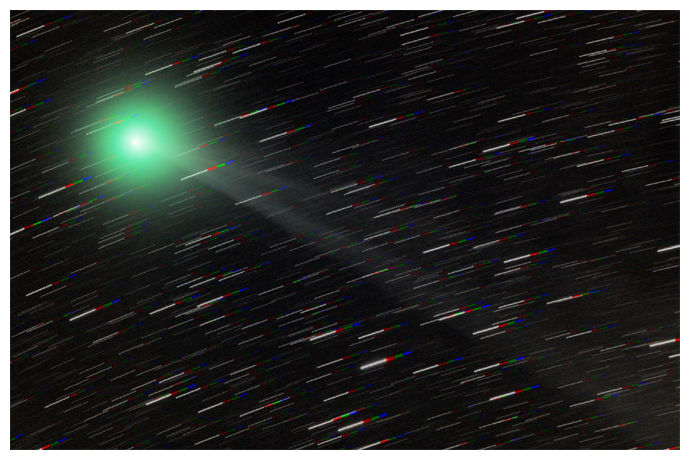
Behold! Comet Lemmon glows lime green

Comet Lemmon
© Peter Ward, Barden Ridge Observatory
Looking like a lone headlight on a rainy night or a glowing lime in the sky, the bright green ball is actually the coma of Comet Lemmon, caught on camera by Australian astronomer Peter Ward from his Barden Ridge Observatory on Feb. 4 (view the hi-res version here). The comet's steadily-growing tail can be seen extending to the lower right.

Comet Lemmon (C/2012 S1) is currently traveling across the sky in the southern hemisphere and has brightened to a visible magnitude of about 6.2 - just at the limit of what can be seen with the naked eye under very dark, clear skies. Peter used a 14.25″ F7.9 Ritchey-Chretien telescope to capture the image of Lemmon, set against long-exposure trails from background stars.

Fireball 4

Watch the rate of asteroid discovery soar

When I started writing about astronomy 35 years ago, astronomers knew of just a few thousand asteroids. Now they know and have cataloged half a million asteroids! That's one reason we hear so often nowadays about asteroids passing near Earth, like the one that will pass on Friday, February 15, 2013. This video is an awesome depiction of the increasingly fast discovery rate for asteroids, over the past three decades. Scott Manley, formerly of Armagh Observatory, created it.


Or, try another graphical representation, also on Armagh Observatory's website. These are are maps of the inner solar system for the years 1800, 1850, 1900, 1950, 1990, 2000 and 2007 showing the increasing rate of discovery of asteroids.

Bottom line: Video from astronomer Scott Manley shows the increasingly fast rate of discovery of asteroids in our solar system, and hence of asteroids whose orbits cross that of Earth.

Info

Could the sea be conscious? Research reveals how tiny plankton behave like a marine 'megamind'

Megamind_1
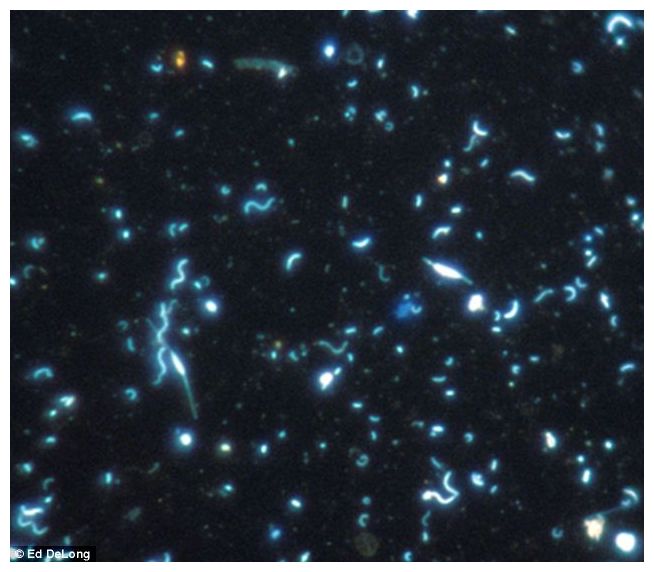
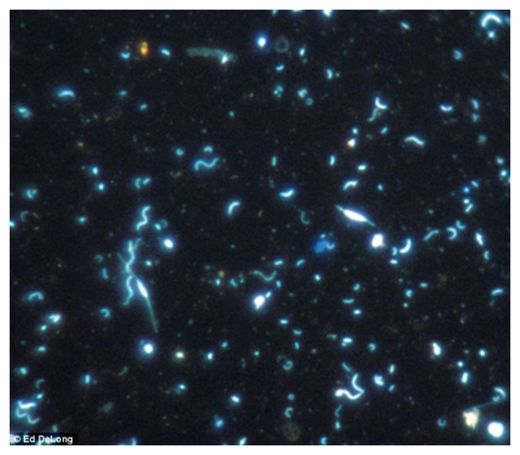
© Ed DeLongMegamind: Despite the amazing diversity of marine microbes, a new research paper shows that many different groups work together to react in unison to their surroundings.
Vastly different species of sea microbes work together to respond as one to their surroundings as if they have one 'megamind', new research has revealed.

U.S. researchers have discovered communities of infinitesimal creatures in our oceans react in unison to changes in their environment.

The links between them are not well understood, but findings suggest the creatures rely on each other to almost the same extent as the different cells in a human body.

As an example, if one set of the microbes were, say, creating energy through photosynthesis, which would then produce carbon dioxide, another set of microbes would somehow know and react - perhaps preparing to absorb the carbon dioxide.

The open sea contains an amazing diversity of extremely tiny organisms called picoplankton, which include relatively simple life forms such as marine bacteria, as well as more complicated organisms.

Microbiologists who study wild marine microbes, as opposed to the lab-grown variety, face enormous challenges in getting a clear picture of the daily activities of their subjects.

To take a look at these creatures in their natural habitat, researchers from the Massachusetts Institute of Technology and the Monterey Bay Aquarium Research Institute used a new method for collecting marine microbes.

Bulb

Epigenetics shapes fate of brain vs. brawn castes in carpenter ants

Image
© Unknown
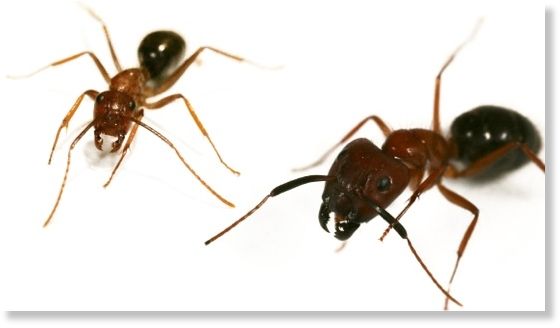
The recently published genome sequences of seven well-studied ant species are opening up new vistas for biology and medicine. A detailed look at molecular mechanisms that underlie the complex behavioral differences in two worker castes in the Florida carpenter ant, Camponotus floridanus,has revealed a link to epigenetics. This is the study of how the expression or suppression of particular genes by chemical modifications affects an organism's physical characteristics, development, and behavior. Epigenetic processes not only play a significant role in many diseases, but are also involved in longevity and aging.

Interdisciplinary research teams led by Shelley Berger, PhD, from thePerelman School of Medicine at the University of Pennsylvania, in collaboration with teams led by Danny Reinberg from New York University and Juergen Liebig from Arizona State University, describe their work in Genome Research. The group found that epigenetic regulation is key to distinguishing one caste, the "majors", as brawny Amazons of the carpenter ant colony, compared to the "minors", their smaller, brainier sisters. These two castes have the same genes, but strikingly distinct behaviors and shape.

Ants, as well as termites and some bees and wasps, are eusocial species that organize themselves into rigid caste-based societies, or colonies, in which only one queen and a small contingent of male ants are usually fertile and reproduce. The rest of a colony is composed of functionally sterile females that are divided into worker castes that perform specialized roles such as foragers, soldiers, and caretakers. InCamponotus floridanus, there are two worker castes that are physically and behaviorally different, yet genetically very similar.

Fireball

Think Friday's close asteroid flyby is sobering? Look at this

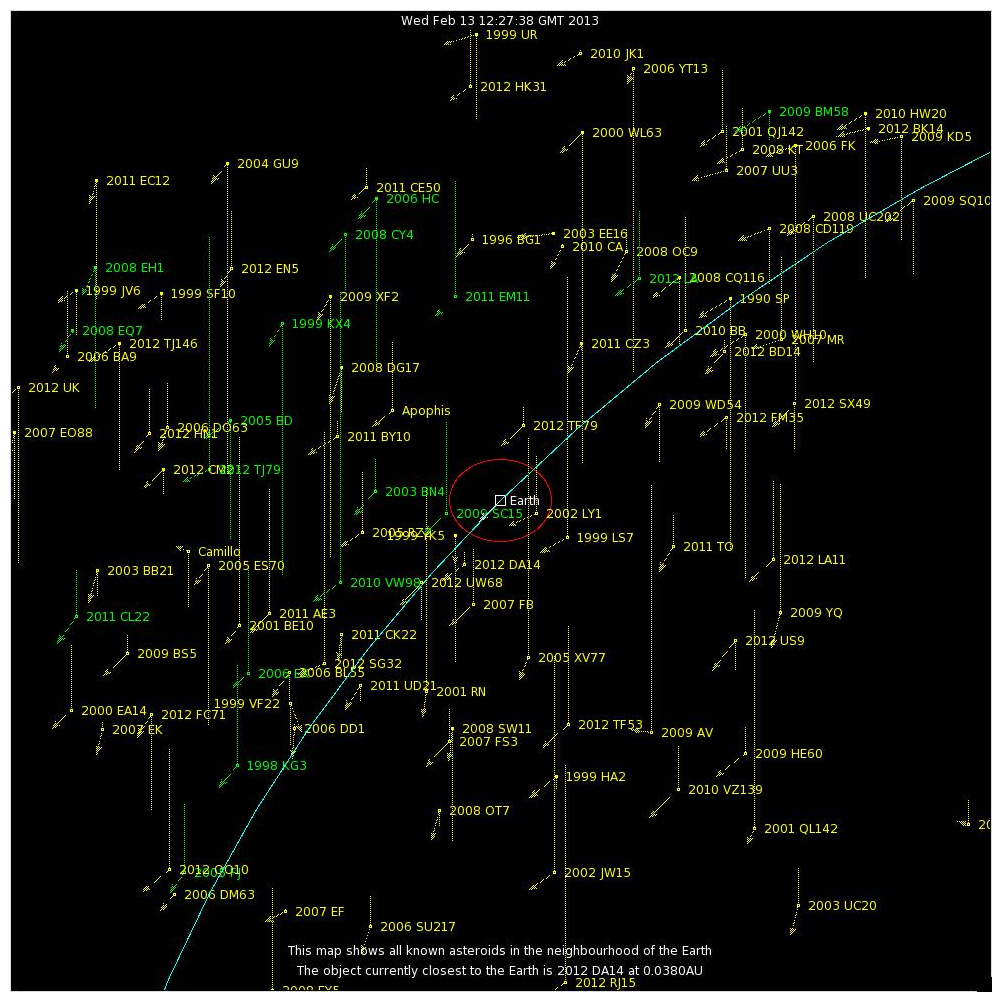
When you see computer-generated images of asteroid 2012 DA14′s February 15, 2013 close flyby - showing the asteroid near Earth in space, seen from a distant vantage point - you might see the Earth, the asteroid, perhaps the sun, and maybe a few other planets. Here is another way to picture Earth and close-passing asteroids, from Armagh Observatory in Northern Ireland.

The image below is near-Earth space today - February 13, 2013. It shows all the objects currently within 0.3 AU of Earth - that's 45 million kilometers - or about 30 million miles - or about one-third of the distance between us and the sun. The red oval around Earth represents 3.84 million kilometers, or 10 lunar distances
NEOs
© Computer-generated image via Scott Manley at Armagh ObservatoryAll asteroids currently within a third of Earth’s distance from the sun are shown, with Earth at the center, in pseudo 3D. The red oval around Earth represents a distance 10 times greater than the moon’s distance. View larger

Meteor

If your satellite TV goes out on Friday, can you blame it on an asteroid? Asteroid 2012 DA14: Will it smash a satellite?

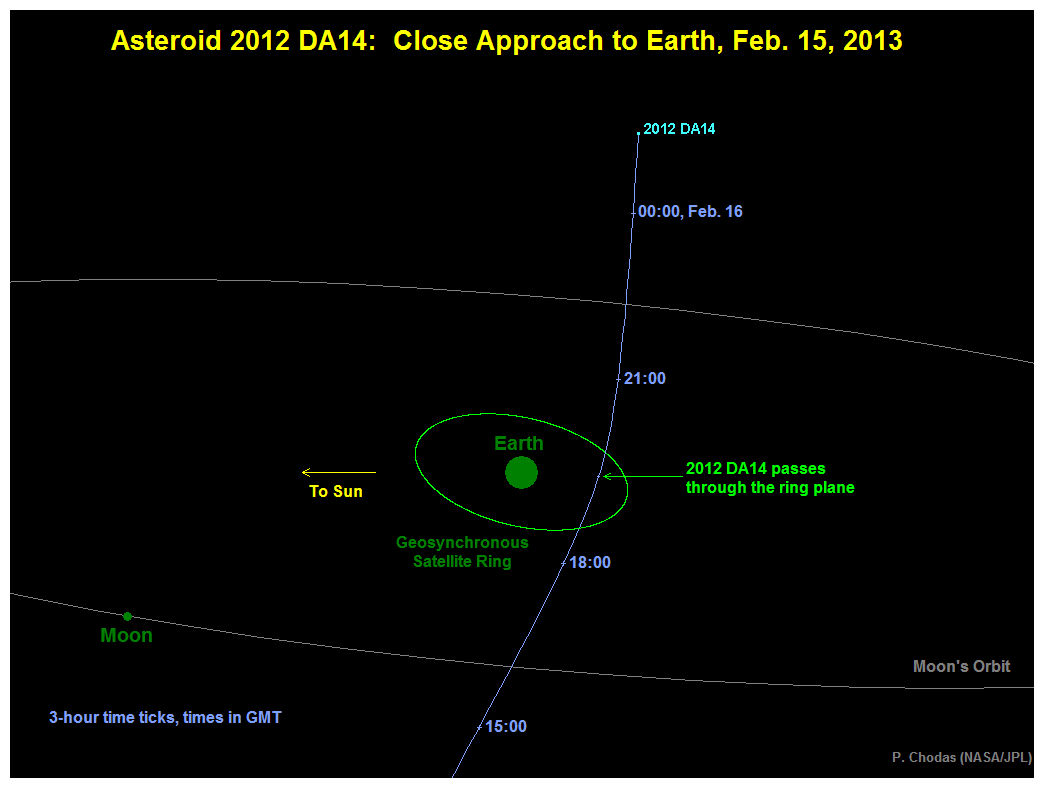
If your satellite TV goes out on Friday, can you blame it on an asteroid? Highly unlikely, say scientists monitoring the approach of asteroid 2012 DA14, which will zoom closer to Earth on Friday than any other known object of its size. The celestial visitor, which is almost as wide as the length of an Olympic-sized swimming pool, is due to pass as close as 17,100 miles at 2:24 p.m. EST (7:24 p.m. GMT) on Friday. That's closer than the television and communications satellites which circle the planet some 500 miles higher.

Image
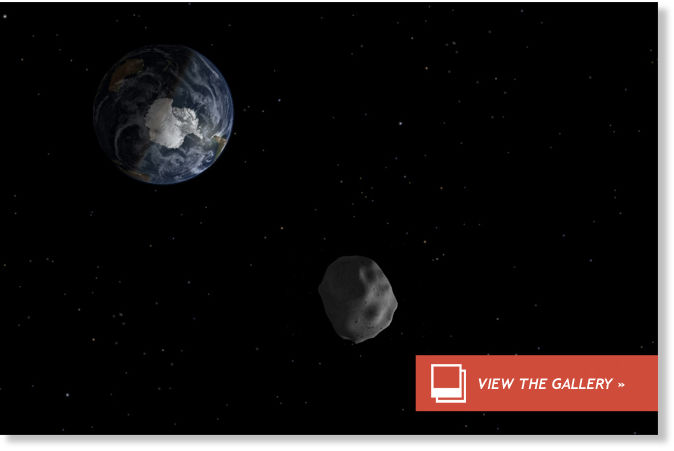
© NASA/JPL-Caltech Artist's impression of asteroid 2012 DA14's Earth flyby.

Info

Turning off the cold: Neuroscientists remove chilly protein from skin

Freezing
© Photos.com
Are you tired of being cold all the time? Do you wish you could turn the cold off at the push of a button? Well neuroscientists from the University of South Carolina (USC) may have some good news for you.

It seems this group of researchers, led by David McKemy, associate professor of neurobiology in the USC Dornsife College of Letters, Arts and Science, have been able to isolate chilliness at the cellular level, identifying a network of sensory neurons in the skin that relays the sensation of cold to the brain. McKemy and his colleagues were able to selectively turn off this sensation in mice without affecting their ability to sense both heat and touch.

This study follows previous work by McKemy, in which he discovered a link between the sensation of cold and a protein known as TRPM8 (pronounced trip-em-ate). The TRPM8 protein is a sensor of cold in skin neurons, as well as a receptor for menthol, the cooling component of mint.

Publishing the new work in the February 13 issue of the Journal of Neuroscience, McKemy and his team have isolated and cut off the neurons that express TRPM8, giving them the ability to test the function of these cells specifically.

Fireball 4

Close Approach of Asteroid 2012 DA14

Asteroid 2012 DA14 was discovered by J75 OAM Observatory, La Sagra on images taken on February 23.03, 2012 with a 0.45-m f/2.8 reflector + CCD.
2012 DA14 has an estimated size of 40 m - 90 m (based on the object's absolute magnitude H=24.09) and it will have a close approach with Earth at about 0.09 LD (Lunar Distances = ~384,000 kilometers) or 0.0002 AU (1 AU = ~150 million kilometers) at 1925 UT on 2013 Feb. 15.

2012 DA14 will pass only ~ 27,700 km (17,200 mi) above the Earth's surface, that is only 0.09 lunar distances or 5.4 Earth radii from the center of the Earth. So close that it will pass inside the ring of geosynchronous weather and communications satellites (located about 35,800 kilometers (22,200 miles) above the equator, but still well above the vast majority of satellites, including the International Space Station). Due to the extremely close approach, this object will be a very strong radar target at Goldstone where observations are scheduled on 2013 Feb. 16, 18, 19, and 20. Radar images should provide constraints on the size, shape, and rotation state of the object.

Asteroid 2012 DA14
© NASA/JPL Near-Earth Object Program Office
This asteroid will reach the peak magnitude ~7.4 on February 15 around 1940 UT and it will be brighter than 9th magnitude for approximately 3 hours (18h00-21h30 UTC). At the moment of the close approach 2012 DA14 will move at ~ 2800"/min (slightly less that 1 degree per minute). The animated gif here made by Geert Barentsen indicate (green areas) parts of the world where the asteroid will be above (and the Sun below) the horizon.

Health

Appendix may not be useless after all

Appendix
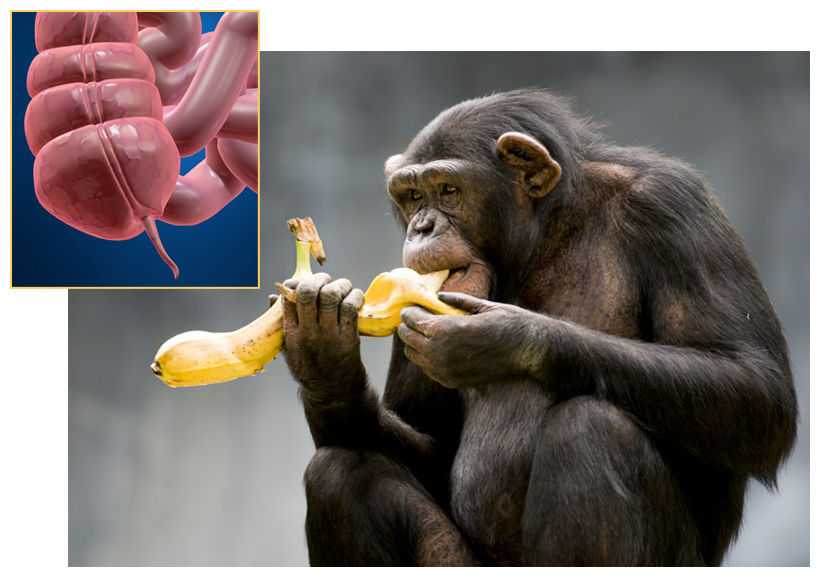
© iStockphoto/Thinkstock; (Inset) Ingram Publishing/ThinkstockShriveled up? The wormlike appendix is traditionally seen as a portion of the gut that withered when apes began eating fruit.
The appendix may not be useless after all. The worm-shaped structure found near the junction of the small and large intestines evolved 32 times among mammals, according to a new study. The finding adds weight to the idea that the appendix helps protect our beneficial gut bacteria when a serious infection strikes.

Charles Darwin was one of the first scientists to theorize on the function of the appendix, which in his day had been identified only in humans and other great apes. He hypothesized that the distant ancestors of these animals survived on a diet of leaves, and so they required a large cecum, a portion of the gut that houses bacteria that can break down stubborn plant tissue. Later, he speculated, these ancestors shifted to a largely fruit-based diet that was easier to digest. A large cecum was no longer necessary, and it began to shrink; today our cecum is tiny. Darwin thought the appendix, which juts off of the cecum, is one of its former folds that shriveled up as the cecum shrank. Consequently, he thought it carried no function.

But some scientists have challenged the idea that the appendix serves no purpose. It's been clear for about a century that the structure contains a particular type of tissue belonging to the lymphatic system. This system carries the white blood cells that help fight infections. Within the last decade, research has shown that this lymphatic tissue encourages the growth of some kinds of beneficial gut bacteria. What's more, careful anatomical study of other mammals has revealed that species as diverse as beavers, koalas, and porcupines also have a structure jutting off of their guts in exactly the same place as our appendix - in other words, the feature is much more common among mammals than once thought.

Heart

Brain scans may predict romantic relationship stability

Image
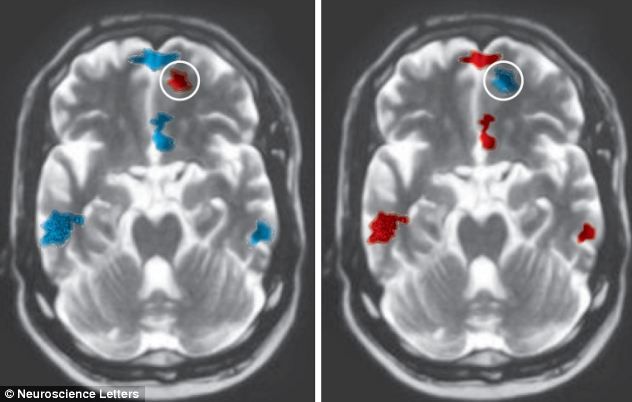
Left: Brain of a volunteer whose relationship lasted. Right: Brain of a volunteer who later split from their partner. Red shows heightened activity and blue shows the brain is deactivated
Brain scans could reveal whether new couples have found long-lasting love, researchers have revealed.

Scientists noticed patterns in the brain activity of volunteers who had recently fallen in love and found they could predict whether the couples would be together three years later.

The findings showed even if volunteers believed they were in passionately love when their brains were scanned, by examining their neuron activity scientists could detect whether those feelings were strong enough for the relationship to last.

Volunteers were shown photographs of their partner and were asked to think of memories of them while their brains were scanned.

Where volunteers' brains showed more activity in the caudate tail area - which reacts emotionally to visual beauty - but less in the medial orbitofrontal cortex - the area linked to criticism and judgement - their relationships tended to last.