
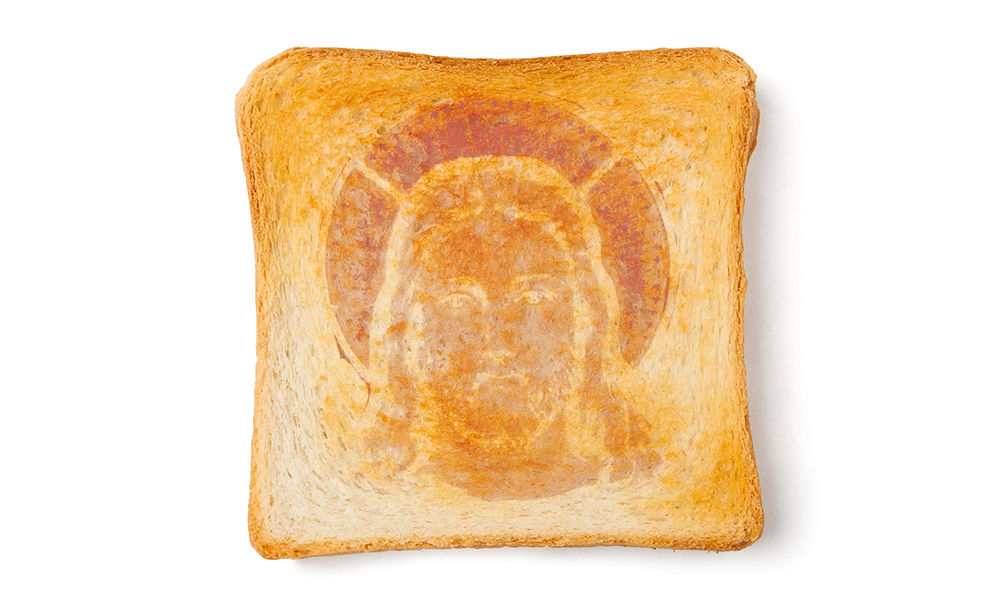
© Karl Tate / ShutterstockJesus on toast? This image may be doctored, but a phenomenon called pareidolia regularly tricks people into seeing faces in burnt bread.
Now, new research reveals the brain processes that underlie these facial false alarms, a phenomenon called "face pareidolia." The findings suggest that expectations matter. When people expect to see a face, these expectations may activate a brain region responsible for processing faces, the researchers report in the April issue of the journal Cortex.
Pareidolia is a well-known phenomenon, responsible for turning a rocky landform on Mars into a face and a water stain on a Chicago underpass into the Virgin Mary. Not all instances of pareidolia result in visions of faces. For example, in 2013, eagle-eyed Internet sleuths swore up and down that NASA's Curiosity Rover had caught a snapshot of a rat on Mars. [Seeing Things On Mars: A History of Martian Illusions]












Comment: Just what we need -- more electromagnetic frequencies and monitoring under the guise of keeping us "safe".