
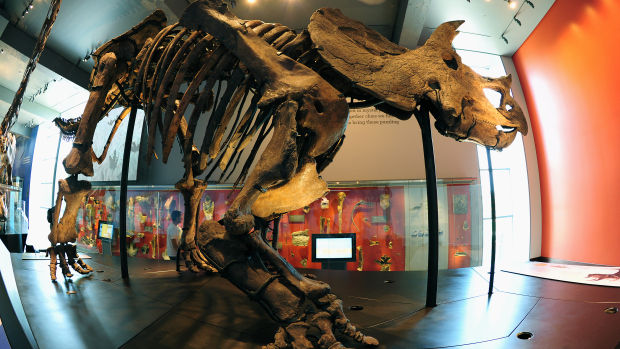
© ROBYN BECK/AFP/Getty ImagesA Triceratops greets visitors at the 14,000 square foot Dinosaur Hall permanent exhibition at the Natural History Museum of Los Angeles
While at the Hell Creek Formation excavation site in Montana, researcher Mark Armitage discovered what he believed to be the largest triceratops horn ever unearthed at the site, according to attorney Brad Dacus of Pacific Justice Institute.
Upon examination of the horn under a high-powered microscope back at CSUN, Dacus says Armitage was "fascinated" to find soft tissue on the sample - a discovery Bacus said stunned members of the school's biology department and even some students "because it indicates that dinosaurs roamed the earth only thousands of years in the past rather than going extinct 60 million years ago."

















Comment: For information on the Electric Universe model and much more related phenomena, read Pierre Lescaudron and Laura Knight-Jadczyk's new book.