

© Reuters / Kacper Pempel
Researchers revealed on Wednesday this week that a bug has been spotted in Bash - a command-line shell developed in the 1980s and common to Linux and Unix systems - the likes of which may allow attackers to target computers and, if successful, run malicious codes that could let them take control of entire servers pertaining to potentially millions of machines.
But while the so-called Heartbleed bug found in April allowed hackers to spy on vulnerable systems due to a previously undiscovered flaw in the open-source encryption software called OpenSSL, security experts say already that the Bash exploit - being referred to as "Shellshock" - is more severe because exploiting it could allow attackers to seize systems that are vulnerable by running unauthorized code that, in a worst case scenario, gives them full privileges on the plundered machine.
"The method of exploiting this issue is also far simpler," Dan Guido, the chief executive of a cybersecurity firm Trail of Bits, told Reuters on Wednesday this week of the differences. "You can just cut and paste a line of code and get good results."
After discovery of Shellshock was identified by researcher Stephane Schazelas on Wednesday, the United States Computer Emergency Readiness Team, or US-CERT, acknowledged the severity of the issue by releasing a statement warning that "exploitation of this vulnerability may allow a remote attacker to execute arbitrary code on an affected system."








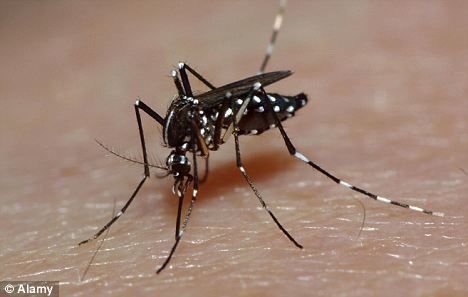









Comment: Comment: If the male mosquitoes are sterile and unable to reproduce, how do they pass the self-destruct gene onto their offspring? Illogic aside, only time will tell the results of this idiotic experiment. Don't mess with mother nature.