Best of the Web:


People

Best of the Web: Why boys need their fathers (or at least fatherly role-models): Masculinity becomes toxic only when it's without MEANING


Comment: We're re-running this because it can't be said enough...


sledding
© Frank Polich/Reuters
When you spend time with boys and girls, one of the first things you notice is that they're generally profoundly different. I say generally, of course, because there are exceptions to every human behavioral rule. All girls aren't the same. All boys aren't the same. But there are general truths, and those who view the world with honest eyes can see them every day.

I sometimes think back to the week I spent a few years ago chaperoning my daughter's eighth-grade class trip to Washington, D.C. It was like shepherding two different colonies of humans. There was the girl group - quiet, dutiful, occasionally tearful, but handling their drama via text message and social media. Then there was the boy group, best described as a rolling, nonstop low-level brawl. They were constantly pushing, grabbing, and mocking. One could often discern the best friendships by finding the guys who most aggressively attacked each other, verbally and physically.

The patterns - though less pronounced, since everything is less pronounced outside of middle school - persist throughout life. Boys are stronger than girls. They're more physically active, less willing to sit still. They're more aggressive. In many ways, their very nature rebels against the increasing emphasis on order and quiet in American schooling. There is less room for play. There is less room for conflict. There is less room for boys.

Comment: See also:


USA

Best of the Web: How to Create a U.S.-Backed Government Coup for Fun and Profit!

protests nicaragua
Nicaragua just defeated a U.S.-backed violent coup attempt, and no one cares.

Well, let me revise that: Very few care. English teachers may care because they may find it fascinating the phrase "violent coup" is one of the only English phrases often introduced with the prefix "U.S.-backed."

But I can tell you for certain the mainstream media don't want you to care. They don't even want you to know it happened. And they certainly don't want you to know that it followed a simple formula for U.S.-backed coups in leftist and anti-imperialist nations throughout Latin America, a formula our military intelligence apparatus has implemented in numerous countries tirelessly, like an overused football play.

On the corporate airwaves you won't hear about U.S.-backed anything. If the U.S. military backed up a truck, CNN wouldn't mention it, NPR would tell you the truck was dealing with an "organic internal protest movement" and Fox News would blame a black person.

Comment: The above is more or less the text Lee Camp recently used on his show Redacted Tonight:


Vader

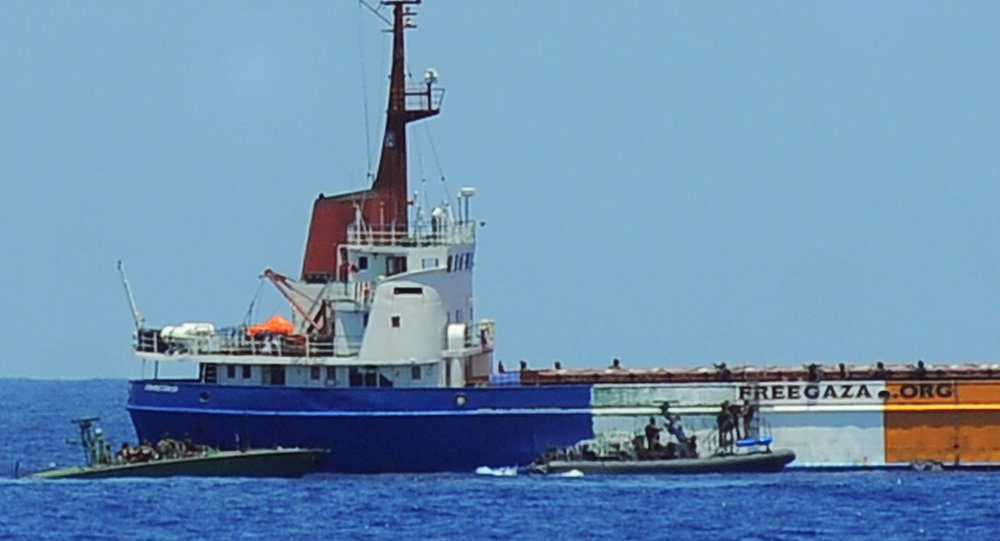
Best of the Web: Flotilla again attempts to break siege of Gaza - Report on Israel's illegal seizure of ships and humanitarian aid

Israel Gaza Freedom Flotilla al-Awda
© Israel Defense Forces press-service/FileIsraeli navy seizes last Freedom Flotilla ship
Israel is fighting constantly not only against Gazans, and against Palestinians generally; it is fighting constantly against freedom-loving people everywhere, who oppose dictatorship of any type, and in any country, on principle, irrespective of nationality.

Here's an example showing how much of a dictatorship and enemy of democrats Israel is:

Anna Dressler was a ship-hand on a flotilla of two small boats launched from Palermo, Italy, which were manned by 34 people from 12 countries in international waters, and which were seized - stolen - by Israel's military, on 29 July 2018. They became seized because these boats were carrying medical supplies in violation of Israel's internationally illegal blockade against food and medicine reaching the residents of Gaza. She was on the boat Al-Awda, which was 42 miles from Gaza at the time of seizure-theft. Israel's troops seizing it were masked, and were armed with machine-guns.

The first video of this incident was released on August 20th.


Comment:


Eye 1

Best of the Web: Newsnight correspondent Mark Urban interviewed Sergei Skripal multiple times last year - BBC won't release correspondence

Skripals BBC logo
© BBC / ReutersYulia and Sergei Skripal
On 8 July 2018 a lady named Kirsty Eccles asked what, in its enormous ramifications, historians may one day see as the most important Freedom of Information request ever made. The rest of this post requires extremely close and careful reading, and some thought, for you to understand that claim.
Dear British Broadcasting Corporation,

1: Why did BBC Newsnight correspondent Mark Urban keep secret from the licence payers that he had been having meetings with Sergei Skripal only last summer.

2: When did the BBC know this?

3: Please provide me with copies of all correspondence between yourselves and Mark Urban on the subject of Sergei Skripal.

Yours faithfully,

Kirsty Eccles

Comment:


2 + 2 = 4

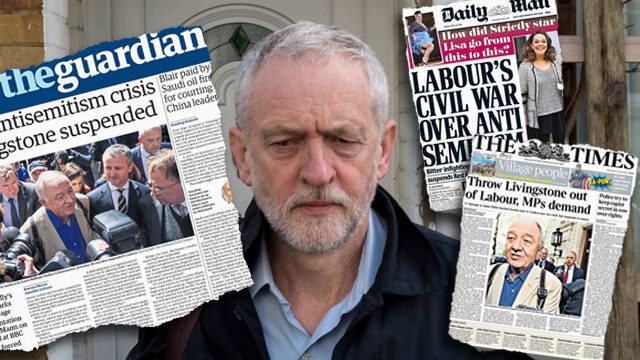
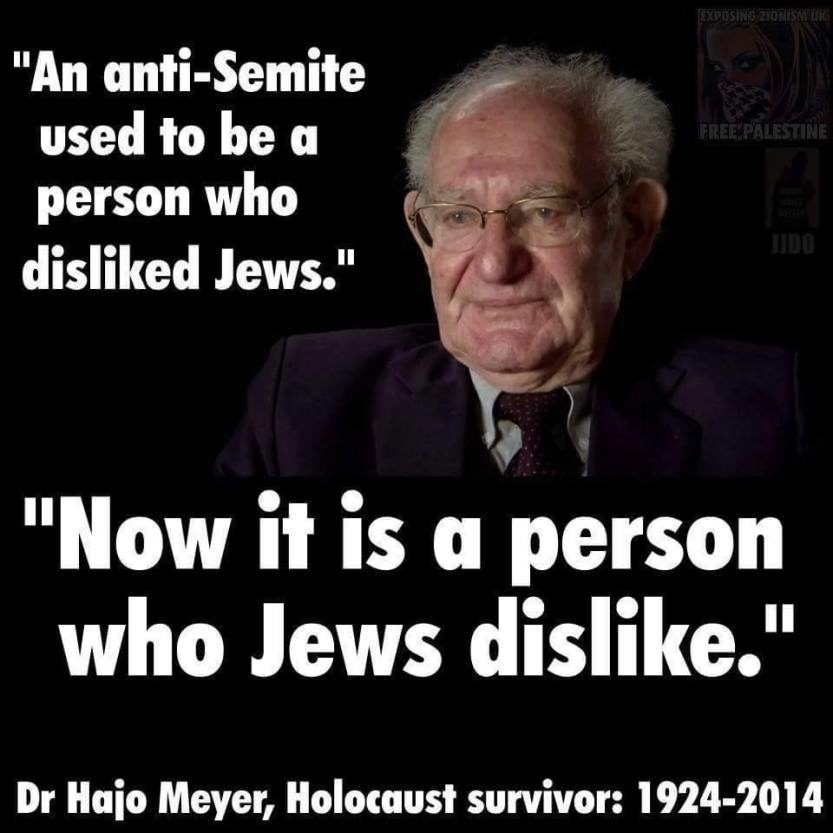
Best of the Web: Smearing critics of Israel undermines importance of tackling genuine anti-Semitism

corbyn labour anti-semitism
Whilst the issue of Britain leaving the EU has dominated our media for the last two years, a close runner-up has been much of the media claiming the Labour Party has a major problem with anti-Semitism.

Last week an opinion poll found that whilst 36 percent of Brits think there is a problem with anti-Semitism in the Labour Party, 38 percent disagree, leaving 26 percent undecided.

In nearly 50 years as a Labour Party member I never saw a Labour MP raise a single issue of anti-Semitism until two and a half years ago when the left-wing candidate for the youth seat on Labour's National Executive Committee was accused of being linked to anti-Semitism. Weeks later an independent report revealed there was no such problem, but the smears led to the defeat of the candidate.

Comment:
hajo meyer jews anti-semitism


Vader

Best of the Web: Bait and switch: While world watched Syria, US attempted false-flag 'attack by Russia' on Afghanistan-Tajikistan border

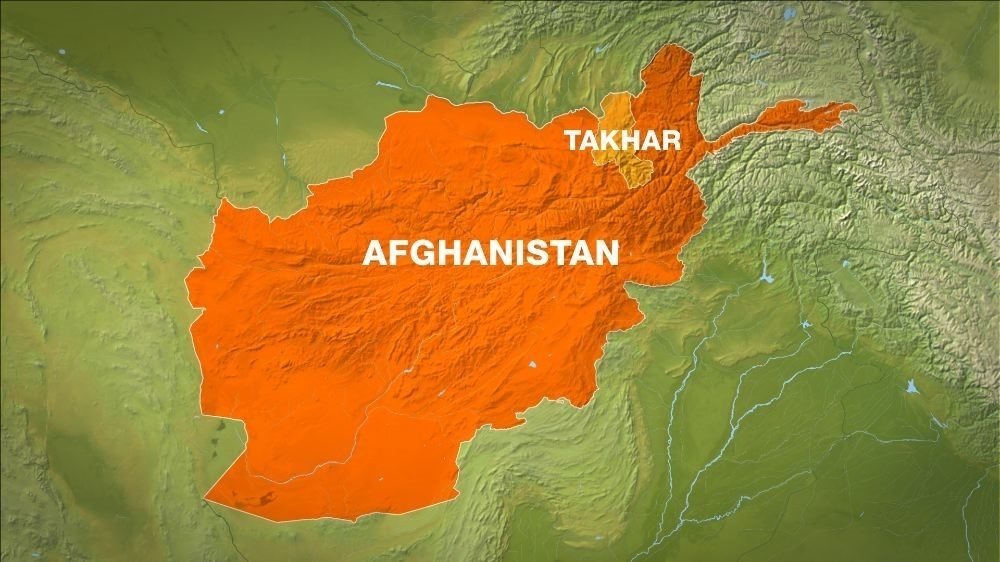
afghanistan map
Location of the 'airstrike' in northern Afghanistan
While the world was waiting with bated breath to see whether the US would really stage yet another chemical weapons false flag attack in Syria, Washington tried to pull a fast one in Afghanistan by manufacturing a fake crisis between Russia and the Taliban.

It's no secret that the US fears the consequences of Russia's newly pragmatic approach towards the Taliban so it was only a matter of time before it tried to manufacture a fake crisis between them in order to undermine Moscow's peacemaking efforts in Afghanistan, and next week's multilateral meeting in the Russian capital pushed the US to act. Although Washington and Kabul's refusal to participate in this event will deprive it of any immediate political significance, its long-term importance is that it contributes to Moscow's efforts to gradually rebrand the Taliban as a legitimate armed opposition movement by providing them with an international venue for constructively interacting with regional diplomats.

This in and of itself will herald in a sea change in political attitudes towards this group by breaking its diplomatic isolation and enabling it to be perceived as a responsible Eurasian actor, especially in the anti-security domain against ISIS-K. For this reason, it's in the US' interests to stop next week's gathering from taking place, or at the very least, to engineer a crisis between Russia and the Taliban that would lead to the latter's refusal to participate in the event, ergo the false flag attack that just took place in Afghanistan.

Light Saber

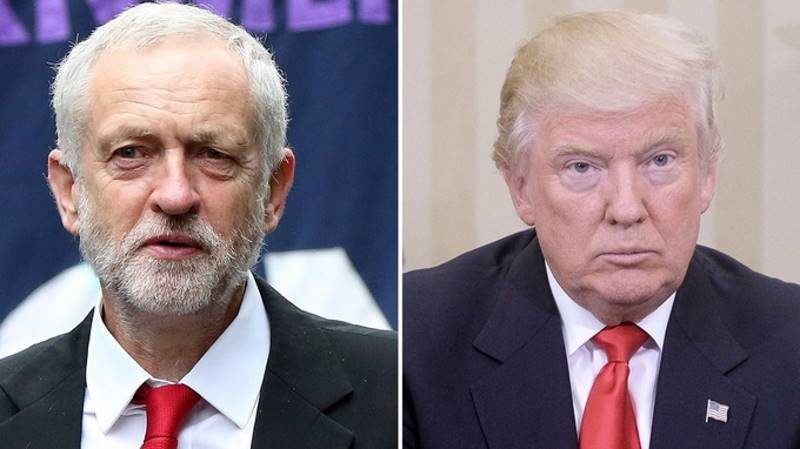
Best of the Web: A warning to Trump and Corbyn: Don't fall for the anti-semitism scare

corbyn Trump
© Press AssociationLabour leader Jeremy Corbyn and {resident Donald Trump
And the Russian warning over Syria

As a new military confrontation over Syria is impending, thought out by Israel, prepared by the British and executed by the US, the West's future depends greatly upon two mavericks, the US President Donald Trump and the UK Opposition Leader Jeremy Corbyn. These two men are as different as you can make. One is for capitalism, another one is a socialist, but both are considered soft on Russia, at least they do not foam at the mouth hearing Putin's name. Both are enemies of Wall Street and the City, both stand against the Deep State, against NATO, both are enemies of globalism and of world government. One is a friend of Israel, another is a friend of Palestine, but both are charged with racism and anti-Semitism.

It is a quaint peculiarity of our time, that anti-Semitism is considered the great and unforgivable sin, trading places with Christ Denial. Negative attitude to Christ-denying Jews had been de rigueur at its time, and the Church, or its Tribunal, the Inquisition, had tried the charged. Nowadays, the heavily Jewish MSM is the accuser, the judge and jury, considering anti-Jewish attitude as a worst sort of racism. The two leaders aren't guilty as charged, but the MSM court dispenses no acquittals.

Star of David

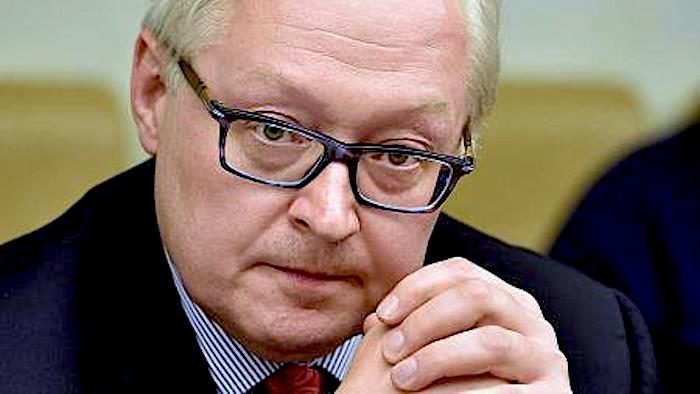
Best of the Web: Putin decimates Netanyahu's dreams as Russia confirms total support for Iran in Syria

Deputy FM Sergey Ryabkov
© Russian EmbassyDeputy FM Sergey Ryabkov
Deputy Foreign Minister Sergei Ryabkov made waves today, dispelling numerous rumors and laying to waste much 'speculation' about Russia's role in Syria, with regard to Iran and Israel.

After difficult talks today in a meeting between senior Russian and US delegations to discuss Syria, in Geneva, Switzerland, Ryabkov's statements today mirror those of Russian Foreign Minister Sergei Lavrov, and Russian Foreign Ministry Spokeswoman Maria Zakharova. Their previous statements reflect Russia's actual, official policy on Iran and Syria. Today's statements bring clarity to any number of vague remarks made in months past.

Israeli officials have yet to comment, but there will no doubt be huge reverberations for today's statement, which clarifies any number of misconceptions spread, even in pro-Russian alternative media and analytic spheres. However, the spread of those important 'misconceptions' was critical in the information war, and only high-level analysts with connections to Moscow, understood the the nature of the information war discourse they were involved in. In that sense, these journalists and analysts were themselves involved in an important aspect of Russian strategy, within the context of 4th Generation Warfare, in terms of their work in creating a hyper-reality simulacrum.

Comment: Russia's declaration of 8 new outposts, that encourages the UN to participate, are a deterrent to Israel's agenda. It is logically a strategic move, necessitated by the US/Israel protection of terrorist enclaves. Was Israel tricked? Russia has been consistently straight-forward in its expounded strategies, policies and assessments of the Syrian War and the components involved, be it the West or Iran. If Netanyahu, a victim of his own delusions, came to another interpretation to support his Middle East fantasy - including attempts to sway Russia against Iran - and now his bubble has burst, that is on him.

More from FRN:
Israel trumps that it is not only controlling the US Congress through AIPAC and other deeper mechanisms upon the deep state, such as through banking and through pedophile kompromat, but ostensibly also the Russian Duma.

Through a complex system of information war, Russia is using the very same cordoning off of the internet which the US establishment and deep state are set to complete, to disassemble reality. This virtual walled garden is meant to decelerate and frustrate the otherwise natural tendency of the internet towards the cross-pollination and cross-semination of ideas.

In some sectors of the internet, Russia is promoted as Israel's greatest ally. In others, the 'Axis of Resistance', featuring Iran, Iraq, and Hezbollah of Lebanon, depicts Russia as an important ally. Both are able to point to certain aspects of the conflict in Syria as evidence of this. This belief creation process, especially through new media and the internet, is a critical part of how simulacra are created in the context of 4GW - fourth generation warfare.

Russia has stated publicly that it is interested in both Iran and Israel's strategic interests. Russia is committed to Russia's strategic interests; which do align with the general conception of deconfliction. The idea here is the most balanced compromises that deliver peace as a status quo. Instead of strategic interests, 'security insurance' is a better concept to separate this out from Israel's irredentist goals or Iran's foothold in Lebanon. It is neither a problem nor a criticism to state such.

Russia is aware that both states, Israel and Iran, engage in a form of demagoguery and rhetorically politicize things beyond what may be the real strategic goal.


Arrow Down

Best of the Web: How America's wars have helped create massive debt, with little strategic benefit to offset the costs

military usa
When Defense Secretary James N. Mattis spoke at the 2018 Center for the National Interest Distinguished Service Award dinner in late July, he outlined a foreign policy strategy for the United States that focused on the resurgence of great-power competition. Mattis also warned that the United States could endanger itself from within. Specifically, he stated that the growing national debt amounts to a form of "inter-generational theft" that Congress must address.

The solvency of the United States and the balance between commitments and power has been an abiding theme of foreign policy realists. In his book, U.S. Foreign Policy: Shield of the Republic, the dean of American realist thinkers, Walter Lippmann, observed in 1943:
No one would seriously suppose that he had a fiscal policy if he did not consider together expenditure and revenue, outgo and income, liabilities and assets. But in foreign relations we have habitually in our minds divorced the discussion of our war aims, our peace aims, our ideals, our interests, our commitments, from the discussion of our armaments, our strategic position, our potential allies and our probable enemies. No policy could emerge from such a discussion. For what settles practical controversy is the knowledge that ends and means have to be balanced: an agreement has eventually to be reached when men admit that they must pay for what they want and that they must want only what they are willing to pay for.
In 1987, Samuel Huntington wrote an essay in Foreign Affairs called "Coping With the Lippmann Gap." He reiterated that America was incurring commitments abroad that it was not willing to pay for at home. Such warnings have gone largely unheeded.

Instead, since the end of the Bill Clinton presidency - when the United States ran a budget surplus - the debt level has been rising steadily. It jumped from $10.6 trillion during the George W. Bush administration to $19.9 trillion under Barack Obama. Though Donald Trump said in 2017 that he would eliminate the debt "over a period of eight years," he has gone silent on the issue even as he presides over a debt that is expected to exceed $21 trillion. Goldman Sachs recently stated that the fiscal outlook for the United States is "not good" and predicts that debt as a percentage of the gross national product will rise from its current 4.1 percent to 7 percent by 2028.


Card - VISA

Best of the Web: How China's Mobile Ecosystems Are Making Banks Obsolete

alipay advert
© Ged Carroll / FlickrAlibaba's proprietary payment platform, Alipay, has shown up in advertisements overseas, such as this one in London's Tottenham Court subway station
The U.S. credit card system siphons off excessive amounts of money from merchants. In a typical $100 credit card purchase, only $97.25 goes to the seller. The rest goes to banks and processors. But who can compete with Visa and MasterCard?

It seems China's new mobile payment ecosystems can. According to a May 2018 article in Bloomberg titled Why China's Payment Apps Give U.S. Bankers Nightmares:
The future of consumer payments may not be designed in New York or London but in China. There, money flows mainly through a pair of digital ecosystems that blend social media, commerce and banking-all run by two of the world's most valuable companies. That contrasts with the U.S., where numerous firms feast on fees from handling and processing payments. Western bankers and credit-card executives who travel to China keep returning with the same anxiety: Payments can happen cheaply and easily without them.
The nightmare for the U.S. financial industry is that a major technology company - whether one from China or a U.S. giant such as Amazon or Facebook - might replicate the success of the Chinese mobile payment systems, cutting banks out.

Comment: An interesting trend, that's for sure.

It's the One World digitized credits system 'conspiracy theorists' warned about decades ago.

The trade-off seems to be: the popular dream of cutting out banksters as middlemen is realized... in exchange for super-sized conglomerates that are part-monopolies, part-governments-unto-themselves.

The incredible thing about it is that China, which has yet to complete its transition to a modern economy, is 'forcing' this development in the West by the act of forging ahead with it.