
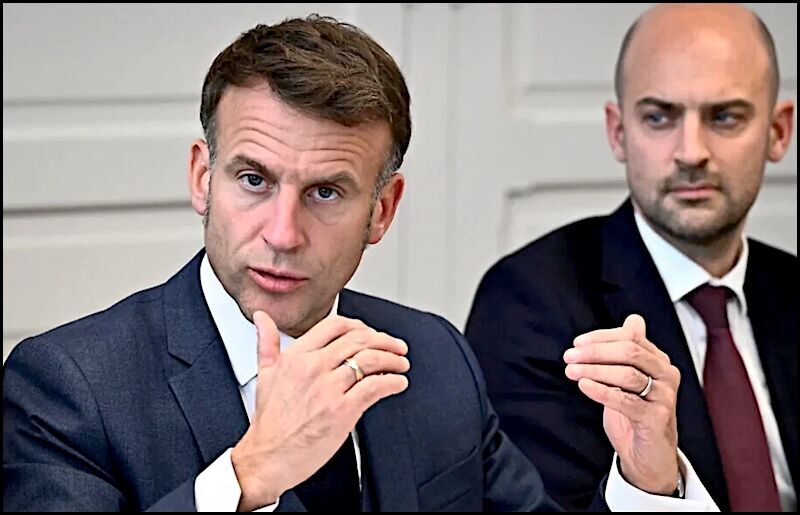
© UnknownFrench President Emmanuel Macron
The exclusion of France and the European Union from the 2026 Israel-Lebanon negotiations signifies more than a diplomatic disagreement. It reveals a broader geopolitical reconfiguration involving mediation power, alliance hierarchies, and competing visions for regional order in the Middle East. The absence of France and the EU highlights a US-Israeli preference for controlled mediation and raises concerns regarding the balance and legitimacy of the process. Lebanon, as a comparatively weak state, is likely to face disproportionate pressure in these negotiations.
The current negotiation framework risks producing an imbalanced settlement primarily shaped by Israeli strategic interests rather than mutual compromise. As noted by Le Monde, this arrangement may prove unstable, and the absence of the EU further underscores the narrowing of diplomatic pluralism in the region.
Detailed Analysis of the Arguments
First, the decision by the United States and Israel to centralize negotiations in Washington should be interpreted as an assertion of strategic control over the negotiation framework. The current talks, hosted and facilitated by the US State Department, function as instruments for Washington to convert military leverage into political outcomes. Including France would potentially dilute American primacy and introduce alternative diplomatic perspectives, particularly those emphasizing Lebanese sovereignty and European multilateral norms. Israel's interest is basically its security; Lebanese sovereignty is not its concern. Historically, US-led negotiations in the region have prioritized security arrangements aligned with Israeli interests, and limiting the number of mediators enhances both coherence and control over outcomes.
Second, Israel's explicit reluctance to involve France stems from perceptions of bias and divergent positions regarding Palestine. President Macron has been a leading Western advocate for Palestinian statehood. Israeli officials have openly stated that Paris should be excluded ("It is certain that we do not want to see the French interfering in these negotiations," said Israel's ambassador to Washington, Yechiel Leiter, who represents Israel at the negotiations), indicating a lack of trust in France as a neutral intermediary. This stance reflects broader tensions in Franco-Israeli relations, as France has maintained a more balanced and, at times, critical position on Israeli military operations, consistently emphasizing Lebanese territorial integrity. From Israel's perspective, France's historical ties to Lebanon and its support for Beirut risk diverting negotiations from Israel's primary objectives: the disarmament of Hezbollah and the establishment of a security buffer zone. France, in turn, fears that this buffer zone may soon be occupied by Israel, given the precedent of Israeli settlers establishing themselves in Lebanon.
Third, France's exclusion should be examined in terms of historical legacy versus contemporary power dynamics. Paris maintains deep political, cultural, and institutional ties to Lebanon, originating from the mandate period and continuing through its involvement in UNIFIL and ceasefire diplomacy. However, in the current geopolitical context, historical influence does not necessarily confer negotiating authority. The ongoing crisis, situated within the broader confrontation involving Iran, Hezbollah, Israel, and US regional strategy, privileges actors with significant hard power, particularly Washington. This situation brings to the fore the theoretical concepts of power and legitimacy.
Fourth, a structural geopolitical rationale underpins the regionalization of the conflict. The Israel-Lebanon negotiations are inseparable from the broader strategic environment shaped by tensions with Iran and the influence of non-state actors such as Hezbollah. The United States and Israel, as principal actors confronting Iran, aim to maintain a tightly controlled diplomatic arena aligned with their broader containment strategy. The inclusion of France, or a more Europeanized mediation format, could complicate this alignment, especially if it emphasizes multilateralism, de-escalation, sovereignty, or humanitarian concerns.
Fifth, this exclusion reflects a recurring pattern in Middle Eastern diplomacy: the marginalization of multilateral or European actors in favor of bilateral or US-centric frameworks. Historical precedents, such as the failed 1983 Israel-Lebanon agreement, demonstrate that negotiations dominated by a single power often result in imbalanced outcomes and lack broader legitimacy. The current configuration raises similar concerns, particularly among European and Lebanese officials who fear that Beirut may encounter disproportionate pressure in a negotiation environment primarily shaped by US and Israeli priorities.
Finally, from a broader geopolitical perspective, France's exclusion exemplifies Europe's declining strategic autonomy and diplomatic leverage in mediating high-intensity conflicts. Although Paris continues to position itself as a defender of Lebanese sovereignty and a necessary counterweight, its inability to secure participation underscores a shifting balance in which influence is increasingly determined by immediate coercive capacity rather than historical legitimacy or normative authority.
In summary, under exclusive US mediation, the emerging Israel-Lebanon framework reflects a security-driven order in which diplomatic access is tightly controlled to favor one party. France's exclusion signals not only bilateral tensions but also a broader marginalization of European influence in high-stakes Middle Eastern negotiations. The asymmetry between Israel and Lebanon, combined with the United States' strong commitment to Israel, risks formalizing an agreement that structurally disadvantages Lebanon's sovereign interests.

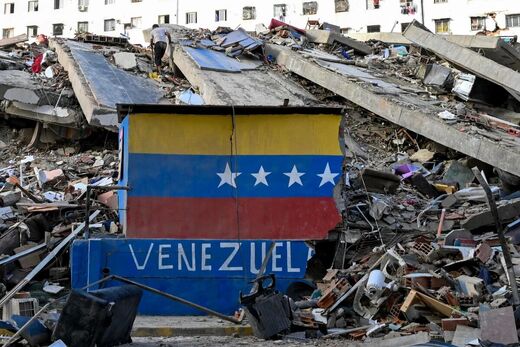

Is that not the whole point, to disadvantage, or shall we say destroy Lebanon? Bit by bit, Usrael wants it all.