
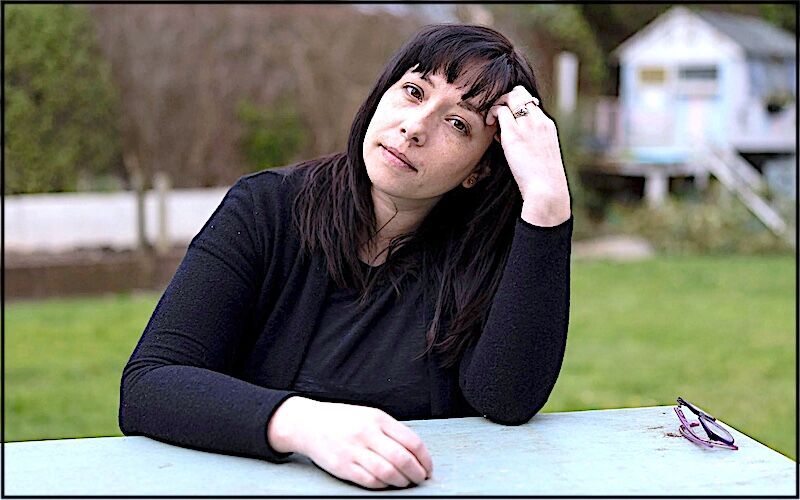
© Heathcliff O'MalleyNikola Brindley, 36, has been left disabled after receiving the AstraZeneca vaccine in July 2021
But within hours, Brindley was in A&E fighting for her life as an allergic reaction began to shut down multiple organ systems. She recalled:
"I collapsed on the doorway, and pretty much lost the ability to walk. My husband rushed me to hospital, my heart rate had soared and I couldn't speak. We were told that if I'd been 10 minutes later, there would have been nothing they could have done."Nearly five years later, the 36-year-old, who lives on the Isle of Man, remains profoundly affected. She lives with ongoing brain fog, chronic pain, headaches and gastrointestinal problems, and requires monitoring from a variety of specialists. Her worsening fatigue has left her requiring a wheelchair, while some days, she struggles to keep down food. Previously active and sporty, she is so disabled that her two children, aged 8 and 11, have been certified as young carers.
"I genuinely thought that it was just going to be another vaccine. Take it, get on with things. Instead, my life has been reduced to trying to manage symptoms every single day."The dark legacy
Horrendous side effects represent the darker legacy of the Covid vaccine rollout, which, years on, remains a deeply thorny topic in public health.
On the one hand, the jabs are widely credited with ending the very worst of the pandemic, with researchers estimating that the first year of the programme prevented somewhere between 14.4 million and 19.8 million deaths worldwide.
The benefits are writ large in official government statistics - in January 2021, as the rollout was beginning, there were more than one million confirmed Covid infections in the UK and 32,049 deaths. A year later, despite the rapid spread of the Omicron variant, the monthly death toll had dropped to 8,100.
"The development and deployment of the vaccines was the important turning point in the pandemic," says Sir Munir Pirmohamed, professor of pharmacology and therapeutics at the University of Liverpool. "This allowed society to open up, and had a major impact on reducing hospital admissions and deaths."
Yet while the vast majority of the 50 million people in the UK (and in other nations) who received Covid vaccines experienced few or no ill effects, there are those like Brindley, who either suffered serious harm or, most tragically of all, lost their lives.
There are no official statistics on how many people were impacted in this way. However, data from the Medicines and Healthcare Products Regulatory Agency (MHRA) indicates that the numbers are not insignificant. While these reports are not proof of the Covid vaccines causing serious harm and death, in the UK, as of February 24, there had been:
· 194,403 serious reports linked to the AstraZeneca vaccine (and 1,532 with a fatal outcome).
· 126,535 serious reports linked to the Pfizer vaccine (and 920 with a fatal outcome).
· 31,339 serious reports associated with the Moderna vaccine (and 102 with a fatal outcome).
For all the data collected, the plight of people who suffered Covid vaccine injuries has been handled markedly differently around the world. Authorities in Japan and South Korea have officially recognised a wide range of cases of vaccine-induced harm, from heart inflammation to sudden hearing loss, and have compensated tens of thousands of people accordingly.
Meanwhile, in the US - where just 92 cases of vaccine harm have been deemed eligible for compensation, compared to more than 24,000 in South Korea - a federal work group is now calling for major changes to how Covid vaccine injuries are tracked and treated. A distinct diagnostic code has been proposed for harms linked to the jabs, which could be used for reimbursement from health insurers, along with plans for The Centers for Disease Control and Prevention to develop diagnostic guidelines to recognise and manage patients suffering from long-term harm.
However, it is a very different story in the UK, where patients like Brinkley describe a near-impossible fight to obtain any kind of financial support.
"I've been trying to advocate to get help and support, not just for myself, but for others as well. But despite engaging at every level [of the healthcare system] available to me, there's still no clear support pathway for those injured."Understanding vaccine harm
So why did some people experience such serious reactions?
The most high-profile form of harm has been the cases of vaccine-induced thrombosis with thrombocytopenia (VITT), or blood clots, a side effect mostly commonly linked to AstraZeneca's shot.
While very rare, it has been officially linked to dozens of fatalities and other serious incidents in the UK. The law firm, Leigh Day, is now seeking compensation from AstraZeneca for bereaved families and victims of VITT-related neurological injuries in the UK, and says it expects the case to go to trial in 2027.
Last month, a major new study published by an international consortium of researchers provided new evidence about why some people experienced VITT. It revealed that in some people with rare genetic vulnerabilities, the vaccine's delivery mechanism initiated a reaction that triggered the formation of deadly clots. "At the time the vaccine was developed, it would have been difficult to predict that this reaction would occur," says Pirmohamed.
But VITT was merely one type of harm.
Cardiac issues - particularly myocarditis (inflammation of the heart muscle) and pericarditis (inflammation of the lining around the heart) - have also been linked to the vaccines, and appear to have been more common than VITT. Thousands of such cases, spanning recipients of all three Covid jabs, have been reported to the MHRA - including several hundred fatalities.
But why did this happen? The mRNA Covid vaccines worked by using the genetic sequence of the SARS-CoV-2 virus's spike protein to teach the immune system how to recognise and fight it. Some researchers have suggested that this viral fragment present in the vaccines may somehow have evaded the immune system and triggered heart inflammation, although this is still far from clear.
Devastating autoimmune reactions
Others, like Brinkley, experienced various autoimmune reactions that damaged different systems in the body. Patrick Stacey, 59, from Derby, developed a form of Guillain-Barré syndrome - a rare autoimmune condition which attacks the nerves, causing muscle weakness and numbness - after receiving the AstraZeneca vaccine in April 2021.
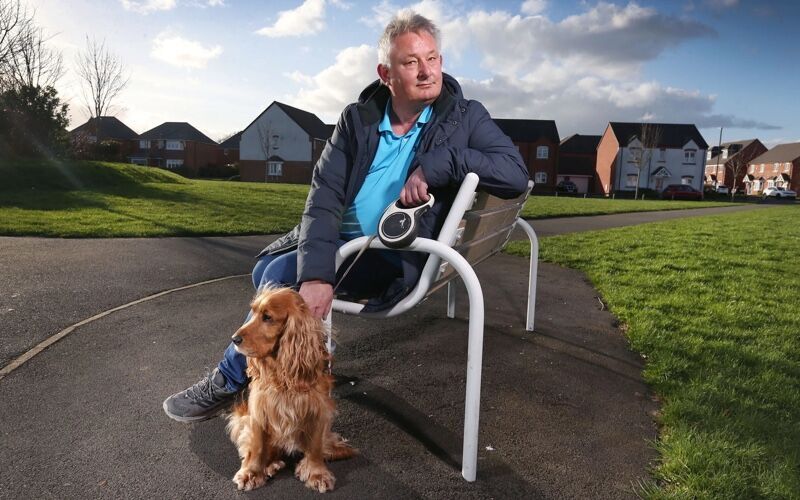
© Lorne CampbellPatrick Stacey, 59, developed a rare autoimmune condition after receiving the AstraZeneca vaccine in April 2021.
Her case was later published by her consultant rheumatologist as a medical case study, and five years later, she still suffers from chronic joint pain, headaches and digestive problems. She also requires ongoing medication for thyroid damage caused by her severe immune reaction.
While researchers now understand why the vaccines caused VITT, it remains a mystery why people like Burke, Brinkley and Stacey experienced autoimmune reactions which have left them chronically unwell. A small collection of researchers in the US is now attempting to understand more about such cases, describing lasting ailments of this kind as forms of post-Covid vaccination syndrome (PCVS).
The research remains in its infancy, and funding is hard to come by, but there are suggestions that women are more vulnerable to PCVS. Some 70 per cent of the adverse events reported to the MHRA occurred in women - a notable gender skew that is also present in long Covid and autoimmune diseases, such as rheumatoid arthritis, although the reasons for this disparity are still unclear.
"We think some of the same biological mechanisms operate for both PCVS and long Covid," says Linda Simoni-Wastila, an associate research professor at the University of Maryland School of Pharmacy.
Researchers also note that the exact cause of PCVS is likely to vary significantly between individuals. Akiko Iwasaki, professor of immunobiology at Yale University School of Medicine, is open to the idea that a persistent viral fragment from the vaccine lingering in the body of a recipient may be what triggers PCVS symptoms, although she cautions that this theory is very much unproven.
According to Iwasaki, another plausible cause of lingering symptoms like persistent pain, brain fog and headaches is the Epstein-Barr virus. It's possible that an autoimmune reaction to the vaccines could have enabled this pathogen, which typically lingers in the body in a dormant state (up to 95 per cent of all adults worldwide are thought to have been infected with it), only to spring to life in some and burrow into the central nervous system, causing problems. But once again, far more evidence is needed.
Living in limbo
While researchers ponder the underlying cause of PCVS and possible treatments, those living with post-vaccine harm in the UK describe being left in limbo, often with neither acknowledgement nor compensation for their ordeals.
Many have lost jobs due to their disabilities. Brindley was dismissed from her dental role within months, while Burke was forced to abandon her dream of a career in pharmacy because she was no longer able to cope with the strain of the job. She now works part-time in her family's gift shop.
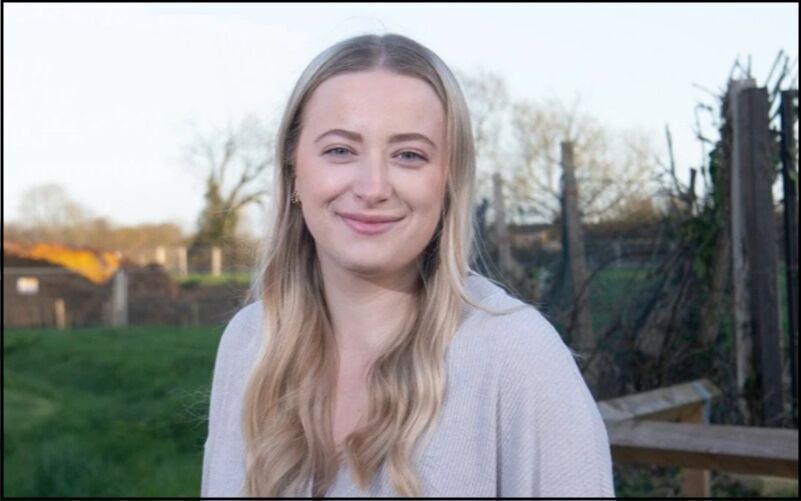
© Jay Williams/DepositphotosReceiving the Pfizer vaccine, Faith Burke, 24, developed joint swelling, breathing difficulties, and had to be hospitalised
"Even though this has been completely life-changing, they've got this fixed scale where you have to be classed as at least 60 per cent disabled, and I'm apparently not regarded as disabled enough, which is quite poor really."According to UKCVFamily, a charity supporting 2,660 vaccine-injured individuals and families, this story is all too common. Indeed, VDPS data indicates that 98 per cent of claims relating to Covid vaccine harm have been rejected. With few available avenues for seeking help, the charity said that 73 per cent of their members have admitted to feeling suicidal, with two people subsequently dying by suicide.
'Lessons need to be learned'
Burke says she is concerned by the lack of research in the UK into why she and others experienced such severe allergic reactions - something which may have significant public health ramifications in the years to come. Surveys have indicated that despite the overall success of the Covid vaccine campaigns, vaccine confidence across the UK has waned significantly since 2019.
Pirmohamed agrees that lessons need to be learned from cases of adverse events when it comes to the design of future vaccines.
"If you are vaccinating millions of people, rare adverse events will occur, such as VITT. We need to learn from these types of adverse events, and heed the lessons for future vaccine development, so that we can pre-empt, predict and prevent."But for Brindley, this is scant consolation.
"We were told that taking the vaccine was the right thing to do. When people are harmed, they deserve to be acknowledged, supported and not left behind. Nobody should be left navigating disability alone. In my case, we've lost everything. We should get some help and support at the end of the day."A spokesperson for Pfizer said:
"Patient safety is paramount and we take any reports of adverse events very seriously. Adverse event reports do not imply causality, and in the context of vaccination, such events may be unrelated to administration of the vaccine. To date, five billion doses of the Pfizer-BioNTech Covid-19 vaccine have been distributed globally, and the benefit-risk profile of the vaccine remains positive for all authorised indications and age groups.A spokesperson for AstraZeneca said:
"As with every medicine and vaccine, including the Pfizer-BioNTech Covid-19 vaccine, Pfizer has robust processes to meet its regulatory responsibilities to closely monitor, report and analyse all adverse events, and collect relevant information to assess any new potential safety risks that may be associated with the Covid-19 vaccine. In addition to our pharmacovigilance efforts and compliance with regulatory requirements related to quality and safety, we also work with regulatory authorities around the world as they independently monitor the safety profile of our vaccine."
"Our sympathy goes out to anyone who has lost loved ones or reported health problems. Patient safety is our highest priority. From the body of evidence in clinical trials and real-world data, the Oxford-AstraZeneca vaccine has continuously been shown to have an acceptable safety profile, and regulators around the world consistently state that the benefits of vaccination outweigh the risks of extremely rare potential side effects."Moderna was approached for comment.















In the first story of this article it states, " she is so disabled [by the vaccine] that her two children, aged 8 and 11, have been certified as young carers. " An 8 year old "certified" as a medical "caregiver"? Are you kidding me? And the little dears are supposed to feel honored or something by this ridiculous "certification?" Charles with that smirk on his face and that tiara on his head must have come up with this one.