
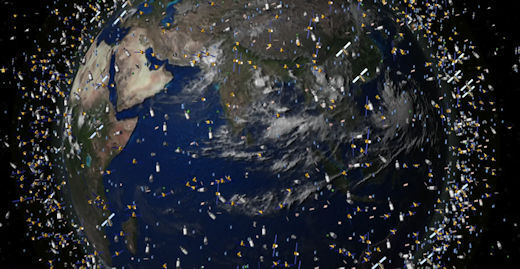
Researchers call this ticking countdown the CRASH Clock (short for Collision Realization And Significant Harm). It measures how long it would take, on average, for a debris-producing collision to occur if satellites suddenly lost situational awareness and stopped maneuvering.
In 2018, before today's megaconstellations filled the skies, the CRASH Clock stood at 121 days. Today, it's less than three.
Orbital traffic is now at unprecedented levels, especially in dense shells of Starlink spacecraft near 550 km altitude. The study shows that close encounters between space objects happen every 20 seconds across low-Earth orbit. According to SpaceX's most recent biannual report, Starlink satellites alone executed 144,404 collision-avoidance maneuvers between Dec. 1, 2024, and May 31, 2025.
Comment: So 144404 collision-avoidance maneuvers within just 6 months and that is just for the Starlink satellites!
At the best of times, avoiding collisions requires constant, precise maneuvering. But what would happen if satellite operators no longer knew exactly where their spacecraft were?
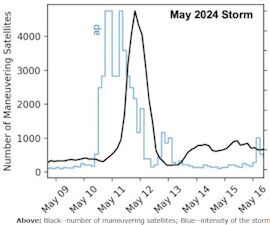
That scenario is not hypothetical. During the geomagnetic superstorm of May 10-11, 2024, more than 5,000 satellites made emergency maneuvers to maintain their orbits (full story). Most were Starlinks. Position uncertainties grew to kilometers--exactly the kind of disruption envisioned by the CRASH Clock. Fortunately, the storm subsided before a major collision occurred.
Enjoy your Starlink--while you can.











Comment: As has been documented on Sott.net and elsewhere that there has been a significant increase in meteorites in recent years with no signs of letting up. The latest graph from Fireball.imo.net bears witness to it and 2025 sets a new record even though the year isn't over yet.