
"This comet is developing very nicely and it is already an impressive object, well-placed for observation in the morning sky," says Nick James of the British Astronomical Association. "It is definitely worth getting up for!"
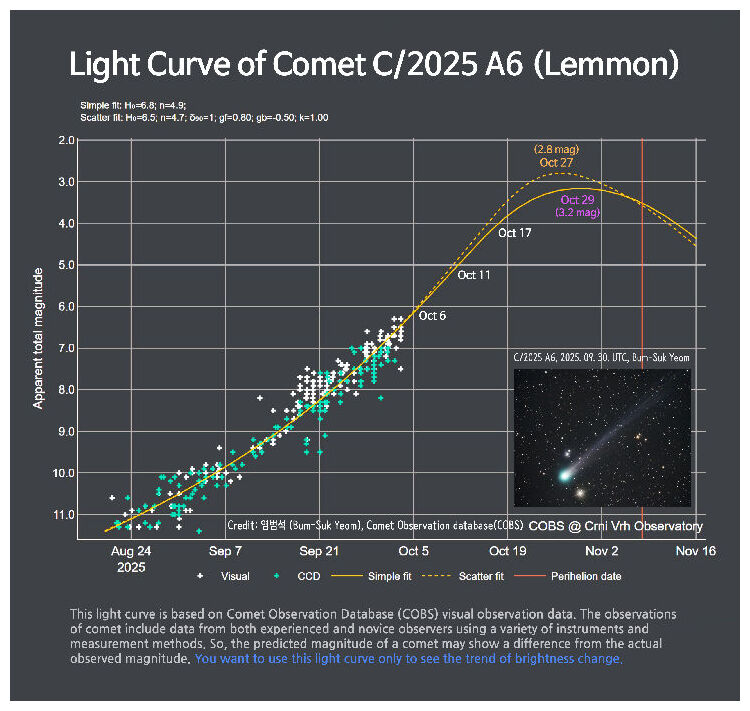
The light curve of Comet Lemmon shows that it is about to cross the threshold (m=+6) of naked-eye visibility:
© Bum-Suk YeomTaken by Bum-Suk Yeom on October 3, 2025 @ Iksan, South Korea.
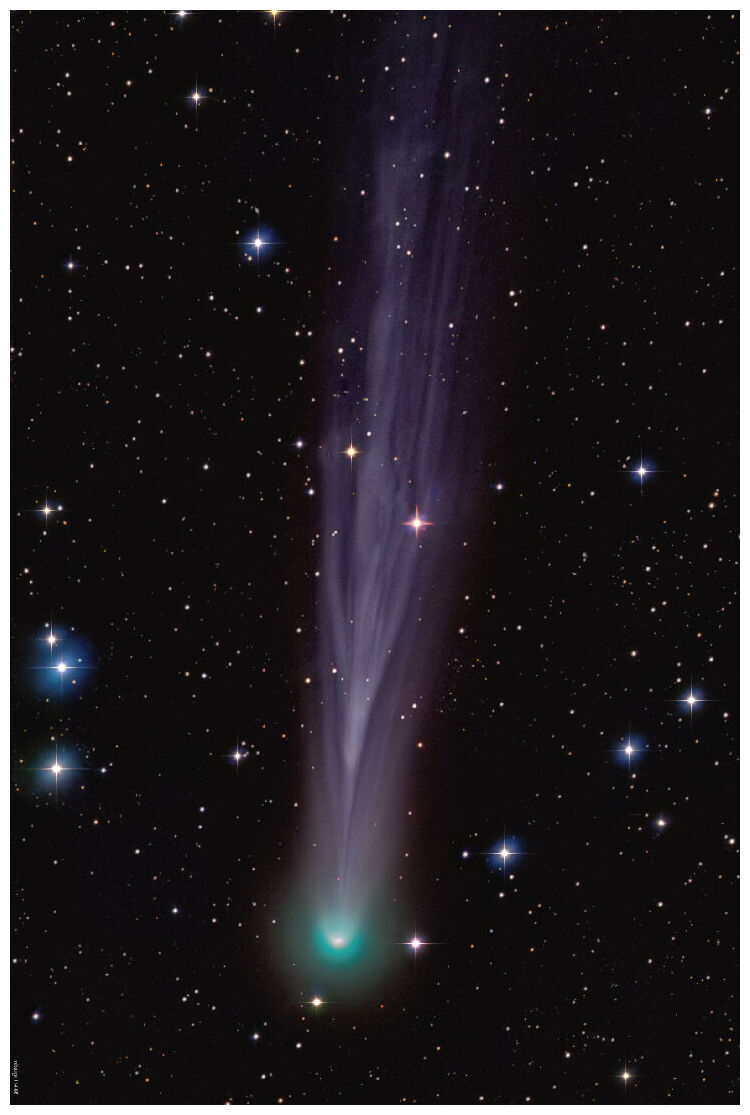
Not only is this comet bright, but also it is remarkably active. In recent nights, amateur astronomers have watched dozens of gaseous knots and filaments billowing down Lemmon's tail. Here's a freeze-frame on Oct. 5th from Italian astronomer Rolando Ligustri:
© rolando ligustriTaken by rolando ligustri on October 5, 2025 @ from New Mexico, Astrottica Obs
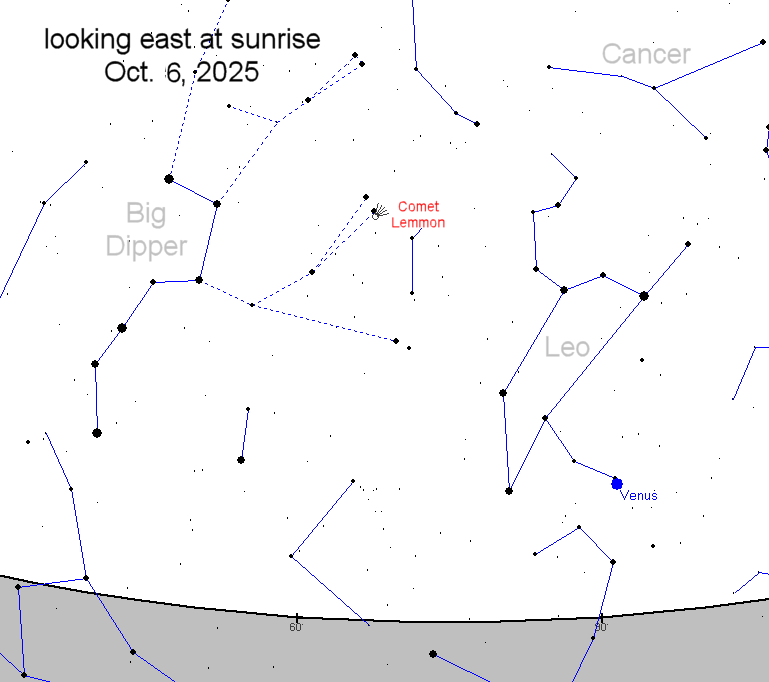
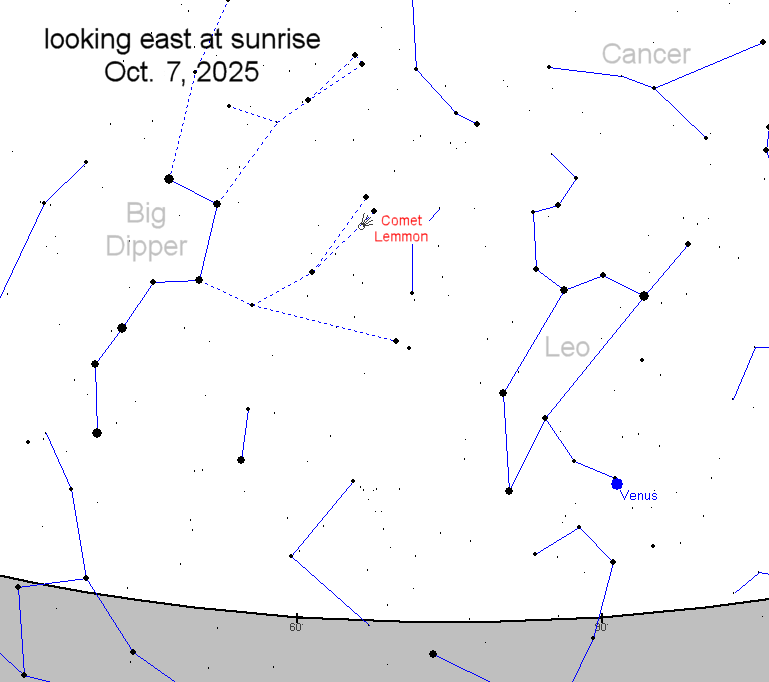
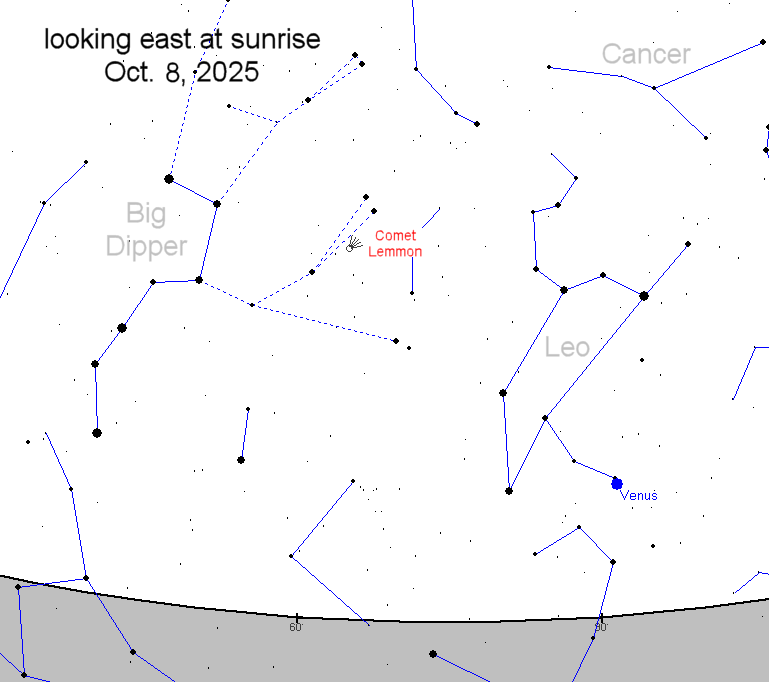
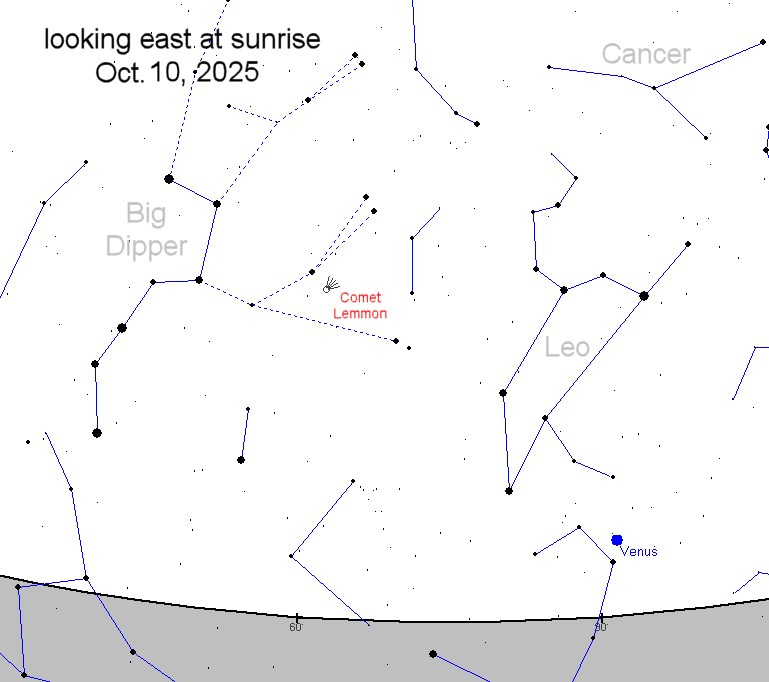
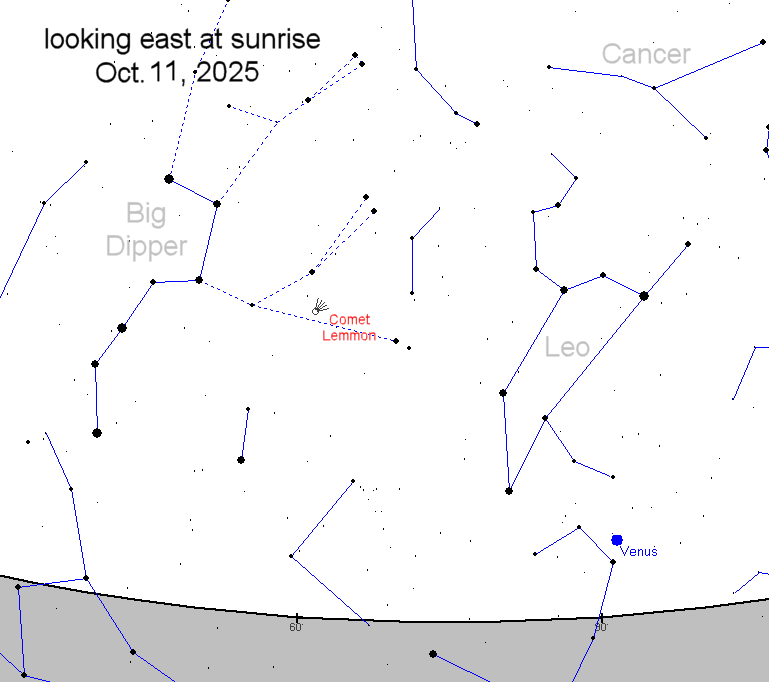
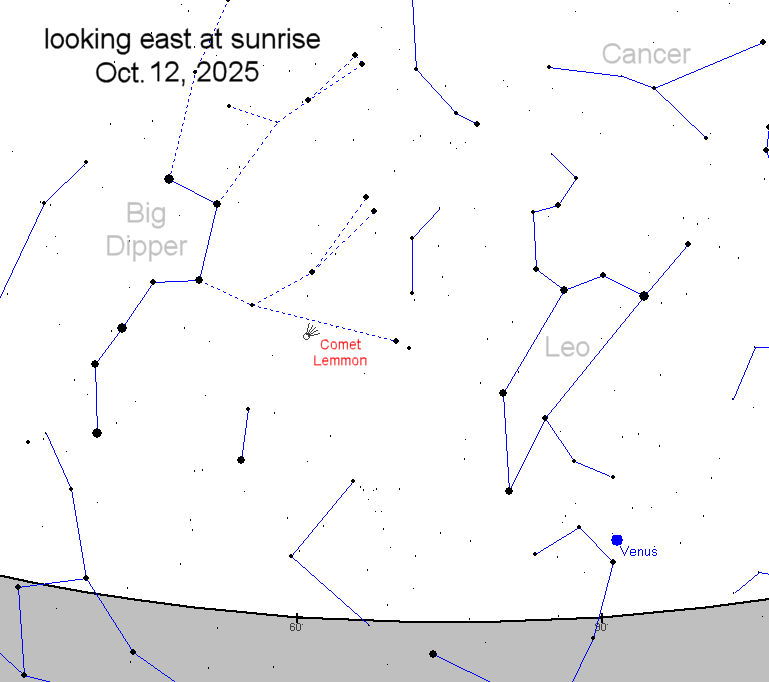
Finding Comet Lemmon is easy. It's in the constellation Ursa Major (the Big Dipper) near the 3rd magnitude star mu Ursa Majoris. For most observers in the northern hemisphere, it is located well above the eastern horizon before sunrise. Sky maps: Oct. 5, 6, 7, 8, 9, 10, 11, 12, 13.






Reader Comments
to our Newsletter