
© WikipediaLogos of the United State's Central Intelligence Agency and State Security Service of Ukraine
As Ukraine slips quietly from the top of the Western media's news agenda, fascinating insights into the granular nature of the CIA's involvement in Kiev's assassination program are being revealed. By the very same outlets that had previously suggested Ukraine was on a solo run with its slew of extrajudicial killings and terror attacks.
Western media has routinely ignored the brutal exploits of Kiev's successor to the KGB, the SBU. When they are reported upon, instead of calling out the illegal killing of journalists and activists, the press seeks to frame them as masterful operations of a band of freedom fighters administering tough justice to the "enemies of Ukraine." A key element of that narrative was that while the US, British, and French intelligence services worked closely with the SBU, they didn't have any direct control of its actions, particularly when those actions involved assassinating unarmed civilians. However, a recently published article in the Washington Post has now revealed that the CIA had, and continues to have, a central role in the group's most disturbing activities.
A Washington Post article "Ukrainian spies with deep ties to CIA wage shadow war against Russia" outlines a labyrinthine relationship between the two intelligence agencies, and while the CIA still maintains it doesn't sanction particular operations, the details revealed in the telling article suggest that this is nothing more than the usual stock disclaimer which accompanies most of Langley's covert operations. The article is based on interviews with "more than two dozen current and former Ukrainian, US and Western intelligence and security officials" and its revelations are both shocking and fascinating.
One of the first claims it makes is that the relationship between the Ukrainian SBU and the CIA has been developing for decades with the latter working to "develop" Ukraine's abilities to carry out sabotage and "operations" since at least 2014. The CIA has also been providing detailed intelligence, equipment and training to the SBU during that period and continues to spend "tens of millions" of dollars developing its capabilities. The sources quoted also confirm that the CIA even designed and built a new headquarters for the SBU in Kiev and currently share "levels of information and intelligence unthinkable" prior to Russia's intervention in Ukraine.
According to the Washington Post, the CIA also now maintains a significant presence in Kiev, not only in terms of men and materiel but also information flow, all of which suggests that despite maintaining an overt distance, the CIA is in fact intimately involved in all aspects of SBU operations including the planning and execution of operations outside the state.
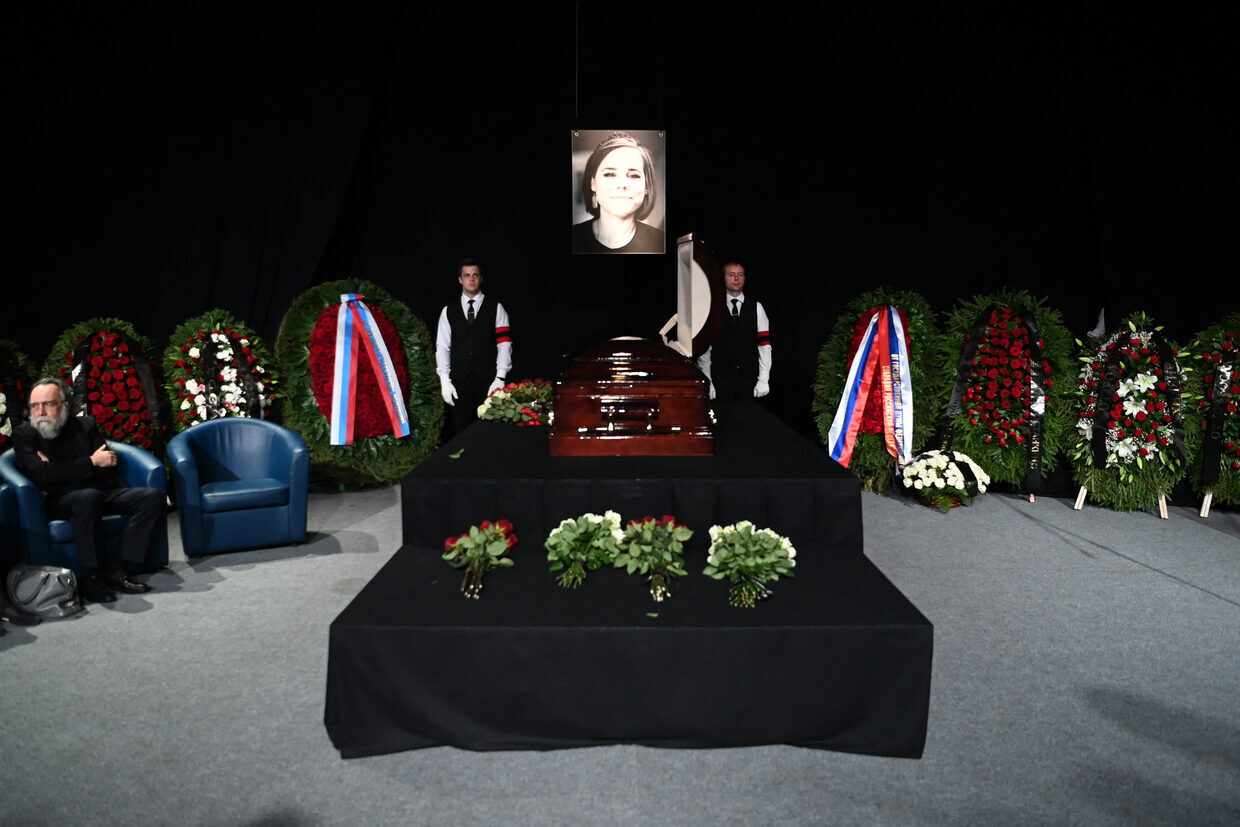
© Kirill KUDRYAVTSEV / AFPRussian ideologue Alexander Dugin (L) attends the farewell ceremony of his daughter Daria Dugina at the Ostankino TV centre in Moscow on August 23, 2022.
The granular details outlined in the article suggest sources either within the CIA or SBU have now confirmed that their relationship, once presented as purely advisory and business-like, is in fact a deep and long-standing partnership. The article goes on to confirm the SBU's involvement in several other targeted murders on Russian territory, including the assassination of Vladlen Tatarsky with a bomb in a crowded St. Petersburg cafe and the murder of ex-submarine commander Stanislav Rzhitsky, who was shot in the back while jogging unarmed in a park in Krasnodar.
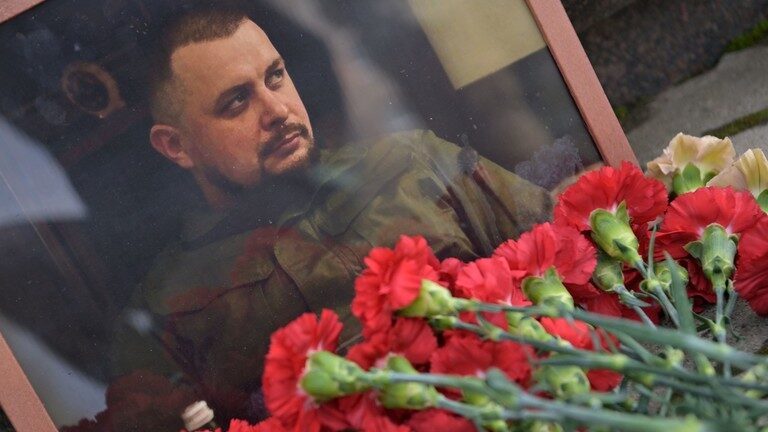
© Evgeny Biyatov/SputnikFlowers are placed near a portrait of Russian military blogger Vladlen Tatarsky, (real name Maxim Fomin), who was killed in a cafe explosion in St. Petersburg on April 2, 2023.
What is most interesting about this piece is probably not its confirmation that the CIA is intimately involved in the operations of the SBU, what's most fascinating is why a newspaper widely recognized as itself having an intimate relationship with the CIA has suddenly decided to basically confirm what many analysts already knew when it comes to Langley and the SBU.
The Washington Post's revelation comes not only in the aftermath of the bloody Hamas incursion into Israel and the subsequent Israeli assault on Gaza but also as international attention, and more importantly, appetite to support Kiev, wanes. This shift in attention, not only in the media but also potentially in the scale of aid, bodes poorly for President Vladimir Zelensky's regime, as it faces increasing domestic pressures and war-weary neighbors.
Couple this with the oncoming winter and the view looks increasingly grim for Zelensky even before mentioning Ukraine's failed counteroffensive and recent Russian battlefield gains. It now also looks inevitable that Ukraine will find itself playing second fiddle to an emerging political and potentially military crisis in the Middle East while competing for the vital US aid that keeps the Kiev regime afloat. Crucially, all of these woes offer a beleaguered NATO an opportunity to apply pressure on Zelensky to seek peace, potentially solving an increasingly difficult puzzle for Kiev's backers as they head towards elections that will be decided by populations ever more vocal in their disdain for the conflict.
So as Kiev's woes compound and the world's gaze shifts towards Gaza, it seems the truth about the West's intimate relationship with the SBU is now being pulled out of the closet, not by a whistleblower or dissenting investigative journalist, but by a stalwart of the US intelligence community, the Washington Post. The question we should all be asking is why? How does this benefit or promote a Western 'victory' in Ukraine? The answer may well be that it's not a victory that these revelations are supposed to facilitate. It's more likely that it's part of a strategy of edging Kiev towards accepting the undeniable reality that the entire US project in Ukraine is set to fail, and for Zelensky to seek accommodation before there's nothing left to negotiate with.
The task now is to end it as painlessly as possible for NATO and Kiev's exhausted backers, and to move on to the next crusade, leaving a devastated and dysfunctional Ukraine to be consigned to the growing graveyard of bloody US foreign policy misadventures.
Chay Bowes is a journalist and geopolitical analyst, MA in Strategic Studies and RT correspondent



Reader Comments