
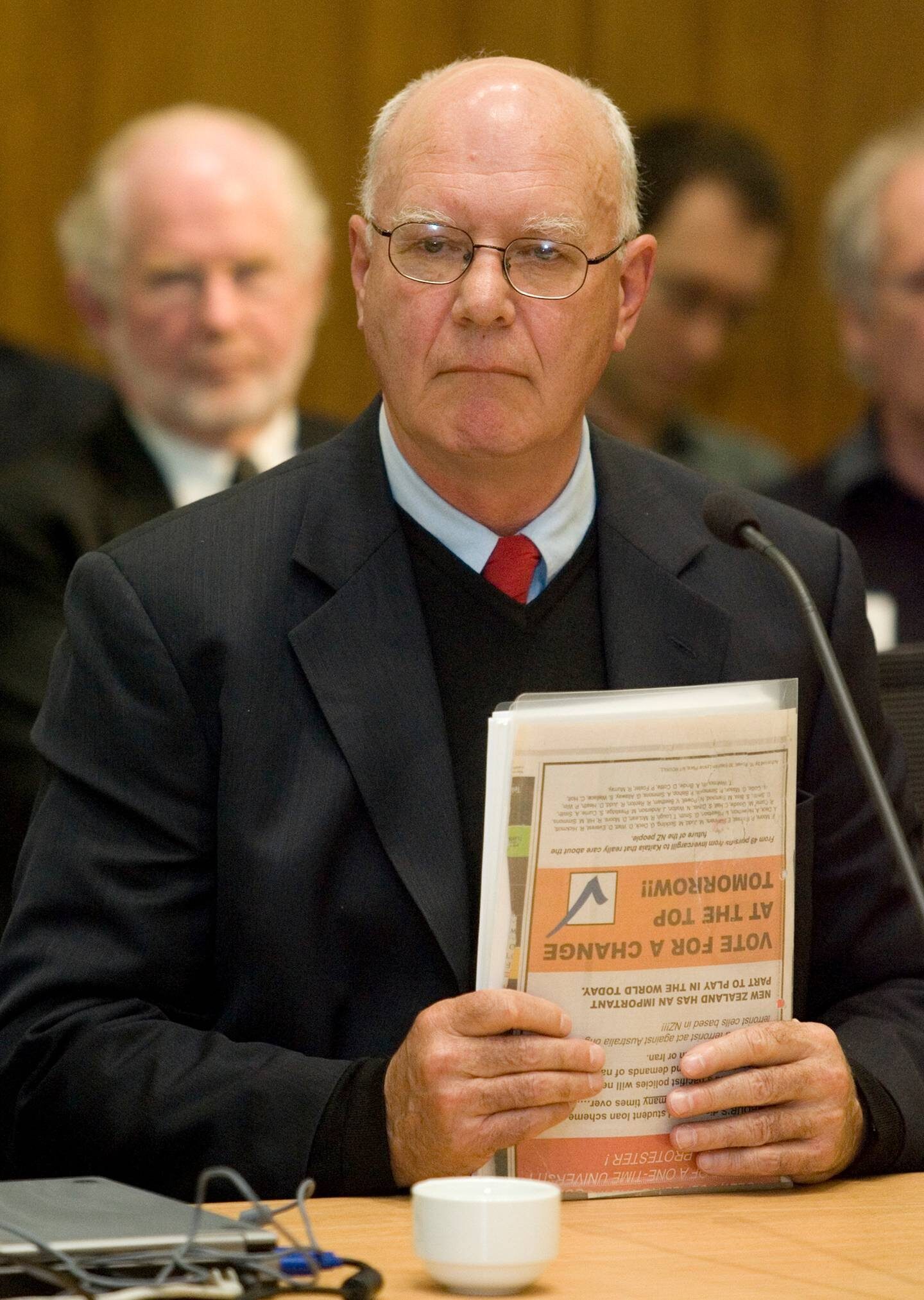
FILE PHOTO: Former Labour Party General Secretary Mike Smith.
Mike Smith, who served as general-secretary of the party from 2001-2009, told RNZ the government was helping to put back a negotiated peace settlement indefinitely by sending Defence Force personnel and resources to Europe as confrontation between Russia and the Western military alliance continues to escalate.
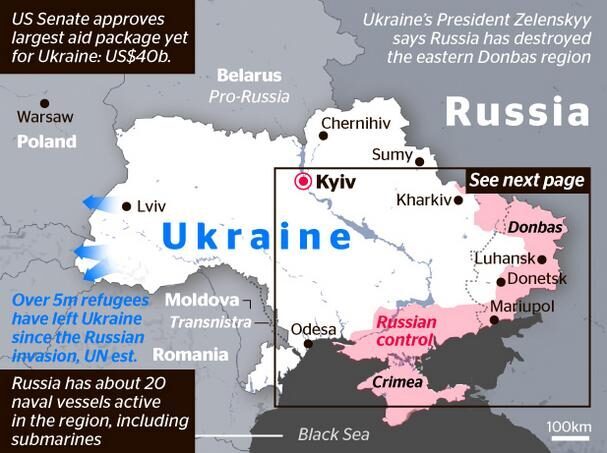
Russia invaded Ukraine on February 24 (local time) claiming its "special military operation" would remove anti-Russian neo-Nazi elements entrenched in Kyiv's institutions of state and protect Russian-speaking populations in the breakaway republics of Donetsk and Luhansk after eight years of civil war. It wants a security guarantee its neighbour won't join Nato, which it views as a hostile threat to its borders.
Comment: It seems nuclear war is unlikely, but there are a variety of catastrophes that could be just as devastating: Ex-president issues Russian food exports warning, blames looming shortages on 'cosmic cretinism' of the West
New Zealand is also inadvertently helping to arm neo-Nazi militias and far-right groups in Ukraine with modern weapons, which could be used elsewhere, he said.
Comment: There's nothing 'inadvertent' about it; as was the case with the West using the terrorist proxy army in Syria in its attempts to overthrow Assad.
Former minister in Helen Clark's Labour government, Matt Robson, echoed his concerns, and called for an informed debate in Parliament over the country's increasing involvement in the conflict.
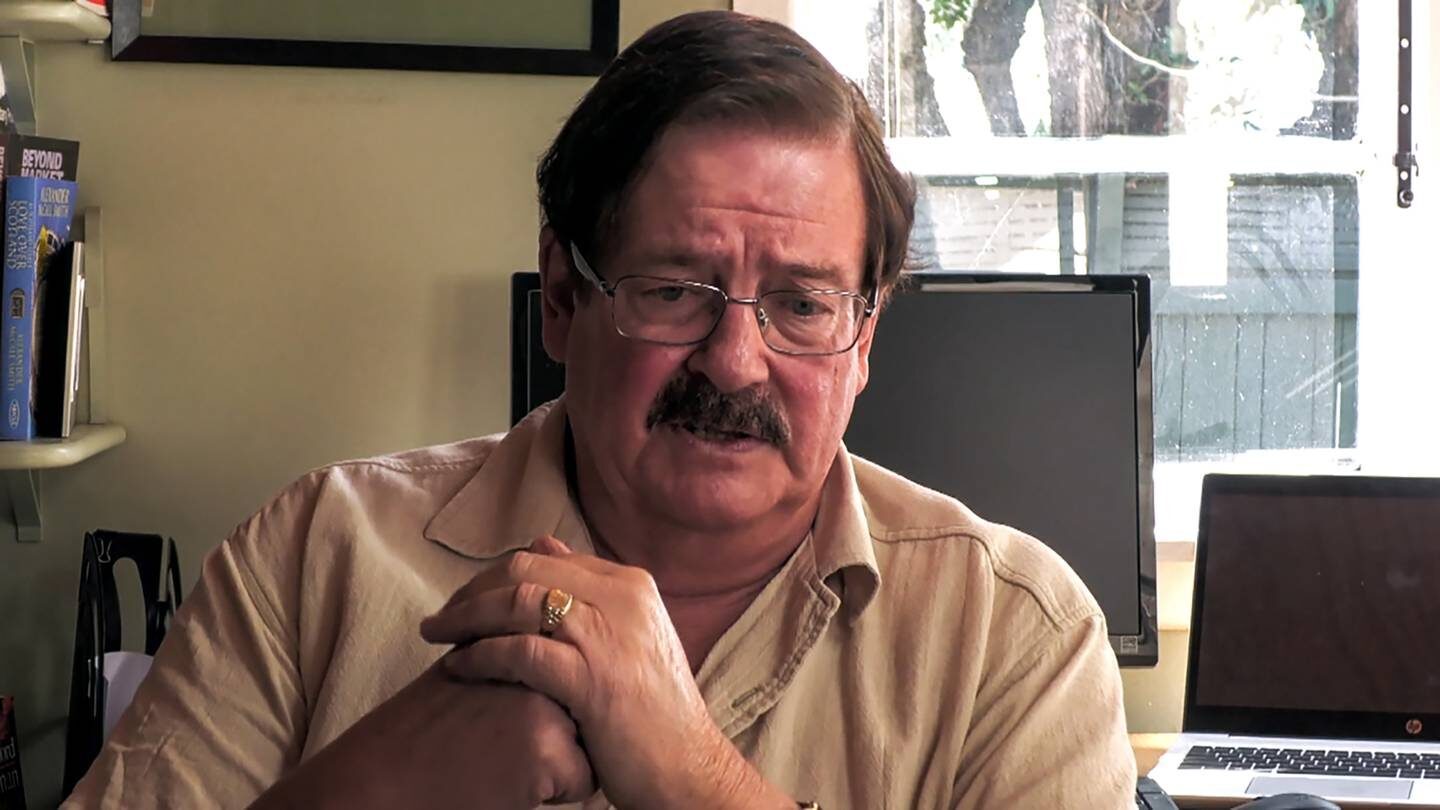
Former Labour MP Matt Robson.
NZDF personnel had already been deployed to the United Kingdom and Europe to provide intelligence, liaison, transportation and logistics backing to Nato's support of Ukraine.
New Zealand has given the UK $15.7 million to purchase military equipment for Ukraine and commercial satellite access for Ukrainian Defence Intelligence. The government has also targeted Russia with sanctions and has established an across-agencies Russia Sanctions Unit.
The country's military involvement had not been debated in Parliament and the Cabinet's use of discretionary powers was of major concern, Smith said.
The US-led Nato alliance was now in a proxy war with Russia in Ukraine and New Zealand's involvement had huge implications, he added.
"My expectation is that the analysts that we've supplied are using intel from the spy planes that are flying around Ukraine and from satellites to provide targeting information to the Ukraine forces. We've made those decisions without any procedure as to how they would be authorised.
"We should not just be able to enter into war at the whim of the government of the day.
"The present situation is disastrous because it's removed any chance of a negotiated peaceful settlement and any chance of a continued independent policy."
Relationship with China
New Zealand's military intervention aligned it closer to US foreign policy, which did not bode well as tensions between China and the US increased in the Indo-Pacific, Smith said.
US President Joe Biden finished a seven-day visit to the region this week, meeting leaders of Quad nations India, Japan and Australia, where discussions where held on co-operation and ways of containing China's power and influence.
Comment: India hasn't agreed to 'contain' China in the same way that the vassals of Japan and Australia have.
China has accused the US of helping to create the crisis in Ukraine, ignoring Russia's security concerns after Nato expanded to eastern Europe, and of immorally "adding fuel to the fire while blaming others".
New Zealand's military response had signalled to China and others wanting to see a multipolar world under the United Nations that New Zealand backed a unipolar world, one where the US continued to write a rules-based world order in its own interests, Smith said.
The position risked having serious consequences for New Zealand-China relations and the economy, he added.
"We're being very stupid because we're betting on the wrong team. That's my worry. We didn't have to do that. We were doing quite well with a free trade agreement with China. We had good relations and that's all being sort of thrown away. We're still heavily dependent on China economically and we are much more vulnerable than we realise.
Comment: The extent of the establishment's desperation, arrogance, and wishful thinking are on full show in their proxy war in Ukraine, that they would even consider the same in China reveals just how dangerously deluded they've become.
"We've sanctioned Russia, so as far as Russia is concerned, we're an 'unfriendly country'. They're close allies with the Chinese, who are concerned about where we are going to fit in with this.
"My personal view is the centre of the world is shifting to Asia ... so we should be focused on that. The line that 'we can talk to them and it doesn't matter what we do' - it's not like that anymore. They're looking at us and they're thinking 'where are you going to end up?' If you see it at the moment, you'd say, we're in bed with the Five Eyes countries, with the whiteys."
Threat of arming far right
Smith also said some of the billions of dollars worth of weapons being sent to Ukraine by Nato nations was falling into the hands of far-right extremist groups, who could use these to commit acts of terror in the future. He compared the situation with the Mujahideen in Afghanistan, which the US armed and trained to fight Russia in the 1980s, many of whom later morphed into jihadists committed to terrorism against the West.
Groups like the Right Sector and the Avoz Battalion - now part of the Interior Ministry's National Guard of Ukraine - were previously viewed by western media as dangerous neo-Nazis who trained far-right extremists from around the world.
Hundreds of Avoz soldiers last week surrendered to Russian forces after being dug in at the Avozstal steel works, after being lauded for their bravery in defending the city for months.
'Lack of balanced discussion'
Labour Party member and former associate foreign affairs minister, Matt Robson, said few people wanted to make such points, to avoid the accusation of being a fellow traveller of Russian President Vladimir Putin.
"I've been accused of that... But there's a risk of a third world war, a nuclear war, so politicians should speak out regardless," he said.
The former Progressive Party deputy leader has been a vocal critic of Nato expansion east towards Russia's borders, as well as New Zealand's role in the current conflict. He said Russia had legitimate security concerns and that there was an imperative to facilitate dialogue and a negotiated peace settlement that addressed these, as well as Ukraine's concerns.
The media and politicians had ignored the historical context of the conflict, Robson said. He pointed to US involvement during the Maidan protests in 2014, which turned bloody as neo-Nazi elements helped topple the elected government of Viktor Yanukovych, who was friendly with Russia, leading to further polarisation and political repression in the eastern region.
"I don't believe that there has been balanced discussion in our Parliament, or the government and Cabinet, on what's happening with the complex situation of Ukraine," he said.
"For instance, the Minsk Agreements of 2015 were very important. These set out a policy of autonomy for the Donbas regions, the Russian-speaking parts of Ukraine ... a peace process, a ceasefire, and that was undermined before President [Volodymyr] Zelenskyy, by the various Kyiv governments, who refused to follow through on their commitment under this, and by the United States. The neo-Nazis threatened Zelenskyy, who then accommodated them.
"I've not seen evidence that one single member of our Parliament or in Cabinet particularly, has read these agreements, or studied the complexity of it."
Comment: It's not in the personal interests of current politicians to do any research of the kind, unless they're prepared to stay quiet, or lose their job; that's why we're primarily reading criticism by former politicians.
Robson said the US had effectively turned Ukraine into a quagmire and lured Russia into it, and that talks were needed to extricate the neighbouring countries.
"You're not going get a negotiated settlement if you're supporting Nato countries adding more and more and more weapons, advanced weapons, to the conflict," he said.
"My position and growing position in the Labour Party membership, is that New Zealand has joined the war party, not to get a negotiated settlement, but to use the Ukrainians for the almost stated policy of the United States, which was like the policy in Afghanistan, not to win the war as such, but to bleed Russia."
Mahuta - We back Ukraine's sovereignty
RNZ sent questions about New Zealand's role in the conflict to the Department of the Prime Minister and Cabinet, which were redirected to the Ministry of Foreign Affairs and Trade.
Foreign Minister Nanaia Mahuta in a statement said New Zealand had been clear and consistent in its support for Ukraine's territorial integrity and sovereignty.
"Russia's actions are a flagrant attempt to undermine international law and the international system on which New Zealand relies," she said.
"It has misused its veto in the Security Council, ignored the will of the United Nations General Assembly, and ignored the binding decision of the International Court of Justice ordering it to cease its invasion of Ukraine.
"We have joined the international community in applying sanctions as a means to severely limit the Putin regime's ability to finance and equip the war in Ukraine and to influence people with power in Russia to break their support for the war."



The men in Ukraine are family men whose family are returning home. This implies a strong resettlement and a strong draw-down on the available fighters which is why President Zelensky plans to use ariel bombardment to carry on the war.
Even tho the US has a record of using air destruction for months at a time, even in the densest cities, the use of Ukrainian ariel bombing will create massive destruction over and above what exists from the Russian occupation.
Basically, the land between the Deneiper and the Russian border will be a no-man's zone.
Pres Zelensky has destroyed his country.
Isn't that really what war is? A choice between what level of destruction will be the future?