
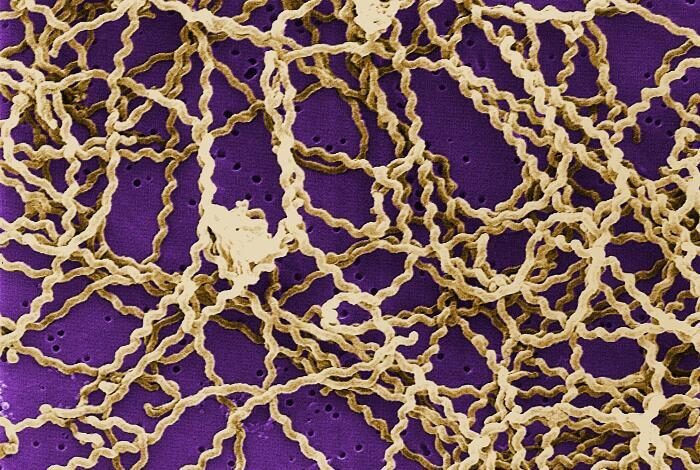
© CDC/ Rob WeyantThis scanning electron micrograph (SEM) depicts a number of Leptospira sp. bacteria atop a 0.1. µm polycarbonate filter.
Leptospires are long, thin motile spirochetes that may be free-living or associated with animal hosts and survive well in fresh water, soil, and mud in tropical areas. Organisms are antigenically complex, with over 200 known pathogenic serologic variants. Molecular taxonomic studies at CDC and elsewhere have identified 13 named and 4 unnamed species of pathogenic leptospires. Leptospirosis causes a wide range of symptoms, and some infected persons may have no symptoms at all. Symptoms of leptospirosis include high fever, severe headache, chills, muscle aches, and vomiting, and may include jaundice (yellow skin and eyes), red eyes, abdominal pain, diarrhea, or a rash.
Leptospires are long, thin motile spirochetes that may be free-living or associated with animal hosts and survive well in fresh water, soil, and mud in tropical areas. Organisms are antigenically complex, with over 200 known pathogenic serologic variants. Molecular taxonomic studies at CDC and elsewhere have identified 13 named and 4 unnamed species of pathogenic leptospires. Leptospirosis causes a wide range of symptoms, and some infected persons may have no symptoms at all. Symptoms of leptospirosis include high fever, severe headache, chills, muscle aches, and vomiting, and may include jaundice (yellow skin and eyes), red eyes, abdominal pain, diarrhea, or a rash.
According to Fijivillage news website, Fiji's Permanent Secretary for Health James Fong said on Tuesday that of the 19 deaths, 16 were recorded in the western part of Fiji, which has a population of around 900,000.
He confirmed that there is an outbreak of leptospirosis in the western and central part of the island nation, an increasing trend of leptospirosis in the north and dengue fever in the western part of the nation.
The clinical and epidemiological data indicate that males and young adults aged 20-49 years are high-risk groups and young males are overly represented in cases and severe outcomes, he added.
Leptospirosis is caused by bacteria that enter the body through skin or eyes, nose or mouth, especially when the skin is broken. Drinking contaminated water may also cause infection.
Outbreaks of leptospirosis are usually caused by exposure to contaminated water such as floodwaters.
In the Pacific island countries, the summer season increased people's risk of contracting leptospirosis due to higher rainfall and frequent flooding.





Comment: See also: