

© Cécile Engrand/Jean DupratElectron micrograph of a Concordia micrometeorite extracted from Antarctic snow at Dome C.
An international program conducted for nearly 20 years by scientists from the CNRS, the Université Paris-Saclay and the National museum of natural history with the support of the French polar institute, has determined that 5,200 tons per year of these micrometeorites reach the ground. The study will be available in the journal Earth & Planetary Science Letters from April 15.
Micrometeorites have always fallen on our planet. These interplanetary dust particles from comets or asteroids are particles of a few tenths to hundredths of a millimeter that have passed through the atmosphere and reached the Earth's surface.

© https://lh5.googleusercontent.com/p/AF1QipNQYTyh16a7CcovREt-9kq1gIGf3CWoTXZNnRF9=w600-h321-p-k-noConcordia Station, Antarctica
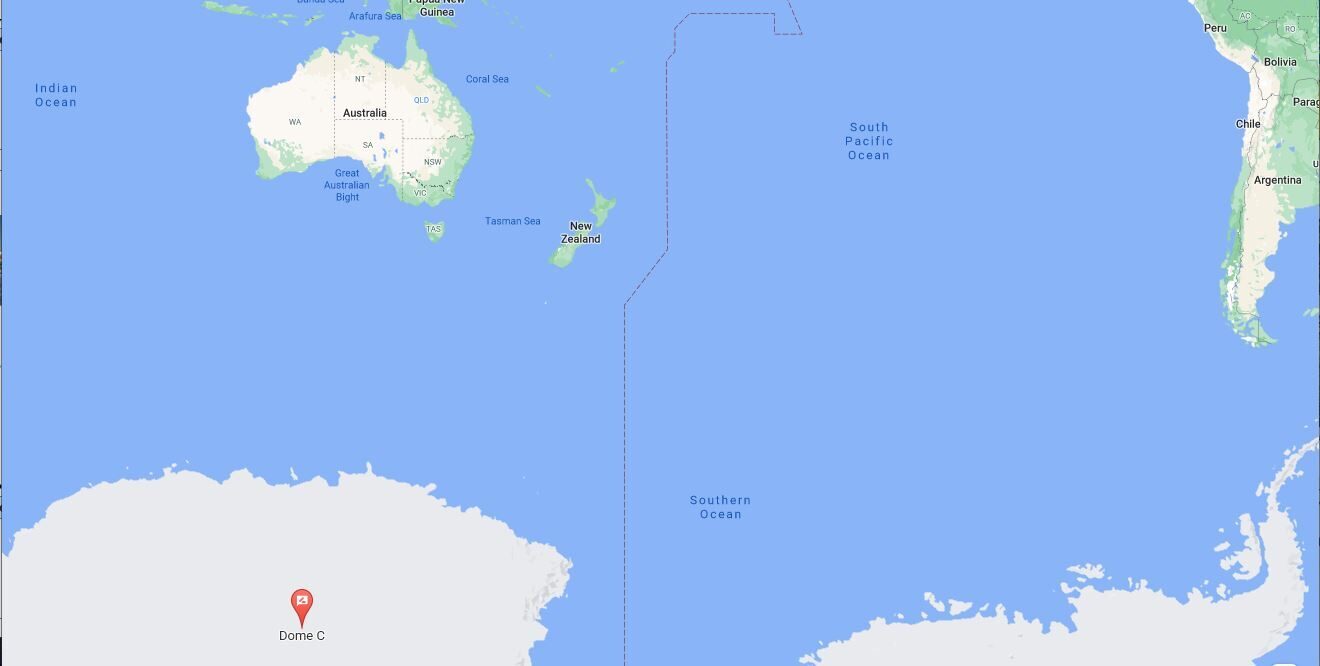
© Google Maps
If these results are applied to the whole planet, the total annual flux of micrometeorites represents 5,200 tons per year. This is the main source of extraterrestrial matter on our planet, far ahead of larger objects such as meteorites, for which the flux is less than ten tons per year.

© Jean Duprat/ Cécile Engrand/ CNRS PhotothèqueCollecting micrometeorites in the central Antarctic regions, at Dome C in 2002. Snow sampling.
This is valuable information to better understand the role played by these interplanetary dust particles in supplying water and carbonaceous molecules on the young Earth.
More information: J. Rojas et al. The micrometeorite flux at Dome C (Antarctica), monitoring the accretion of extraterrestrial dust on Earth, Earth and Planetary Science Letters (2021). DOI: 10.1016/j.epsl.2021.116794






Last time I checked, metal filings collect at the poles of a magnet, not along the sides. Estimating the number of filings all over the magnet cannot be done if you are only looking at the poles. Same with space debris hitting any planet with a well defined magnetic field