
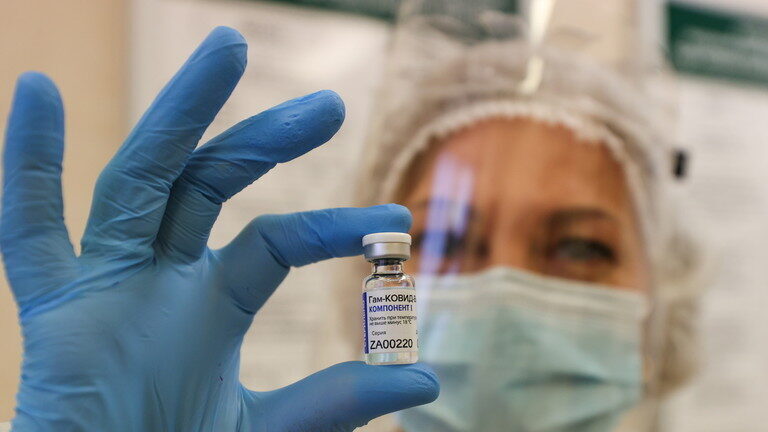
© Reuters /BelTA/ Andrei PokumeikoSputnik V (Gam-COVID-Vac) vaccine
"As the European Union unrolls proven versions of the coronavirus vaccine, Hungary's PM Orban, apparently to score political points with Putin, imports 6,000 doses of the Sputnik vaccine," he tweeted on Tuesday, commenting on a Hungary's receiving the modest shipment of the Russian inoculation for trials earlier this week.
Comment: Comparatively Russia's vaccine has a longer and stronger track record and has not needed to be rushed through using 'emergency' legislation. But it's a good thing that HRW is showing its true colours to the general public.
Roth has run the George-Soros funded institution for 27 years, and his Twitter feed suggests his views strongly align with the concerns of his Hungarian-born sponsor.
Hungary is one of about 50 countries that have expressed interest in the Sputnik V coronavirus vaccine. Some of them, including Argentina, Venezuela and Belarus, have already received first batches of the drug.
Roth opposing the Russian jab to the "proven" versions adopted by the EU has drawn condemnation from The Grayzone editor Max Blumenthal, who accused the long-time HRW executive of running "a disinfo campaign" against the Russian vaccine, that has shown roughly the same efficacy as its western counterparts.
"The vaccines produced by Western Big Pharma are no more "proven" than the Sputnik V. Both demonstrate 90%+ efficacy levels in trials," he noted.
Mark Ames, the host of the popular War Nerd podcast, accused Roth of "openly subverting trust in Russia's Covid vaccine."
Other commentators echoed the sentiment, some jokingly appointing Roth a spokesman for rival Moderna and Pfizer jabs.
In a Facebook post on Tuesday, Hungary's Foreign Minister Peter Szijjarto defended the move to purchase the vaccine, noting that Russian health authorities provided Hungarian doctors and epidemiologists full access to laboratories where the jab is being manufactured, and that the members of the delegation were more satisfied with the tour, speaking about the "state of the art technology" and "the highest level of expertise" by the Russian researchers upon return.
Szijjarto lamented, however, that the opinion of the medical professionals did not placate the nay-sayers, seeking to politicize the issue.
"This is an extremely irresponsible thing," the minister said, pointing out that Hungary has for decades been taking advantage of Russia-made inoculations.
"The vast majority of Hungarians have been vaccinated with Russian vaccines since childhood, as all our vaccines used to come from there," he said.
As an EU member, Hungary has to wait for a medicine to be greenlit by the European Medicines Agency (EMA), responsible for approving new drugs and vaccines across the bloc before it can put it to use. The Amsterdam-based body has so far given its seal of approval only to one vaccine, developed by Pfizer and BioNTech.
The watchdog is set to review the US-based Moderna vaccine's application by January 6, instead of the initial 12 January deadline, after it faced accusations of dragging its feet on the urgent issue.
At the same time, EMA's executive director Emer Cooke said that if countries believe that "the benefits" of a certain vaccine, not approved by the EU, outweigh the risks then they are "free to allow the temporary use of a product without a license."
'Blackmail & ultimatums': Russian FM Lavrov says it's now up to Western countries to put an end to their Covid-19 'vaccine wars'
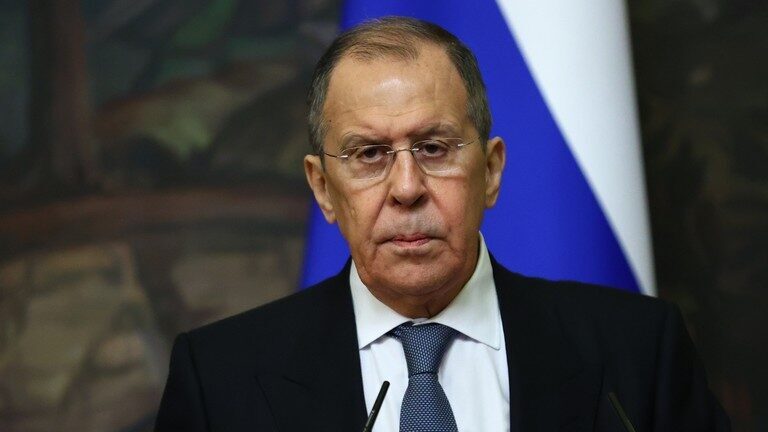
© Sputnik / Press service of the Russian Foreign MinistryFILE PHOTO.
Speaking to Moscow's TASS news service on Wednesday, the veteran diplomat was asked whether 2021 would see a "vaccine war" between Russia and other countries working to roll out their jabs. He argued that Russia believes "it is only possible to effectively solve large-scale cross-border problems by uniting on the principles of solidarity."
By contrast, he said, "Western states are trying not only to politicize the humanitarian theme of the fight against coronavirus infections, but also to take advantage of the pandemic to punish governments they don't like."
Lavrov was positive about "friendly co-operation" fostered between Russia and other nations, including the CIS countries, the Eurasian Economic Union, Brazil and China, despite the difficult circumstances. Acknowledging that ties with states like the UK, the US and the EU had suffered over the same period, he added that "we remain open to dialogue with Western colleagues. Of course, on the understanding that they will give up on telling us what to do, along with their blackmail and ultimatum policies."
At the same time, the diplomat expressed hope that, with US President Donald Trump's departure in January, there was scope to revive bilateral talks on arms controls. Speaking about the New START Treaty that limits the missile capabilities of the world's two largest nuclear powers, Lavrov said it was worth "waiting for the next administration to determine its approach" before writing off the agreement. Unless renewed, the pact is due to expire early next year, and there are fears that its lapse would amount to a starting pistol for a new global arms race.
While it would be tempting to think that 2020 has brought chaos to Russia's neighborhood, with the flames of Ukraine's 2014 Maidan still burning and a fresh conflict between Azerbaijan and Armenia, Lavrov was upbeat about relations in the region. "We expect that the situation in the space of the former USSR will be generally stable," he said, citing the Russian-brokered ceasefire in Nagorno-Karabakh, hopes for Moldova's new presidency and fresh elections due in Kyrgyzstan.
The foreign minister added that the situation in Belarus, which has been paralyzed by waves of mass protests since the country's disputed presidential elections over the summer, would also resolve itself. He added that "the fate of Belarus will be decided by the Belarusian people and their legitimate representatives, not by impostors and their Western organizers."


Comment: Yet another reminder that, for some entities, this sadistic, manufactured crisis is not really about a virus, it's a power grab.
See also: