

© Katie Orlinsky, Nat Geo Image CollectionA team of sled dogs race on the Herbert Glacier, near Juneau, Alaska. This group of dog breeds has not interbred with wolves, a surprising discovery.
Scientists know that dogs likely evolved from Eurasian wolves, but exactly when or where that transformation took place is a matter of great mystery. To better understand the genetics of sled dogs and their place in the world, scientists sequenced the genome of a dog from Siberia's Zhokhov archaeological site, dating to around 9,500 years ago.
"I was actually anticipating that we would find some sort of precursor of domestic dogs," says lead author Mikkel-Holger Sinding, a paleogeneticist and Ph.D. student at the University of Copenhagen in Denmark.
Instead, he and his colleagues found today's sled dogs and the Zhokhov dog descended from the same branch. "It means that all dogs must have diversified earlier than this," he says.
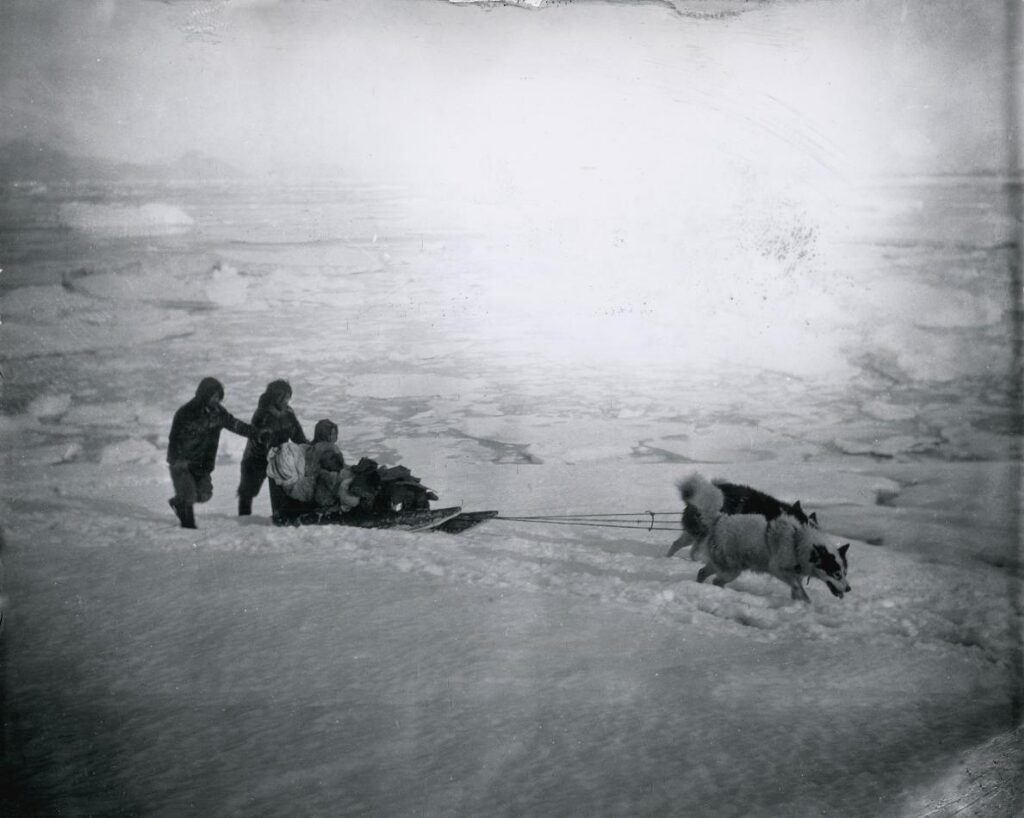
© Robert E. Peary, National GeographicInuit people and their dogs travel by sledge. The photo was first published in Northward Over the Great Ice, explorer Robert E. Peary’s 1898 account of his trips to Greenland. In 1909, he became one of the first to reach the North Pole.
The analysis, which compared genes between ancient and modern dog sled dogs with those of other breeds, also revealed all sorts of fascinating and unique adaptations to Arctic life, such as the ability to thrive on a high-fat diet.
"One of the biggest differences between a brown bear and a polar bear is that the polar bear has a specific genetic adaptation for eating lots of blubber. And we see almost precisely the same solution in [sled] dogs," Sinding says.
This makes logical sense, as the Inuit and Thule peoples of the Arctic and their working dogs have survived for thousands of years by hunting blubber-rich marine mammals, like seals and whales.
Comment: Notably most of humanity thrived on meat and fat until recent times, and in turn health quality has plummeted.
The scientists also compared the Zhokhov dog's DNA with an even more ancient canid — a Siberian Pleistocene wolf that lived about 33,000 years ago. Together with genomes from modern wolves and domesticated dogs, the team revealed that, remarkably, sled dogs haven't interbred with gray wolves in the past 9,500 years, unlike other breeds. This is especially strange, given that indigenous peoples have documented dog-wolf pairings. The fact that traces of wolf genetics don't show up in the Greenland sled dogs' genome suggests that either hybrids didn't survive well, or that there was some reason humans did not breed them.
The research also showed that sled dog genomes contain mutations related to their cold environments, such as running and pulling sleds in low-oxygen conditions.
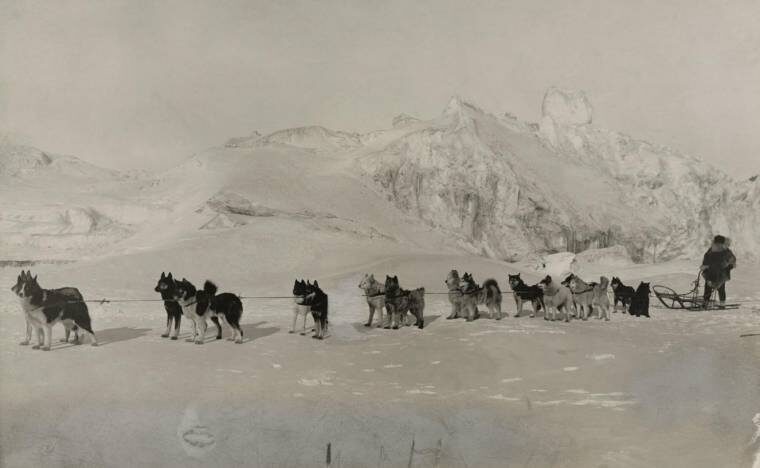
© Lomen Brothers, National GeographicA driver poses with a dog team in this photo from a 1919 issue of National Geographic (location unknown).
Another mutation allows sled dogs to highly regulate body temperatures, says Ostrander — necessary not only to survive the cold, but to cool down after a period of exertion.
In West Yellowstone, Montana, sled dog mushers of all ages gather to compete in the Rodeo Run, a two-day race. These sled dogs aren't your typical Siberian husky — some have been crossed with other breeds to go farther and faster.
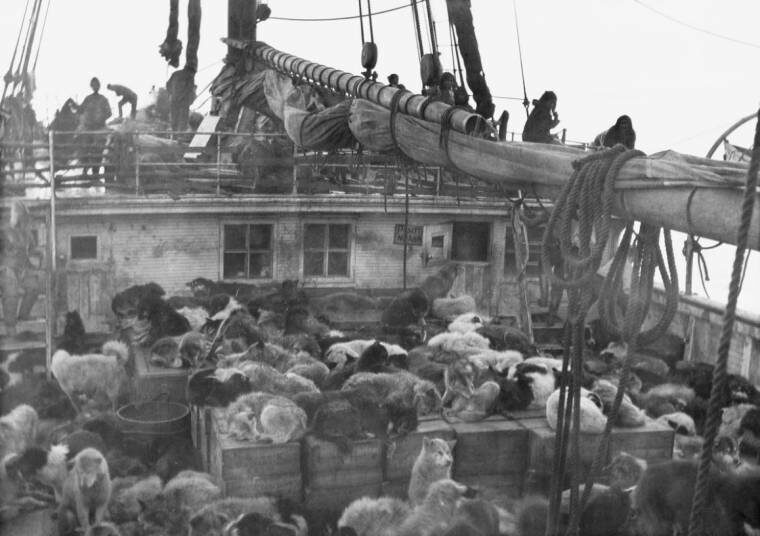
© Robert E. Peary, National GeographicIn 1908, explorer Robert E. Peary set sail for the North Pole with 246 dogs. “I shall never forget the frightful noise, the choking stench and the terrible confusion,” wrote the ship’s captain, Bob Bartlett.
Owning a happy sled dog
Curiously, such traits are still present in today's pooches, which provides useful guidance for pet owners — particularly those with purebreds.
"In addition to all the geographic and evolutionary connections they make [in the study]," Ostrander says, "the connection to how we should be thinking about our modern pets is really important."
For instance, based on the animals' genes, Sinding advises sled dog owners to avoid starchy, high-carb diets. "Give them protein and fat," he says. "That's what they developed for."
Comment: A raw diet of meat with fat is actually the healthiest diet for all dogs: 'Vegetarian' dog embarrasses owner after it picks meat on live TV
Likewise, the study shows these dogs evolved to move, not "sit around in an apartment all day," Ostrander says, suggesting lots of exercise and task-based play is crucial.
Pet owners might also want to consider climate before choosing a new pup, she says. Sled dogs get overheated easily and are more lethargic in hot or humid environments, but when you "take them into the snow, you see how happy they are," she says. (Read about what makes a good sled dog.)
Next up, Sinding wants to unravel the mystery of what happened in canid evolution between the sled dogs of Zhokhov and the dogs of present day.
"There's a 9,500-year gap," he says. "There's so much history between these two points that we want to investigate."



R.C.