
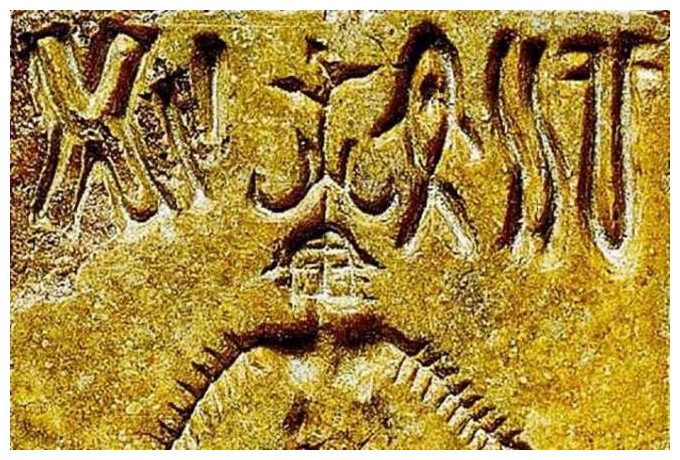
© Financial ExpressIn the 1920s, when the Harappan civilisation first came into limelight owing to the efforts of the then leading archaeologists of British and Indian origin, it was little expected that the civilisation would prove to be a mystery for a such a long time.
Of course, there are other scripts that remain elusive to the human minds, such as the texts of the Olmec and Zapotec (Mesoamerican cultures prior to the Mayans taking over), Proto-Elamite (earliest writings of ancient Persia or modern-day Iran), among few others; but the prize money stands only for deciphering the Harappan script. So, if one wants a name in the academic world, and can withstand the constant eagle-eyed surveillance and inspections by the experts of one's works, what can be better than to take up the challenge of reading the scripts of Harappan civilisation!
In the 1920s, when the Harappan civilisation first came into limelight owing to the efforts of the then leading archaeologists of British and Indian origin, it was little expected that the civilisation would prove to be a mystery for a such a long time. One of the world's oldest civilisations, the Harappan settlements were found scattered across widespread areas adjoining the Sindhu- Ghaggar river belts.
The excavations from various sites revealed a highly advanced civilisation with large well-planned brick-laid fortified cities, advanced drainage system, houses with many rooms and sometimes double-storeyed, separate bathroom and toilets, and a sophisticated system of interconnected tanks and reservoirs for elaborate water management. However, despite the thousands of archaeological artefacts excavated from more than a thousand settlements, a wholesome perspective of the civilisation still remains elusive. This is because unlike the Mayan scripts and Egyptian hieroglyphs, Harappan scripts are still undecipherable.
The pre to proto historic culture of Harappa that once occupied a large part of North-Western India and modern-day Pakistan (approximate time range being 5,500 BCE to 1,500 BCE) have yielded many (in thousands, to be precise) short inscriptions, most of which have just 4 or 5 symbols. While there are many claims to have deciphered it, until now there has been no consensus on how to read the signs. Almost as many as 600 Harappan symbols have been identified from various tablets, seals, ceramic wares, metals objects, and various other artefacts, which includes a signboard like an object that perhaps once hung over the inner citadel gates of Dholavira. The majority symbols are seen engraved on small stone seals (one-inch square), above images of animals (such as bull, elephant, or unicorns) and humans.



Reader Comments