

OPPOSITE ENDS: The case of award-winning journalist and publisher Julian Assange held in UK Belmarsh Prison awaiting possible extradition to the US for espionage charges – contrasts with recently released Russian opposition journalist Ivan Golunov.
Jeremy Hunt was referring to the case of Ivan Golunov, the Russian journalist who writes for the Meduza Project, and who was arrested on 7th June with charges of possessing illegal drugs; charges that were subsequently dropped due to a lack of evidence.
The case caused such a public outcry in Russia, where it was widely believed the charges were false, that undoubtedly impacted on the decision to end Golunov's detention.
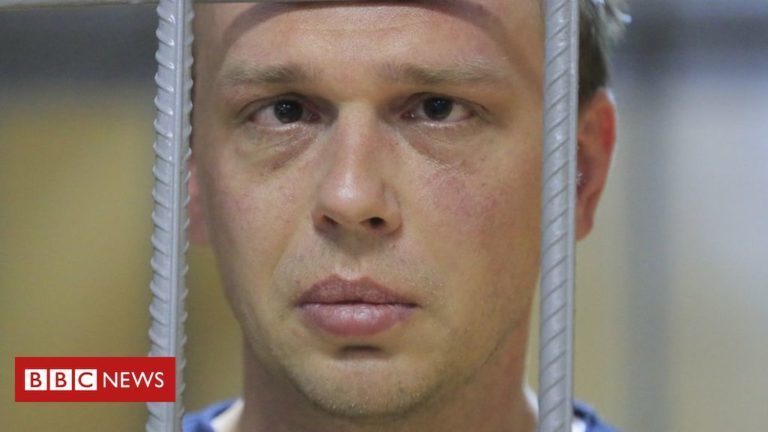
© BBC NewsMEDIA FREEDOM: Golunov’s arrest dominated western media headlines and politicians’ feeds over this past week
Thanks to the complicity of the current Ecuadorian and British governments in US plans to force Assange to stand trial, Assange is now to be extradited for his supposed role in the leaking of state documents. Documents, it is worth reminding the reader, that were supplied to Assange by US soldier Chelsea Manning and which exposed the dastardly nature of the US war in Iraq, and its indiscriminate killing of Iraqi civilians. Other important files revealed the slaughter of hundreds of civilians in Afghanistan, and the corruption at the heart of western-backed Tunisian dictator Zine al-Abidine Ben Ali; evidence which undoubtedly escalated his downfall. But far from being held up as a beacon of free speech amongst his fellow journalists for exposing the truth about state-sponsored crimes, the former Wikilieaks editor has already been 'sentenced' by those who one would expect to defend him, and the cause of journalistic freedom. With the exception of such eminent writers such as John Pilger, who said Assange's case is mainly about 'shutting down dissent and investigative journalism' and Christopher Hedges who claims it could set a 'terrifying legal precedent', Assange has been accused of hiding from the truth and told he should have faced up to the charges long ago.
On the other hand, the same western media which derides Assange carries the torch for Russian journalists such as Ivan Golunov who are equally held up to be victims of freedom of speech. We are repeatedly learning about apparent breaches of journalistic freedoms in Russia, and yet the most stark attack on our democracy to date - the persecution of Julian Assange - is packaged to the public in such a way that we are also persuaded to denounce this 'traitor' who 'hid from justice' in the Ecuadorian embassy. The hypocrisy could not be more blatant.
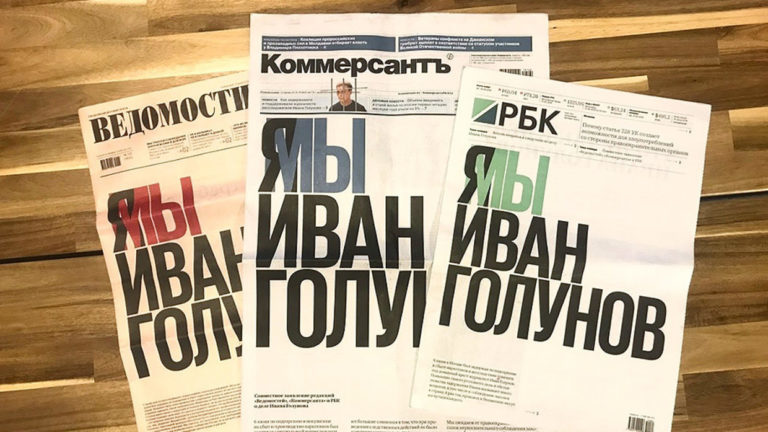
© Elena Medvedeva / RT
We have therefore approached a 1984 moment in the Anglophone world where we must ask ourselves if freedom of speech still exists, and possibly, if it ever did exist, or was it just an illusion of a well-oiled western propaganda machine. The case of Julian Assange, in the context of a society all to ready to highlight press freedom issues abroad, has really brought home the hypocrisy of western policies. How can we continue to lecture other nations on freedom and democracy if we do not implement it faithfully ourselves? And furthermore, which direction are we heading in? Through our pursuit of liberal values and democracy, are we at risk of becoming equally or even more authoritarian than the states we are accusing of muffling the press?
Assange therefore marks a critical juncture in our history, and should be seen as a much-needed wake-up call.
***
Author Johanna Ross is a freelance journalist and a special contributor to 21WIRE. She is based in Edinburgh, Scotland.



Comment: See also: