RFE/RLMon, 10 Jun 2019 20:21 UTC
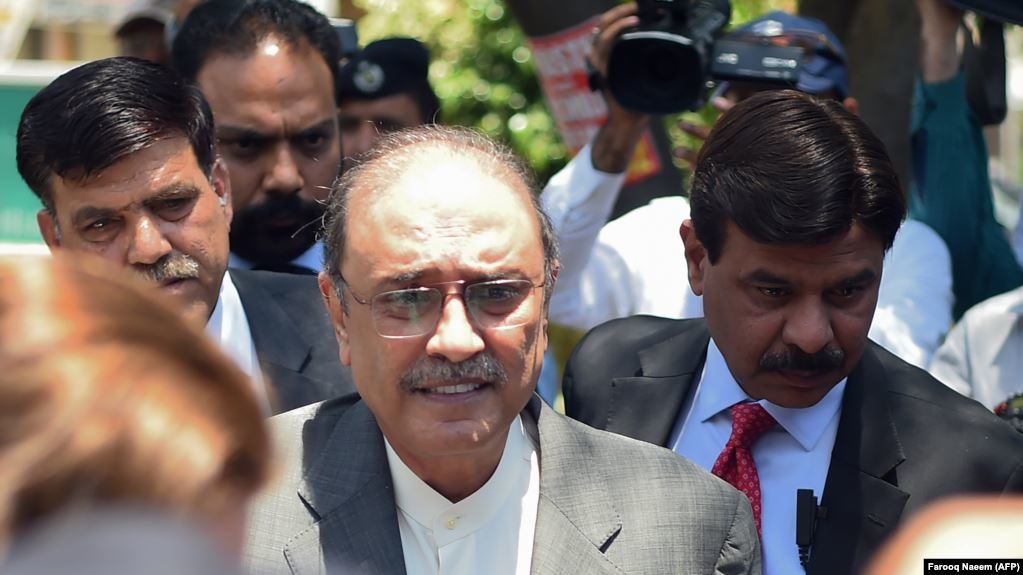
© Farooq Naeem/Agence France-PressePakistani authorities have arrested former President Asif Ali Zardari on corruption charges.
A team from the Pakistani anti-corruption agency, the National Accountability Bureau (NAB), arrested Zardari at his residence in the capital on June 10, after a court rejected his request for an extension of his bail in a money-laundering case.
The Islamabad High Court rejected a bail plea by Zardari, co-chairman of the opposition Pakistan Peoples' Party (PPP), and his sister Faryal Talpur.
No arrest warrant has been issued for Talpur so far, reports said.
The NAB accuses Zardari and Talpur of transferring 150 million rupees ($1 million) to their private company through fake bank accounts.
Zardari and Talpur reject the charges against them.
The NAB has arrested several politicians on corruption charges since Prime Minister Imran Khan took office last year.
The Supreme Court removed Sharif's predecessor, Nawaz Sharif, from office over corruption allegations.
Zardari was elected president in 2008, after leading efforts to remove military ruler Pervez Musharraf, and served until 2013.
Comment: Zardari's legal troubles are varied and long-standing. One example from 2012
Pakistan's Top Court Convicts PM of Contempt
The source of the current conflict is a graft case against President Asif Ali Zardari that involves kickbacks he and his late wife, former Prime Minister Benazir Bhutto, allegedly received from Swiss companies when Bhutto was in power in the 1990s. They were found guilty in absentia in a Swiss court in 2003.
Zardari appealed, but Swiss prosecutors ended up dropping the case in 2008 after the Pakistani government approved an ordinance giving the president and others immunity from old corruption cases that many agreed were politically motivated.
The Pakistani Supreme Court ruled the ordinance unconstitutional in 2009 and ordered the government to write a letter to Swiss authorities requesting they reopen the case against Zardari. Gilani has refused, saying the Pakistani constitution grants the president immunity from criminal prosecution while in office.
It is far from clear whether Swiss authorities would pay any attention to such a letter. A Swiss prosecutor said last year that Zardari had immunity, and there are also statute of limitations issues. The refusal by the government to send the "Swiss letter" is in large part political. It doesn't want to be seen initiating a graft case against Zardari, especially one that involves his ex-wife, Bhutto.
Government loyalists have acccused the chief of the Supreme Court of having a feud against Zardari. Supporters of the judiciary say it is trying to uphold the law in a country where the country's politicians have engaged in massive corruption for years.



Comment: Zardari's legal troubles are varied and long-standing. One example from 2012
Pakistan's Top Court Convicts PM of Contempt