
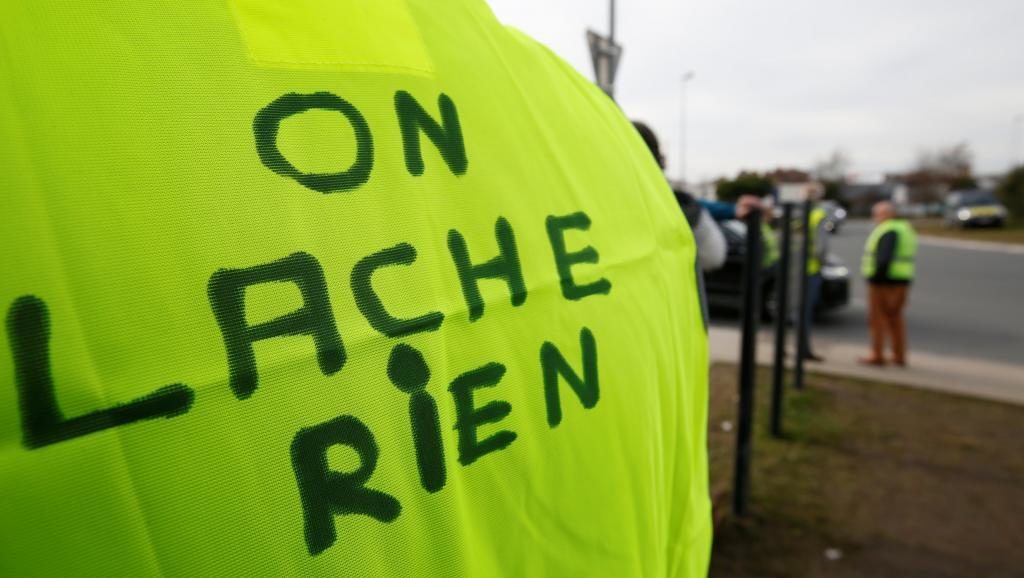
© Reuters/Regis DuvignauProtesters wearing yellow vests occupy a roundabout in Sainte-Eulalie near Bordeaux
President Emmanuel Macron sought to appease Yellow Vest demonstrators, offering them concessions after weeks of massive protests. A monthly minimum wage hike by €100 ($113) and tax decreases for the poor among them.
But Veronique le Floch, Secretary General of 'Coordination rurale' (Rural Coordination), a labor union of French farmers, told RT France Macron had only embraced wage earners but failed to deliver a similar promise to those employed in agriculture.
"We have nothing to do with minimal wage as we don't talk working overtime because it's all unclear when you work 70 hours a week," le Floch railed at Macron for neglecting "the plight of agriculture" and not considering the real income of people residing in rural areas.
"He forgot [to say] that every second farmer lives on less than 365 euros ($415) a month, that a farmer's pension is under the social benefits standards," the union head stated.
According to le Floch, farmers spend as much as half of their income on various taxes, including the tax on compulsory social insurance, the land tax and the income tax. "Even if you make no income, you still have to pay those taxes," she explained.
Macron's measures met an equally cold response from the French opposition and the general public.
The Yellow Vest rallies against the new taxes, which were expected to lead to fuel price hikes, snowballed into a nationwide protest campaign in a matter of weeks. Major clashes between police and protesters also took place, reaching levels of violence unseen in France for decades.


Comment: It seem that Macron's actions are being orchestrated behind the scenes, and interested only in blunting the the most vociferous protests, which are in the big cities. France's economy is heavily weighted to farming. It contains one-third of all agricultural land within the EU. A leader who was truly concerned with citizen welfare would never have made such a blunder.