
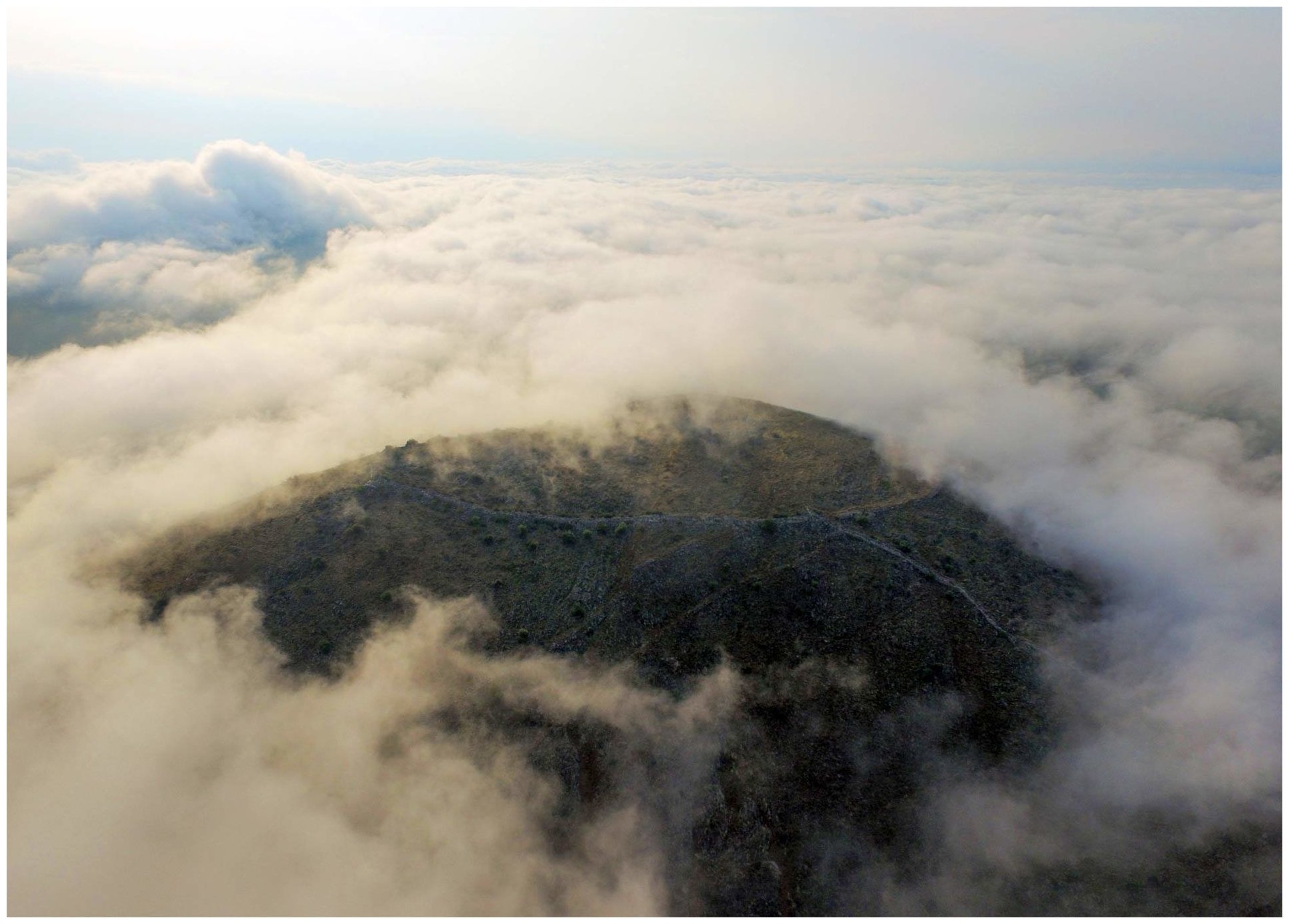
© Swedish Institute at Athens / Ephorate of Antiquities of Karditsa/Hellenic Ministry of Culture and SportsThe city’s acropolis is barely visible during a cloudy day on the Thessalian plains.
The archaeological remains can be dated to several historical periods and are scattered on and around Strongilovoúni, an isolated hill towering 705 feet (215 m) above the vast plains of Western Thessaly.
"Most striking of the visible remains at the site are the well-preserved fortifications, at points still 8 feet (2.5 m) high, but the lower slopes below the hill show clear indications of being the location of an extensive urban settlement, now covered by silt and sediment from the nearby river Enipeas," the archaeologists said.
Rönnlund and his colleagues completed the first field season during two weeks in September 2016.
"We found a town square and a street grid that indicate that we are dealing with quite a large city," Rönnlund said.
"The area inside the city wall measures over 40 hectares."
The team also found ancient pottery and coins that can help to date the city.
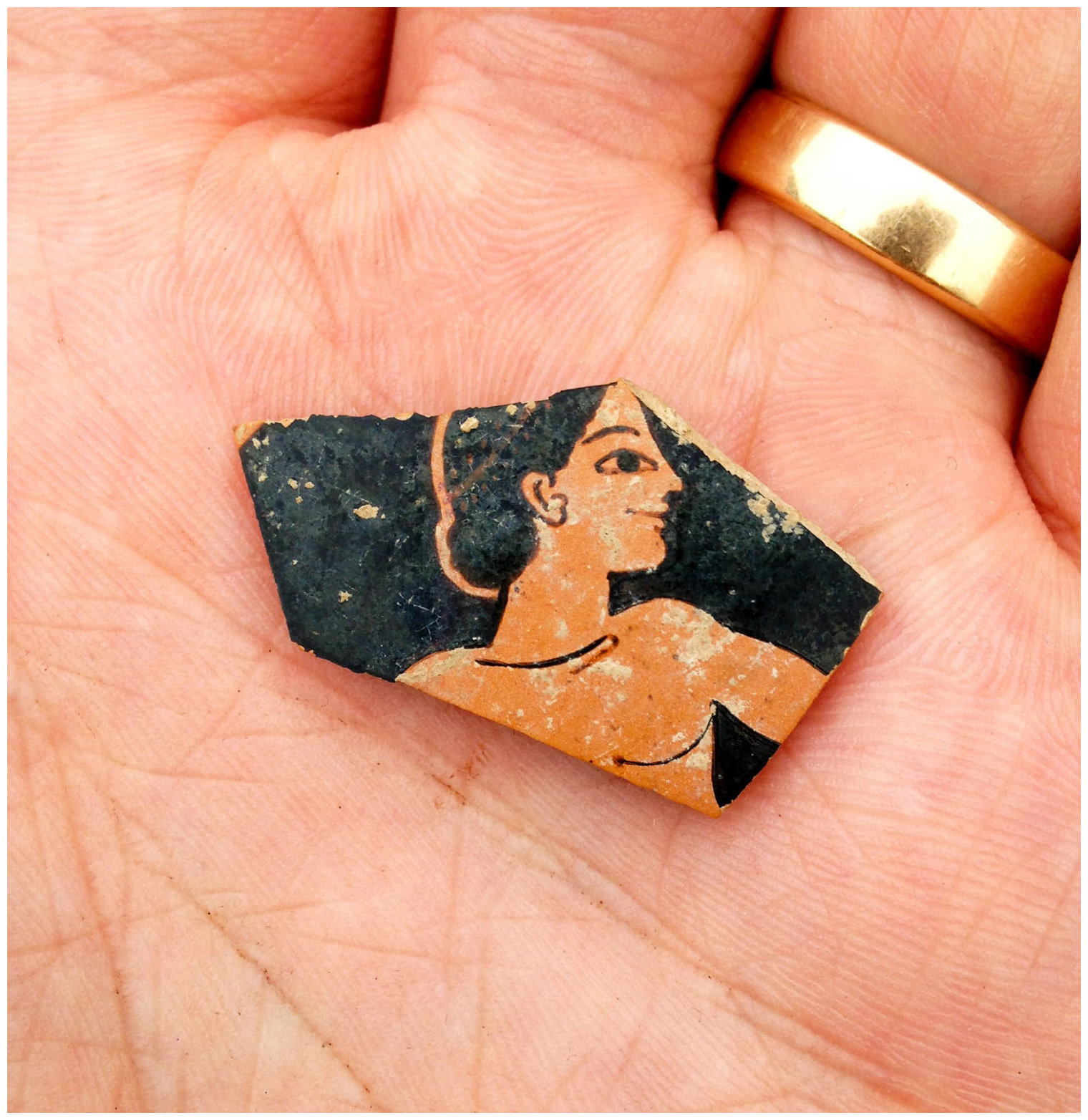
© Swedish Institute at Athens / Ephorate of Antiquities of Karditsa / Hellenic Ministry of Culture and SportsFragment of red-figure pottery from the late 6th century BC, probably by Attic painter Paseas.
"The Strongilovoúni hill is hiding many secrets," he added.
"Our ambition is to avoid excavation and instead use methods such as ground-penetrating radar, which will enable the team to leave the site in the same shape as it was in when they arrived."
"The success of this approach is evident from the results of the first field season."



At this writing the IMF/World Bank are trying to figure out how to apply austerity measures to the city retroactively.