
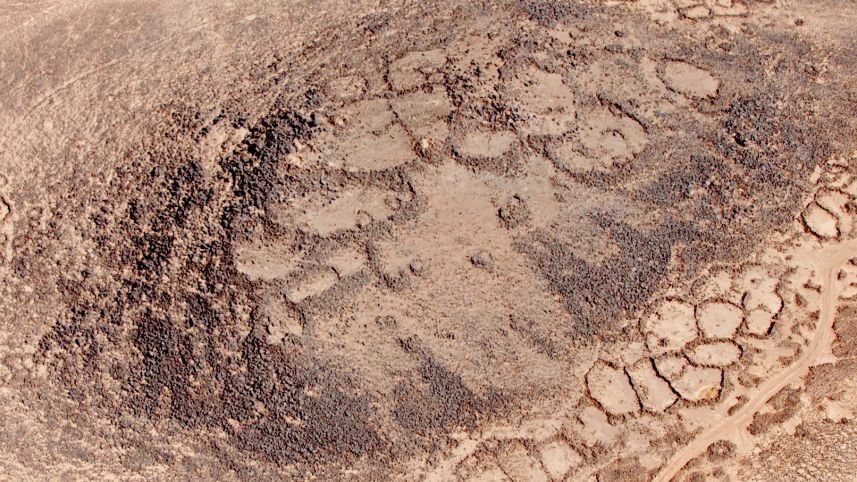
© Matthew Neale Dalton / APAAMEAerial view of Khirbet Abu al-Husayn, Jordan
The remains of the fortified settlements were discovered atop hills at the edge of North-eastern Jordan´s scorched volcanic desert, close to the Syrian border. Radiocarbon dates date its era between 4000 and 3500 B.C.E., about 1000 years before the pyramids.
The discovery came as a surprise, since nothing like this old has been found in the inhospitable depths of the Jordan desert, a place that had been considered uninhabitable by primitive society.
Jawa, a fortified site from the 4th millennium B.C.E discovered earlier at the western edge of the region, had been considered to be the most eastern located settlement of the early Bronze Age in the region, Dr. Bernd Müller-Neuhof, head of the excavation project, told Haaretz. Now three others found deeper in the desert, and possibly older, are under study.
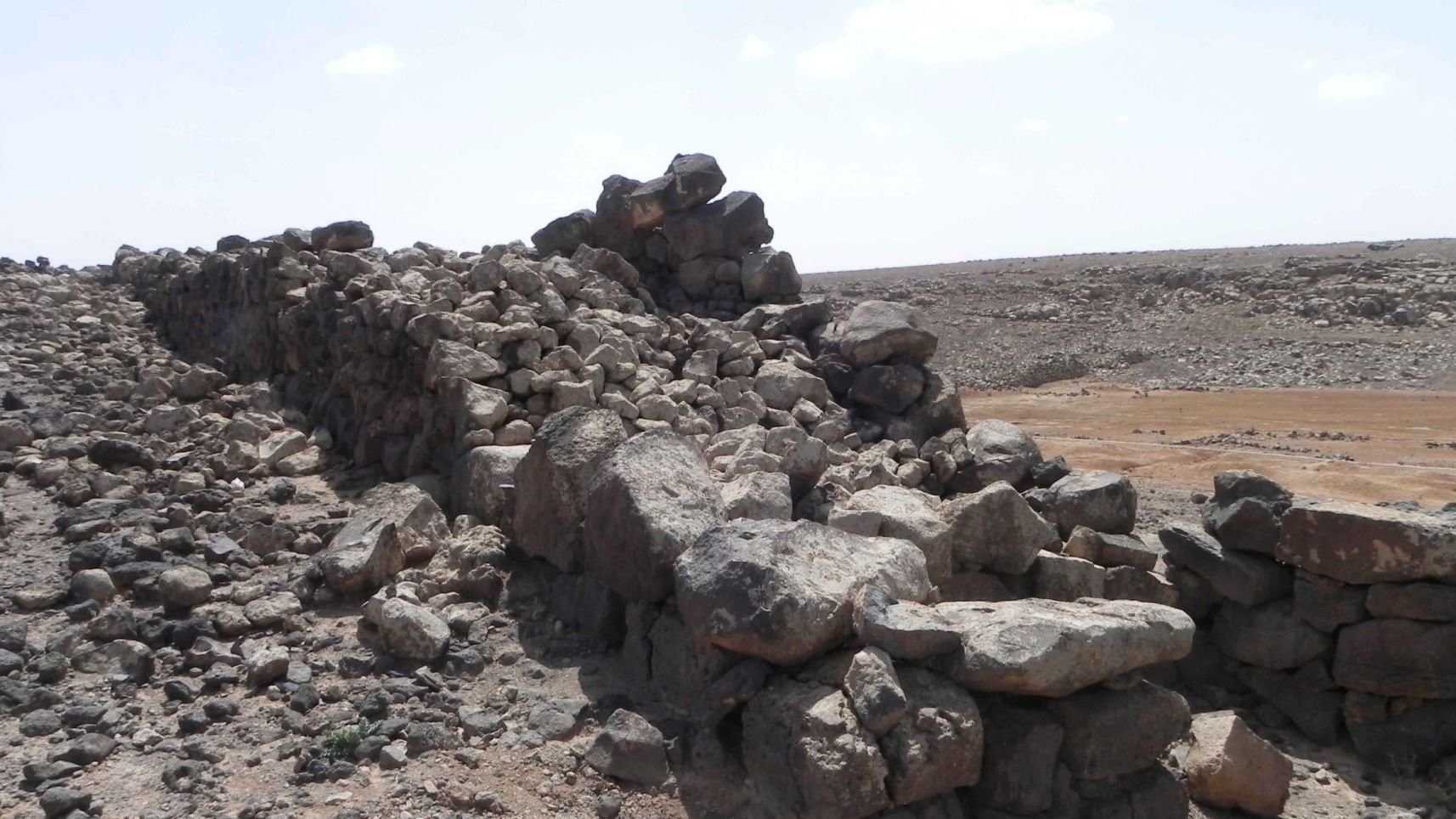
© B. Müller-Neuhof / Dai-OrientabteilungSection of the double-face fortification wall in Jawa
These fortified settlements may be the earliest of their kind in the Levant or even all of Southwest Asia, the archaeologist heading the study suggests.
The inhabitants of these settlements were not the first people using this region, Müller-Neuhof adds. There is evidence of temporary hunter-herder camps during the Neolithic era. Nonetheless, this is the first evidence of year-round occupation of at least some of the sites, which were first discovered during surveys in the area of north-eastern Jordan by the Orient Department of the German Archaeological Institute between 2010 and 2015.
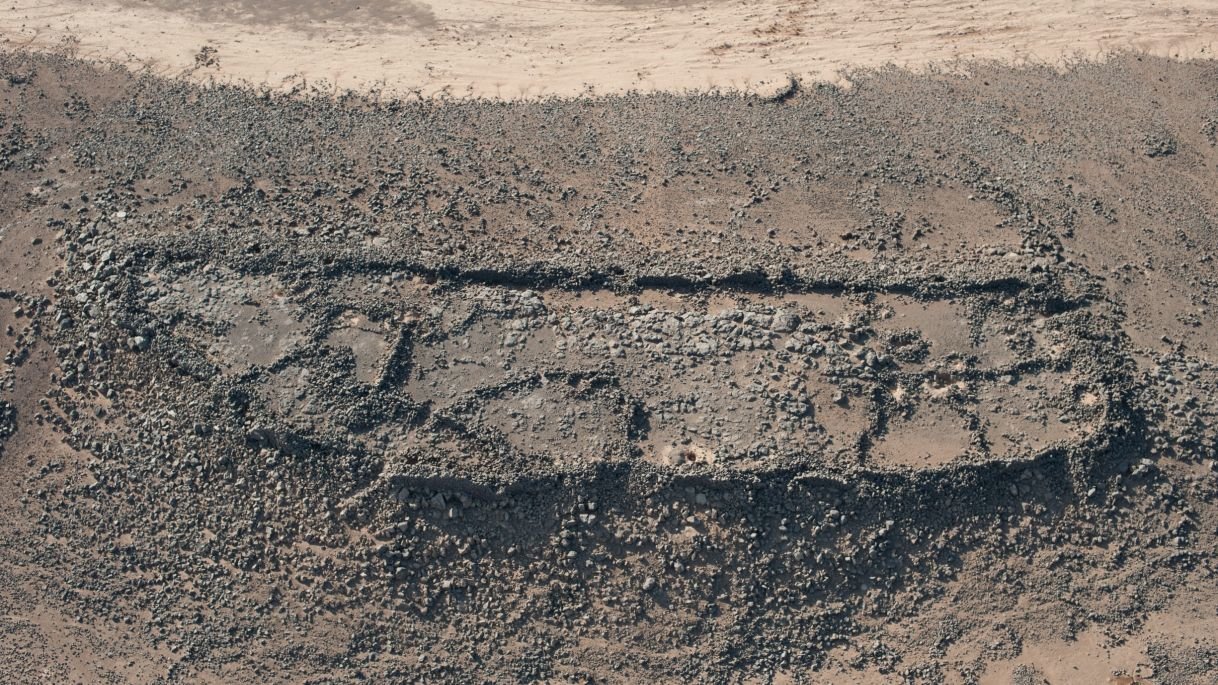
© Robert Howard Bewley / APAAMEThe Ramla al-Jabariya Hillfort: Farming terraces can be seen descending from fortified walls of a 6,000-year old settlement, possibly the first of its kind.
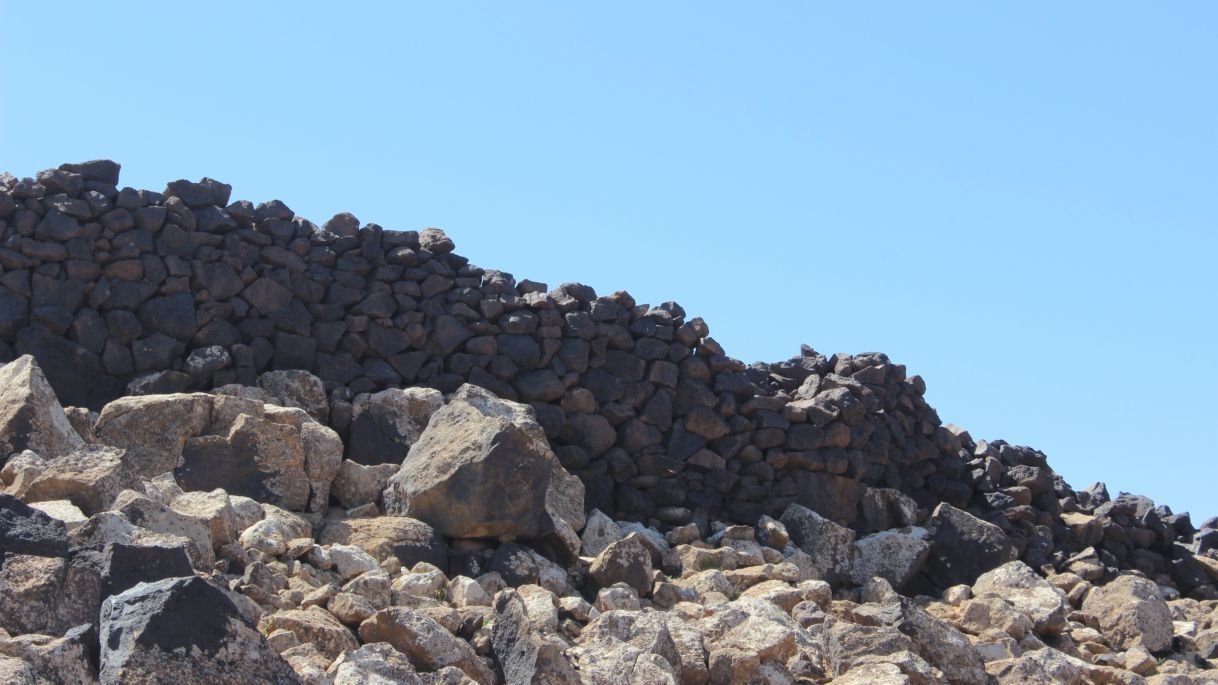
© B. Muller-Neuhof / Dai-OrientabteilungKhirbet al-Jabariya: View of the fortification wall. This may be among the earliest fortified settlements built by man and are more advanced than expected.
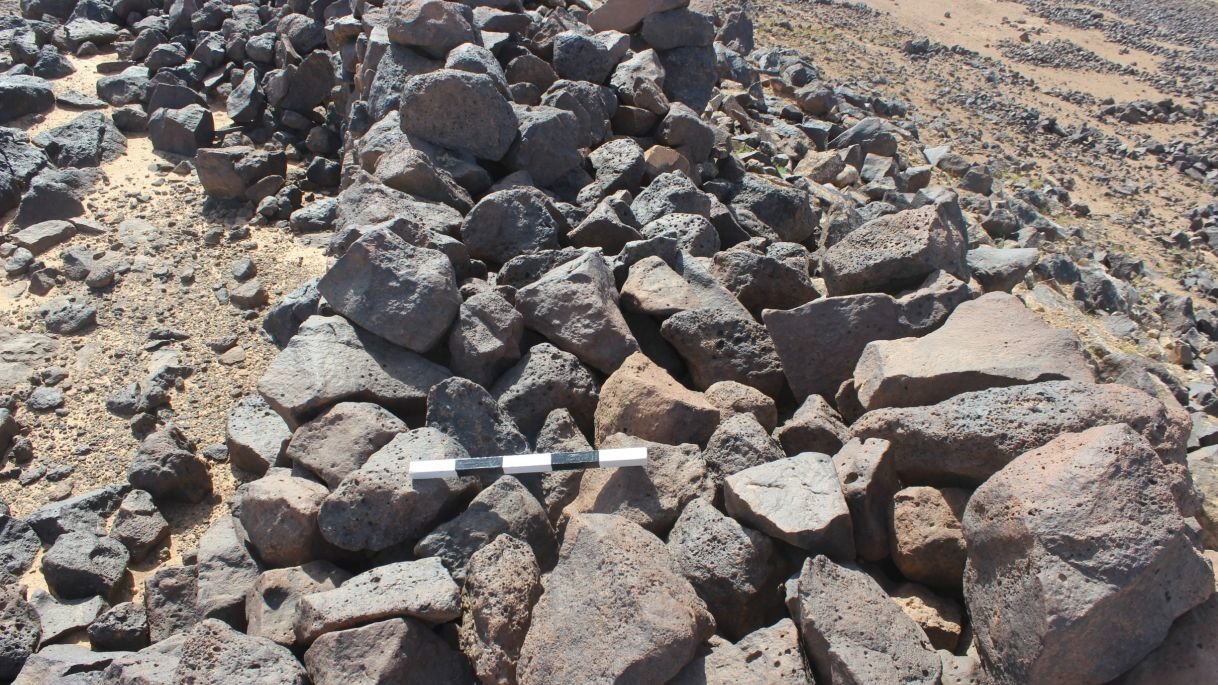
© B. Muller-Neuhof / Dai-OrientabteilungSection of the double-face fortification wall at Khirbet al-Jabariya, possibly the earliest such settlement in the Levant.
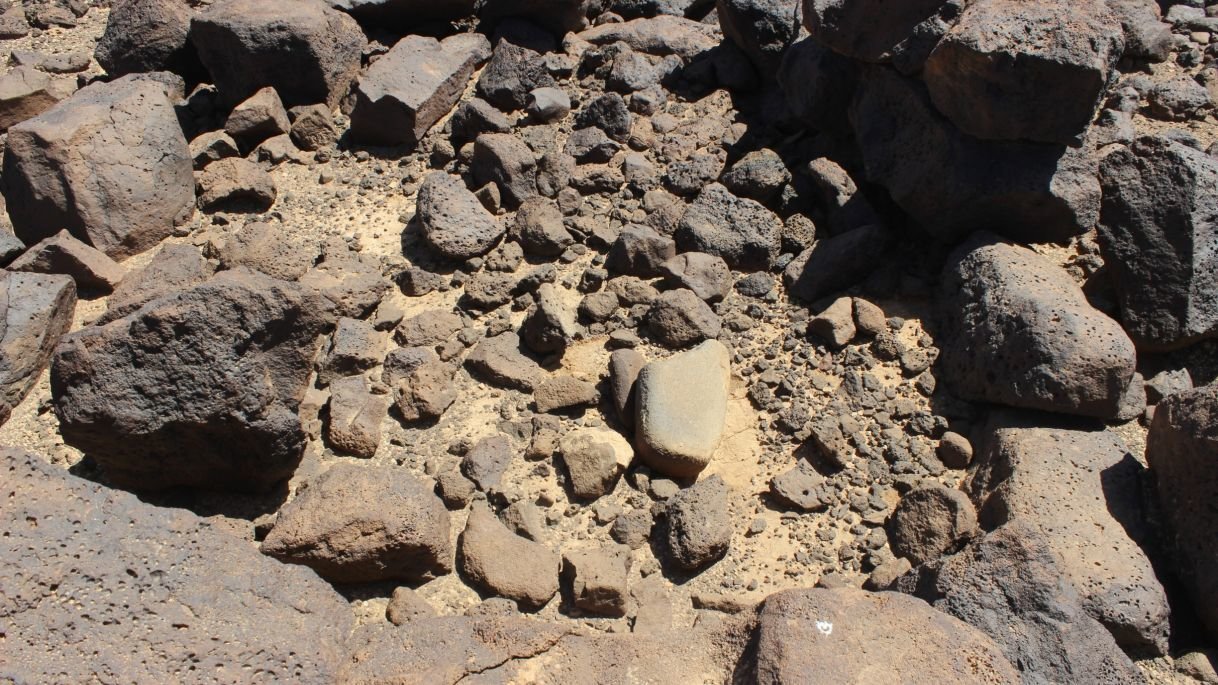
© B. Muller-Neuhof / Dai-OrientabteilungKhirbet al-Jabariya: A dwelling prior to excavation, with grinding stone fragments on the surface.
Protecting the scarce resource: Water
Since the area had no regular source of water, the inhabitants engineered a sophisticated system of diverting locally occurring precipitation into terraced gardens, where they saturated sediments for agricultural purposes. Water for consumption was most probably obtained by digging wells in wadi beds and by using lava caves as natural cisterns.
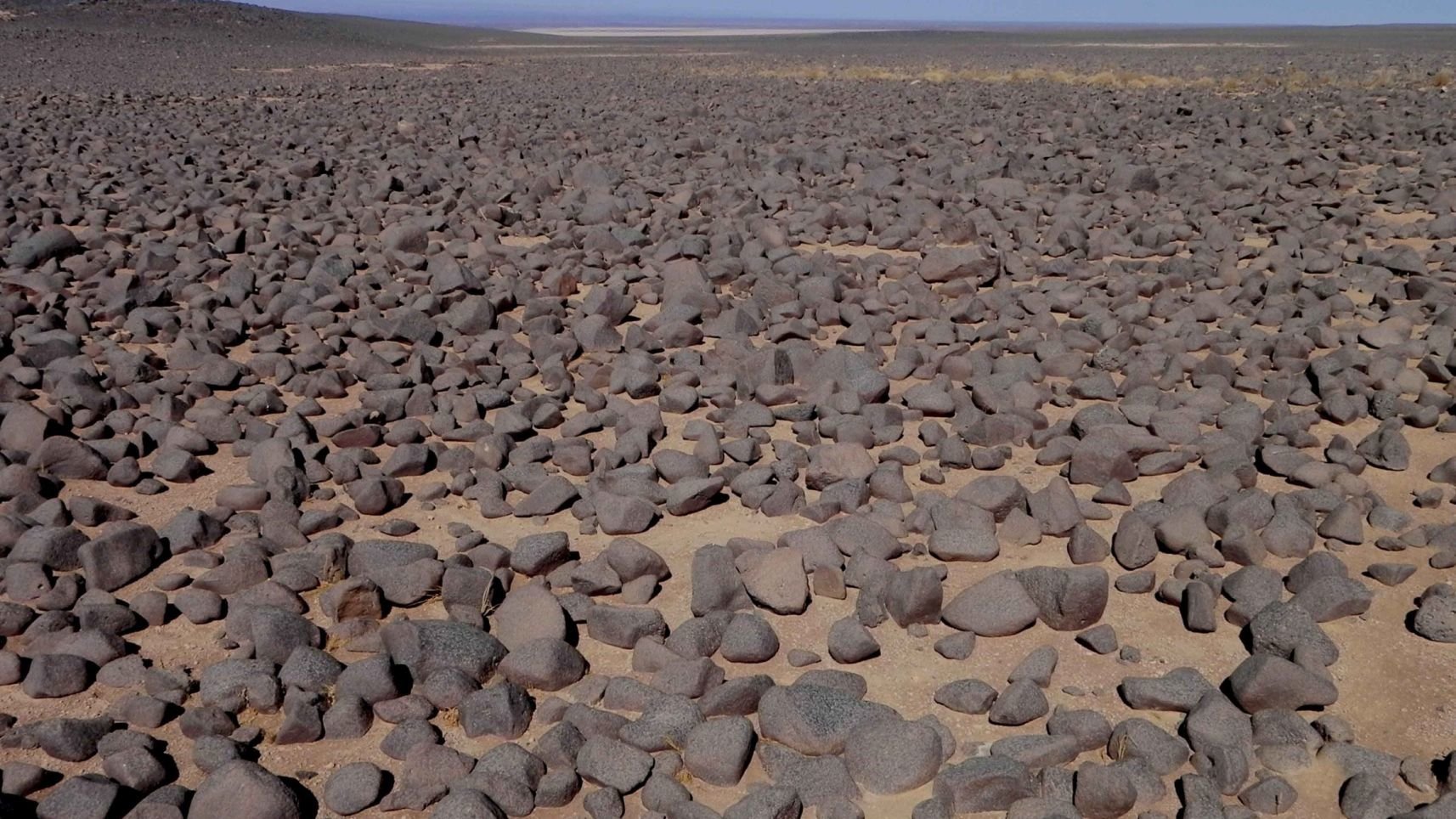
© B. Müller-Neuhof / Dai-OrientabteilungNot a hospitable place, yet permanent settlements were built here some 6,000 years ago: The surface of the basalt desert in north-eastern Jordan.
Older than the well-known field irrigation systems in Mesopotamia, these terraces may be the earliest example of irrigation farming using artificially harvested rainwater.
A 2011 survey identified similar terraced gardens at Jawa as well, Müller-Neuhof says.
The archaeologists also found evidence of flint mining and flint tool mass production east of the basalt desert, which might have been related to the settlement activities on the volcanoes.
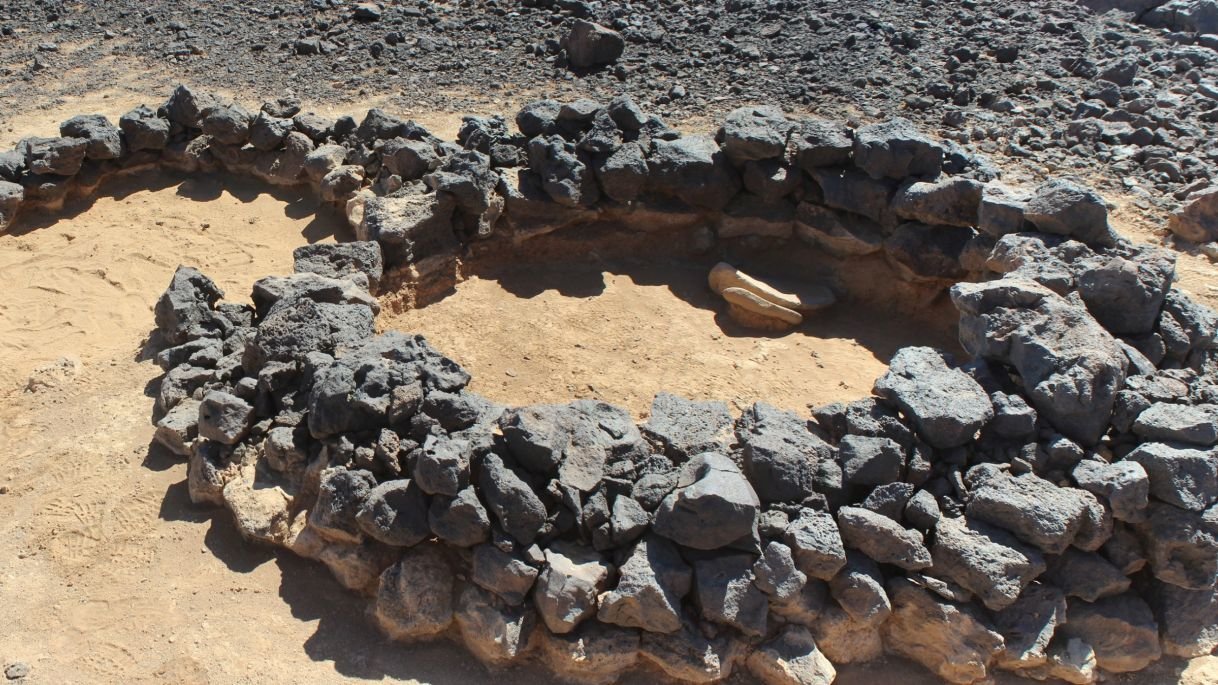
© B. Muller-Neuhof / Dai-OrientabteilungExcavated dwelling in Tulul al-Ghusayn with grinding slabs in situ.
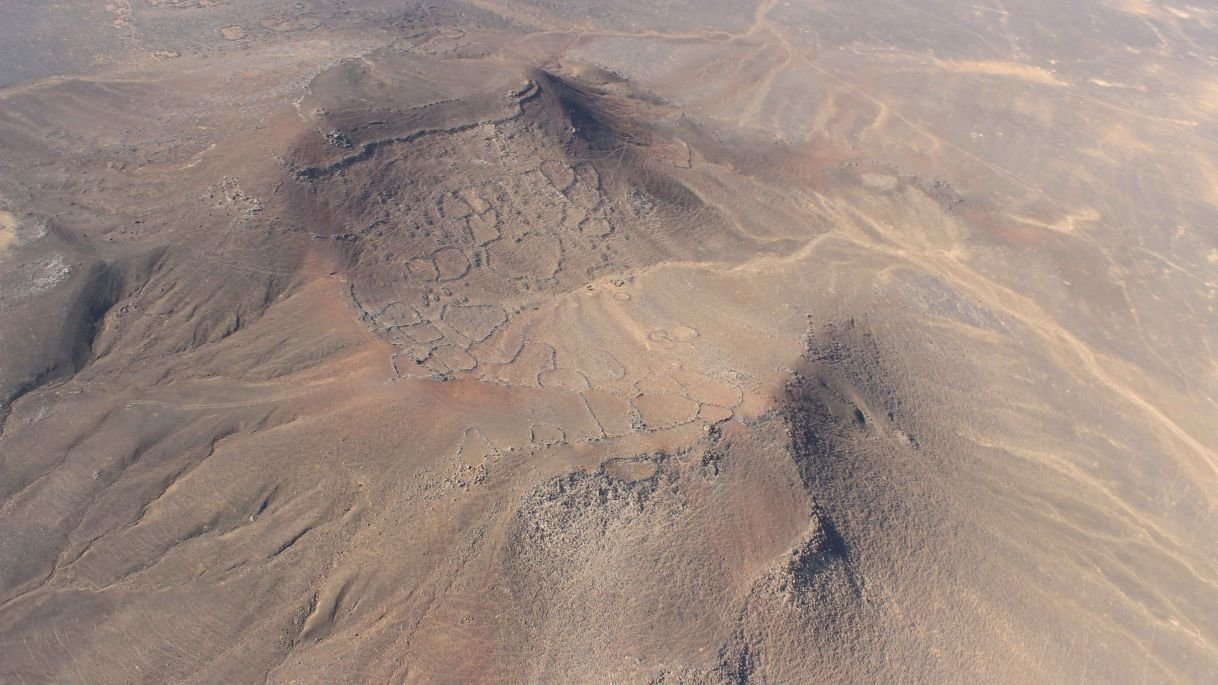
© Bernd Müller-Neuhof / APAAMEAerial view of Tulul al-Ghusayn, a 6,000-year-old hilltop stone fortress deep in the north-eastern Jordan basalt desert.
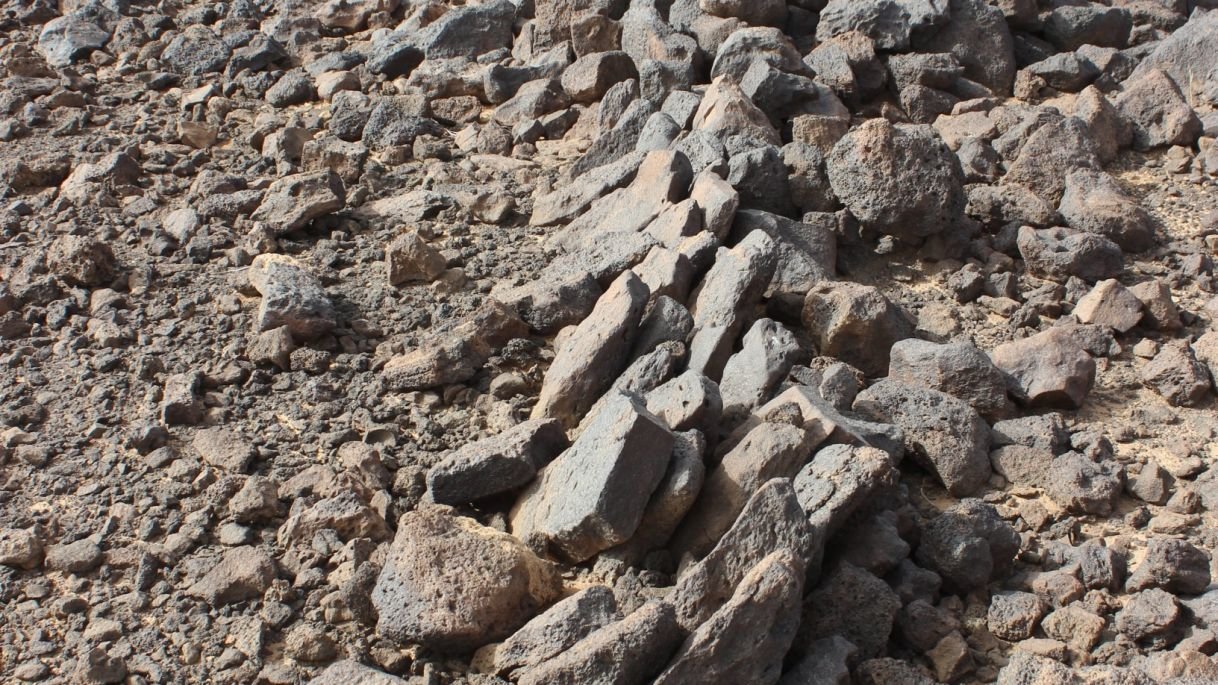
© B. Muller-Neuhof / Dai-OrientabteilungTulul al-Ghusayn: rows of standing stones.
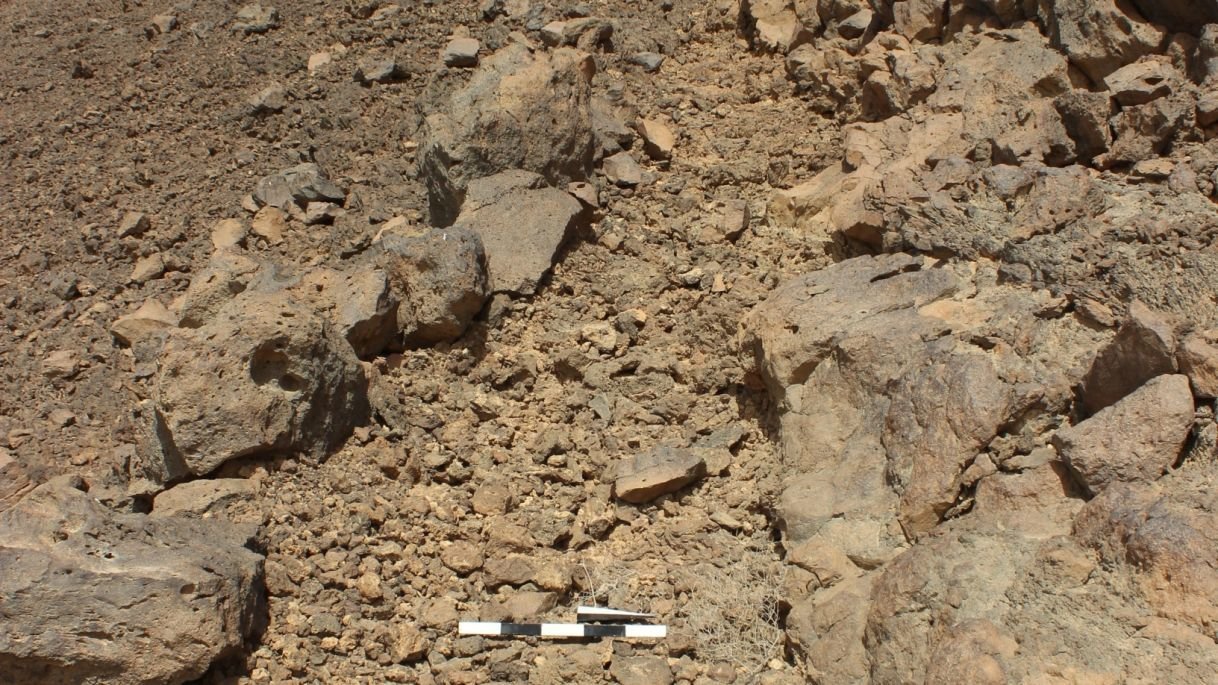
© B. Muller-Neuhof / Dai-OrientabteilungTulul al-Ghusayn: The path toward the southern gate.
At Jawa, signs of conflict in the walls have been discovered, areas where walls had been battered down and rebuilt. Some think water-hungry nomads of the deserts may have clashed with the immigrants that build the cities over control of the water.
Writing hadn't been invented yet and there is no clue as to the inhabitants' name. Theoretically, their origin might be elucidated by finding similarities, if any, with flint tool assemblages, pottery or other clues in well-known sedentary cultures in the southern Levant and Mesopotamia, Müller-Neuhof explains. However, no clear clues have surfaced yet.
Alternatively, the inhabitants may have been indigenous, deriving from the people who lived in the region during the Late Neolithic.
The discoveries advance our understanding of the earliest cultural development in Mesopotamia and the southern Levant, the birthplace of modern civilization. The 4th millennium B.C.E. was a crucial period in the history of old world civilization, as cultural evolutionary processes began that would enable the development of complex cultures, Among these processes were the beginning of urbanization, the invention of artificial irrigation, mass production of commodities, long-distance trade, and the invention of the precursors of writing and economic administration. The new discoveries move a region hitherto unknown and regarded as peripheral into the focus of research on this crucial period.
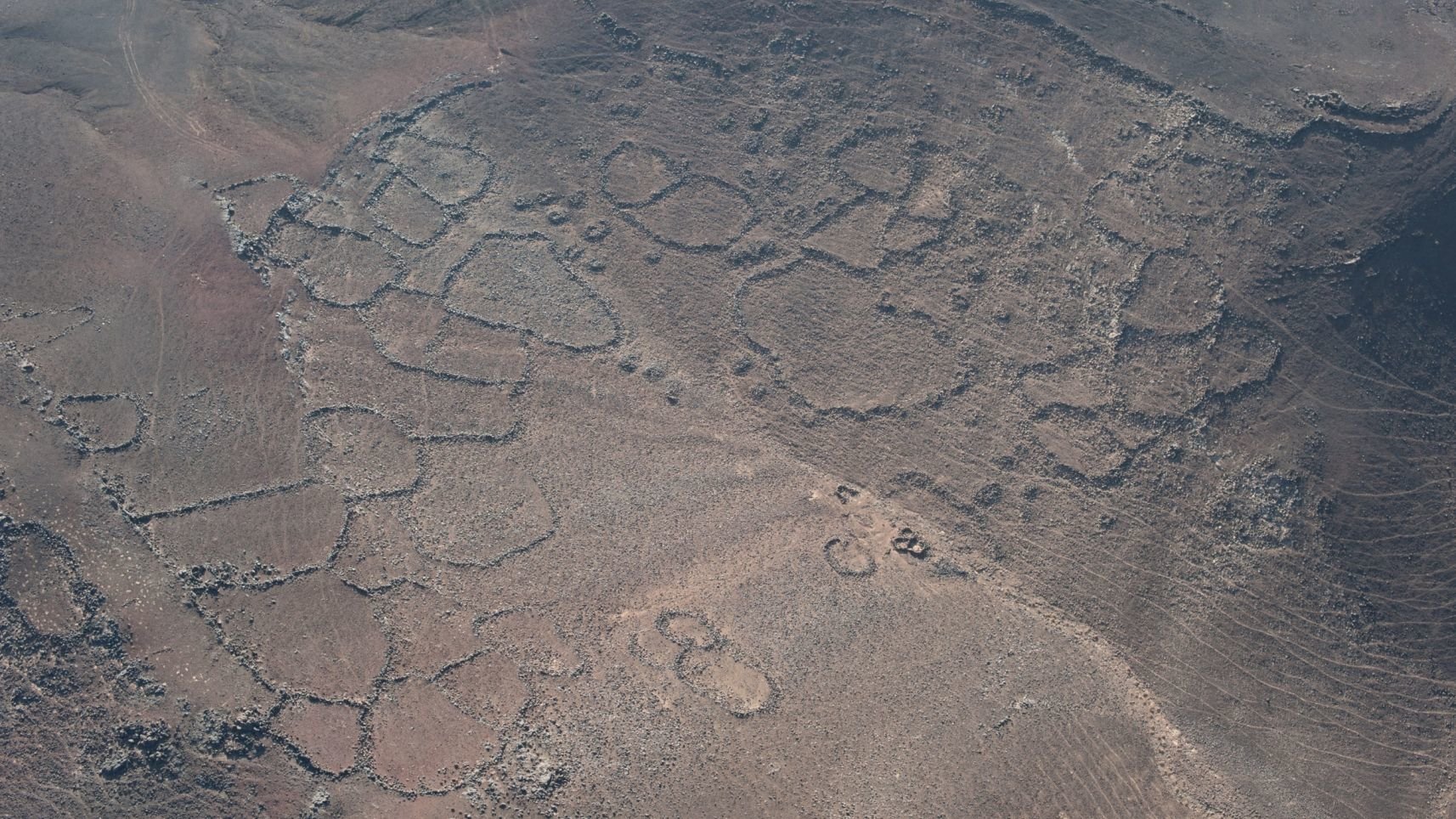
© Robert Howard Bewley / APAAMEAerial view of the garden terraces in the crater of the Tulul al-Ghusayn volcano.
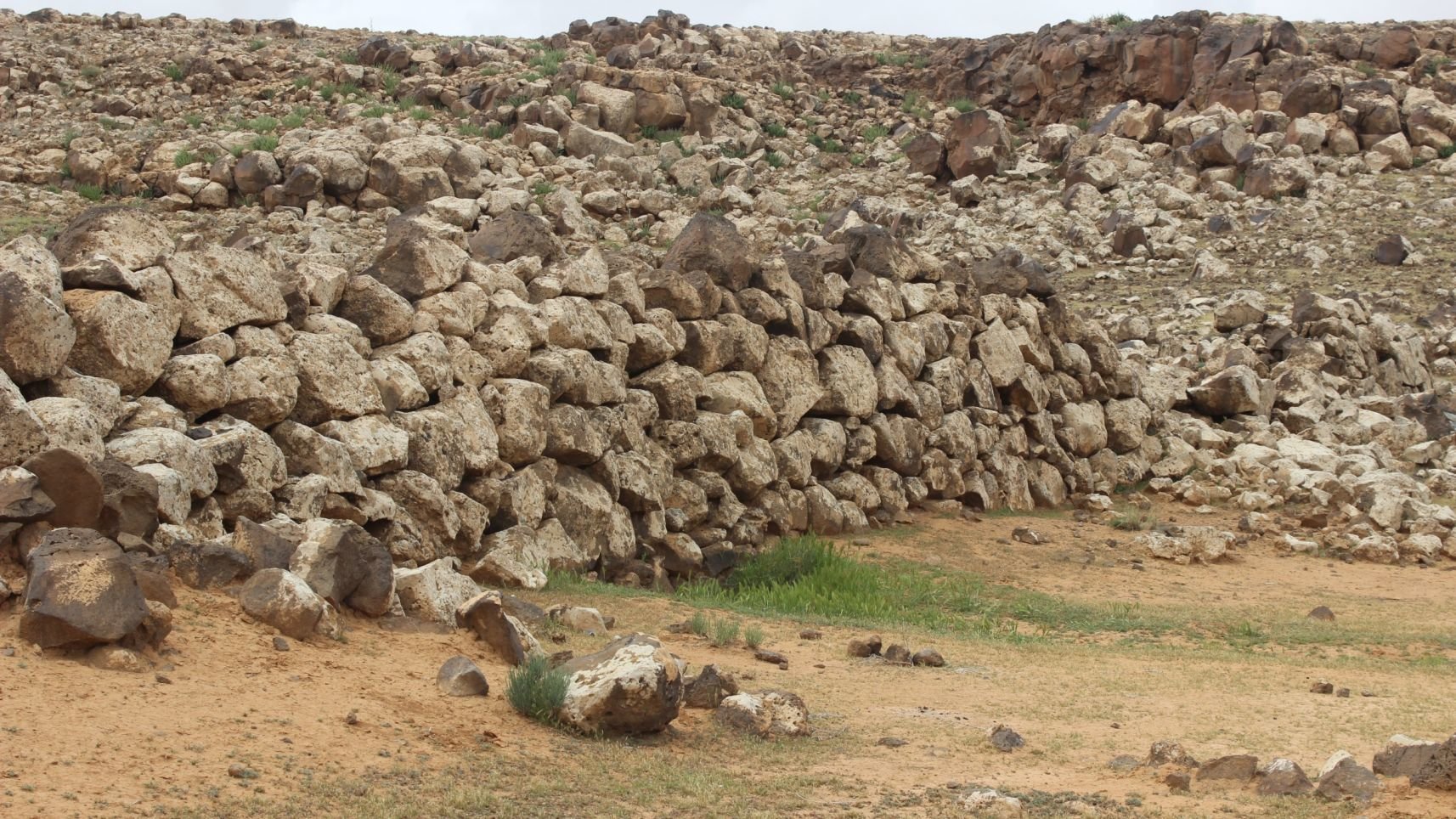
© B. Müller-Neuhof / Dai-OrientabteilungDam built at Jawa 6,000 years ago.



Reader Comments
to our Newsletter