
About 90,000 pages containing documents and photos from European investigations were disclosed to the American channel by sources linked to the Paris attacks probe.
In particular, they showed that other attacks had been planned for Europe, and that the Paris massacre was just a "small-scale" version of what was to take place later. A top European counter-terrorism official told CNN that other locations included sites in the Netherlands, as well as more French targets, including shopping centers and a supermarket. The official observed that IS had also seemingly taken steps to infiltrate the UK in order to carry out attacks there as well.
© CNN
Comment: ISIS upping efforts to smuggle terrorists into Britain
One unnamed official quoted apparently said there are around 50 children from Britain currently linked to IS whose return to the UK must be carefully considered.
"Some of them who have been used to carry out criminal acts are below the age of responsibility in many countries in Europe.
"We know of children from the West who had been taken to Syria, but there are also children who have been born there to European parents. As we know Daesh [IS] are now bringing five-year-olds into their jihad.
"But the real problem would be with the thousands of adults. A number of states are liaising on this, but the policies will depend to an extent on political and legal considerations in individual states."
Terrorists extensively use social messengers such as Viber, Whatsapp, and Telegram, mainly because they allow for encrypted communication, which data pulled from their cellphones has shown. One of the apps even allows users to pick a phone number that can throw any intelligence service off their trail. On top of encryption, senior commanders in Syria only give their agents in Europe enough information and money to proceed to the next step.
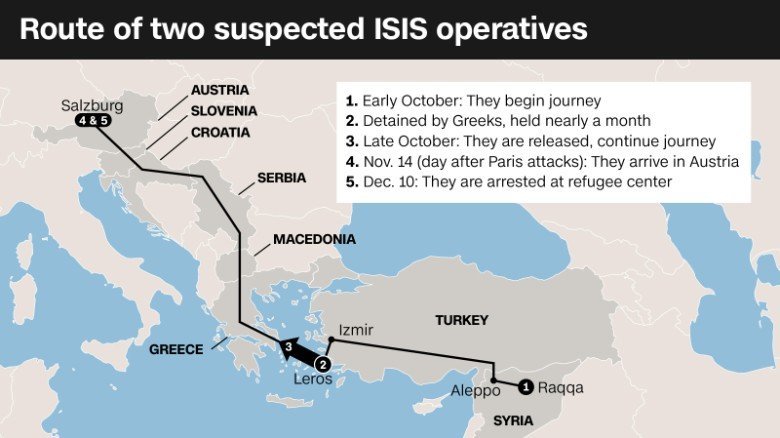
The documents reveal the route of four IS terrorists who left Raqqa, Syria last year, apparently intending to enter France posing as refugees.
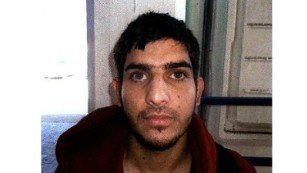
Ahmad al-Mohammad
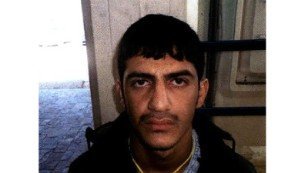
Mohamad al-Mahmod
"Abu Ahmad... is key in sending those individuals, at least the foreigners, into the Paris attacks," said Jean-Charles Brisard, president and chairman of the French Center for the Analysis of Terrorism, who reviewed the documents for CNN. "He is the one who recruited them, who funds them, who trained them. He was always in contact with them."
The four terrorists didn't know each other's real names or what their final mission or target would be. Haddadi later told the investigation that they were to do something "for the good of God."
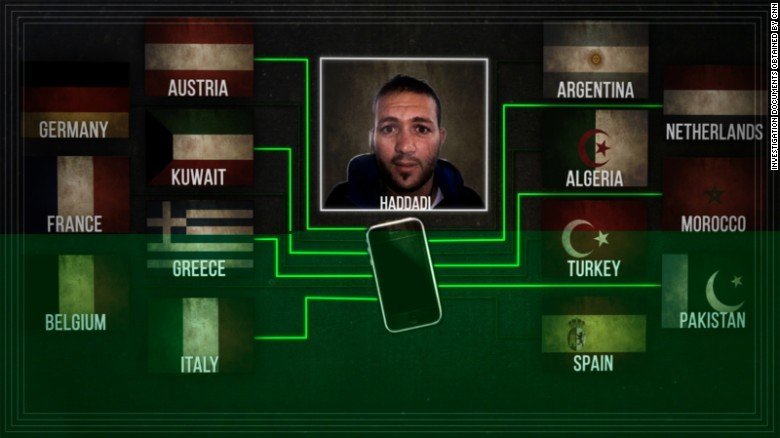
Graphic featuring suspected ISIS operative Adel Haddadi's global network.
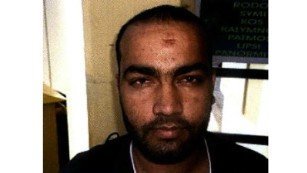
Muhammad Usman
Tabaouni was reportedly expected to launch a follow-up attack with Haddadi and Usman. His cellphone contact list contained a number linked to the terror cell of Abdelhamid Abaaoud, the mastermind behind the Paris attacks.
"We can assume that Tabaouni was also part of the same plot. And was instructed to carry out an attack," Brisard told CNN.
Tabaouni was detained in Brussels and now faces extradition to Austria, the channel said. Haddadi and Usman face terrorism charges in France after extradition.
The documents also show one Islamic State (IS, formerly ISIS/ISIL) supporter boasted over Telegram, an app the terrorist group uses to communicate with jihadists, about upcoming attacks in places including Britain that would be as deadly as those in Nice and Paris.
He said there were many local sleeper cells being set up by people who had come through migrant routes.
Comment: 'More will come' ISIS warns HUNDREDS of jihadis have SNUCK into Schengen to attack Europe
Express.co.uk has seen online material from ISIS supporters, claiming sleeper cells are waiting to attack. One ISIS supporter boasted over Telegram app about upcoming attacks which he claimed would be as deadly as those in Nice and Paris.
He said: "There are many cells being set up.
"That Islam will bring fear upon their land and each home.
"And many more attacks are carded.
"And on the way in many forms and fashions.
"Until they stop."
The jihadist, who claims to be 28, said Muslims who support the caliphate attack Europe because of the war in Syria. He also claimed those killed in Nice and Paris should have stopped their national governments from getting involved in the war in Syria.
He said: "Victory is by Allah and with the Muslims.
"What is to happen is to happen with no consequences to anyone
"What makes the citizens normal or innocent?
"When this is their rule or else stand up and abolish the governments."
Political scientist Colin Clarke from the American think-tank RAND has warned Europe not to take the claims lightly.
Investigators are now analyzing more than 1,600 pages of data from Tabaouni's phone in hopes of learning more about his movements and contacts. Several sources told CNN there are probably more sleeper cells and ISIS operatives coming into Europe using the same crowded, chaotic refugee route exploited by Haddadi, Usman and Tabaouni. "We've seen that in the recent weeks, several of them, individuals who carry out individual attacks, inspired attacks, were coming back from Syria using the same route," Brisard said. "In addition to that, several jihadists have been arrested all around in France ... in Belgium and Germany using the same route, for the same purpose," Brisard said.
The treasure trove of information that investigators gained from the interrogations and the data extracted from the phones may help authorities better identify future plotters. Even after the arrests in Austria, Haddadi's phone was still active.
On December 15, five days after the refugee center raid, the documents show that the team's ISIS handler, Abu Ahmad, reached out to his operatives. He messaged Haddadi, perhaps wondering about their silence. "How are you," he wrote. "What has become of you?" There was no reply.
Comment: Islamic State issues new call for attacks in the West, all non-believers 'legitimate targets'
The Islamic State has released a new Rumiyah online magazine urging adherents to carry out more so-called lone-wolf attacks globally.
Targets for attacks include businessmen on their way to work, young people playing sports in the park and even "the street vendor selling flowers to those passing by." A photo from what appears to be a British market vendor selling flowers has a caption beneath it that reads "Even the blood of a merry crusader citizen selling flowers to passersby."
Jihadis are urged to strike such soft targets with no special precedence to attack soldiers or policemen, but rather to strike terror into the hearts of all disbelievers.
Rumiyah is a reference to an Islamic prophecy that foretells the downfall of Rome following the collapse of Constantinople which fell in the Muslim conquest of 1415 and calls for the targeting of all non-Muslims.
The magazine features recently-killed Abu Mohammed Al Adnani on the front cover with a foreword arguing that contrary to the West's belief, the Islamic State dream does not die with the death of its leaders.
A four page eulogy for Abu Mansur Al Muhajir, a dead Australian jihadist of Lebanese descent, urges Islamic State attacks in Australia.
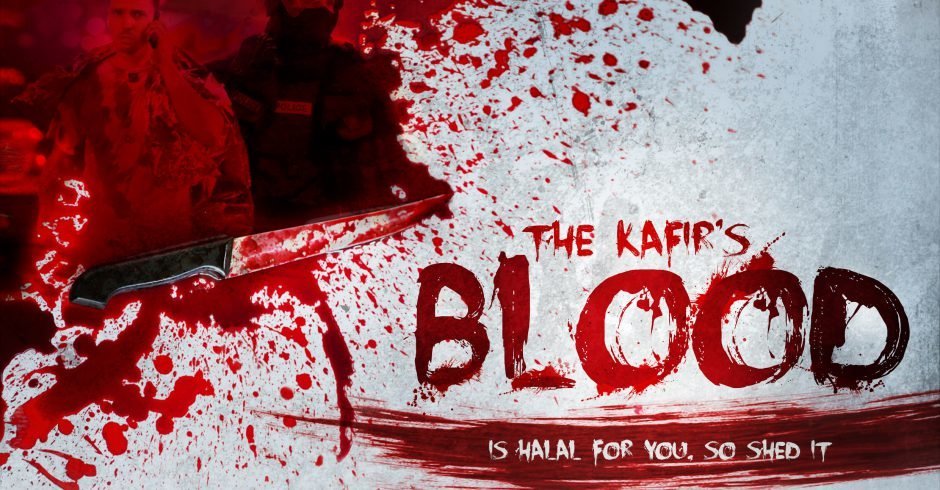
In a chilling essay entitled "The Kafir's blood is Halal for you. So shed it," the magazine cites references from the Koran and early Islamic scholars that the war against the non-believer is not limited to the 'enemy' fighting "frontline operations." Rather "he has also ordered that they be slain wherever they may be - on or off the battlefield."
At the conclusion of the article, Muslims who live in "Dar al-Kufr" (literally land of disbelievers) are told that shedding "the blood of the disbelievers is halal (permissible) and killing them is a form of worship to Allah, the Lord, King, and God of mankind."
A total of 130 people were killed and 368 injured in coordinated terror attacks in Paris and Saint-Denis, a northern Parisian suburb, in November of 2015. At that time, three suicide bombers blew themselves up during a football match outside the Stade de France just before several mass shootings and another suicide bombing were launched. Hostages were also taken at a rock concert in the Bataclan theatre, leading to a standoff with police. The attacks were France's deadliest since World War II.

Reader Comments
to our Newsletter