
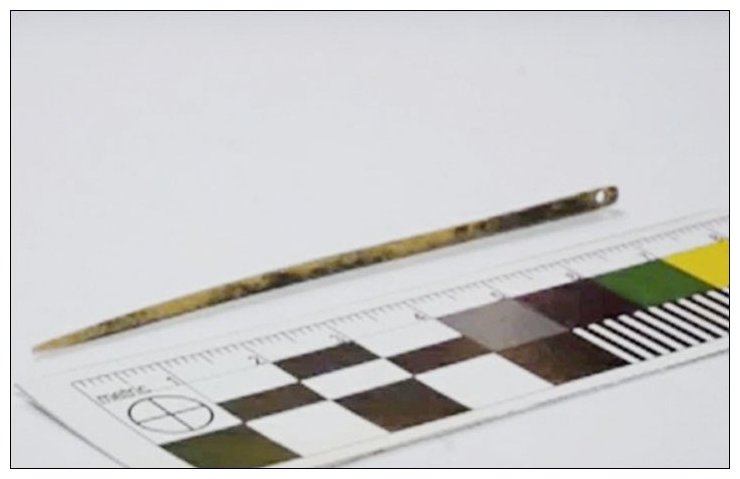
© VestiThe needle is seen as providing proof that the long-gone Denisovans - named after the cave - were more sophisticated than previously believed.
Scientists found the sewing implement - complete with a hole for thread - during the annual summer archeological dig at an Altai Mountains cave widely believed to hold the secrets of man's origins. It appears to be still useable after 50,000 years.
Professor Mikhail Shunkov, head of the Institute of Archaeology and Ethnography in Novosibirsk, said: 'It is the most unique find of this season, which can even be called sensational.
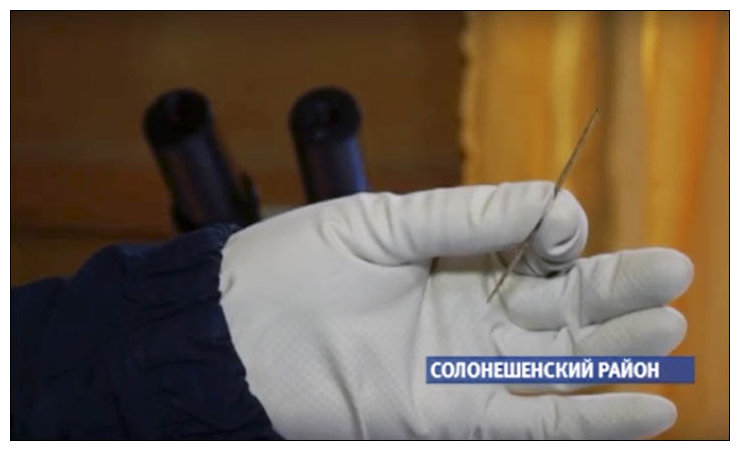
© VestiIt appears to be still useable after 50,000 years.
The needle is seen as providing proof that the long-gone Denisovans - named after the cave - were more sophisticated than previously believed. It predates by some 10,000 years an intricate modern-looking piece of polished jewellery made of chlorite by the Denisovans.
It was made of the bone of a large and so far unidentified bird.
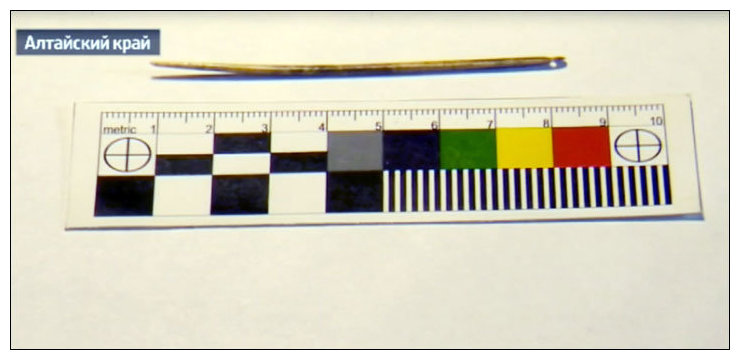
© Russia 24, VestiThe 7 centimetre (2 3/4 inch) needle was made and used by our long extinct Denisovan ancestors, a recently-discovered hominin species or subspecies.
The needle rewrites history since the previous oldest such object dates to some 40,000 years ago, according to Russian scientists. It is assumed that the newly-found needle was made by Denisovans, as it was found in the same layer where Denisovan remains were previously found.
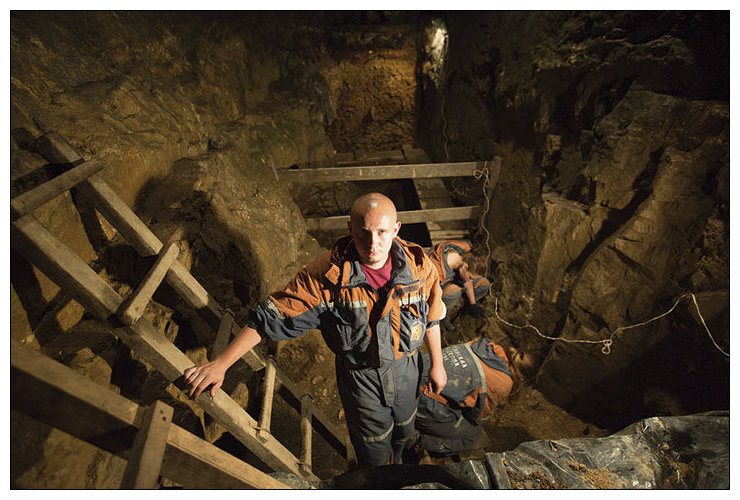
© Vera SalnitskayaDr Maksim Kozlikin, head of the excavations at Denisova cave: 'It is the longest needle found in Denisova cave.'
Analysis showed she was genetically distinct from Neanderthals and modern humans. In 2010 analysis on an upper molar from a young adult, found in the cave ten years previously, showed the tooth was also from a Denisovan.
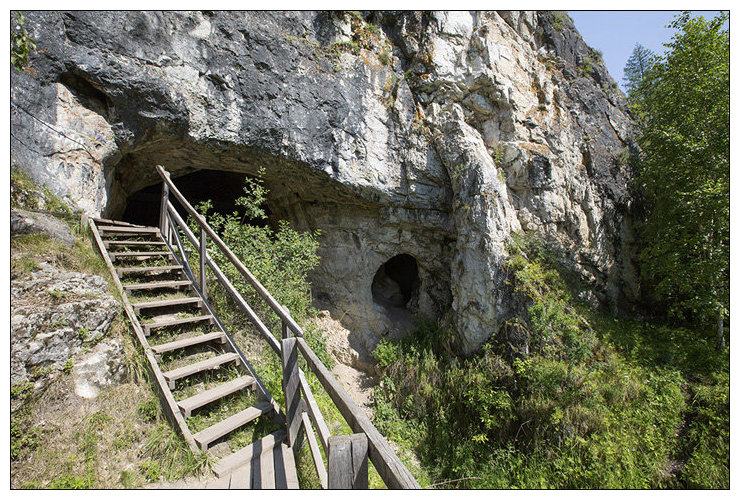
© Vera SalnitskayaThe cave lies in the Altai Mountains around 160 kilometres (100 miles) south of the city of Barnaul.
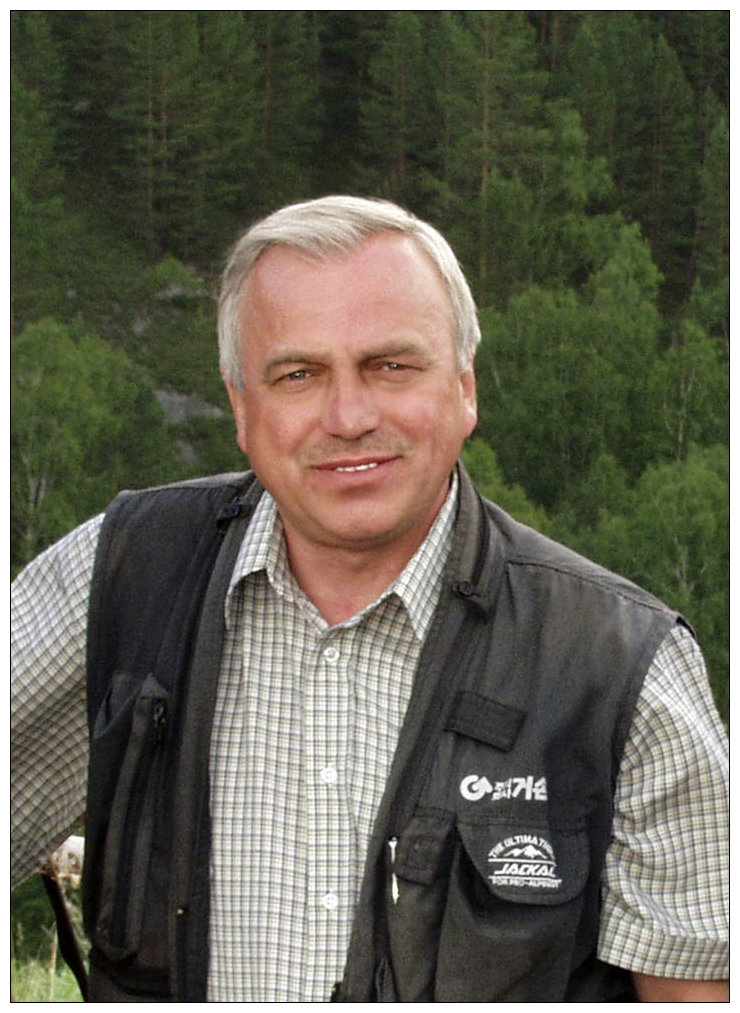
© IAET SB RAS Professor Mikhail Shunkov, head of the Institute of Archaeology and Ethnography in Novosibirsk, said: 'It is the most unique find of this season, which can even be called sensational.'
The bracelet was discovered in 2008, (see image below) and scientists have since suggested it showed the Denisovans to be more technologically advanced than Home sapiens or Neanderthals.
Scientists found that a hole had been drilled in part of the bracelet with such precision that it could only have been done with a high-rotation drill similar to those used today.
It was also carefully polished and grinded, with a heavy pendant added in the centre, probably hanging from a short leather strap.
The cave has also provides evidence of cross-breeding between modern Homo sapiens with both Neanderthals and Denisovans.
Additionally, it has provided proof that early man surged out of Africa some 35,000 years earlier than was assumed by experts.
'It is the first genetic evidence of modern humans outside Africa,' said Sergi Castellano, a scientist at the Max Planck Institute for Evolutionary Anthropology, earlier this year.
The cave lies in the Altai Mountains around 160 kilometres (100 miles) south of the city of Barnaul. Prof Shunkov said: 'We can confidently say that Altai was one of the cultural centres... the modern human was formed.'
Scientist Svante Paabo, from the Max Planck Institute, in Leipzig, Germany, has said: 'The one place where we are sure all three human forms have lived at one time or another is here in Denisova Cave.'
The Institute of Archaeology and Ethnography is part of the Siberian Branch of the Russian Academy of Sciences.
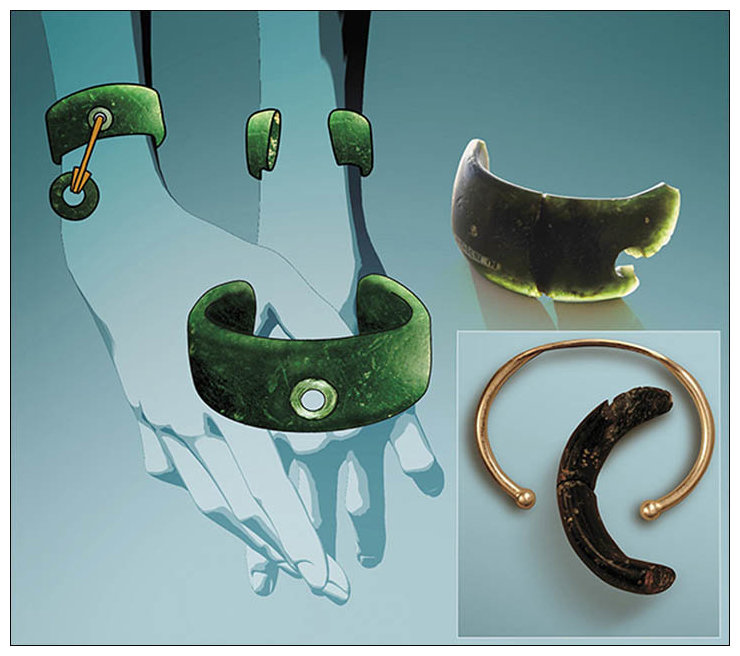
© Vera Salnitskaya, Anastasia AbdulmanovaThe bracelet was carefully polished and grinded, with a heavy pendant added in the centre, probably hanging from a short leather strap.





And yet there are archaeologists today who say that civilisation began 5 thousand years ago, idiots!