
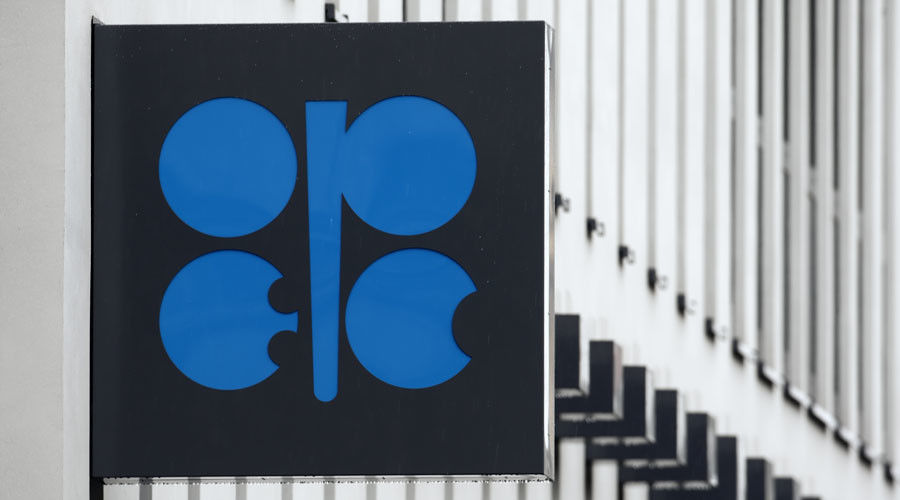
© Heinz-Peter Bader / ReutersOPEC headquarters in Vienna.
Unlike OPEC countries, the Russian oil industry is less state-regulated, said Sechin, adding that due to climatic peculiarities, Russia cannot quickly adjust oil production.
Since OPEC decided to defend market share rather than price, output from the group has soared http://t.co/BYIUe1jHia pic.twitter.com/S5bvXiawa9— IEA (@IEA) August 16, 2015"The Russian government, understanding the differences in the conditions of production and property rights, agrees to observer status in OPEC, but cannot accede as a full-time member," TASS quotes him as saying at the FT commodities conference in Singapore.
Sechin also accused OPEC of not meeting its own production quotas.
"OPEC countries are currently exceeding their own quota [30 million barrels per day], according to various estimates, by 1.5 million to 2.5 million barrels per day. If the quota was met, then, the global oil market would be balanced, which would positively affect crude prices," he said.
@IEA @ATAEconBob worth checking out US oil production growth over last 7yrs. #gamechanger — Takis Christodoulopo (@takis2910) August 30, 2015Speaking about Iran returning to the world market, "fears are exaggerated," because the country needs to have "hundreds of billions of dollars" invested for a significant increase in production, said Sechin.

Comment: Russia doesn't need to play those OPEC games.