
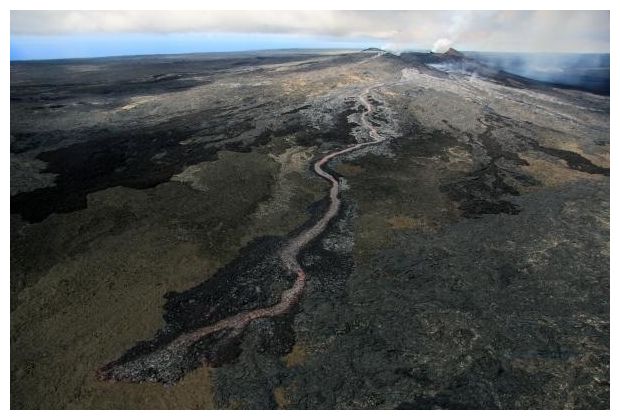
© West Hawaii Today/Hawaiian Volcano ObservatoryLava flows from the northeast flank of Puu Oo on Friday.
The event began when the crater floor subsided, causing a collapse of spatter cones, which revealed small lava ponds inside. Geologists attributed the event to magma accumulating in a mostly horizontal layer about 1,640 feet below the crater, located along Kilauea's east rift zone.
The new flow may have had an impact on the Kahaualea 2 flow, which extends 4.4 miles northeast of the crater, according to HVO.
"From this morning's webcam views, it's clear that the flow is still hot but is far less active than prior to the June 27 collapse," the observatory reported Saturday. "We should know with more certainty over the next few days whether the Kahaualea 2 flow has stalled."

Reader Comments
to our Newsletter