
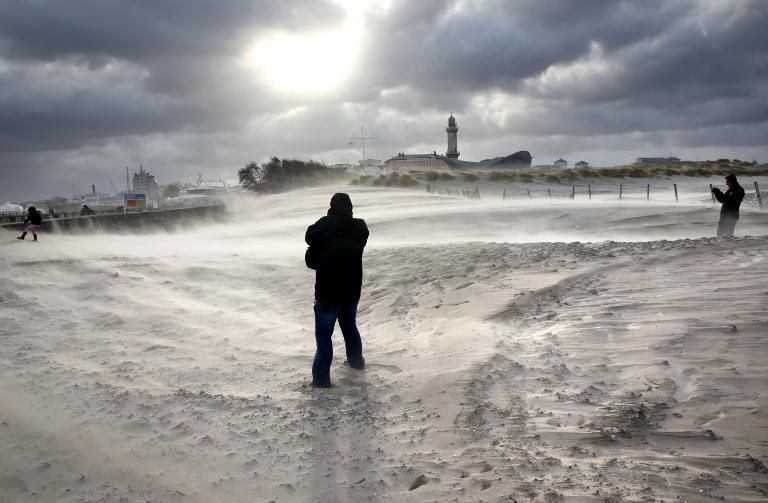
© AFP/ Bernd WustneckPeople stand on a dune while storm front Xaver hits the shore of Rostock-Warne-muende, northern Germany, December 6, 2013
Emergency services across the region battled overnight to evacuate flooded harbour areas, sandbag sodden dykes and repair damage from toppled trees that crashed onto houses, roads, train tracks and power lines. Atlantic storm "Xaver", having barrelled across Britain where two people died Thursday, packed winds of up to 158 kilometres (98 miles) per hour as it hit Germany, also battering the Netherlands, Poland and southern Scandinavia.
Blackouts hit 400,000 homes in Poland and affected 50,000 people in Sweden, while thousands of air passengers were stranded as flights were cancelled at Amsterdam, Berlin, Hamburg, Gdansk and other airports. In Germany alone, more than 500 flights were scrapped, said an online travel portal, while dozens of trains were also cancelled.
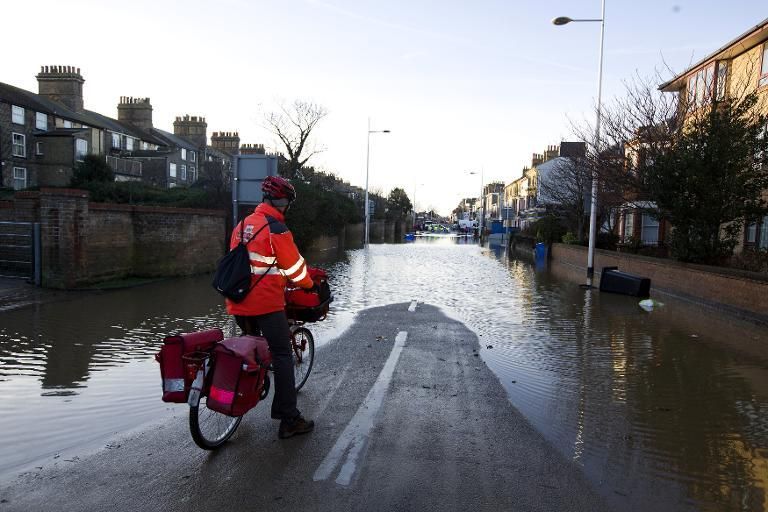
© AFP/Justin TallisA postman looks at a flooded street in Lowest-oft, eastern England on December 6, 2013
"Three people died on the spot, another was taken to hospital." The previous day in Britain, a lorry driver died when his vehicle toppled onto other cars in Scotland, while a man riding a mobility scooter was struck by a falling tree in Nottinghamshire, central England.
Also Thursday, two Filipino sailors were swept overboard from a ship off southern Sweden and have remained missing, while a 72-year-old woman died in Denmark after strong winds tipped over her van.'Defences held up well' Despite the deaths and turmoil, several affected countries breathed a cautious sigh of relief Friday that the damage wasn't worse - mindful of catastrophic floods that hit North Sea countries in 1953, when more than 2,000 people died.Britain reported the worst tidal surge since that disaster, but Environment Agency spokesman Tim Connell told the BBC that "the defences seemed to have held up well".
In northern Germany, the Elbe River harbour of Hamburg was under six metres of water, the highest in about a decade, leaving only the tops of lamp posts sticking out of the freezing waters. Also in Hamburg, a fallen tree derailed a suburban commuter train which hit a bridge.
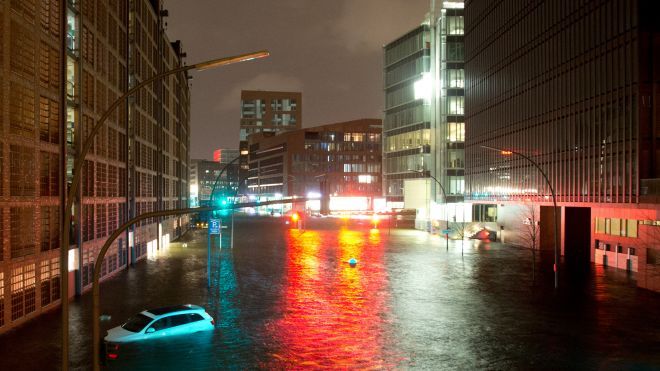
© APDec. 6, 2013 - A car stands in a street near the port of Hamburg, Germany. A storm with hurricane-force gusts hit Germany's coastal ares and tidal floods caused by the storm flooded the port of Hamburg.
Children were allowed to stay away from school, and Christmas markets battened down their hatches. In snowy Berlin, hefty winds brought down the 13-metre-tall Christmas tree outside the residence of President Joachim Gauck. Still, German authorities said the worst had been averted, and damage was nowhere near that of severe floods in 1962 that left 340 people dead.



Reader Comments
to our Newsletter