
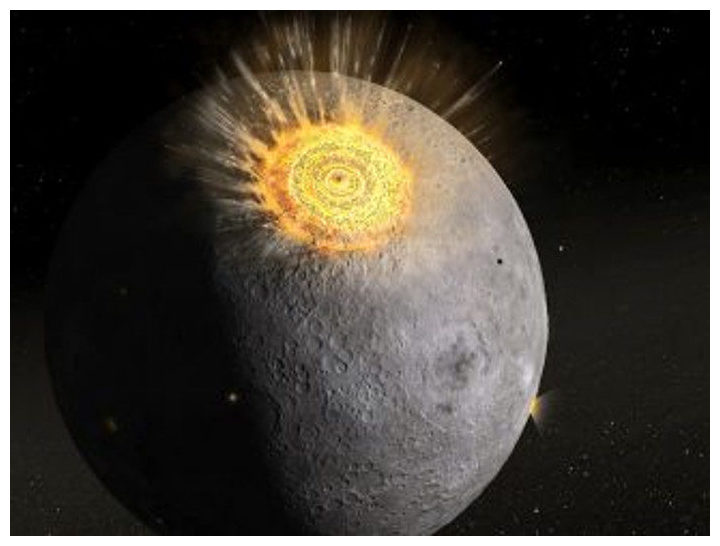
© Daniel D. Durda/FIAAAAn artist’s impression of how the early Moon was reshaped by an intense period of bombardment. A new study reveals that large impacts could have produced the range of lunar rocks sampled by the Apollo missions over 4.3 billion years ago.
A group of international scientists led by the Royal Ontario Museum has discovered that the formation of ancient rocks on the Moon may be directly linked to large-scale meteorite impacts.
The scientists conducted new research of a unique rock collected by NASA astronauts during the 1972 Apollo 17 mission to the Moon. They found it contains mineralogical evidence that it formed at incredibly high temperatures (in excess of 2300 °C/ 4300 °F) that can only be achieved by the melting of the outer layer of a planet in a large impact event. In the rock, the researchers discovered the former presence of cubic zirconia, a mineral phase often used as a substitute for diamond in jewellery.
The phase would only form in rocks heated to above 2300 °C, and though it has since reverted to a more stable phase (the mineral known as baddeleyite), the crystal retains distinctive evidence of a high-temperature structure. An interactive image of the complex crystal used in the study can be seen here using the .


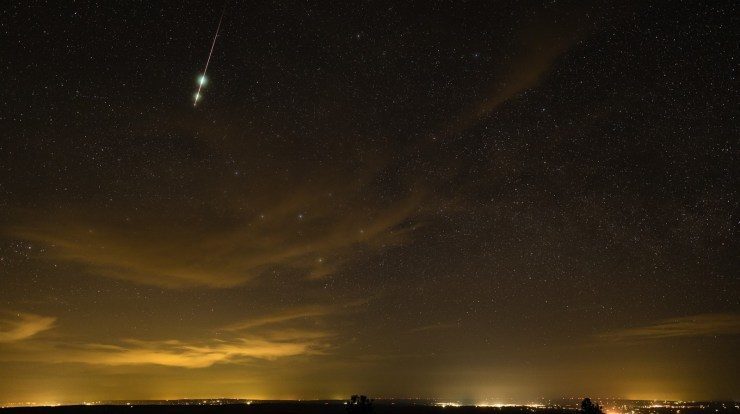





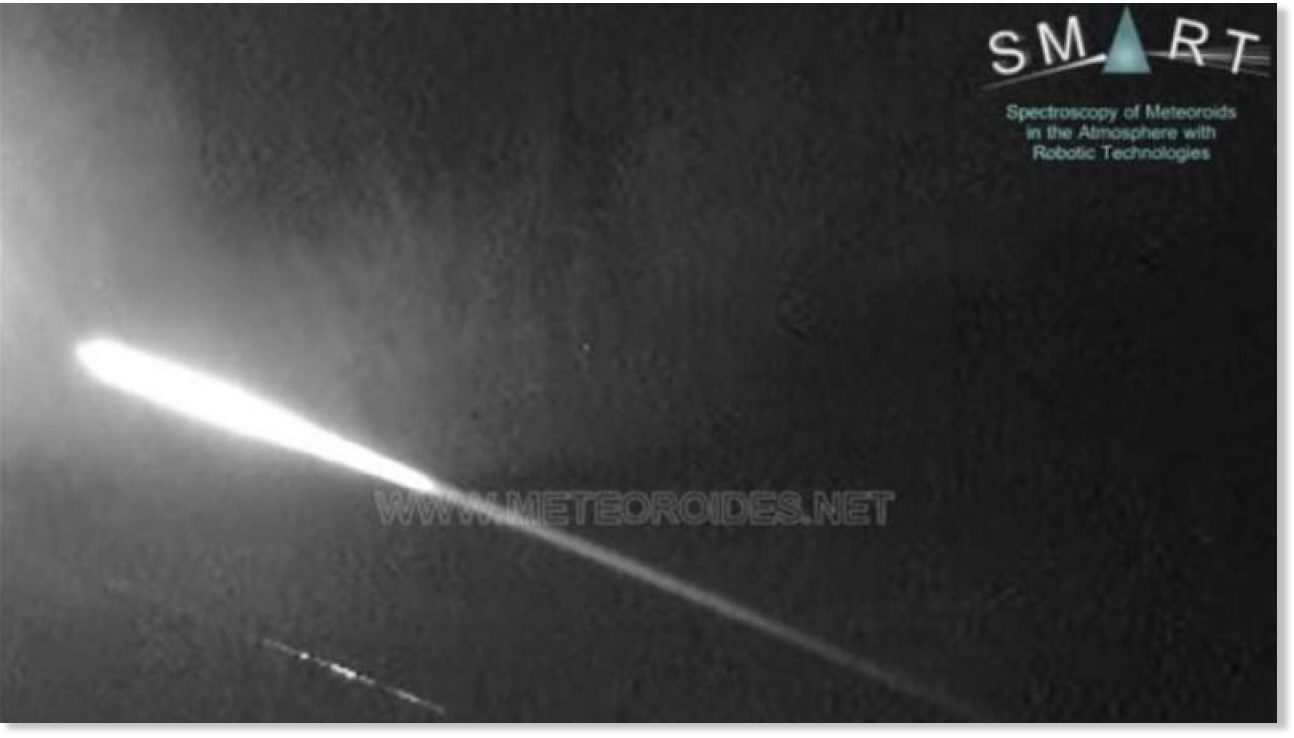




Comment: Just over one week ago another meteor fireball was spotted across several Washington State counties with boom-like sounds reported.