Floods
S


Question

Scientists baffled by relentless rise of two Caribbean lakes

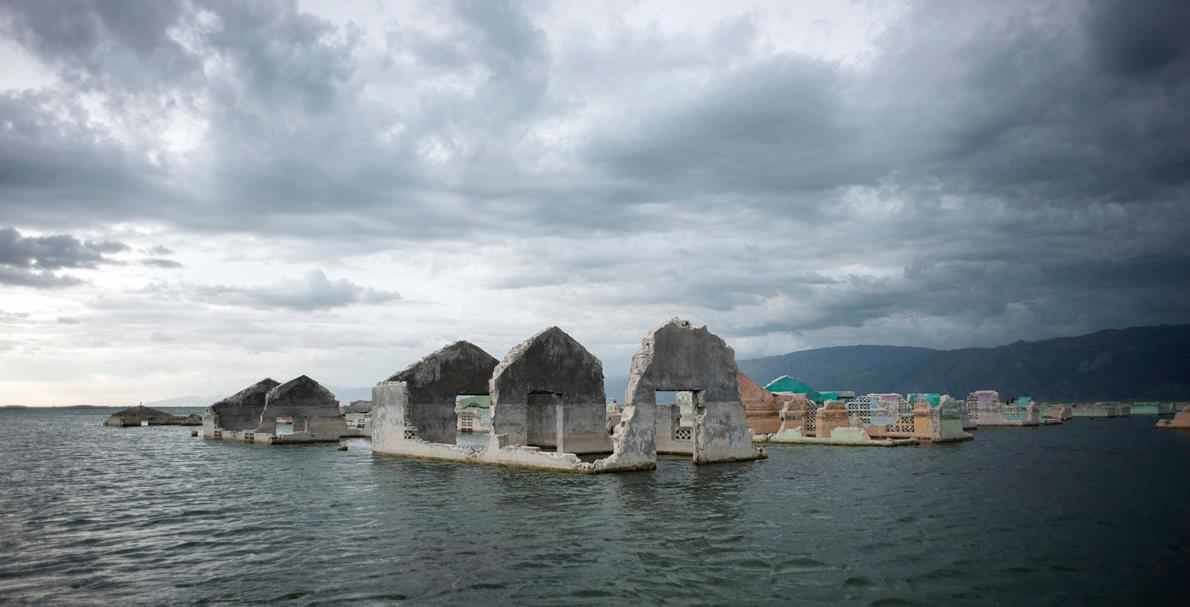
The Haitian village of Lunettes floating in Lake Azuéi
© Alessandro GrassaniThe Haitian village of Lunettes appears to float in Lake Azuéi, also known as Étang Saumâtre. The lake's water level has risen so much that it has swamped thousands of acres.
In Haiti and the Dominican Republic, the lakes are flooding farmland, swallowing communities and leading to deforestation.


On a recent calm day, the surface of Lake Azuéi has no waves, not even any ripples. Pillars of pastel-colored concrete break the still surface, the tops of what once were houses. They are all that's visible of the community that once thrived here.

Alberto Pierre, a skinny, wide-eyed 25-year-old, said the submerged village where he grew up wasn't even near the lake. "The water used to be many kilometers from here."

Lake Azuéi, the largest lake in Haiti, lies about 18 miles east of Port-au-Prince, the capital, nestled along the border with the Dominican Republic. Also known as Étang Saumâtre, the lake rose so much between 2004 and 2009 that it engulfed dozens of square miles.

"At first we put rocks so it wouldn't come into our houses," Pierre says. "But then the water just overran the rocks." Families in the village of Letant began abandoning their houses, building huts on higher ground using wood, tarps, whatever they could find. By 2012, all 83 houses had been vacated.

"We don't know why the water is rising," he says.

In fact, nobody does. There seems to be no logic to the lake's rise. Experts from the United Nations, a French engineering firm, a Dominican Republic university, a New York City college and many others have looked for clues to explain the rise of Lake Azuéi and neighboring Lake Enriquillo, just across the border in the Dominican Republic. But few of the theories seem to hold water. Some now hypothesize the phenomenon is related to climate change, but the evidence is counterintuitive: Unlike ocean levels, which rise with climate change, lakes tend to shrink.

Cloud Precipitation

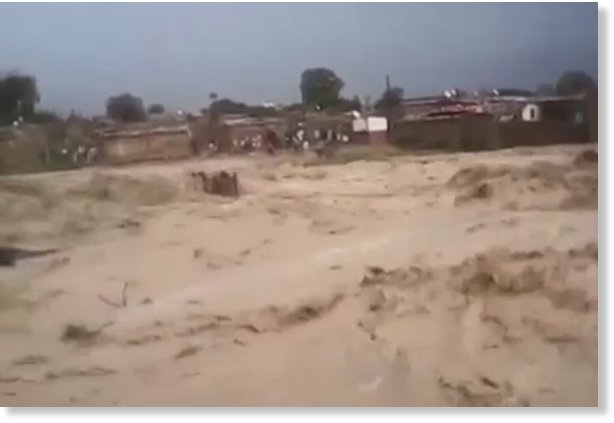
24 dead and 30 missing following floods in Angola

Floods Angola
© VOAPortuguês Verified account Floods Angola
At least 24 people have been killed and many more are missing after floods struck in city of Lubango, Huíla, in southern Angola.

Angola news agency ANGOP reports that heavy rain fell for around 9 hours on Monday 29 February 2016. Local media report that two rivers - the Capitao and the Caculuvar - overflowed.

The worst affected areas were the Tchioco and Canguinda districts of the city. It is thought that the flood water may have swept through a local market in Tchioco, where many young people work washing cars. Many of the victims are aged between 12 and 30, ANGOP report. Local emergency services said bodies were found up to 500 metres downstream.

The funerals of the victims took place yesterday. During the ceremony, retired archbishop of Lubango, Dom Zacarias Kamwenho, called for an end to building houses in risk areas. Lubango has been the site of several forced mass evictions to make way for public infrastructure projects. Families were left with no alternative housing, according to Human Rights Watch.


Comment: Warning, some may find the following video upsetting.


Cloud Precipitation

Landslide in São Paulo, Brazil kills 2; Rio de Janeiro floods after 100 mm of rain in 4 hours

Floods São Paulo
© Defesa Civil da Praia GrandeFlooding in São Paulo
Heavy rain in south eastern Brazil has caused a deadly landslide in São Sebastião, São Paulo State, and widespread flooding in the streets of Rio de Janeiro city, where some areas saw over 90mm of rain in 4 hours.

São Paulo

The heavy rain began to fall on 28 February 2016. Two people died after they were buried in a landslide in the Boicucanga neighbourhood of São Sebastião on 29 February. The landslide destroyed several homes, leaving at least 11 people homeless. A total of 27 people were evacuated.

Agência Brasil say that a total of 7 people have died in landslides in the state since December.

The heavy rain also caused surface flooding in Baixada Santista on the coast of São Paulo state. Local civil defence personnel were called in to help carry out some evacuations.

Cloud Precipitation

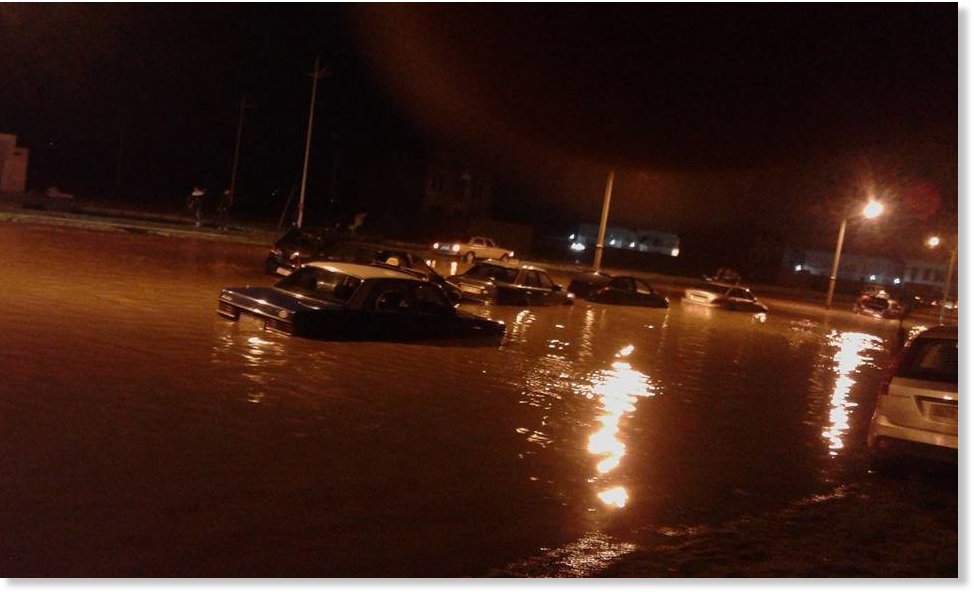
Peruvian army sent in to deal with floods

Floods in Peru
Floods in Peru
The authorities in Peru are sending the military to help areas affected by floods that have afflicted several parts of the country.

Scientists blame El Niño, the warm ocean current, for the heavy rains that turned roads into rivers in Arequipa, setting cars adrift in the torrent. The southern province has been particularly badly hit; at least two people were reportedly killed.

Residents in Tumbes, a coastal region in the northwest, were also left to survey the damage.

Local media reported that 3,000 people in the area had been left homeless, with 30,000 affected in some way.


Cloud Precipitation

Flash floods hit Montego Bay, Jamaica

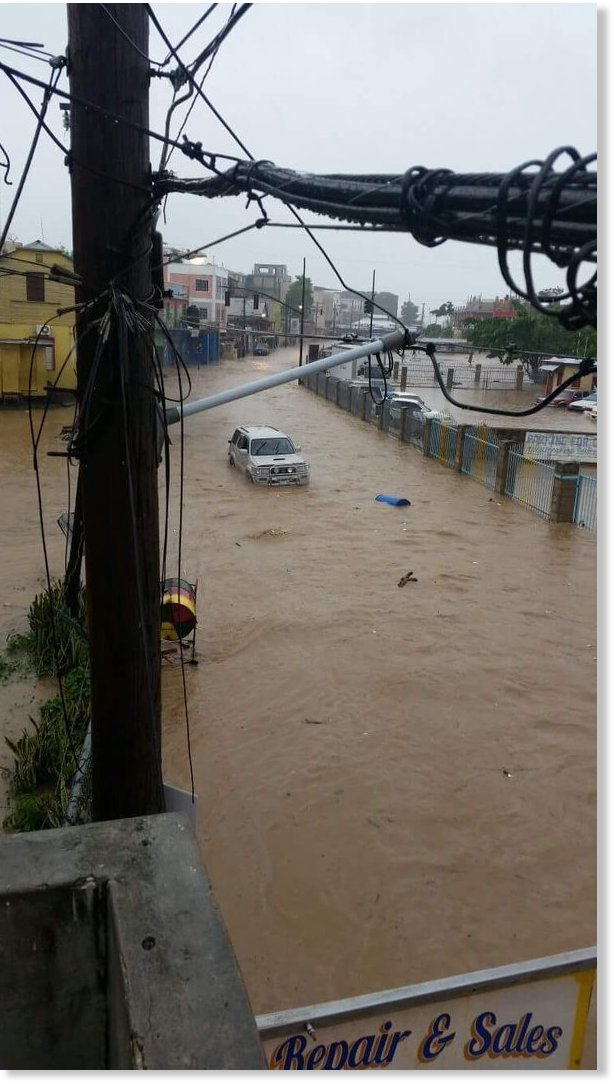
Creek Street in Montego Bay St. James.
© Abka Fitz-HenleyCreek Street in Montego Bay St. James.
Western Bureau:

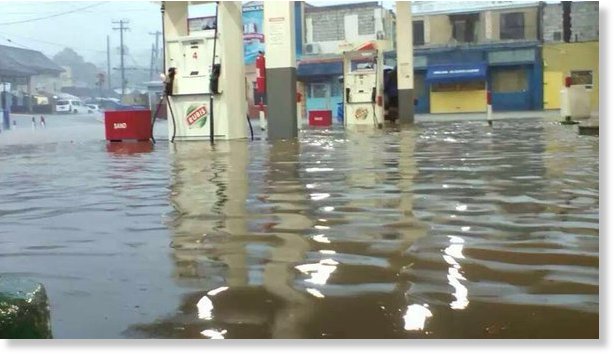
The heavy rains that have been lashing section of St James since late Friday afternoon resulted in significant flooding in several sections of downtown Montego Bay and has left several houses in the newly constructed Port Bello Housing Scheme, near Cornwall Courts, under water.

"We have had reports of Creek Street, Dome Street and the Sign main road being under water at this time," Montego Bay's mayor, Councillor Glendon Harris, told The Gleaner shortly after 1 p.m.

"We have teams from the National Works Agency, the Police and the St James Fire Department out there monitoring the situation".

As a result of the number of flooded roadways across the western city, traffic was reduced to a snarl in some areas and came to a complete standstill in many other sections, creating a nightmare for motorists and pedestrians.


Montego Bay city flooded after heavy rain
© Abka Fitz-HenleyMontego Bay city flooded after heavy rain

Cloud Precipitation

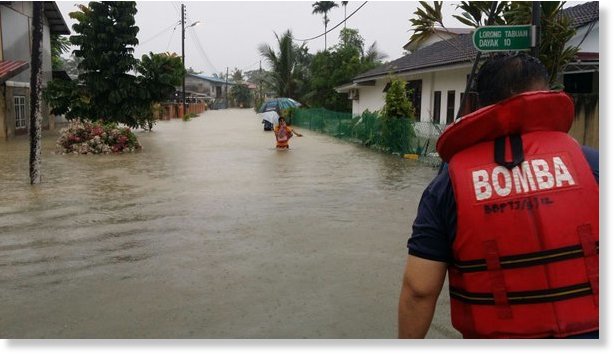
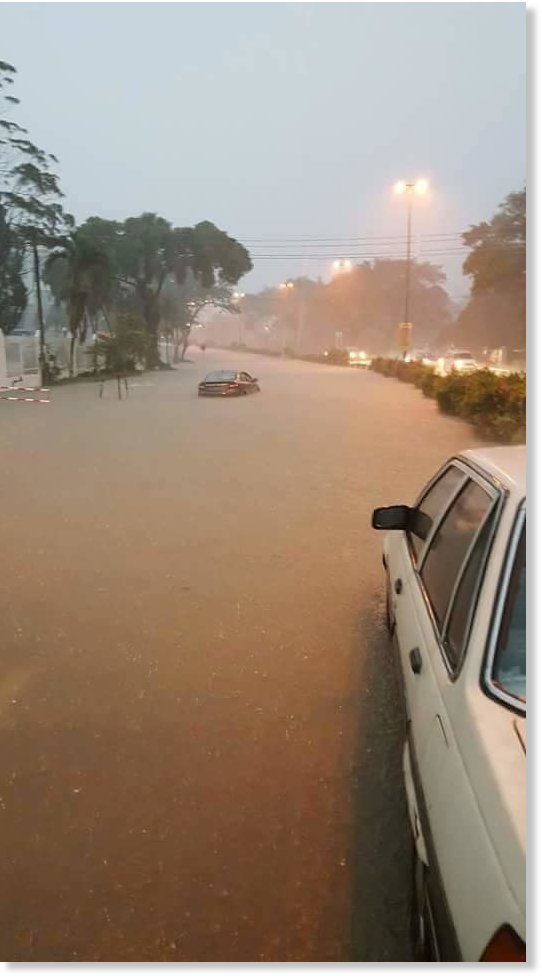
Flash floods in Kuching, Malaysia following 300 mm (nearly 1 foot) of rain in 24 hours

Floods in Kuching
© Bomba MalaysiaFloods in Kuching
Heavy rainfall in Malaysia has caused the third wave of flooding in the state of Sarawak on the island of Borneo.

A torrential downpour that began early on Saturday 27 February caused severe flooding in and some landslides in the district of Serian. Other areas affected included Padawan, Penrissen and Bau-Lundu.

The state's capital city, Kuching, was also badly affected, with some streets under 70 cm of water at the peak of the floods.

Local media say that much as 300 mm of rain fell in Kuching in 24 hours between 27 and 28 February, 2016. The city's drainage system is designed for a maximum of 180 mm of rain and was unable to cope. However, much of the flood water had subsided by late morning of Sunday 28 February.


Floods in Kuching

Cloud Precipitation

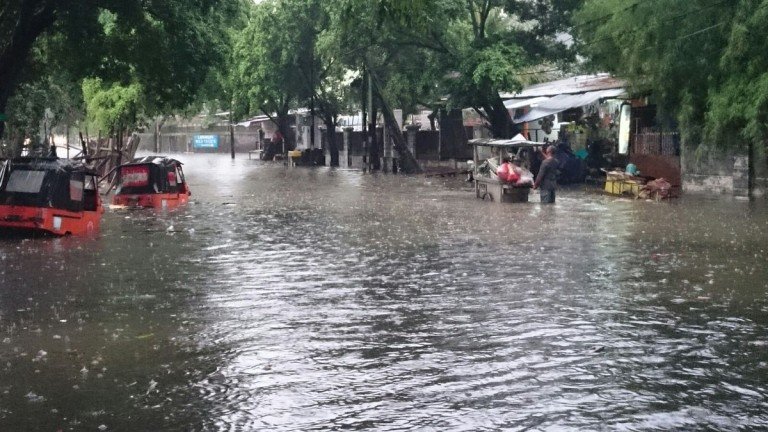
Roads blocked after flooding in Jakarta, Indonesia

Flooding in the streets of Jakarta, 26 February 2016.
© BPBDFlooding in the streets of Jakarta, 26 February 2016.
In Indonesia, Jakarta's Disaster Management Agency, BPBD, reported earlier today that heavy rainfall in Greater Jakarta and the surrounding areas has caused flooding across several parts of the city, causing traffic problems and some damage to buildings.

BPBD say that most of the rain fell in just one hour during the evening of 25 February 2016. In East Jakarta, the rain left flood water up to 90cm. BPBD say that around 40 people have been evacuated from their homes in Cakung.

Flooding has also been reported in areas of West and South Jakarta, and also in North Jakarta, in particular Kelapa Gading and Cilincing.

Indonesia's Meteorology and Geophysics Agency (Badan Meteorologi, Klimatologi, Dan Geofisika - BMKG) has predicted further rain over the weekend for Greater Jakarta, surrounding areas and across many parts of Indonesia.

Cloud Precipitation

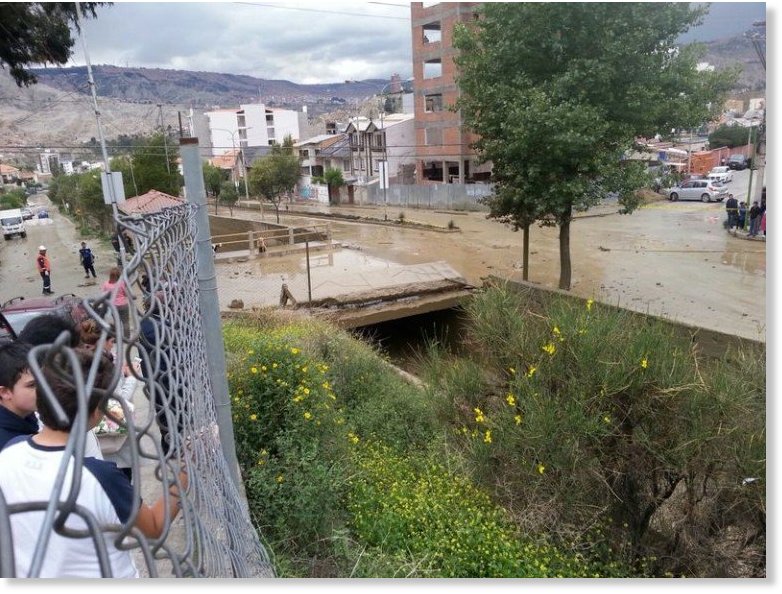
Flash floods hit La Paz, Bolivia after torrential rainstorm

flash flood in La Paz, Bolivia.
© Andrea InnocentiBridge topped by the flash flood in La Paz, Bolivia.
Intense rain and increasing river levels have been reported in Bolivia since 23 February, 2016. So far Bolivia's rainy season, under the influence of this year's strong El-Niño, has mostly been characterised by drought rather than floods.

La Paz

A torrential rainstorm hit the city of La Paz on the 24 February 2016, causing a flash flood resulting in the overflow of the Huayñajahuira River, a tributary of the Choqueyapu River. Starting at 17:00, intense rain affected the upper part of the urban watershed of Choqueyapu River, with no rain observed in the southern part of the city, where the flood occurred.

Video below courtesy of Andrea Innocenti:


Cloud Precipitation

Flash floods hit eastern Israel

Israel floods
© Akil al Ziadneh/AlbayanFlooding in the Bedouin town of Um Namila, near Rahat in the Negev on Monday, February, 22, 2016

Flash floods hit eastern Israel as temperatures drop throughout country; warmer days expected later in the week


Several Israeli schools and roads were closed Monday due to flooding as rain and wind bashed the country after a week of unseasonably high temperatures.

Flash floods in the area of Ein Gedi in eastern Israel prompted school closures in the area. On Mount Hermon, heavy snow and wind led operators to close the ski resort.

A group of 10 hikers who were stranded due to the inclement weather in the Negev, next to the Ramon Crater in southern Israel, were rescued. A search and rescue unit was called to the area and safely brought the hikers out using jeeps, reports said.

The southern city of Sderot also experienced flooding, as well as many Bedouin areas of the Negev.


Cloud Precipitation

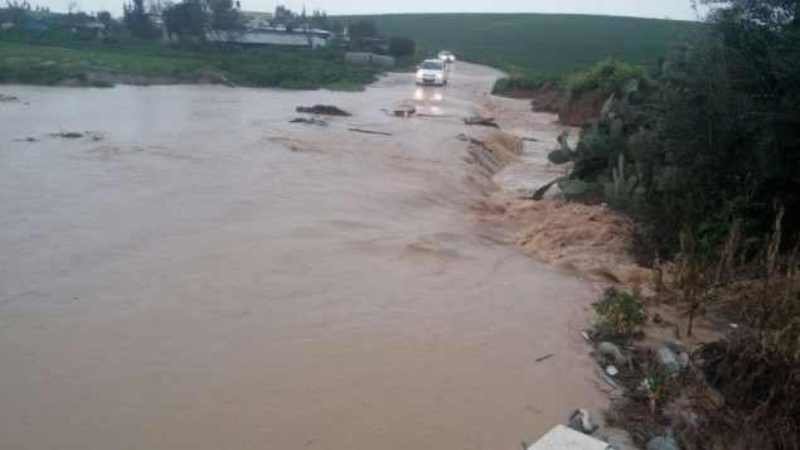
Torrential rainfall causes flooding in northern Morocco

Floods in Morocco
© StoplydecFloods in Morocco
Torrential rainfall between Saturday 20 and Sunday 21 February caused flooding in areas of northern Morocco, in particular in the Tanger-Tetouan-Al Hoceima region, including the provinces of Tetouan and Chefchaouen.

In the harbour city of Larache, Larache province, 99 mm of rainfall was recorded in 24 hours between 20 and 21 February. In Tangier, around 29 mm of rain fell in 24 hours to 21 February.

The city of Tetouan recorded 22.1 mm in 24 hours on 20 February and 25.9 mm the next day. Roads were blocked and the flooding caused major traffic disruption. Residents criticised the city's drainage system for its inability to cope. Some damage to buildings was also reported in both provinces of Tetouan and Chefchaouen.

There are also unconfirmed reports that a woman drowned in a remote area of Tetouan province after a group she was travelling with became trapped by the flood water.