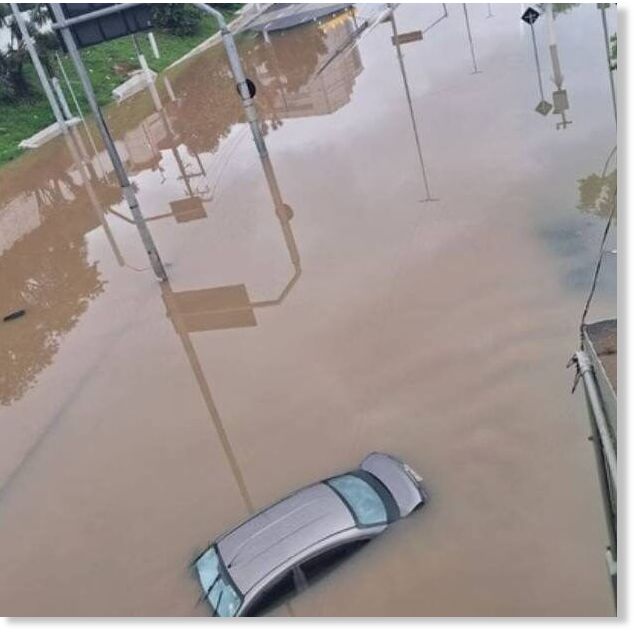
A tropical storm set off flooding and a landslide in the southern Philippines, leaving at least four people dead, displacing more than 6,000 and trapping residents in houses in two flooded villages, officials said Friday.
Tropical Storm Penha slammed ashore onto the southeastern province of Surigao del Sur from the Pacific late Thursday. It was last tracked Friday around noon off central Bohol province with sustained winds of up to 55 kilometers (34 miles) per hour and gusts of up to 70 kph (43mph), according to forecasters.
A couple and two children died Thursday night when their shanty was hit by a landslide in a quarry area that was set off by torrential rains in a village in southern Cagayan de Oro city, Office of Civil Defense regional director Antonio Sugarol said.
In southern Iligan city, about 55 kilometers (34 miles) southwest of Cagayan de Oro, a resident called the DZMM radio network Friday and pleaded to be rescued from the second floor of her house as floodwater rose and trapped her and three other family members.
Three weeks' worth of rain fell in just a few hours
The town of Antibes Juan-les-Pins, in south-eastern France, flooded yesterday evening (February 3) after a storm brought three weeks' worth of rain in just four hours.
Locals took to social media to share images and videos of the continuous rainfall, lightning, and hailstones which caused streets to quickly fill with water, particularly in the west and centre of the town.
Some 86 litres of rain per square metre fell between 19:00 and 23:00 across the affected area in the Alpes-Maritimes department, reported La Chaine Météo.
The 'stationary' storm is said to have been caused by humid air rising from the Mediterranean.
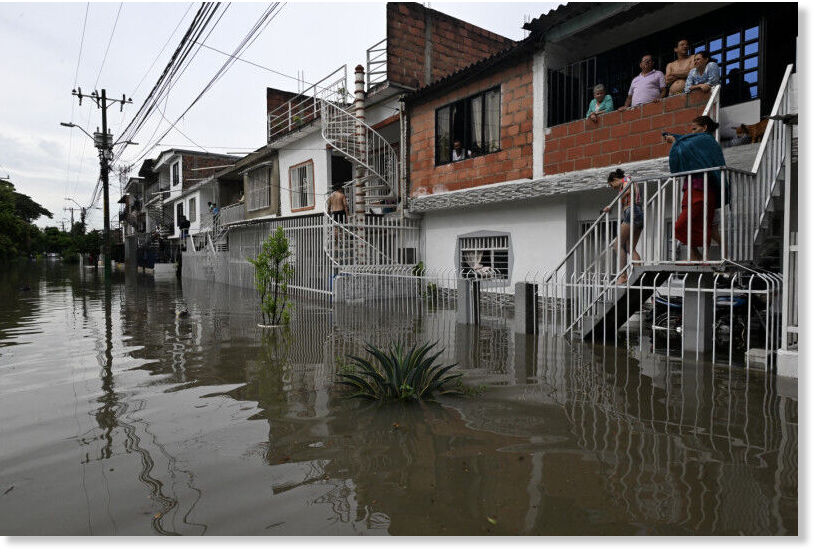
Colombia is facing an unusually intense rainy season that has caused flooding, landslides and emergencies in dozens of municipalities, especially in the Caribbean, Andean, Pacific and Amazon regions, the Institute of Hydrology, Meteorology and Environmental Studies (Ideam) warned on Tuesday.
"During the month of January, rainfall patterns above normal were recorded in several regions of the national territory," the meteorological authority said in a statement, warning that these conditions will continue in the coming days.
Ideam also points out that this behavior has increased rainfall by 64.4% compared to normal, with the greatest impact in the north, center and west of the country.
Since last Friday, the most intense rains have been concentrated in the southern departments of the country such as Putumayo and Nariño; in the central departments of Caldas, Risaralda, Huila and Boyacá, and in the northwest, Antioquia.
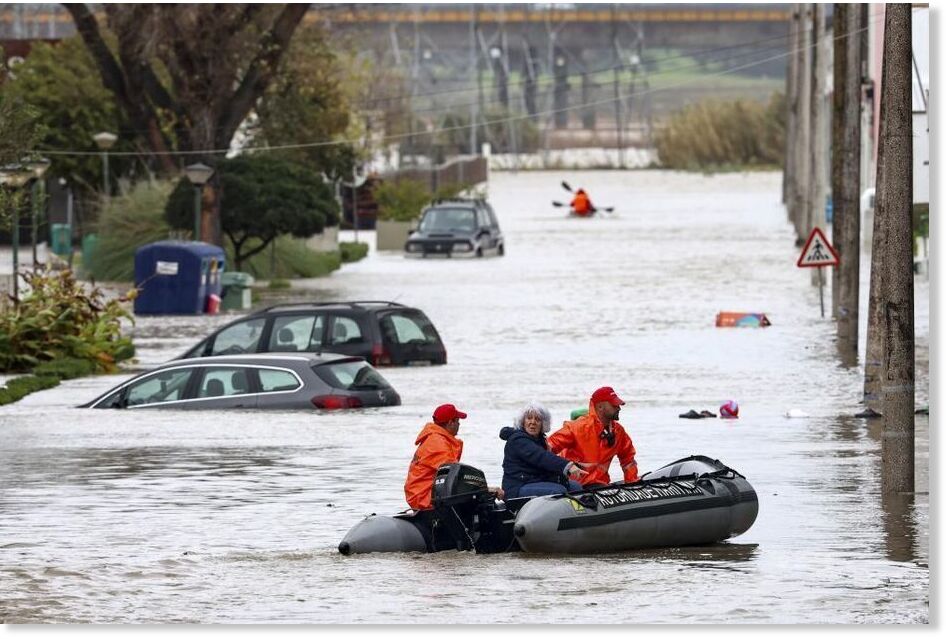
The lower part of the city of Alcácer do Sal, flooded on Wednesday due to the rising Sado River, has accumulated water in some areas with no damage, according to a source from the city council.
In statements to the Lusa news agency, António Grilo, councilor responsible for Civil Protection in the Alcácer do Sal City Council, in the Setúbal district, said that the Sado River "ended up overflowing the retaining wall" on the riverfront and "putting some water on the public road," without "causing any kind of damage."
"Also on 'Avenida dos Aviadores' we continue to have the same volume of water and the expectation is that it will remain so for many hours," he added.
In addition to the rain that has fallen in recent days and the rising tide of the Sado River, "the dams upstream continue to release a lot of water and, at the moment, we are unable to change the situation," he reported.
An intense frontal system caused severe flooding in Maipú, leaving the road completely submerged and generating traffic chaos in the western area of Santiago.
A violent frontal system that hit the Metropolitan Region this Saturday left serious consequences in Maipú and other communes of the capital, turning Camino Melipilla into a veritable urban river.
The most critical situation is recorded between the intersection of Camino Melipilla and Pajaritos, in front of GoodYear, and Ciudad Satélite, where at least one of the roads remains completely flooded due to the intense rain that fell in just one hour.
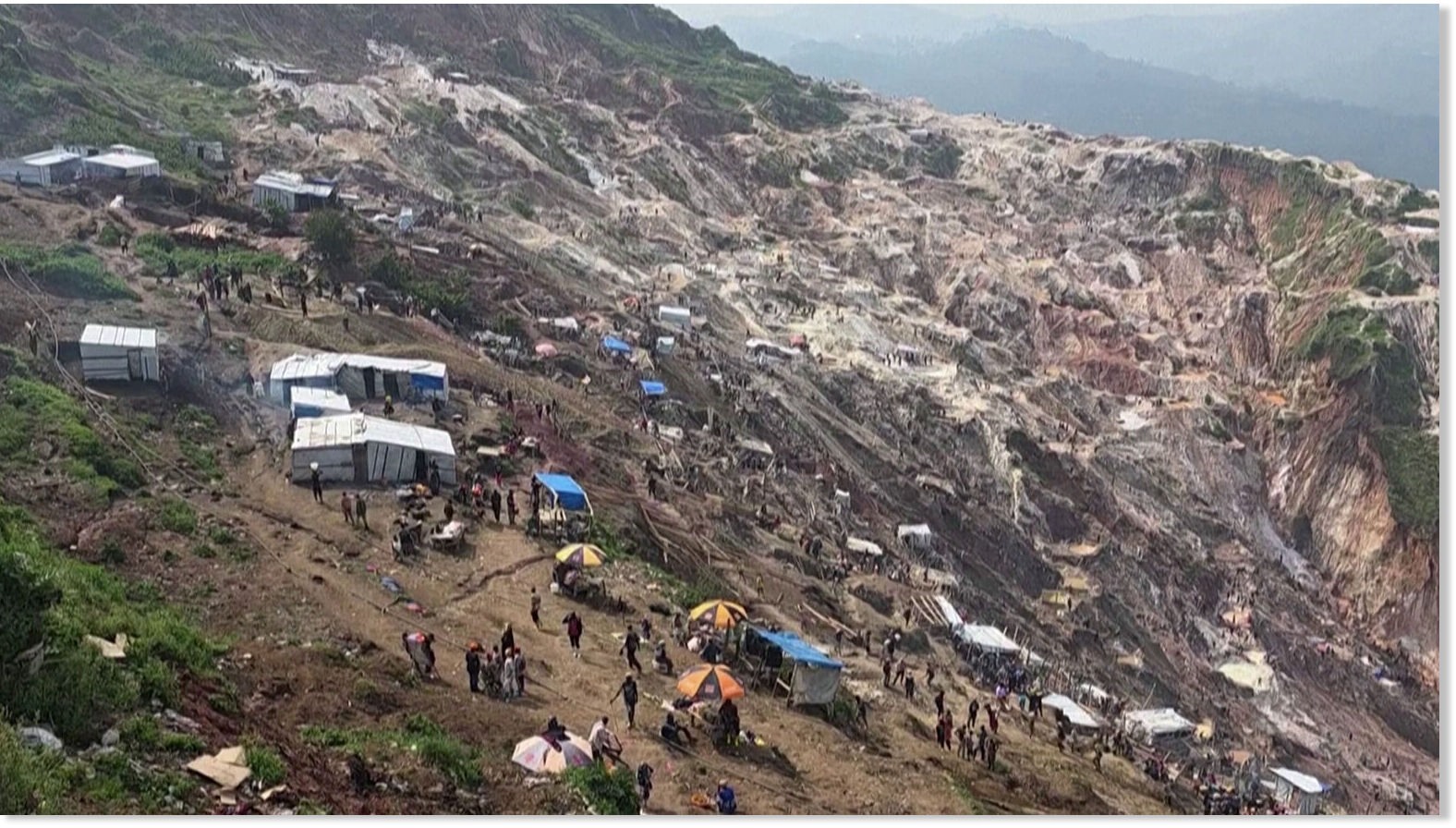
More than 200 people have been reported killed in a collapse at the Rubaya coltan mine in eastern Democratic Republic of the Congo (DRC), Lumumba Kambere Muyisa, spokesperson for the rebel-appointed governor of the province where the mine is located, told the Reuters news agency.
The mine, located some 60km (37 miles) northwest of Goma city, the provincial capital of North Kivu province, collapsed on Wednesday, and the precise number of casualties was still unclear as of Friday evening, Reuters reports.
"More than 200 people were victims of this landslide, including miners, children and market women. Some people were rescued just in time and have serious injuries," Muyisa told Reuters, adding that about 20 injured people were being treated in health facilities.
"We are in the rainy season. The ground is fragile. It was the ground that gave way while the victims were in the hole," he said.
Eraston Bahati Musanga, the governor of North Kivu province appointed by the M23 rebel group, told the AFP news agency on Friday that "some bodies have been recovered", without giving a specific figure of the number of those killed and injured, but suggesting a potentially high death toll.
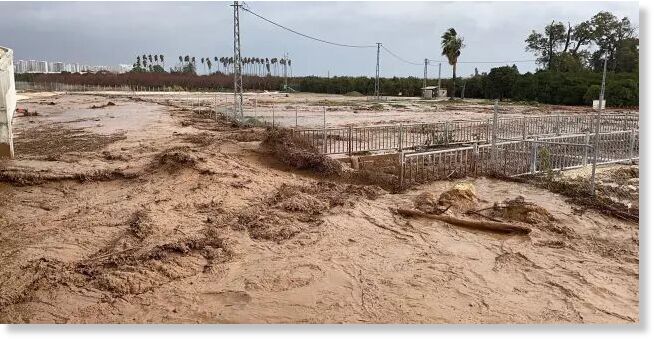
Heavy rainfall in Adana and Mersin, as warned by the meteorology department, has led to flooding. While cemeteries in the cities were submerged, streams overflowed, roads turned into lakes, and homes and businesses were inundated. It was noted that the effects of the rainfall could continue intermittently in the cities where daily life has been virtually paralyzed.
After the warnings from the General Directorate of Meteorology, heavy rainfall that was effective in Adana and Mersin in the morning hours caused flooding. Due to the flood, which negatively affected daily life, cemeteries were submerged, streams overflowed, roads turned into lakes, and homes and workplaces were flooded.
A man drowned in a flash flood on Thursday night (29), on Avenida 31 de Março, in Piracicaba (SP). Trapped by a structure on the road, he did not survive his injuries and died at the scene.
The tragedy raises to 14 the number of victims of the rains in the state of São Paulo since the beginning of December. Of this total, six deaths occurred in similar situations involving flash floods.
The storm, which lasted about 40 minutes and recorded more than 50 millimeters of precipitation, caused flooding in neighborhoods in the central region of the city. The force of the water even ripped up the asphalt on one of the main avenues of Piracicaba, which has approximately 425,000 inhabitants and is located in the central region of the state.
In the last 12 hours, the city accumulated more than 80 millimeters of rain, according to data from the Integrated Hydrographic Basin System (SIBH), of SP Águas. Measuring stations in the municipality indicated rapid increases in the level of the Piracicaba River, which runs through the city center.
Authorities have pledged ongoing efforts to protect residential neighborhoods in Ksar El Kebir threatened by flooding following the rising waters of the Loukkos River.
The provincial director of Equipment and Water in Larache, Azzedine Aittalab, told Morocco's news agency today that teams are currently installing temporary barriers to prevent the river's waters from reaching at-risk areas.
He said the efforts are part of broader preventive measures aimed at safeguarding citizens, protecting property, and ensuring people's safety, recalling a task force and a vigilance committee chaired by Larache province governor Bouassam El Alamine that have been operational since Tuesday to closely follow developments after the weather alerts.
He said the committee conducted inspections to assess conditions along the river, focusing on several sensitive points.
Comment: Related: Heavy rains trigger large-scale flooding across Colombia's Medellín