Animals
S


Black Cat

Over 200 Pelicans Wash Up Dead at Topsail Beach, NC - Preliminary Necropsies Inconclusive

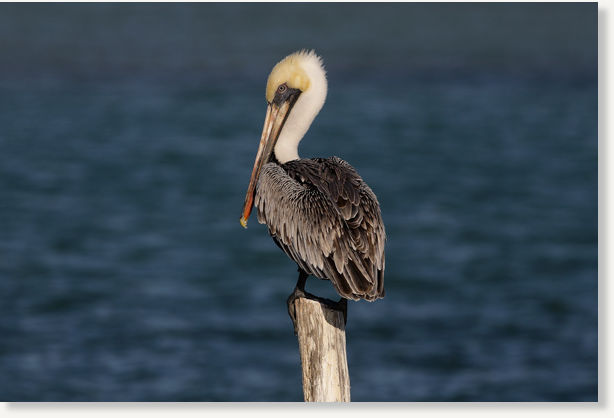
Preliminary necropsies by the University of Georgia on some of the more than 200 Brown Pelicans that have washed up on the shores of Topsail Beach on the coast of southeastern North Carolina are inconclusive and do not yet support concerns that foul play was responsible. Complete toxicology and pathology reports are expected to be available soon.

A taskforce including officials from the National Oceanic and Atmospheric Administration and the U.S. Fish and Wildlife Service, as well as state officials, has been formed and has been meeting to investigate the deaths, but so far has not determined a cause. The first dead birds began washing up on shore in November.

pelican
© Mike RichardsonBrown Pelican, from the surfbirds galleries.

Red Flag

Birds Vanishing in the Philippines

gulls flying
© unknown
The number of birds flying south to important wintering grounds in the Philippines has fallen sharply this year, with experts saying the dramatic demise of wetlands and hunting are to blame.

Despite some harsh, cold weather across the Eurasian landmass, some waterbirds that usually migrate in huge flocks to the tropical islands have been completely absent, said Philippine-based Danish ornithologist Arne Jensen.

"The flyway populations of several waterbird species are in constant and dramatic decline," Jensen, who advises the Philippine government on species conservation, told AFP.

"Hence the urgent need to establish real and well-managed, hunting-free waterbird sanctuaries along the migratory flyways."

Candaba, a swamp two hours' drive north of Manila that has long been used as a pit stop by hundreds of species as they fly staggering distances between the Arctic Circle and Australia, appears emblematic of the downfall.

Black Cat

Bye Bye Blackbird

Image
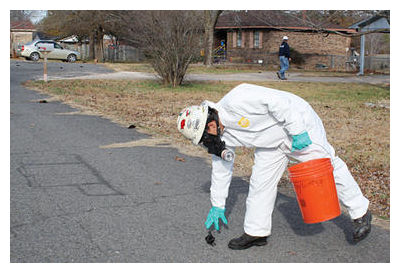
© Warren Watkins/The Daily Citizen/AP/FileA worker with US Environmental Services, a private contractor, picks up a dead bird in Beebe, Ark. on Jan. 1. The USDA said it killed hundreds of starlings in South Dakota this week.

It's not the "aflockalyptic" fallout from a secret US weapon lab as some have theorized. But the government acknowledged Thursday that it had a hand in one of a string of mysterious mass bird deaths that have spooked residents in Arkansas, Louisiana, Alabama, South Dakota, and Kentucky in the last month.

The United States Department of Agriculture (USDA) took responsibility for hundreds of dead starlings that were found on the ground and frozen in trees in a Yankton, S.D., park on Monday.

The USDA's Wildlife Services Program, which contracts with farmers for bird control, said it used an avicide poison called DRC-1339 to cull a roost of 5,000 birds that were defecating on a farmer's cattle feed across the state line in Nebraska. But officials said the agency had nothing to do with large and dense recent bird kills in Arkansas and Louisiana.

Fish

US: Sea otter deaths on the rise; 304 found dead on Central Coast in 2010

Image
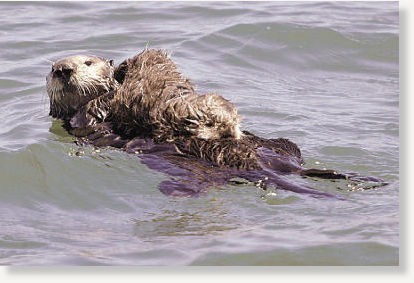
© Sentinel FileA female otter floats on her back with her pup resting on her belly in Elkhorn Slough. A recent study shows otters are on the decline along the Central Coast.
2010 was a hard year for Central Coast otters.

A preliminary report from the U.S. Geological Survey shows that 304 otters were found dead along the coast between Half Moon Bay and Santa Barbara, according to the Monterey-based Otter Project.

When compared to the total spring count of 2,700 otters, 11.2 percent dead may not seem catastrophic, especially when compared to the 8 percent found dead in 2009. However, the jump from 232 dead otters in 2009 to 304 in 2010, makes scientists concerned for the species.

"Young pups and females died this year; if pups are dying, you have no future, and if females are dying you have no reproductive future," said Steve Shimek, chief executive of the Otter Project. "This suggests that we don't have a trend that will turn around too easily."

Though there was a peak of more than 3,000 otters in 2007 and there are a variety of causes for their death, what's unusual to Shimek is the number dying from disease.

Fish

Ireland: Hundreds of fish die in County Antrim river

dead,fish antrim,river
© BBC

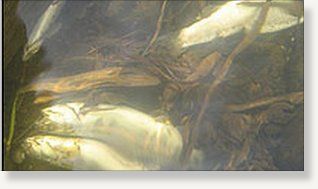
Hundreds of fish have been found dead in the Six Mile Water river in County Antrim.

Billy Robinson from Ballynure Angling Club walked a few miles alongside the river on Sunday afternoon.

He said he has seen dead fish from Duck bridge right up towards Ballyclare.

"There are quite a few dead trout, from small fish, up to fish weighing three quarters of a pound to a pound in weight, so it seems to be a total fish kill," he said.

"I'm looking over the bridge at the moment and there must be around 30 or 40 fish dead in the space of a few yards."

Cow Skull

10,000 Cattle Die In Vietnam

On Monday evening, the Department of Husbandry at the Ministry of Agriculture and Rural Development announced that more than 10,000 cows and buffalos have perished nationwide due to harsh weather conditions.

The northern mountainous province of Cao Bang topped the list with more than 2,260 dead cattle.

Officials in Lang Son reported nearly 2,000 dead, Lao Cai more than 1,400, Son La 1,300 while Ha Giang and Bac Kan both reported 1,000 cows and buffalos dead. The brutal cold has also afflicted cattle herds in central provinces of Quang Nam, Ha Tinh and Quang Binh.

The animals had been grazed by people from ethnic groups outdoors where the harsh conditions have deprived the herds of warmth and food.

Throughout the northern region, high mountainous areas have reported deep freezes. The temperature in Sa Pa was expected to drop from the current -0.5 degrees Celsius to the record low of below -2 degrees Celsius.

Lower mountainous areas have all reported temperatures below 10 degrees Celsius.

Hourglass

Dying Birds Stir Extinction Fears

Image
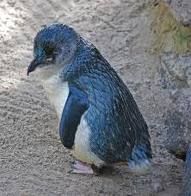
Little penguins are dying in their hundreds, leading conservationists to fear they are starving as a result of the La Nina weather system.

Other seabirds are washing up dead on beaches, raising concerns that species could become extinct if climate change causes extreme weather events to become more frequent.

At Wellington Zoo, two starving little blue penguin chicks have been brought in this week. One died on Wednesday and the other, found at Lyall Bay, was hanging on to life yesterday.

The zoo's veterinary science manager, Lisa Argilla, said petrels were also starving around Wellington's south coast, and five shags had been brought in this month. "They're unable to find enough food. We've had a lot of starvations and a lot of mortalities."

Eye 1

Bird Death is spreading: Ducks mysteriously found dead in Norway

dead duck
© Dan Henry KlausenEvery day, they find 10 more dead birds.
Online Translation:

Port Director Odd Bernt Mevold is one of those who collect the birds. So far today we've picked up ten birds, so there is a high mortality rate now.

What happens in the harbor here is tragic, "said Mevold to NRK.

Now the door is about 10 birds a day in the area, and it is not normal, "says Mevold.

The bird behaves strange

Also NRK employee observed today eider ducks behaved very strange.

They behave quite abnormal, nervous system and their coordination ability does not work, "says Mevold.

It is also found dead crabs. .

Arrow Down

UK wild bird numbers continue to fall

Image
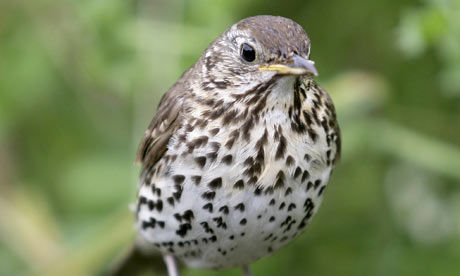
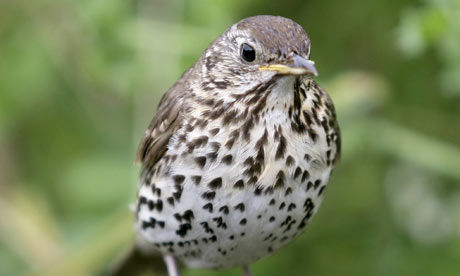
© Rex Features/BYB"At once a voice arose among/ The bleak twigs overhead/ In a full-hearted evensong/ Of joy illimited ... " - Hardy's Darkling Thrush
New figures show populations of farmland birds at record low, with woodland birds also experiencing a 24% decline

Populations of wild birds in the UK are falling dramatically with even slight recent recoveries apparently stalled, government figures showed today.

Only seabird populations remain comfortably above 1970 levels, while farmland bird numbers continue to plunge from a brief mid-1970s peak to half those of 40 years ago.

Habitat changes responsible for fewer nesting sites and food shortages were blamed last summer for sharp English farmbird losses but the reasons for the decline in woodland birds are less clear, according to the RSPB.

However research led by the British Trust for Ornithology has suggested agricultural intensification has also hit birds favouring wet grassland and moorland. Less vegetation cover and scrub, overgrazing by deer, more drainage of nearby farmland and changing winter climate may all be factors in the woodland bird decline.

Some farmland birds, such as the grey partridge, turtle dove, starling, tree sparrow, corn bunting and yellow wagtail have declined by over 70% over the period of official monitoring based on annual surveys of breeding sites and other data relating to 121 species. But wood pigeon and jackdaw populations have doubled and stock dove and greenfinch numbers risen by 50%.

Among woodland birds, huge falls have been recorded for wood warbler, willow tit, tree pipit, lesser spotted woodpecker, blackbird, dunnock, song thrush and tawny owl, among others. Yet black cap, great spotted woodpecker, green woodpecker, nuthatch and long-tailed tit are thriving

Eye 1

Farmer wants to know what's killing his buffalo

Image
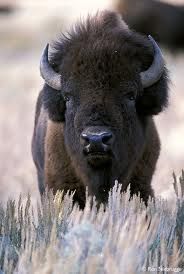
© Yellowstone National Park
Dozens of buffalo on a Sempronius farm have died mysteriously over the last four months, and veterinary examinations provide no clue to what happened.

"We're going nuts down here trying to figure out what's going on," farm owner Peter Head said. "This is going to put me out of business."

Beginning in October, the buffalo have been dying off sporadically - as many as six on some days. Of the original 110 animals, 55 have died, including 17 of 23 calves and many of the older animals, Head said.

"They just stand around like they have stomach cramps," Head said of the sick buffalo. "Like something's bothering them on the inside."