Animals
S


Wolf

Fox breaks into penguin enclosure at Melbourne zoo, massacres 14 birds

Image
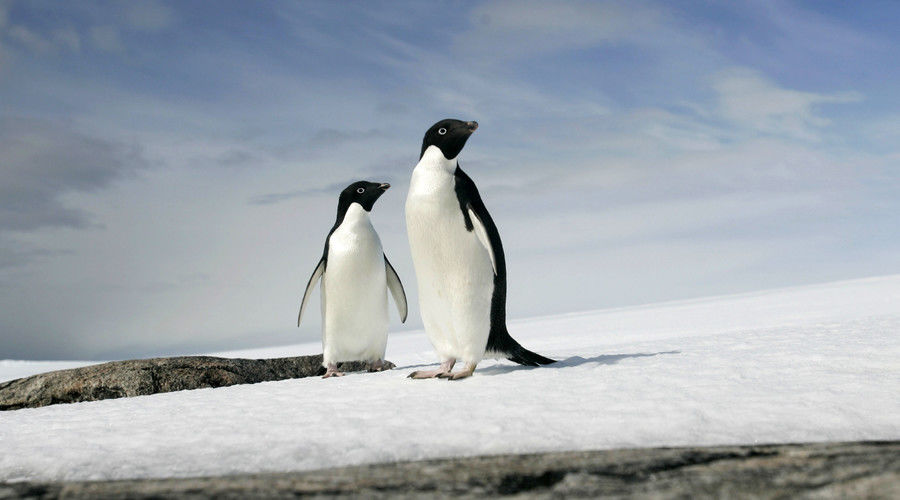
© Pauline Askin/ReutersA pair of Adelie penguins are pictured at Cape Denison, Commonwealth Bay, East Antarctica.
A fox has caused pandemonium at a zoo in Australia as it managed to break into a penguin enclosure and kill 14 of the Antarctic birds. Staff at the Melbourne zoo made the grisly discovery on Wednesday morning.

The fox attack managed to wipe out almost half the zoo's penguin population, as only 15 birds were able to survive the carnage. They have undergone checks by veterinarians and been moved to a more secure area.

The manager of Wild Seas, Justin Valentine says that the penguins are settling into their new temporary accommodation, while the zoo is undertaking measures to make sure that the fox does not strike again.

"The zoo is working with a fox control expert, and he will be coming in to offer further advice," he said in a statement.

Valentine said that foxes are commonly found in the suburbs of Melbourne, but they are not often able to get into the grounds of the zoo.

Zoo staff have had no luck in tracking down the fox, which is still at large.

Attention

Nearly 1100 hogs killed by hydrogen sulfide gas in Tracy, Iowa

Pig farm
"It makes me emotional just thinking about if someone would have stepped in the building," said Hog Farmer Carroll Hoksbergen.

Hoksbergen knows what happened could have been a lot worse, and he is thankful that his wife and brothers-in-law didn't die. "Other farmers have lost a hog or a few hogs here or there with this kind of event, but ours was just to a much greater magnitude.

So, we certainly want this to be a wake up for all farmers that are working with this right now, all across the state of Iowa, how dangerous this really is, and what a disaster it can be," said Hoksbergen.

Nearly 1100 hogs died, being overcome by hydrogen sulfide gas. Only 99 hogs survived. "It's hydrogen sulfide gas, a gas that municipal workers deal with in city sewer lines and that type of thing. Most hog farmers are aware that it's there and that you have to work with it," said Hoksbergen.

"In the manure hauling process , as we pump it out of there, out of the pits, that gas is created and usually it's vented off and with ventilation with the fans," said Hoksbergen. "We certainly try to follow all protocols, keeping all fans running, and ventilation take care of it and things to prevent this, but it can still sneak up on you," said Hoksbergen.

Comment: According to an industry online magazine, four powerful poisons can be present in manure pits, especially in those below the ground - hydrogen sulfide, ammonia, carbon dioxide, and methane. In August, manure pit fumes killed four workers in two separate incidents in Iowa and Wisconsin.

Considering the sheer magnitude of this particular incident, perhaps outgassing may have been a factor.

As high levels of hydrogen sulfide builds up, such events may become a lot more common. Those working on sewer systems, manure pits or living in 'low-lying areas' may be particularly susceptible to these potentially fatal 'heavier than air' toxic fumes.

In Ireland this year two trawler men died from hydrogen sulphide poisoning, as well as two Dublin brothers in a sewer tragedy.


Question

16 snowy owls found starving or near death in Saskatchewan, Canada

Image
© Healing Haven Wildlife RescueOne of the first snowy owls found by the Healing Haven Wildlife Rescue.
Snowy owls are migrating south for winter, but many may not survive.

Healing Haven Wildlife Rescue has received 16 calls for snowy owls in distress, but only half of the owls have made it to the facility, located near Dorintosh, Sask.

"By the time people are finding them, they are just so far gone, they are in an extremely emaciated state. And often just the stress of picking them up and driving them here is enough to kind of tip them over the edge, and they don't make it," said Mark Dallyn, the founder of Healing Haven Wildlife Rescue.

He says year to year, he may encounter calls for starving snowy owls, because of the boom and bust of lemming populations, the predator's main food source.

"But this year is different. It's affecting both young owls and adult owls as well. And it's affecting way more than we're used to," Dallyn said.

Attention

Dead Blue whale draws crowd to Ophir beach, Oregon

Image
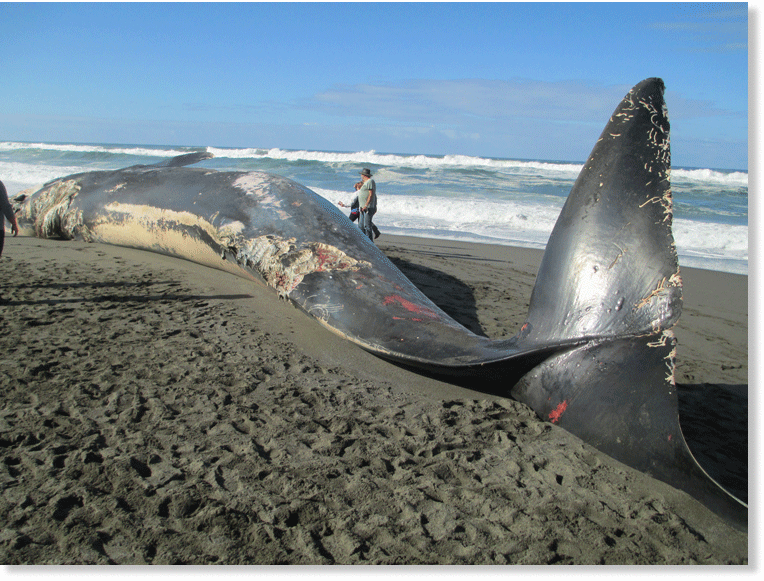
© Randy Robbins.The decaying body of a blue whale washed ashore Monday near the Ophir rest area about 7 miles north of Gold Beach.
A large, dead blue whale measuring approximately 80 feet and weighing nearly 20 tons made landfall in Ophir, about 7 miles north of Gold Beach on Monday, according to Russ Stauf, Rogue Watershed manager.

The rare beaching attracted a crowd all day Tuesday, with motorists parking along Highway 101 at the Ophir rest stop, some walking across the sand for a closer look.

The stench of the large marine mammal was oppressive from more than 100 yards away. That didn't stop a group of preschool children, including one child who was clutching a furry Orca whale toy, from trekking along a winding path to the beach to see the whale up close. They were joined by a woman who stood inside the curl of the huge, upright tail.


Attention

Third shark attack in 2 months off Mozambique

Image
Jaws 3
A third shark attack happened in the Bay of Inhambane in southern Mozambique for the past two months, resulting in a fisherman losing both arms, local news agency reported on Monday.

The attack happened on Sunday in shallow water of the bay, when the fisherman, who was fishing for prawns, pulled his nets ashore, according to the state-owned news agency AIM.

The victim was rushed to local hospital for treatment, but the shark had virtually severed both arms from his body, and the medical team believed there was no option but to amputate them.

Frog

The surprising trick jellyfish use to swim

Image
© francescopaoli / FotoliaJellyfish swimming in the ocean. Millions of years ago, even before the continents had settled into place, jellyfish were already swimming the oceans with the same pulsing motions we observe today.
Millions of years ago, even before the continents had settled into place, jellyfish were already swimming the oceans with the same pulsing motions we observe today.

Now through clever experiments and insightful math, an interdisciplinary research team has revealed a startling truth about how jellyfish and lampreys, another ancient species that undulate like eels, move through the water with unmatched efficiency.

"It confounds all our assumptions," said John Dabiri, a professor of civil and environmental engineering and of mechanical engineering at Stanford. "But our experiments show that jellyfish and lampreys actually suck water toward themselves to move forward instead of pushing against the water behind them, as had been previously supposed."

This new understanding of motion in fluids is published in a Nature Communications article that Dabiri co-authored with Brad Gemmell of the University of South Florida, Sean Colin of Roger Williams University and John Costello of Providence College.

Attention

Whale found dead on Oman coast

Image
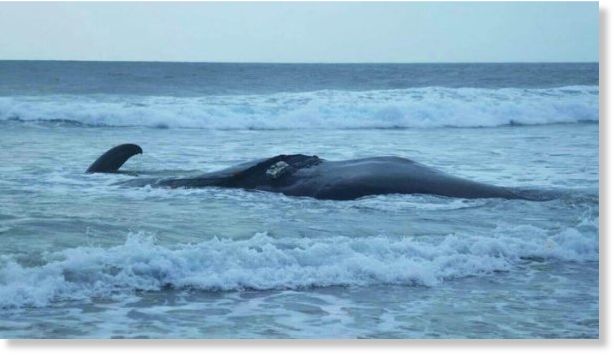
© ONAWhale washes ashore on Oman coast
A 20-metre 'Ambar' whale drifted ashore on Tuesday at Fushi Beach located between centre of the Wilayat of Sadah and Hadbeen area after getting caught in a fishing net used by fishing boats.

Said bin Masoud Al Amri, Director of Fisheries Department in Sadah said that the Fisheries Research Center in Raysut will deal with the issue and the concerned authorities will remove it.

Attention

10 pilot whales strand on Calais beach, France; 7 die

Image
© EPA/Fred Collier
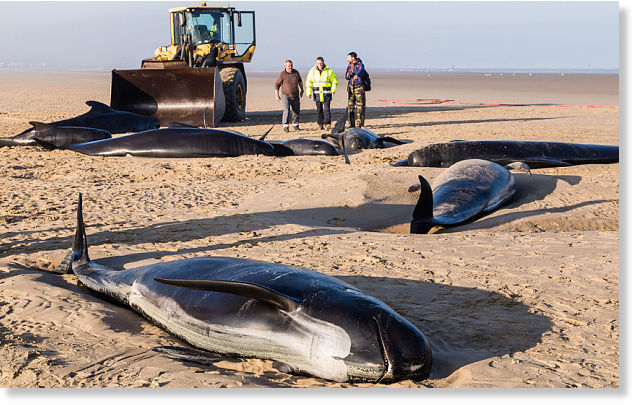
Pilot whales stranded on a Calais beach, despite huge efforts only three of the mamals could be saved.
A school of 10 whales that washed up on Monday in northern France may have done so voluntarily after the death of the dominant male, an expert said.

Seven of the whales found on the beach in Calais have not survived.

"The group was in the middle of a deep-sea migration towards the Faroe Islands to reproduce and feed," said Jacky Karpouzopoulos, of the Centre for Marine Mammal Research at La Rochelle.

"It's possible that this was a voluntary family beaching, whereby the dominant male died at sea and the rest followed his body," she said.

Eye 2

Shark bites woman 'to the bone' off Brevard County beach, Florida; 25th local attack this year

Image
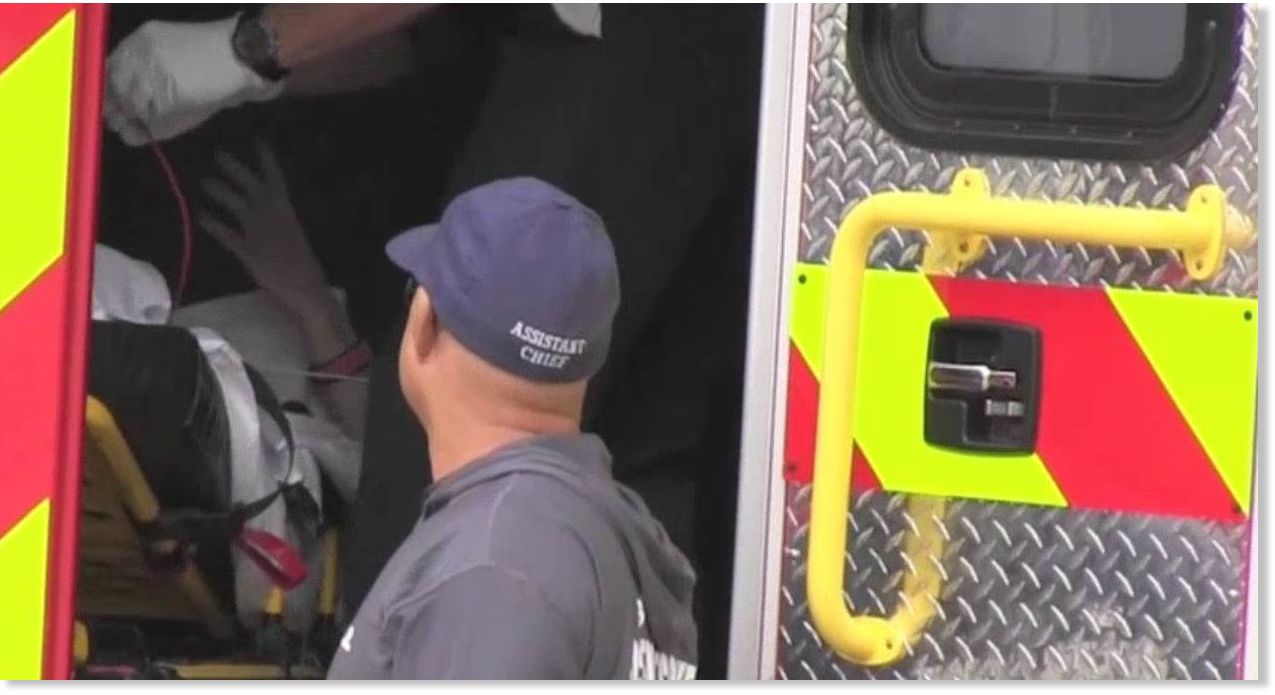
© NBC News ChannelParamedics treat an unidentified woman who was severely bitten by a shark Sunday in Cocoa Beach, Florida.
A woman wading through waist-deep water just off Florida's Atlantic coast was bitten "to the bone" Sunday afternoon, a witness and authorities told NBC News.

Brevard County Ocean Rescue Chief Jeff Scabarozi said the 28-year-old woman was close to shore in Cocoa Beach, near Cape Canaveral, when a shark bit her ankle about 3 p.m. ET. NBC station WESH of Orlando identified the woman as a tourist and described the injury as a 6- to 7-inch gash on her leg.

The witness, who was about 100 feet away, never saw the shark — "only jellyfish," she said. Beachgoers helped the woman out of the water, and she was transported to a hospital.


Cloud Precipitation

Several days of torrential rains flood the Masai Mara plains in Kenya, puzzling the wildlife

Image
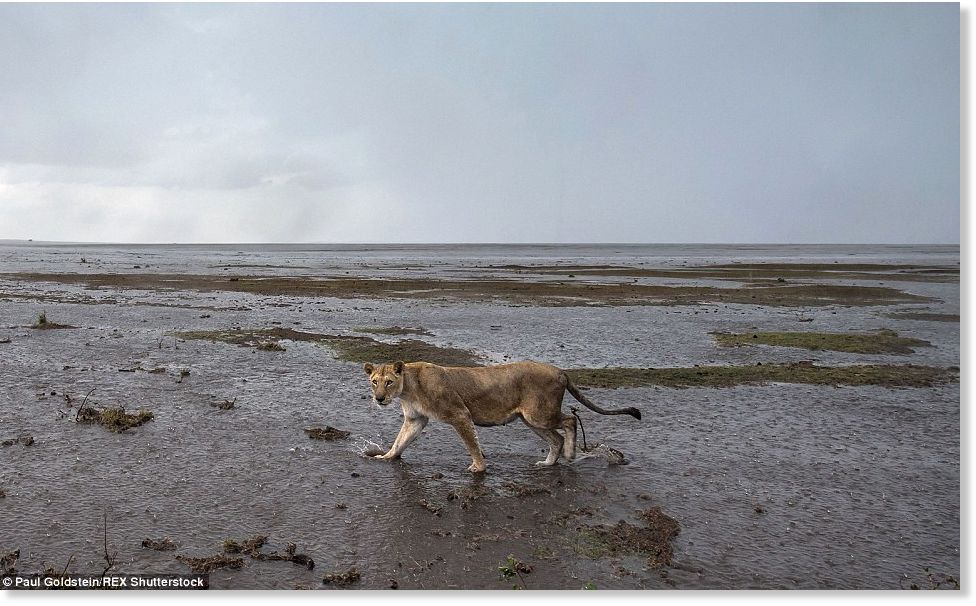
Thunderbolt and lightning: As the heavens open once more, the lioness makes her way across the muddy, watery plains
A long drought on the plains of the Masai Mara has been broken by several days of torrential rains, turning the dry Kenyan plains into a veritable sea.

These stunning images taken last week show drought turned to flood on the national reserve in southern Kenya, and lone animals who did not make it to shelter in time.

They include a lioness teetering on a small mound of earth, before 'island hopping' between small patches of land still visible above the giant puddles. Another image shows a forlorn gazelle hunched and exposed to the heavy rains.

The images were taken by British wildlife photographer and guide Paul Goldstein, from Wimbledon, south London.

'Last week the drought in Kenya's Masai Mara was broken. Violently,' Mr Goldstein explains.

Image
No way of staying dry: The lioness wades through the water which comes up her elbows