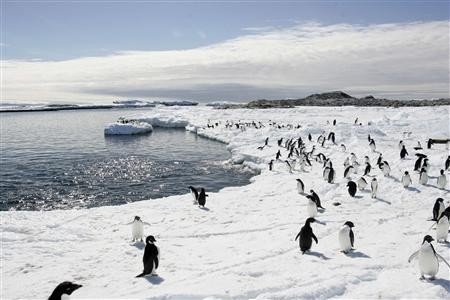
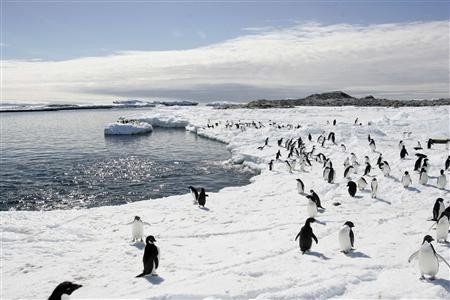
© ReutersAdelie penguins walk on the ice at Cape Denison in Antarctica, on 12 December 2009.
An estimated 150,000 Adelie penguins living in Antarctica have died after a huge iceberg the size of Luxemburg became lodged near their colony. The grounding of the colossal iceberg in Cape Denison in Commonwealth Bay left the colony effectively landlocked.
This meant the mid-sized penguins, that range from 46cm-71 cm (18in-28in), had to trek 60km to the sea to feed on their favoured krill. Their habitat used to sit on the edge of a large expanse of open water but in 2010 a massive iceberg measuring 2,900km sq became lodged in the bay, rendering the colony of Penguins landlocked.
In the last five years the
colony was dwindled in size, as the perilous journey has claimed the lives of 150,000 of the penguins, according to research carried out by the Climate Change Research Centre at Australia's University of New South Wales. And scientists warned that the colony is set to disappear in just 20 years unless the sea ice breaks up or the iceberg, named B09B, becomes dislodged.
Researchers in an article in
Antarctic Science said: "
The arrival of iceberg B09B in Commonwealth Bay, East Antarctica, and subsequent fast ice expansion has dramatically increased the distance Adélie penguins breeding at Cape Denison must travel in search of food. "The Cape Denison population could be extirpated within 20 years unless B09B relocates or the now perennial fast ice within the bay breaks out. This has provided a natural experiment to investigate the impact of iceberg stranding events and sea ice expansion along the East Antarctic coast."But all is not lost, a study of
another colony of Adelie penguins located just 8km from the coast of Commonwealth Bay is thriving, the researchers said. And new findings from other studies suggest that between the last ice age through to 1,000 years ago, some species of penguins have benefited from climate warming and retreating ice.













Comment: Unusual migratory patterns and deaths of sea creatures around the world seems to be increasing:
- North Sea sperm whale death toll increases to 23 as another 8 are washed up on German coast
- 300 turtles and a bottlenose dolphin found dead on beach in India
- Tens of thousands of dead jellyfish and starfish found on beaches of West Sussex and Hampshire, UK
- Rare deep sea ragfish found dead on coast of Gustavus, Alaska: 4th for the state in 3 years
- Wrong time, wrong place: Rare Arctic Beluga whale seen off the Irish coast
As the number of volcanoes erupting right now is greater than the 20th century's YEARLY average, a comparable escalation in activity of their underwater counterparts seems logical.It is estimated there are up to one million submarine volcanoes on our planet. Effects from this volcanic activity, combined with increased methane outgassing, radiation from the Fukushima disaster are probably also causing the ongoing devastation of marine life, mass fish die offs and strange migratory behaviour we are currently witnessing.
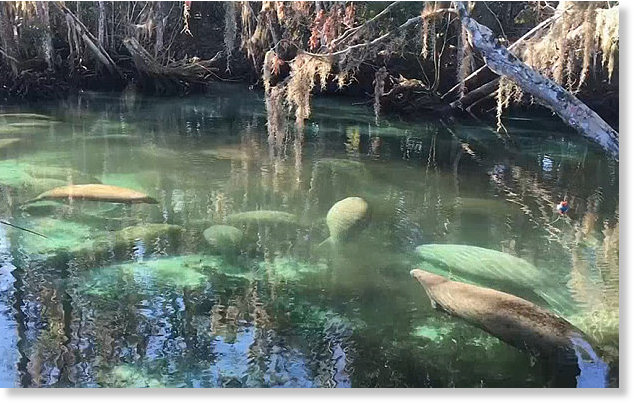
See also: Around 500 manatees crowd into a Florida spring to stay warm