
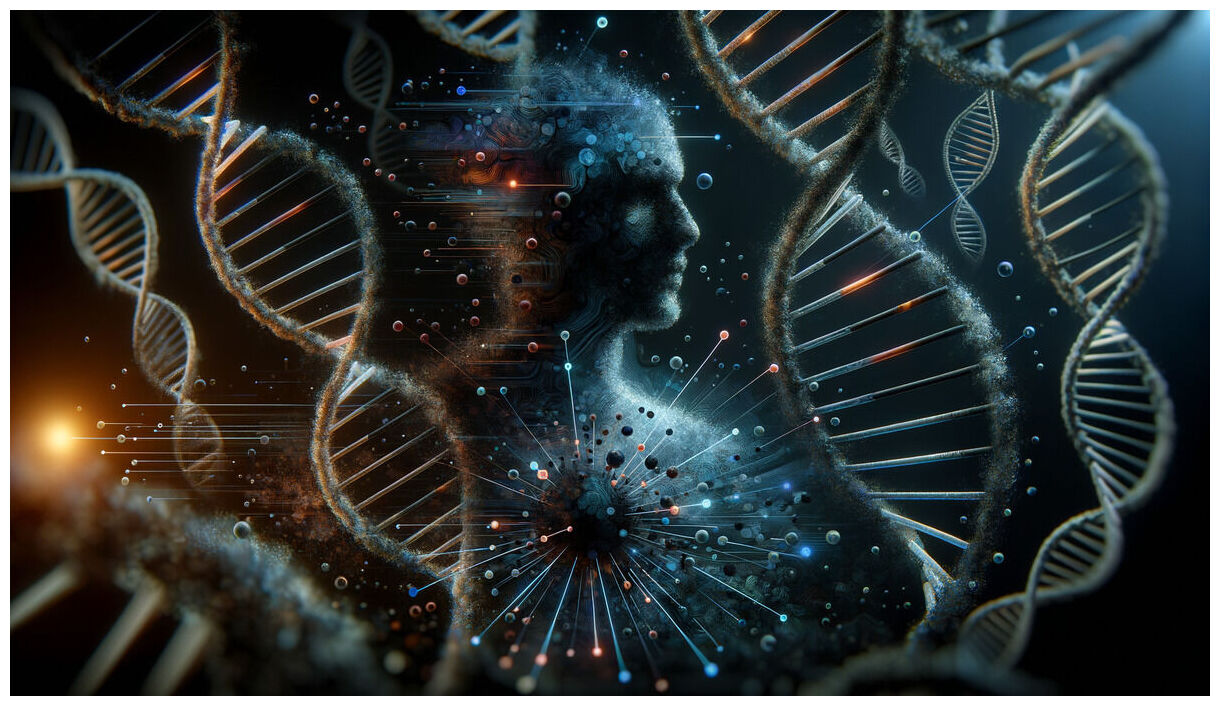
© new-science.ruA new study details how human ancestors mixed with a mystery population 300,000 years ago.
"The fact that we can reconstruct events from hundreds of thousands or millions of years ago just by looking at DNA today is astonishing, and it tells us that our history is far richer and more complex than we imagined," study co-author Aylwyn Scally, a geneticist at the University of Cambridge, said in a statement.
In a study published Tuesday (March 18) in the journal Nature Genetics, researchers presented a new method of modeling genomic data, called "cobraa," that has allowed them to trace the evolution of modern humans (Homo sapiens).
By applying their new method to modern human DNA data published in the 1000 Genomes Project and the Human Genome Diversity Project, the researchers discovered that there were two main ancestral groups that split around 1.5 million years ago, which they called Population A and Population B.
Just after that split, Population A experienced a bottleneck when the population plummeted and likely lost a significant amount of genetic diversity. But Population A grew over time, and Neanderthals and Denisovans branched off from it.
Then, around 300,000 years ago, Population A mixed with Population B, the researchers found. Their genetic analysis suggests that 80% of the genome of all present-day humans comes from Population A, while 20% of our genome comes from Population B.











Comment: Details of the other recent deaths: