Strange Skies
S


Cassiopaea

Ultra bright supernova is a stellar mystery

Supernova
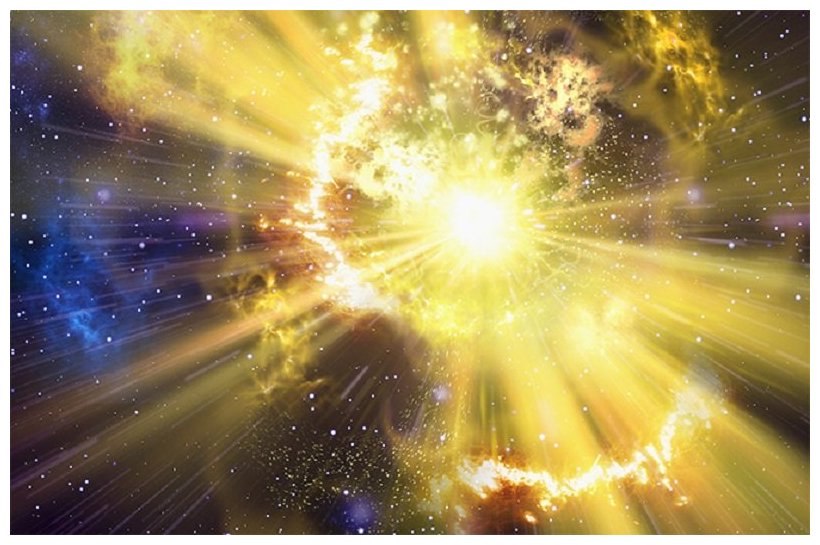
© CorbisThis artist's conception shows a powerful supernova ripping through a nebula.
A network of small, ground-based telescopes hunting the night-time skies for transient supernovas fished out a whopper -- a one-of-a-kind cosmic explosion that at its peak blasted out more light than 50 times all the stars in the Milky Way galaxy.

The object, which takes its name, ASASSN-15lh from the All-Sky Automated Survey for SuperNovae, was first spotted on June 14, 2015. A week later, astronomer Subo Dong, with the Kavli Institute for Astronomy and Astrophysics at Peking University, was looking at the object's spectra, a chemical breakdown of its light, and realized something strange was going on.

The measurements were so different, the survey's automated software didn't even recognize it as a supernova, Dong wrote in an email to Discovery News.

"We thought about various non-supernova, exotic scenarios, but none seemed to work," Dong said.

Working with colleagues at observatories worldwide, Dong started thinking the object may belong to a rare class of so-called superluminous supernovae, a suspicion bolstered by follow-up measurements taken by the 10-meter South African Large Telescope .

"Seeing the SALT spectrum was the moment we knew for sure that we were on to something big," Dong said.

ASASSN-15lh is located about 3.8 billion light-years away, but is so bright that if were as close as Sirius, a bright star 8.6 light-years away from Earth, the supernova would appear to be almost as bright as the sun.

Comment:

Record-breaking explosion 2.5 times brighter than any previous superluminous supernova found


Question

Disappearing quasar has scientists baffled

Disappearing Quasar
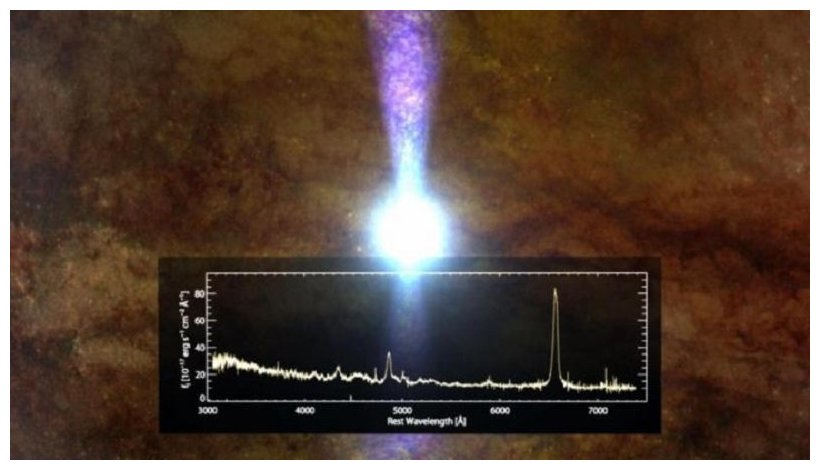
© Dana Berry/SkyWorks Digital, Inc.This is an artist's conception of the "changing-look quasar" as is appeared in early 2015. The glowing blue region shows the last of the gas being swallowed by central black hole as it shuts off. The spectrum is the previous one obtained by the SDSS in 2003.
Astronomers with the Sloan Digital Sky Survey (SDSS) announced that a distant quasar ran out of gas.

Their conclusions, reported Jan. 8 at the American Astronomical Society meeting in Kissimmee, Florida, clarify why quasar SDSS J1011+5442 changed so dramatically in the handful of years between observations.

"We are used to thinking of the sky as unchanging," said University of Washington astronomy professor Scott Anderson, who is principal investigator of the SDSS's Time-Domain Spectroscopic Survey. "The SDSS gives us a great opportunity to see that change as it happens."

Quasars are the compact area at the center of large galaxies, usually surrounding a massive black hole. The black hole at the center of J1011+5442, for example, is some 50 million times more massive than our sun. As the black hole gobbles up superheated gas, it emits vast amounts of light and radio waves. When SDSS astronomers made their first observations of J1011+5442 in 2003, they measured the spectrum of the quasar, which let them understand the properties of the gas being swallowed by the black hole. In particular, the prominent "hydrogen-alpha" line in the spectrum revealed how much gas was falling into the central black hole.

The SDSS measured another spectrum for this quasar in early 2015, and noticed a huge decrease between 2003 and 2015. The team made use of additional observations by other telescopes over those 12 years to narrow down the period of change.

Cloud Grey

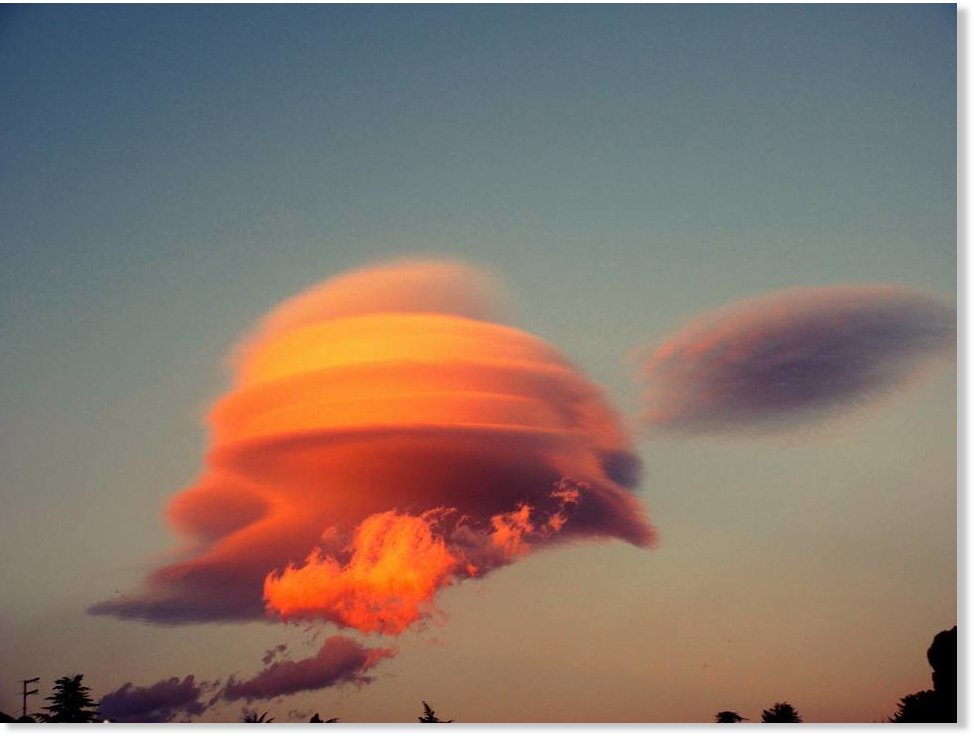
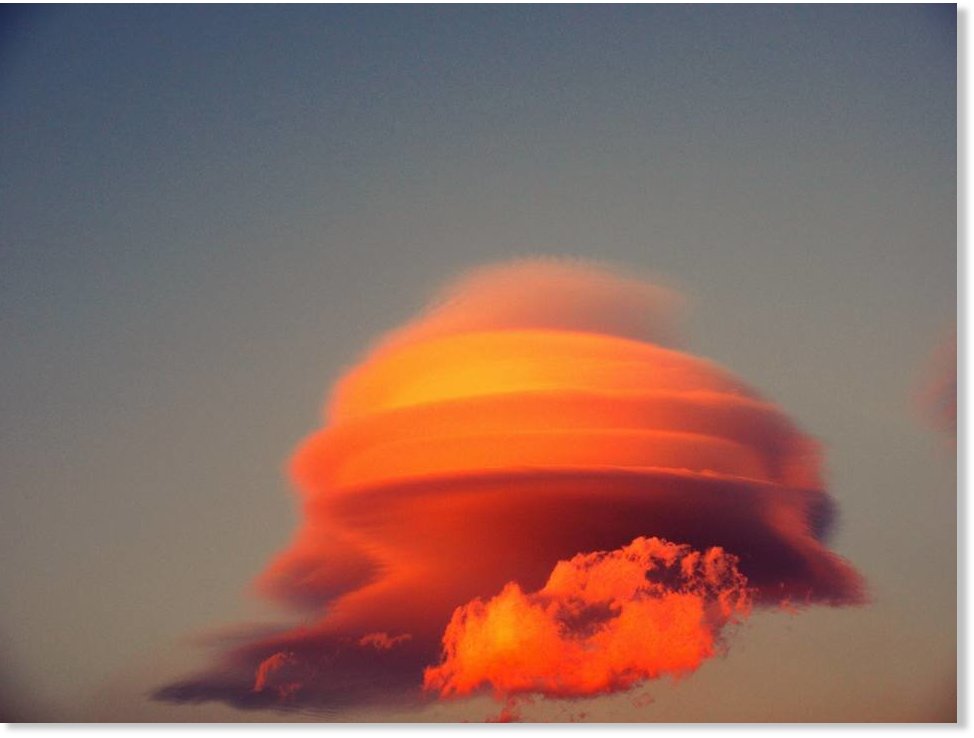
Dramatic lenticular cloud photographed over Sicily, Italy

Lenticular cloud
© Mario PappalardoLenticular cloud
Dramatic lenticular clouds have been offered as an explanation for some UFO sightings.

Well looking at this one in the sky of Sicily I don't blame ufologists.

Mario Pappalardo captured these insane lenticular clouds at sunset on January 5, 2016 and published them on his Facebook page.

Lenticular clouds in scientific jargon also known as Altocumulus lenticularis are stationary lens-shaped clouds that form in the troposphere.

Lenticular cloud

Sun

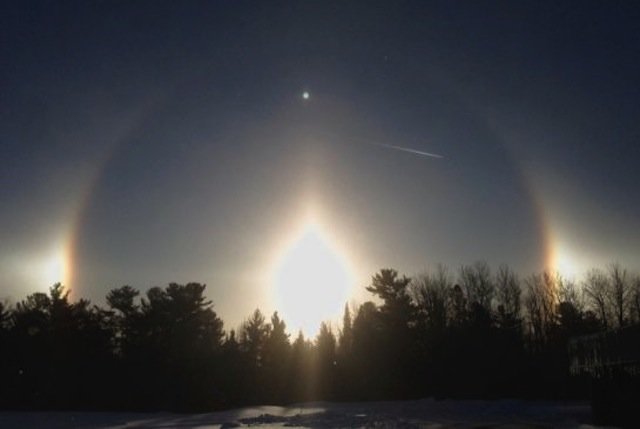
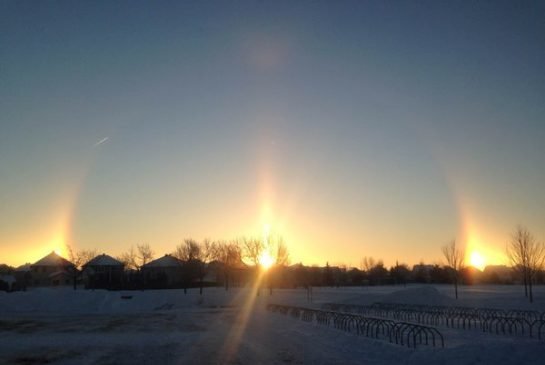
Vibrant sundog delights photographers in Ottawa, Canada

Ottawa sundog
© Barbara Navrot
A particularly bright display Tuesday morning showed the sun surrounded by "mock suns" and a bright halo

Ottawa residents looking up on Tuesday morning were treated to an unusual weather display: a very bright sundog - or "phantom sun" - that lit up the sky.

Sundogs, also known as parhelia, look a bit like a winter rainbow. They only appear in very cold weather, according to David Phillips, senior climatologist with Environment Canada."It's really a textbook example," he said, adding that clear conditions on Tuesday morning made the sundogs especially vibrant.

Parhelia appear when sunlight interacts with ice crystals high in the atmosphere, creating two "mock suns" and a faint halo.
"Sometimes they were regarded as a forewarning of troubled times: a harbinger of foul weather. So there's some folklore that goes with them as well," Phillips said.

On Tuesday, the sight didn't generate any worry or fear about bad omens - just excitement from local photographers.
"I've seen sundogs before but never to that extent," said Barbara Havrot, a math teacher and hobby photographer who managed to snap an early-morning photo."This was a complete arch, like a huge rainbow, in all its glory," she said.
Ottawa sundog
© Danielle Richardson

Cloud Grey

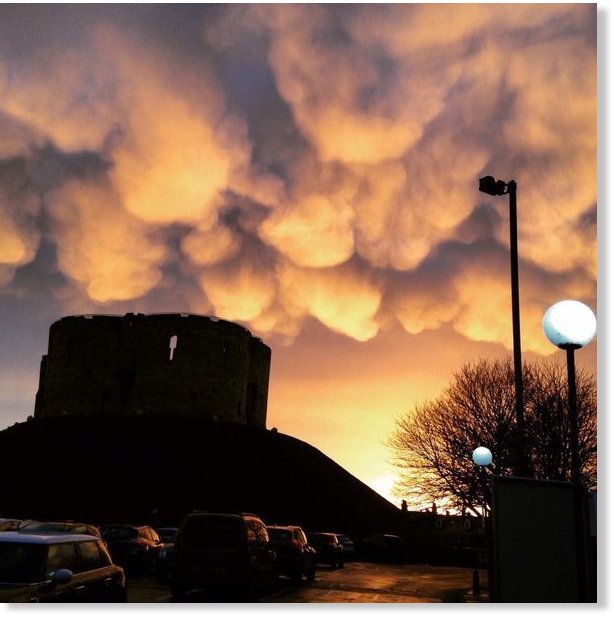
Spectacular mammatus clouds photographed over York, England

Mammatus clouds
© Karen Winship/ York Weather StationAwesome Mammatus clouds over Clifford’s tower in York.
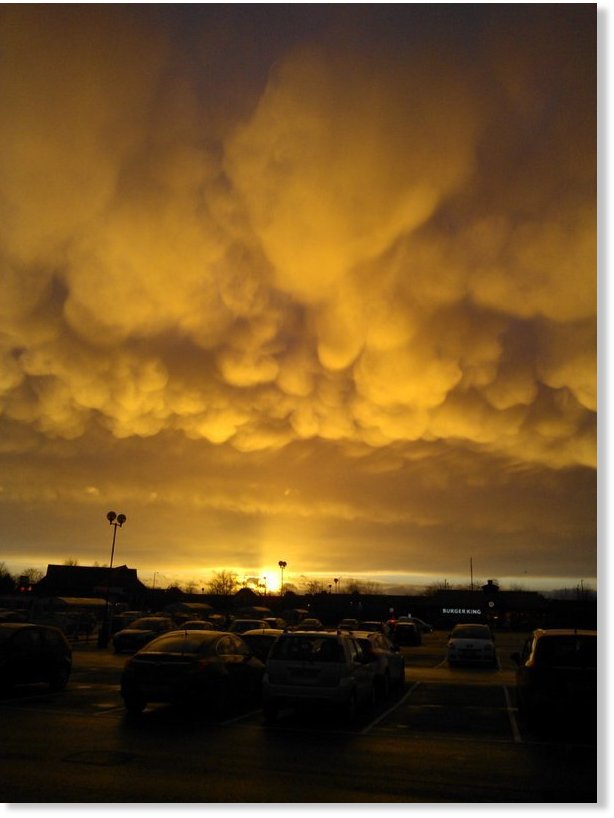
These spectacular mammatus clouds engulfed the sunset sky of York, England on January 7, 2015.

Watch some amazing pictures and learn more about their formation below.

Mammatus are pouch-like clouds that protrude down from the bottom of a thunderstorm's anvil cloud.

 Mammatus clouds
© Russ @Alien_OrificeAnd with the light of the sun setting, these weird clouds are become magical.
The storm's anvil consists of ice crystals but, as it spreads out at the top of a thunderstorm, some of the ice begins falling and cools the clear air below.

Fireball

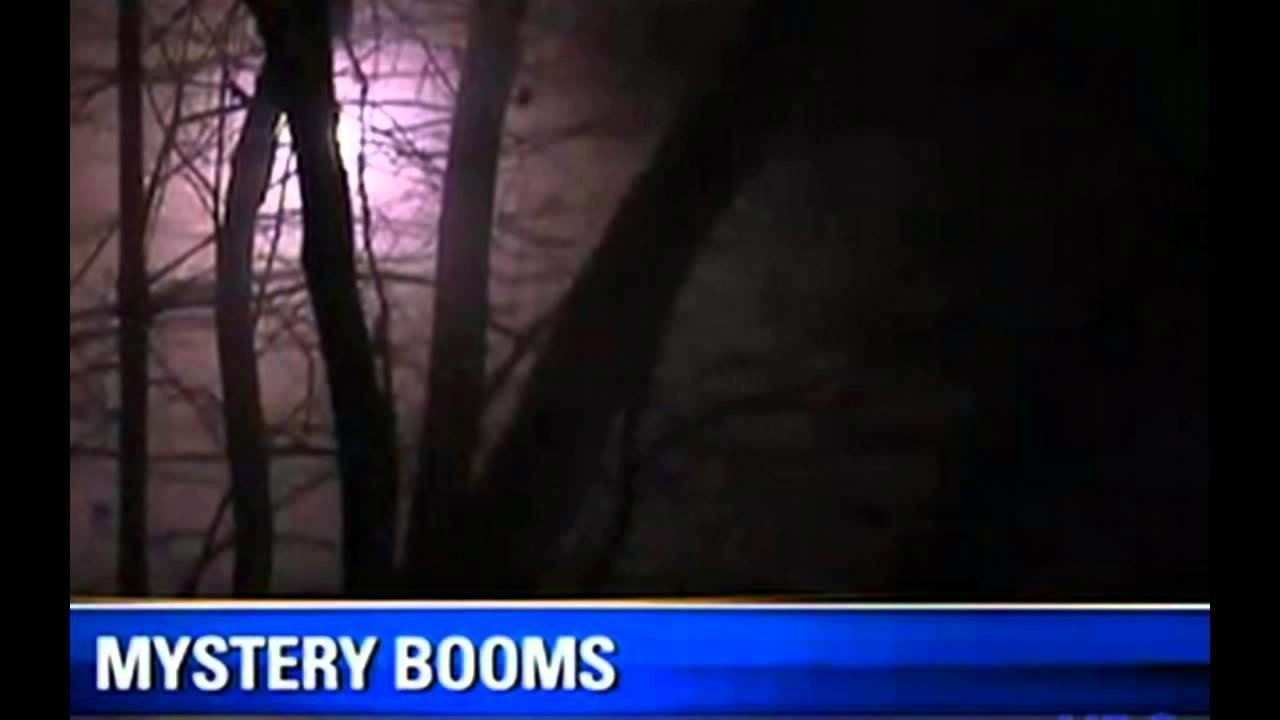
Unexplained loud booms: A compilation from 2015

mystery booms
The following video, produced by the Enigma Seeker Youtube channel, is a compilation of news reports about loud booms heard across the US in 2015. They're often unexplained, or the explanation provided by the authorities falls short of actually explaining the cause of the booms.

Meteor fireball and seismic activity has increased dramatically in recent years, so we suspect a that number of these booms can be attributed to overhead meteor explosions or are earthquake-related.


Comment: See also:

NASA space data supports citizens' observations: Meteor fireballs are increasing dramatically


Christmas Lights

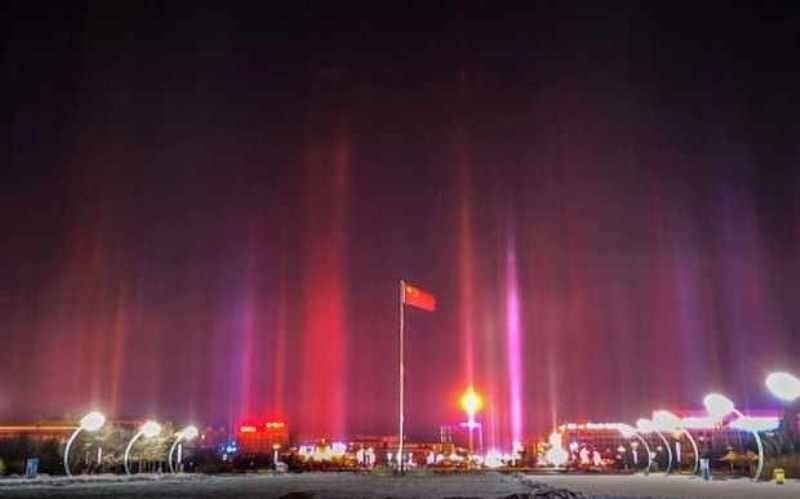
Spectacular multi-colored 'light pillars' illuminate skies in northern China

light pillars over China
© NewsflareThe natural phenomenon creates an amazing spectacle by creating pillars of light

Sun pillars form when falling ice crystals reflect sunlight during low temperatures


Mesmerizing multi-colored pillars of light appeared in the sky above a city in northern China last week.

Residents were dazzled as the beams appeared to burst from the ground in Xilinhot, Inner Mongolia, on Wednesday night.

The phenomenon is called a sun, light or solar pillar, reports People's Daily Online.

According to NASA, the rare spectacle occurs when falling ice crystals reflect sunlight as the sun rises or sets during extremely low temperatures.

"Ice sometimes forms flat, six-sided shaped crystals as it falls from high-level clouds. Air resistance causes these crystals to lie nearly flat much of the time as they flutter to the ground," NASA wrote on its website. "Sunlight reflects off crystals that are properly aligned, creating the sun-pillar effect."

Temperatures in Xilinhot plummeted to -20.2F on Wednesday, reports the Daily Telegraph, meaning it was the perfect condition for the natural light show.


Comment: This rare phenomena has been observed recently over Norway, Sweden, Russia and the United States in the past month.


Question

Clever hoax? Inter-dimensional portal caught on film over the Large Hadron Collider

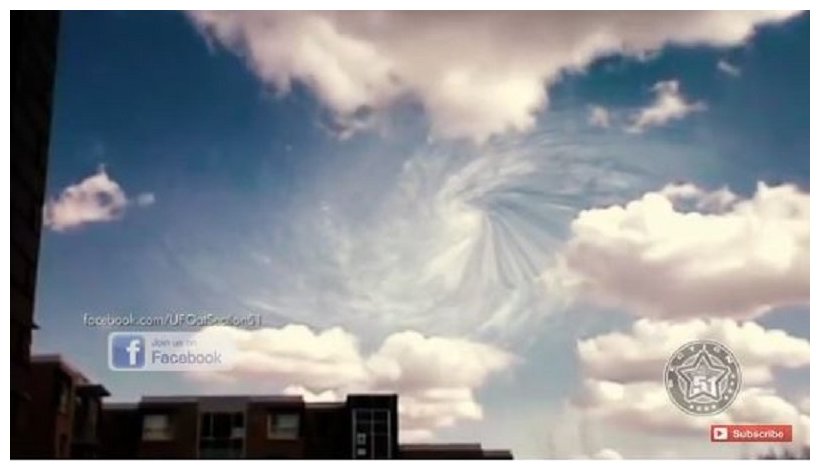
On December 7, 2015 tourists captured on film a swirling inter-dimensional portal in the sky above the Large Hadron Collider in Geneva, Switzerland. An orb is seen entering the portal before it disappears. The question is it truth or a clever hoax?
Inter-dimensional Portal
© YouTube Screen Capture
The video (see below) was posted to the youtube channel Section 51, a YouTube UFO fan channel. Claims made by the YouTube channel is the video was filmed by American tourists who captured the footage in Geneva, Switzerland on December 7, 2015. In the video it appears a swirling portal opens in the sky. Clouds begin to swirl into what has been described as a portal into another dimension. Within seconds a glowing orb begins to rise from bottom right hand corner of the screen. Eventually the glowing orb appears to disappear into the swirling portal just before the portal appears to close and disappear.

What is interesting about the footage is that the swirling portal appears above the Large Hadron Collider. The Large Hadron Collider is known for experiments involving dark matter. It is the world's largest particle collider. It was built by the European Organization for Nuclear Research also known as CERN. The site of the machine is underground and the tests involved are meant to help answer the most basic to the most complex questions in physics.

Sun

Mystifying sun dogs appear in Galo, Belarus

Sun dog
© Yury Shevtsov
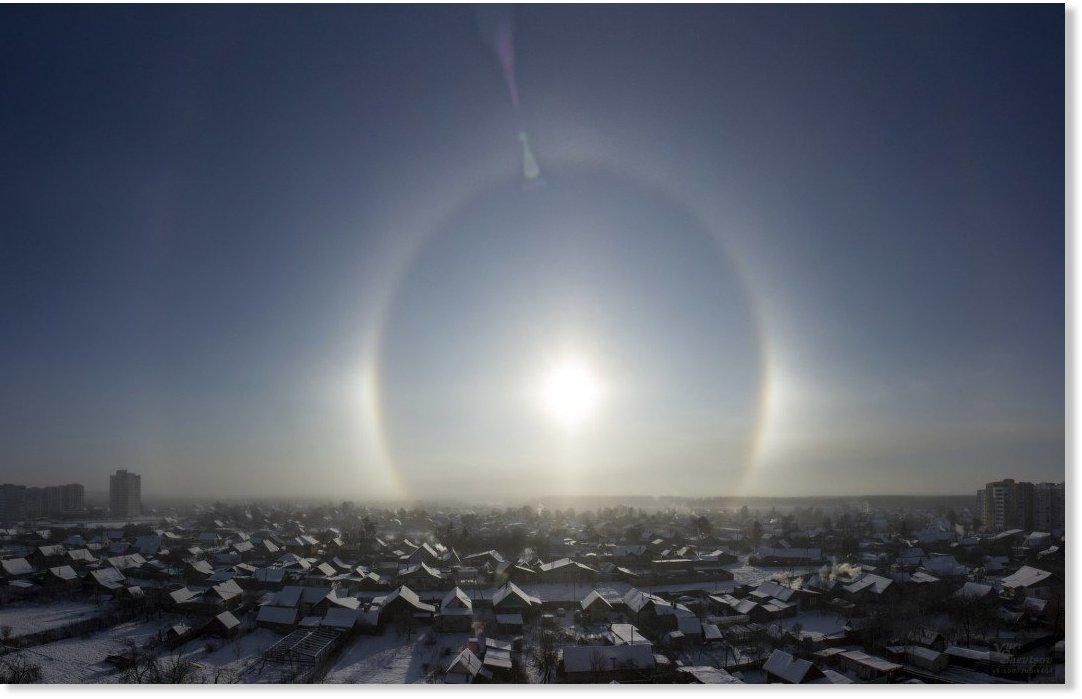
Look at these mystifying sun dogs surrounding the sun in Galo, Belarus.

They form like a giant eye in the sky. Eerie.

Photographer Yury Shevtsov was lucky enough to catch this eerie three suns phenomenon in the sky of his city, Galo.

On January 3, 2016, eerie sun dogs appeared around the sun.

The mysterious parhelia are linked together by a luminous ring known as a 22° halo creating a giant eye in the sky.

Sun dogs are a member of a large family of halos, created by light interacting with ice crystals in the atmosphere.

Sun dogs typically appear as two subtly colored patches of light to the left and right of the Sun, approximately 22° distant and at the same elevation above the horizon as the Sun.

They can be seen anywhere in the world during any season, but they are not always obvious or bright.

This video features the three suns phenomenon over Bolshereche, Russia on January 4, 2016:


Sun

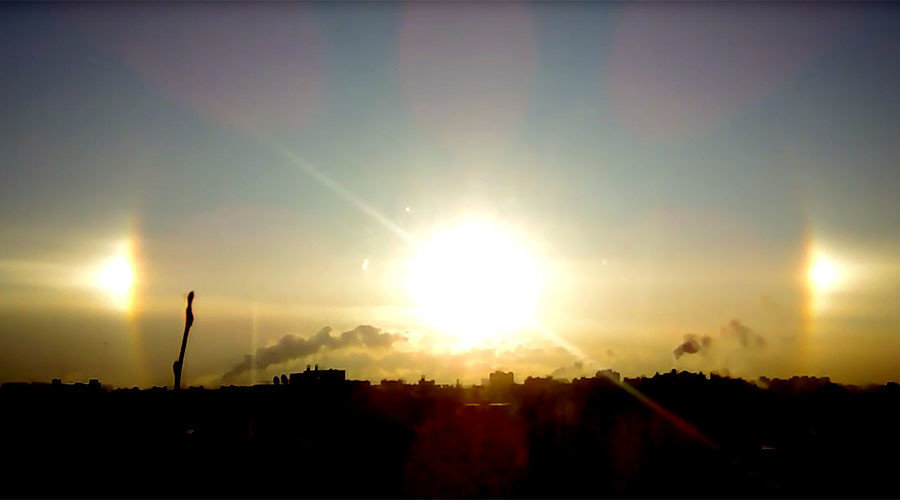
Three suns in St Petersburg, Russia, thanks to frost

Three suns St. Petersburg, Russia
© Марк / YouTube
Citizens of St Petersburg in Russia woke up to an out of this world sight - three suns in the sky. People took to social media to share the unbelievable vision.