Earthquakes
S


Radar

3.4-magnitude earthquake hits Tasmania

Image
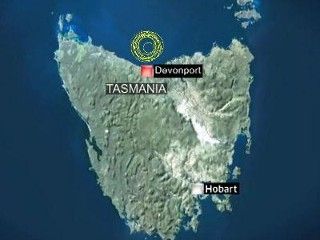
Residents on Tasmania's northern coast have woken to tremors after a 3.4-magnitude earthquake struck 10km from the shore.

The earthquake, about 10 to 12 kilometres from Wynyard, hit at 7.21am (AEDT) on Sunday, sending short and sharp tremors to nearby Burnie and as far away as Launceston, said Geoscience Australia seismologist Jonathan Bathgate.

Mr Bathgate said the agency received around 100 calls from residents who felt the tremors.

"It's been fairly widely-felt across that section of Tasmania," he said.

"They generally hear a loud noise and feel a sharp, sudden jolt.

"The phones have been just ringing constantly.

"I think it woke a few people up."

Bizarro Earth

Earthquake measuring 5.7 in Gulf of California, Mexico

Image
Strong earthquake in the Gulf of California, Mexico

Preliminary readings are reporting a M5.7 to M5.9 earthquake

The epicenter was located in the middle of the Gulf which means that both coasts (Baja California and Mexico) will have been shaken but will normally not have damage or injuries.

Bizarro Earth

Yellowstone and Louisiana sinkhole jarred by 7.5 magnitude Alaskan earthquake?

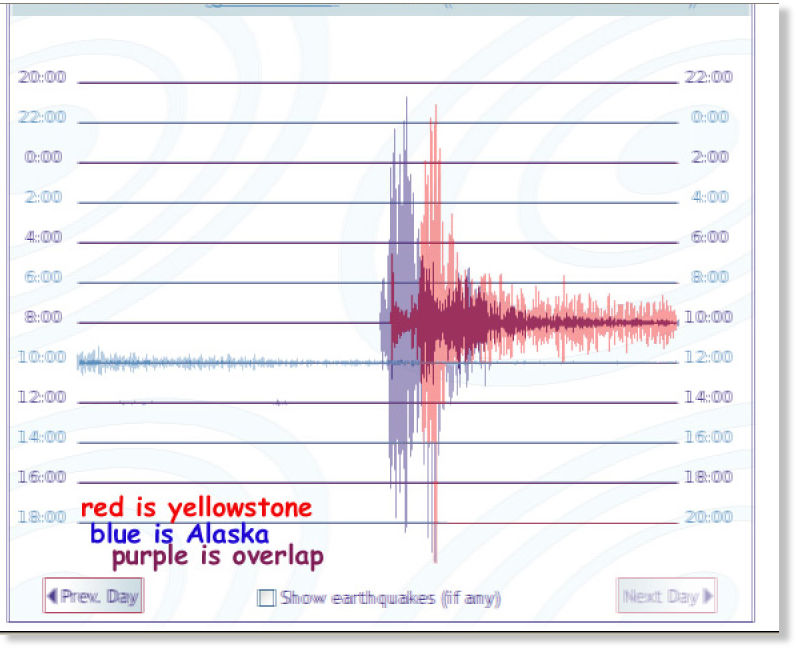
The following graphs/charts show that the 7.5 Earthquake that struck Alaska earlier today also dealt a jarring blow to both the Yellowstone Supervolcano as well as to the Louisiana Sinkhole. According to the USGS, the Alaskan quake struck on 2013-01-05 at 08:58:19 UTC. The charts below show proof that the EQ was felt at both the Yellowstone Supervolcano as well as at the Louisiana Sinkhole. The first chart below shows the Alaska EQ in blue and Yellowstone's reaction to it in red. Purple shows the overlap. Source
Image

Bizarro Earth

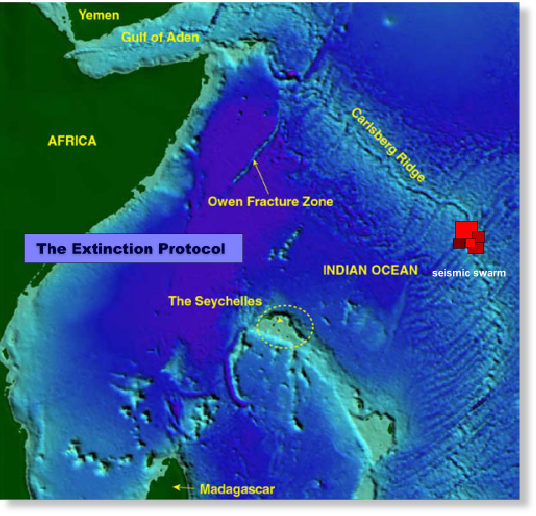
Earthquake swarm rattles seafloor along Carlsberg Ridge, Indian Ocean

Because the Carlsberg Ridge is one of the slowest-spreading, and so supposedly less active oceanic ridges, many had thought it unlikely to be the location of a major volcanic eruption.. At ridges such as this, heat is thought to be released more slowly from the underlying magma. However, we may have to rethink that previous assessment. The Carlsberg Ridge region is currently being shaken by a major seismic swarm, which could very well be volcanic in nature. The strongest tremor in the current swarm is a magnitude 5.0. Nature journal said in previous eruption, "A huge plume of hydrothermal chemicals, drifted up to 1.4 kilometers above the vent site and 70 kilometers along the underwater ridge was seen some years ago. It's by far the biggest vent plume ever seen, and confirms that such plumes form following volcanic eruptions at the sea floor, even at slow-spreading oceanic ridges." 1
Image

Bizarro Earth

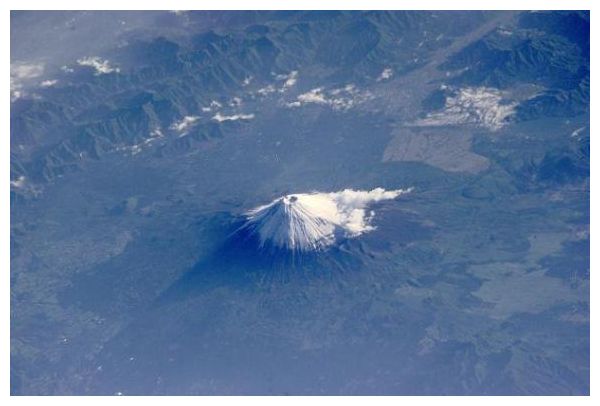
"Mt. Fuji should erupt by 2015": Ryuku University Professor Emeritus

Mt. Fuji
© Wikipedia
Since the Great Tohoku Earthquake of March 2011, scientists have been anxiously watching the massive volcano known as Mt. Fuji for signs of activity. In September of last year, a report was released stating that Mt. Fuji's magma chamber pressure had risen to a worrisome 1.6 megapascals, which is estimated to be higher than when it last erupted.

According to retired professor Masaki Kimura of Ryukyu University, this and other recent phenomena indicate an eruption of Mt. Fuji should have taken place in 2011 with a four-year margin of error ending in 2015.

First, a little background on Mt. Fuji. Japan sits on the edge of a "subduction zone" which is where one layer of the Earth's crust is pushed under another. In the below image, courtesy of Google Maps, you can see the trench along which subduction is occurring around Japan.

Bizarro Earth

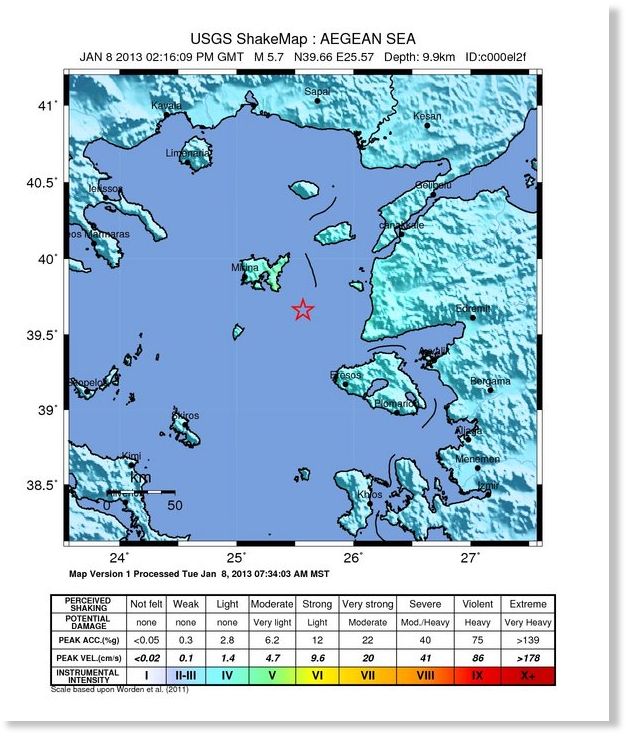
USGS: Earthquake Magnitude 5.7 - 47km WSW of Bozcaada, Turkey

Image
© USGS
Event Time:
2013-01-08 14:16:09 UTC

2013-01-08 16:16:09 UTC+02:00 at epicenter

Location:
39.659°N 25.567°E depth=9.9km (6.1mi)

Nearby Cities:
47km (29mi) WSW of Bozcaada, Turkey67km (42mi) WSW of Ezine, Turkey

80km (50mi) NW of Mitilini, Greece

89km (55mi) SW of Canakkale, Turkey

246km (153mi) NE of Athens, Greece

Bizarro Earth

Earth in crisis: Is the planet on the verge of a 'meltdown'?

Image
Conditions on the planet continue to deteriorate, particularly in respect to more pronounced climate extremes seen across hemispheres, and the number of volcanoes that are now continuously erupting. The planet is undergoing dynamic change, whereby we're seeing early evidence that the physical dynamics of the planet is moving towards a spectrum of greater instability. This is happening, as the planet's magnetic field continues to abate in strength. This is suggestive that we've passed the rubicon in this internal process of a geological shift that has been brought on by an anomalistic fluctuation of thermal gradient in the planet's outer core. Consequently, change is now uniform, and these Earth changes can now generate events which will affect the entire planet. We had a 4.6 magnitude earthquake in Falcon, Venezuela on January 4, 2013 and that earthquake was immediately followed by a 4.3 earthquake in the Ceram Sea and a 4.9 in Halmahera, Indonesia.

Both points on the globe are on exact opposite ends of the planet. We call it an antipodal tangent. On January 5, we had a 5.1 magnitude earthquake on the Mid-Indian Ridge and that was followed approximately 4.5 hours later by an earthquake near the antipodal point of the Cascadian fault with a 7.5 magnitude earthquake in southeastern Alaska. What this means is the entire planet is now starting to resonate from this heightened state of seismicity. The Bible prophesized in Isaiah 24:20 there would come a time, in the very near future, where the Earth would be reeling to and fro or back and forth like a drunkard. This is a state of resonate seismicity resulting from the impact of very large cluster earthquakes or what we refer to in geology as an earthquake storm.

Target

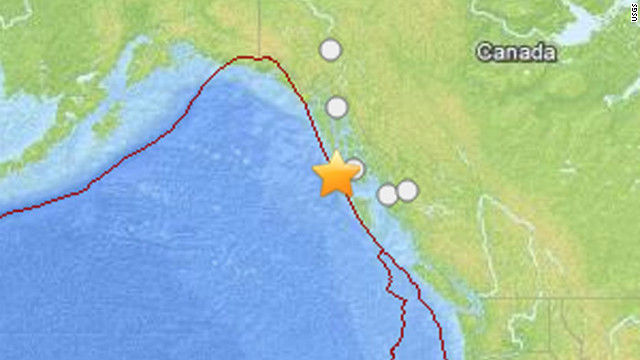
7.5 earthquake strikes off coast of Alaska; tsunami warning canceled

Image
A strong earthquake struck off the coast of Alaska on Saturday, January 5, 2013.
A tsunami warning was canceled early Saturday for portions of British Columbia, Canada, and southeastern Alaska, officials said.

The warning was issued following a 7.5-magnitude earthquake that struck off the coast of Alaska 63 miles west of Craig, a town on Prince of Wales Island, and 208 miles south of the capital of Juneau, the U.S. Geological Survey said.

The size of the temblor, which struck at 3:58 a.m. ET, off the coast of Alaska was downgraded by the USGS from 7.7 to 7.5.

There were no initial reports of damage but the West Coast and Alaska Tsunami Warning Center said a small tsunami of about six inches was observed near the southeastern Alaskan town of Port Alexander on Baranof Island.

A tsunami watch for the coastal areas of the British Columbia-Washington border was also canceled.

Bizarro Earth

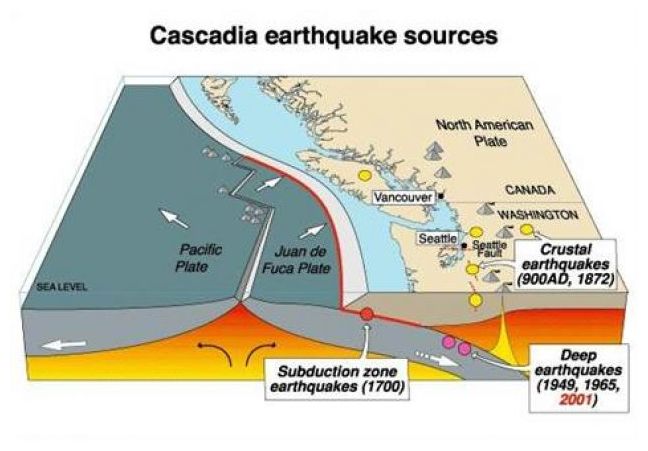
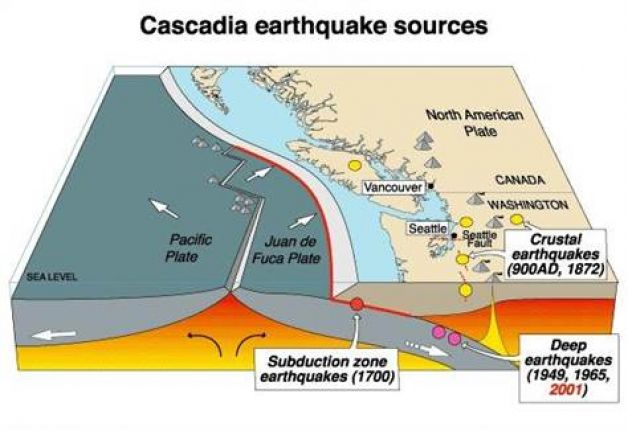
Will a megathrust earthquake strike the Northwest U.S. in 2013? Some clues are emerging

Megaquake
© Seattle Pi
There were 4,800 earthquakes in the Northwest in 2012 and a record "episodic tremor and slip" event - a string of deep mini-quakes running from Vancouver Island to below Centralia - over the summer, but does any of that mean we're likely to see the "big one" in 2013?

While the devastating megathrust quakes that happen every 300 to 500 years in our neck of the woods (those caused by the Juan De Fuca plate's grinding collision and subduction with the North American plate) are still impossible to predict, some clues may be emerging.

An immature science

Taken together, last year's quakes were "mild" since so few of them were big enough to be felt, said John Vidale, director of the Pacific Northwest Seismic Network.

The biggest and most interesting quake of the year struck under Victoria, B.C., last week. It was a magnitude 4 temblor and resembled in depth and fault the magnitude 6.8 Nisqually quake that damaged Seattle and shook the region in 2001, he said.It was felt and reported to the network's webpage by about 800 people.

He added that a string of unusual quakes around the globe has the seismic community baffled. A big earthquake off the coast of Sumatra in the Indian Ocean six months ago was "very strange" because of its size and distance from the plate boundary.It showed "we can get earthquakes we really hadn't anticipated," he said.

In the past few years, China got hit with an earthquake on a fault that wasn't mapped, New Zealand suffered a "very rare earthquake" ...
"There's a whole series of events in the last decade that give us the impression that we know less than ever," Vidale said. "We keep thinking that these are the specific risks we need to look out for and then earthquakes happen that aren't the ones we thought were most likely to happen."
Also, a roughly annual seismic event in the Northwest discovered 12 years ago - the "episodic tremor and slip,"or ETS - went wild last summer.

Map

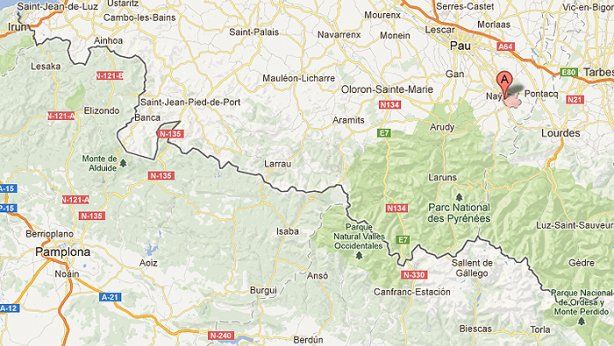
4.8-magnitude quake hits France

Image
A 4.8-magnitude earthquake hit southwest France on early Monday, without reports of casualties, the French Central Earthquake Bureau reported.

The quake occurred at about 0:35 a.m. local time (2335 GMT on Sunday) in the area of Pau, with the epicenter being monitored at 43.18 degrees north latitude and 0.24 degrees east longitude, according to the earthquake bureau.

There have so far been no reports of casualties or property losses.