Earthquakes
S


Bizarro Earth

Massive earthquakes make volcanoes sink - moving mountains

Image
The biggest earthquakes also move mountains.

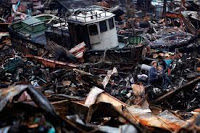
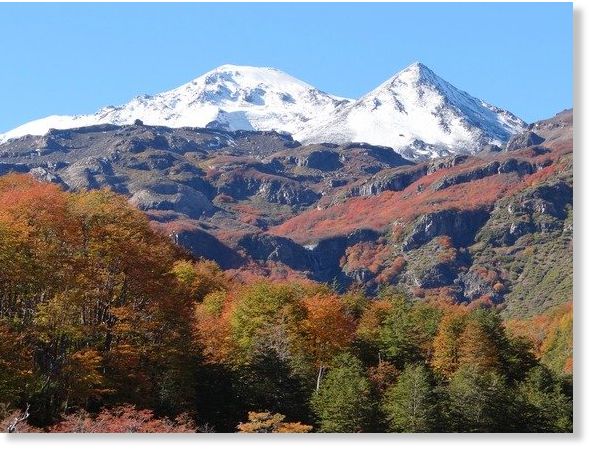
The massive earthquakes that struck Japan and Chile in 2011 and 2010, respectively, sank several big volcanoes by up to 6 inches (15 centimeters), two new studies report.

This is the first time scientists have seen a string of volcanoes drop after an earthquake. Even though the mountains are on opposite sides of the Pacific Ocean, their descents look remarkably similar. The two teams have different explanations for why the volcanoes sank, according to the studies, published today (June 30) in the journal Nature Geoscience. However, both groups agree it's likely scientists will discover more examples of drooping volcanoes after big earthquakes, and find a single mechanism that controls the process.

"It's amazing, the parallels between them," said Matthew Pritchard, a geophysicist at Cornell University in Ithaca, N.Y., and lead author of one of the studies. "I think it makes a really strong case that this is a ubiquitous process."
Bizarro Earth

Volcanic eruptions rage in Alaska: Geologist, "for some reason we can't explain, activity picked up"

Image
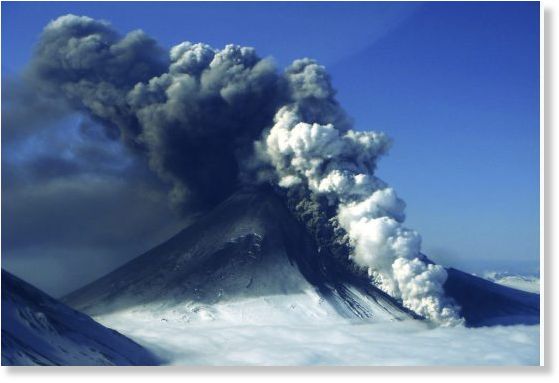
Alaska volcano eruptions are entering a more powerful phase. After six weeks of Alaska volcano eruptions reaching five miles into the sky, covering nearby communities with ash and shutting down air flights, there looks to be no end. Alaska volcano eruptions 2013 started in May at the Pavlof Volcano, which is located about 590 miles southwest of the major city Anchorage, in the Alaska Peninsula. The most powerful phase of Alaska volcano eruptions started with low-level rumblings.

According to scientists at the federal-state Alaska Volcano Observatory, the latest phase of Alaska volcano eruptions started late on Monday and continued through the night into Tuesday. The blasts emanate from the crater of a 8,261 foot volcano. Tina Neal, an geologist at the observatory said, "For some reason we can't explain, it picked up in intensity and vigor.' In May, Alaska volcano eruptions sent a smaller ash cloud 15,000 feet into the air. The ash was visible for miles. Residents were worried that it would damage power generators. The ash plume has so far topped of at an altitude of 28,000 feet, which is too low in the air to affect major air traffic, but high enough that small planes have to fly around it.

Comment: SOTT.net can explain it: the recent localized heatwave is probably the result of increased underwater and land-based volcanic activity, which in turn is the result of Earth Changes brought on by the grounding of the electrical current running through the solar system. Listen to this episode of SOTT Talk Radio to find out more!


Bizarro Earth

Energy shift? Popocatépetl volcano growing more violent, Philippine volcano shaken by 15 earthquakes

Image
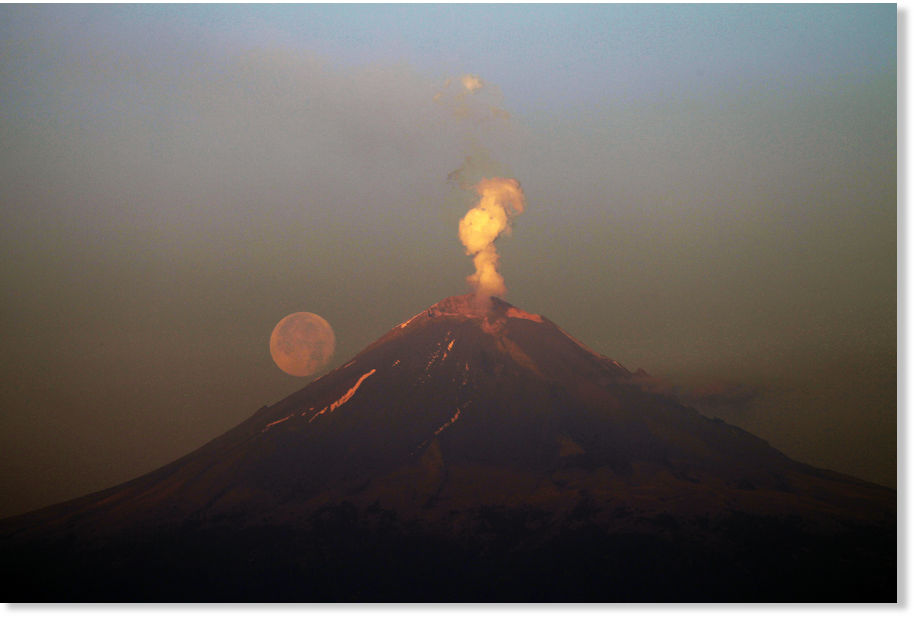
A Supermoon, a geomagnetic storm from a CME, and the advent of the summer solstice- did these forces create a energy shift in planetary processes within Earth’s interior? Volcanoes across the planet have suddenly become more agitated.

Seismic activity has picked up, suggesting that the volcano could be headed for more vigorous activity soon. SO2 emissions on NOAA recent satellite data have been relatively high as well. A magnitude 3.6 volcanic quake occurred on Tuesday night 23:57 local time and was located SE of the crater at 2 km depth. Over 3 hours of low frequency and short amplitude tremor were recorded. An earthquake swarms occurred yesterday as well and another one seems to have started an hour ago. The rate of small to moderate steam and ash explosions was reported to about 2 per hour during yesterday, with ash plumes reaching up to 1-2 km height above the crater. Ashfall has been reported at Tepetlixpa and Ecatzingo. On 25 June, with the support of the Ministry of Maritime Affairs and Navy of México, a reconnaissance flight over Popocatepetl´s crater was carried out. It could be observed that the inner crater has grown to 250 m in diameter and 60 m depth, as a result of the explosions of recent days. No other changes could be seen. (CENAPRED) - Volcano Discovery

Bizarro Earth

Nicarauga's Telica volcano shaken by new earthquake swarm

Image
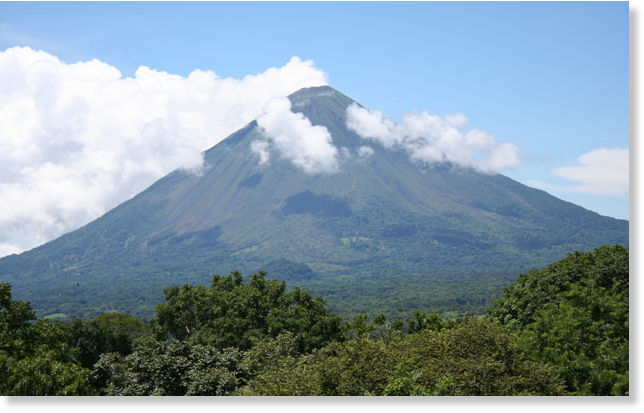
A new earthquake swarm started this morning, visible on INETER's seismograms. Telica has six cones, the tallest of which is 1061 meters high. There is a double crater at the top, 700 meters wide and 120 meters deep. Telica has erupted frequently since the Spanish Era. The most recent eruption was in 2011. In terms of explosive force, Telica's largest eruption has been rated with a VEI of 4. That eruption occurred in 1529. One of Nicaragua's most active volcanoes, Telica has erupted frequently, and ash from those frequent eruptions keeps the slopes of its cone bare of vegetation. - Volcano Discovery, Wikipedia

Bizarro Earth

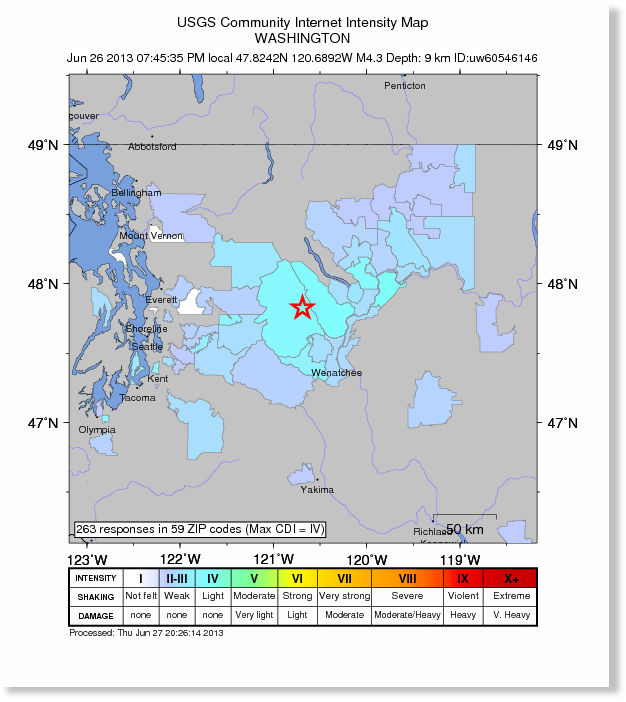
USGS: Shallow Earthquake Magnitude 4.3 - 25km N of Leavenworth, Washington

Image
© USGS
Event Time:
2013-06-27 02:45:35 UTC
2013-06-26 19:45:35 UTC-07:00 at epicenter

Location:
47.824°N 120.689°W depth=9.1km (5.7mi)

Nearby Cities:
25km (16mi) N of Leavenworth, Washington
52km (32mi) NNW of Wenatchee, Washington
54km (34mi) NNW of East Wenatchee, Washington
91km (57mi) ENE of Snoqualmie, Washington
188km (117mi) ENE of Olympia, Washington

Technical Data

Bizarro Earth

Erupting Shiveluch volcano blankets Kamchatka villages in ash

Image
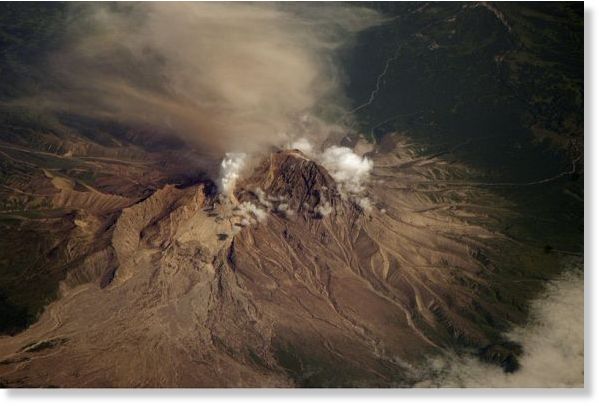
An ash cloud from the erupting Shiveluch volcano is spreading over the Kamchatka Peninsula in Russia's Far East covering several local villages in ash and disrupting local aviation services, a news report said Thursday.

Showers of ash were reported in the village of Klyuchi in the Ust-Kamchatsky district forcing authorities to distribute gas masks among residents, Interfax said.

Local residents said that the streets are covered with a layer of ash and that there is a strong smell of sulphur in the air. The village is located 47 kilometers away from the volcano.

The plume of ash, spewed into the air by the Shiveluch volcano Thursday morning, reached a height of 10 kilometers above sea level.

All public facilities in the village continue to function despite the ashfall, while local firefighters and rescuers are sending out text messages warning people to stay inside.

The Emergency Situations Ministry's local office said the lives of local residents were not in danger.

Bizarro Earth

A rare tsunami hit the U.S. East Coast earlier this month?

The National Oceanic and Atmospheric Administration says a 6 ft wave that hit the east coast earlier this month was a rare tsunami. The West Coast and Alaska Tsunami Warning Center said the source of the wave is "complex and under review," but they believe it was caused by a strong storm and perhaps even the "the slumping at the continental shelf east of New Jersey."
Image
The weather service says that Brian Coen, who was spear fishing near Barnegat Inlet in New Jersey, saw the effect of the tsunami first hand.

He told the weather service that he noticed an outgoing tide that lasted a couple of minutes and exposed rocks that had been submerged. That was followed by a big six-foot wave.

The Asbury Park Press, which covers the Jersey coast, talked to Paul Whitmore, director of the tsunami center.

He explained the weather system that moved through the area may have changed the air pressure enough to "generate waves that act just like tsunamis." When that happens, the wave is called a "meteotsunami" - in other words a tsunami caused by meteorological conditions, not seismic activity.

Bizarro Earth

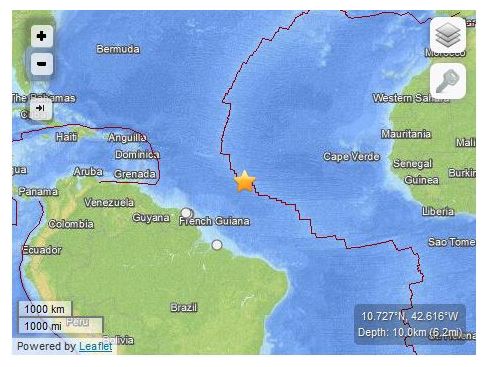
USGS: Earthquake Magnitude 6.4 - Northern Mid-Atlantic Ridge

Atlantic Quake_240613
© USGS
Event Time
2013-06-24 22:04:13 UTC
2013-06-24 19:04:13 UTC-03:00 at epicenter

Location
10.726°N 42.616°W depth=10.0km (6.2mi)

Nearby Cities
1242km (772mi) ENE of Remire-Montjoly, French Guiana
1248km (775mi) ENE of Cayenne, French Guiana
1252km (778mi) ENE of Matoury, French Guiana
1265km (786mi) ENE of Kourou, French Guiana
1359km (844mi) NNE of Salinopolis, Brazil

Technical Details

Bizarro Earth

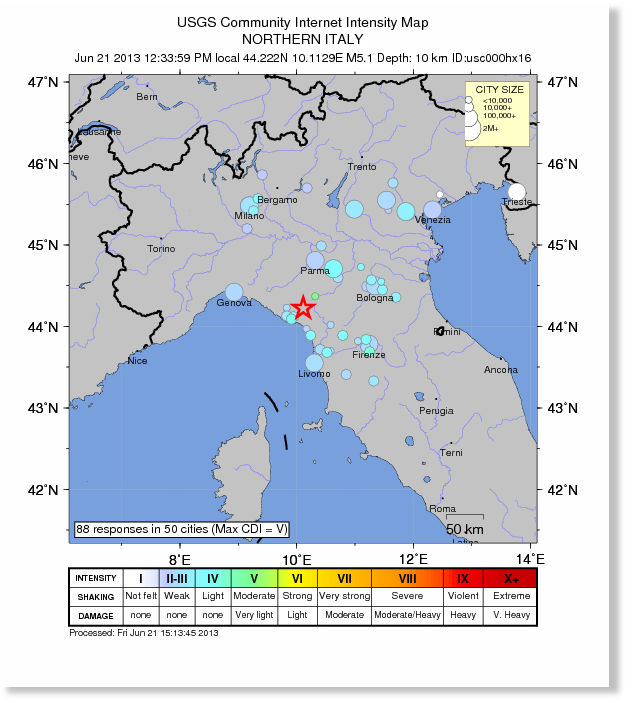
Shallow earthquake magnitude 5.2 hits Italy, minor damage in rural areas

Image
© USGS
A magnitude 5.2 earthquake was felt across central and northern Italy on Friday, causing some minor damage in rural areas but there were no immediate reports of injuries.

The epicentre of the quake, which hit at about 12:33 p.m. (6.33 a.m. EDT) was between the towns of Massa and Lucca in Tuscany and La Spezia in the Liguria region, the national geophysics institute said.

The tremor was felt in Milan, the largest city in northern Italy, and as far north as the Friuli region near the border with Slovenia.

The mayor of Casola in Lunigiana, a small town in the Tuscan countryside, told Italian television the quake had caused cracks in some old buildings and minor collapses but there were no reports of injuries.

Aftershocks continued to rock the area, some as strong as magnitude 4.0, officials said, adding that residents in some rural areas were advised to stay out of their homes for the time being.

Bizarro Earth

Cascadia fault line in North America: A now still and silent subduction zone where disaster awaits

Image
On a dark winter's night in January 1700 a tsunami struck Japan. It flooded fields, swept away villages for miles inland and cost many lives. Even as far back as 1700 the Japanese had made the connection between earthquakes and Tsunami, but this time there was no earthquake, no warning to allow the people time to evacuate to higher ground. The tsunami was called the 'orphan tsunami' because it had no 'parent' earthquake. For more than 300 years the origin of the orphan tsunami remained a mystery.

In the 1980s Hiroo Kanamori and Tom Heaton published a paper that said the 1700 tsunami was caused by a massive rupture of the Cascadia fault line that runs off the west coast of the United States from California to Vancouver. In 1987 Brian Atwater studied soil samples far inland across the length of the fault and discovered that the United States had also suffered a tsunami at the same time as the Japanese. He concluded that Kanamori and Heaton were correct, a massive earthquake had sent a tsunami out from the source of the quake inundating the coasts on both sides of the Pacific.

Recent studies by researchers at the University of Pennsylvania has concurred on the findings of previous studies.