Health & WellnessS


Health

Understanding the importance of microbes: How gut bacteria plays a crucial role in weight management

gut bacteria
Obesity is one of our most pressing health problems today, affecting millions worldwide. In America alone, 35 percent of adults battle with it daily.

The main causes are an unhealthy diet, a sedentary lifestyle, and genetics, but considering how many people are affected by this issue and how much strain it is placing on our already overburdened medical systems, researchers are desperate to find other avenues to treat it. And through their efforts, they have now discovered that our gut plays a crucial role in weight management.

New evidence suggests that gut bacteria alter the way we store fat, how we balance levels of glucose in the blood, and how we respond to hormones that make us feel hungry or full. If we have the wrong mix of microbes from birth, we may be predisposed to obesity and diabetes.

Thankfully, researchers are starting to find the differences between the wrong and the right ones, and what factors determine those differences. Their hope is that, with this knowledge, they can prevent and maybe even reverse obesity. We also need to learn how to keep our gut microbes happy in order to avoid weight gain. This begins with redesigning our food choices.

Comment: To learn more about the importance of a healthy microbiome and how diet can effect gut flora composition leading to better overall health, wellness and weight management read the following articles:


Syringe

Independent research demonstrates conclusively that unvaccinated children enjoy far superior health than those vaccinated

unvaccinated children
The research demonstrates conclusively that unvaccinated children enjoy far superior health when compared to those vaccinated.
While there have been no official US government-sponsored studies comparing the health of vaccinated to unvaccinated children, several independently funded studies have been done in the US and overseas. The majority of these studies have been conducted abroad, but many involve American children.

What do these studies show? The research demonstrates conclusively that unvaccinated children enjoy far superior health when compared to those vaccinated. Unvaccinated children experience almost no incidence of autism, autoimmune disorders, asthma, allergies, diabetes and other common childhood diseases which have reached epidemic proportions in recent years.

The Research Studies

One of the most comprehensive studies is an ongoing comparative survey by German homeopathic physician Andreas Bachmair. Bachmair is conducting an independent study comparing the health of vaccinated to unvaccinated children with 17,461 participants.

This research has found a significant increase in the following diseases in those vaccinated: asthma, allergies, bronchitis, otitis media (ear infections), hay fever, herpes, neurodermatitis, hyperactivity, scoliosis, epilepsy, autoimmune disorders, thyroid disease, autism and diabetes. Furthermore, Bachmair discovered three other studies which substantiated his findings. To see the chart with the comparison in diseases, visit this link provided by the Vermont Coalition for Vaccine Choice.

Comment: Scientists come out against vaccines: When researching scientists' recommendations for public health policies in regards to vaccines, it is surprising how few of them support vaccination unless they work for the pharmaceutical industry.


Alarm Clock

Dr. Gary Null - Medicine that kills

Medicine that kills
American science and public health is the finest in the world, with the smartest people working with the latest technologies to prevent and cure disease. We are exceptional.

That is a common belief held by several million people working within the medical industrial complex. The problem is, it's untrue. In fact, it's just the opposite. American medicine kills more people unnecessarily than any other national medical system in the industrialized world. As Harvard School of Medicine professor Lucian Leape noted, American medicine kills 3 jumbo jets-worth of patients every 48 hours.(1)

In this series we review the startling science which suggests that deaths from medical error in the US may be conservativelyestimated at 400,000 annually, while severe injuries from medical error may top 10,000,000.(2,3) This equates to 8 million deaths and 200,000,000 severe injuries due to modern medical medicine during the past twenty years. It is higher than the casualties from any single conflict or war in American history.

Attention

Experiments gone wrong: The price we pay for chemical and genetic warfare against nature

GE mosquito
As noted in a recent article by The Atlantic,1 history is rife with pest control experiments gone terribly wrong. Today the stakes are higher than ever, as scientists are increasingly turning to genetic engineering to affect environmental change.

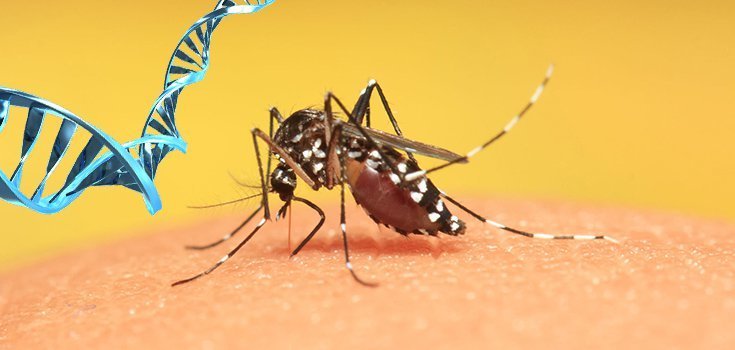
Earlier this year, the Zika virus, which is carried by the Aedes aegypti mosquito, was declared a worldwide public health threat.2,3 Besides calling for increased use of chemical sprays against mosquitoes, focus quickly turned to the idea of releasing genetically engineered (GE) mosquitoes to control populations.

The male transgenic mosquitoes, which are released to mate with females in the wild, carry a "suicide" or "self-destruct gene" that gets transferred to the offspring, killing them before they reach breeding maturity.4

To achieve this, protein fragments from the herpes virus, E. coli bacteria, coral and cabbage looper moth were inserted into the insects. Biotech company Oxitec refers to their GE mosquitoes as a "non-chemical insecticide," and these controversial creatures are now another step closer to being released on U.S. soil.

Meetings for Key Haven residents have already been held to discuss Oxitec's proposed GE mosquito trial in the area.5

In early March, the U.S. Food and Drug Administration (FDA) released a draft of its environmental impact study6 of the GE mosquito, declaring it will have "no significant impact" on the health of residents or the environment in this Florida Keys' community.7

As noted by CNN, Zika wasn't the original reason Oxitec's transgenic mosquitoes were considered.

The Aedes aegypti mosquito also carries the dengue, yellow fever and chikungunya virus, and outbreaks of dengue fever in the Florida Keys in 2009 and 2010 prompted local mosquito control officials to look for more effective options to control the non-native insect.

According to Oxitec, field tests in Piracicaba, Brazil, led to an 82 percent decline to the mosquito population over an eight-month period.8 In the Cayman Islands, 96 percent of native mosquitoes were suppressed in a 2010 field trial.

The Cayman Islands recently approved full deployment of the Oxitec mosquito, starting in June, with weekly releases of hundreds of thousands of mosquitoes scheduled to continue for at least nine months.9

However, while the FDA has given the transgenic mosquito the thumbs up, Key Haven residents are not particularly keen on being guinea pigs.

Especially since neither dengue, Zika, or any of the other diseases spread by Aedes aegypti pose a threat to health in the Florida Keys.10 Mila de Mier, who lives in the small community of Key Haven, told CNN:11
"Less than a mile from the release site is a senior center and a local school. That area was not one that was affected by dengue. Not a single case ever. So why does the FDA want to do an experiment here when they can do this all over the world? ...
There has been no acceptance from community members. If the local and federal government fail to protect us and our wishes, our last option will be to trust the judicial system and bring it to the court. A legal battle is an option at this point."
What Could Go Wrong?

While decimating Aedes aegypti populations may sound like a good solution to eliminate transmission of disease, there's always the potential for unforeseen side effects.

A 2011 article in The New York Times12 brought up a number of concerns, including the possibility that these genes might infect human blood, not through insect bites, but by finding entry through skin lesions or inhalation.

According to the Institute of Science in Society,13 such transmission could potentially create "insertion mutations" and other unpredictable types of DNA damage in the host.

Arrow Up

You can grow new brain cells: Neurogenesis

neurogenesis
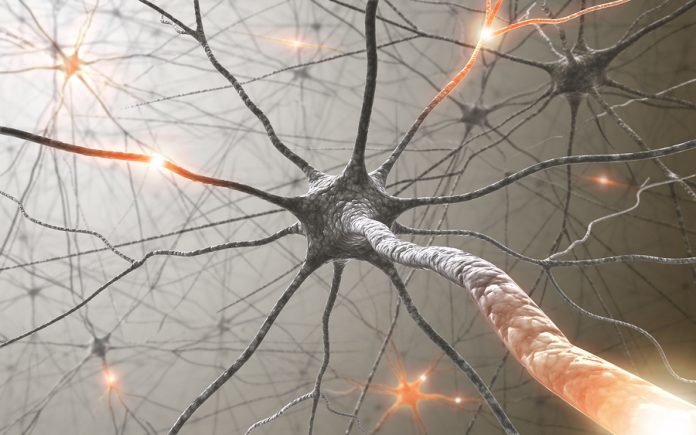
It's called neurogenesis. Your brain's hippocampus is capable of creating new neurons and certain environmental factors make it speed up and slow down.

Comment: See also: Moving your body keeps your brain sharp


SOTT Logo Radio

SOTT Focus: The Health & Wellness Show: What is Applied Kinesiology and what can it do for you?

applied kinesiology muscle testing
An AK practitioner muscle testing a patient
Today on the Health and Wellness Show we will dive into the field of Applied Kinesiology commonly referred to as muscle testing, a technique that taps into the circuitry of the human Biocomputer. Joining our discussion today will be Foxx sharing background information and personal experience with Applied Kinesiology and how an experienced practitioner can establish a dialog with the body, accessing it's innate "circuitry" and information field, to help determine imbalances and find corrections for those imbalances.

Zoya's Pet health segment will address Applied Kinesiology for animals. Join us for another informative show!

Running Time: 01:56:59

Download: MP3


Info

Making sense of the recent reports on cell phone use and cancer

radiation risk
© thetruthaboutcancer.com
You may have read the headlines about a new study linking cellphone radiation to cancer.

What does this mean for your health?

Researchers at the National Toxicology Program found an increase in tumors among rats exposed to radio-frequency radiation similar to that emitted by cell phones, compared to a control group of unexposed rats. These findings are significant on their own, but to truly understand what they mean the NTP research has to be viewed in context of other research on this issue.

Comment: A good place to start on really making sense of all the data that has come to light over the cell phone = cancer debate is to read about what 15 minutes on your cell phone actually does to your brain and then read the following articles:


Bulb

New research shows that the religious practice of fasting has sound scientific reasoning behind it

fasting
© Roberto A Sanchez/Getty Images
There's little overlap between the type of health advice proffered in any given Goop newsletter and the brand of asceticism practiced by the religiously devout. That is, save for fasting—which may help us experience something more like eternal life in this lifetime, increasing longevity in addition to trimming waistlines.

Researchers from the University of Florida did a three-year study in which they had 24 participants practice fasting (with one small meal in the afternoon) and feasting on alternate days for three weeks at a time. They found that the routine caused the gene related to antiaging in our cells to increase, which can lead to longevity. The study found that intermittent fasting decreased insulin levels for the participants, so it could help diabetics.

Comment: Read more about the benefits of fasting:


Megaphone

Flashback A response to Paul A. Offit's flawed argument - "The Anti-Vaccination Epidemic"

Dr. Offit
© March Against Monsanto
Dr. Offit presents a flawed argument that "misguided" parents are to blame for the "reemergence" of infectious diseases. A deeper investigation into the statistics he quotes brings about a more accurate argument.

Dr. Offit, one of three inventors of a vaccine now marketed by Merck, presents a flawed argument that "misguided" parents are to blame for the "reemergence" of infectious diseases. A deeper investigation into the statistics he quotes brings about a more accurate understanding of what is truly happening with regard to these illnesses.

He focuses mainly on outbreaks of pertussis in California. First, it must be noted that the raw numbers of pertussis cases reported in the media are not reflective of lab-confirmed pertussis; they also include "suspected" cases which could actually be infection with B. parapertussis, known to cause "pertussis-like illness". There is evidence in peer-reviewed literature of the mutation of the pertussis bacteria as the direct result of vaccination. The mutated version, B. parapertussis, is not covered by the current vaccine and reports referring to pertussis outbreaks do not distinguish between which patients had lab confirmed pertussis and which had the mutated bacteria. Second, he points to 58 ICU admissions for pertussis so far this year. The AAP has recently recommended early ICU intervention - even for those whose eventual disease progression doesn't warrant it - because previously doctors had been ignoring the severity of the disease in a subset of children. So, the ICU numbers may not reflect true need for such treatment.

Comment: Read the following articles to learn more about Dr. Offit and why he is such an avid supporter of vaccines:
Vaccine Advocate Says Children Can Receive 10,000 Vaccines at Once
An example of, let's call it lunacy, from high places in the vaccine industry, Dr. Paul Offit once publicly remarked that children can safely receive 100,000 vaccines at once. He later changed that to 10,000. Unfortunately, this leading pediatrician who holds influential University and Clinical positions has media clout and has been interviewed often.

He has written publications refuting vaccination dangers and condemning those who refuse vaccinations for their children, even to the point of encouraging pediatricians to not provide care for children not vaccinated.


Beaker

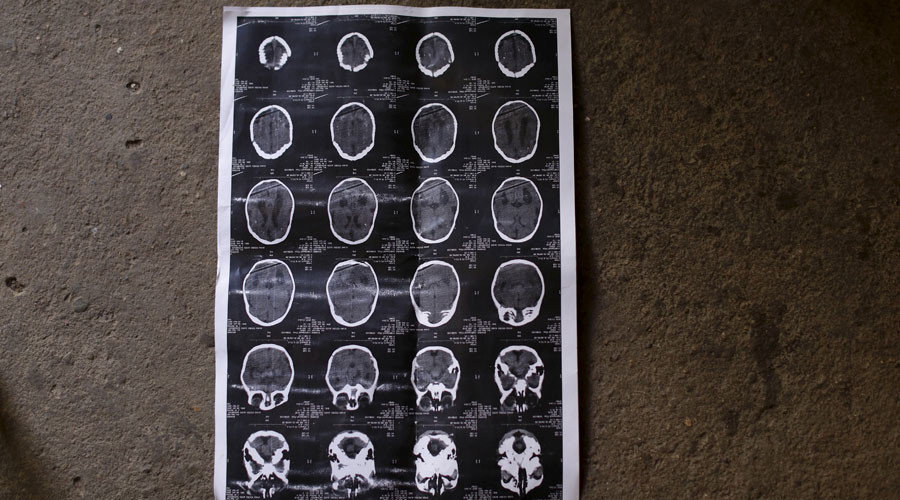
Stanford researchers stunned by brain damage reversal with stem cell treatment

MRI images
© Ueslei Marcelino/Reuters
Stanford researchers have found that injecting stem cells directly into the brains of recovering stroke sufferers is more than just safe - it actually reverses brain damage, something previously thought impossible by science.

The amazing thing about the latest study, published in the journal Stroke, is that the arguably bigger success came about by accident. It was a small sample size of only 18 patients, and the objective was to test the safety of the procedure - which involves injecting stem cells directly under the uppermost layer of the brain. The tests showed that it is doable and relatively straightforward, as far as brain surgery goes.

But what "stunned" Stanford researchers was that the stem cells also reversed the damage way past the six-month recovery period after a stroke, beyond which it is thought the remaining unhealed brain circuits are completely beyond recovery. At that point, other therapy is normally stopped and the sufferer is left to live with whatever impairment remains.

A stroke is, essentially, a blood clot in the brain. If a person is lucky enough to survive one, they may lose a significant portion of their speech-making and motor faculties. While the functions may be restored in six months, they come back somewhat limited.

In the current study, scientists took a sample of recovering sufferers all at the stage of three to five years since the incidents, which is long after any existing treatment would still be administered. They drilled holes into the participants' skulls and directly injected stem cells from adult donors into the grey matter.

Comment: Stem cells could save stroke victims