
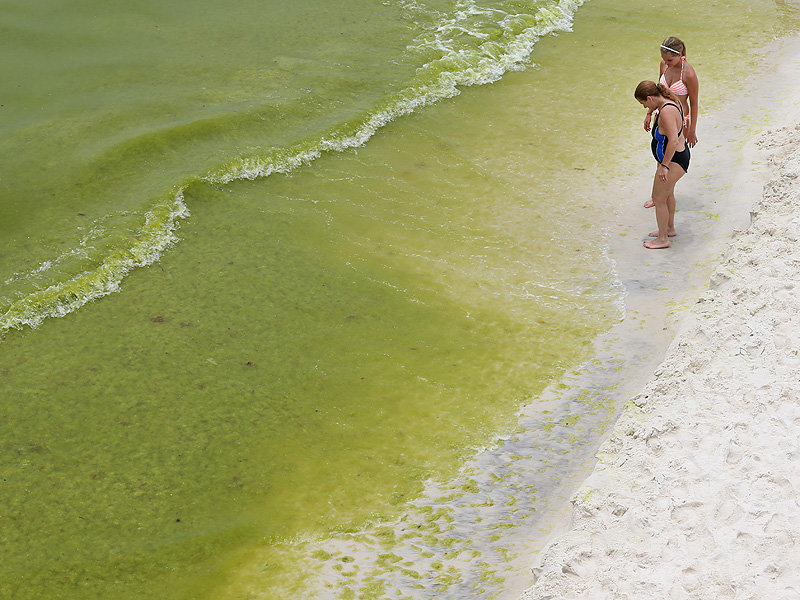
"Enjoy your vacation on Playa Guacamole," the Miami Herald quipped,1 as in some areas the algae is more than thick enough to dip a chip — not that you'd want to. "It smells like death on a cracker," one Florida resident told the Tampa Bay Times.2 And it's not only the smell that's a problem.
Blue-Green Algae Is Dangerous to People, Pets and the Environment
The algae, also known as cyanobacteria, is so prolific it can now be seen from space.3 Further, it can produce toxins that are harmful to humans and marine life. Skin rashes and respiratory issues can result from exposure to the algae, and should it get into an open wound, it can lead to a staph infection.4
Some experts believe the cyanobacteria may be a type called microcystis, which are nerve toxins that may lead to nausea, vomiting, headaches, seizures and long-term liver disease if ingested in drinking water.5
Researchers are also looking into whether another toxin, BMAA (Beta-N-Methylamino-L-alanine), in blue-green algae may be linked to neurological diseases like Alzheimer's, Parkinson's and amyotrophic lateral sclerosis (ALS or Lou Gehrig's Disease).6
Manatees, fish and other marine life, as well as sea grass and other plant life, are also endangered by the algae blooms, which alter the food chain and deplete oxygen, leading to sometimes-massive dead zones. Not to mention, exposure to blue-green algae can also be deadly to your pets.














Comment: These algae blooms are also affecting lakes throughout the U.S. and pose a risk to drinking water supplies.