Health & WellnessS


Sherlock

Zika: 6 things that we know so far

zika virus
Anyone who is a regular reader knows that if there is a scary pandemic out there we should be worried about, I'm the head engineer on the worry train. (This book is front and center on my bookcase. Obviously, I spend a fair bit of time thinking about pandemics!)

There are many viruses that would wreak terrifying havoc if it were to spread, and since the beginning of this, I haven't been convinced that Zika is one of them. The "cure" as officials race to "stop Zika" - that, I'm worried about. Predictions are that soon 1 in 4 Puerto Ricans will contract the virus. But is it really that big of a deal? Here are six reasons why I ask that question.

Here's what we know about Zika.

Let's examine what we know so far.

Comment: Zika is a hoax designed to scare people, field test GM mosquitoes and create a buzz for an upcoming vaccine.


Hearts

The connection between our immune system and social preferences

group of friends social interaction
Most of us enjoy, if not even prefer, spending time with others rather than spending all of our free time in social isolation. Some studies even suggest that social connectivity plays a significant role in our overall health and well-being (1, 2). So what is it then that drives this preference to be with others, and similarly, what contributes to the social indifference or even social aversion seen in some neurologic disorders like autism spectrum disorder and schizophrenia? It looks like, at least in part, it's pathogenic microbes like bacteria and viruses.

Exciting new research suggests that our immune system may drive our preference for social interactions, and these new findings raise fundamental questions about human behavior. There's a quote that's been circulated widely among researchers studying the interactions between microorganisms and humans that I read in an interview with Justin and Erica Sonnenburg: "Humans are elaborate culturing vessels that have evolved to propagate and pass on these micro-organisms," and this new research, published last month, suggests that even our behavior may have evolved as a means of supporting the spread of microbes.

There are a few reasons this research is so significant.

Heart - Black

Texas pregnancy related deaths soar after funding cuts to women's health programs

planned parenthood
The rate of pregnancy-related deaths nearly doubled in Texas from 2011-2012, a trend researchers found 'puzzling'

Texas showed the sharpest increase of maternal deaths of all U.S. states between 2000 and 2014, with that rate doubling in the two-year period after the state slashed funding for Planned Parenthood and women's health programs, according to a study to be published next month.

The analysis (pdf), forthcoming in the September issue of Obstetrics and Gynecology, found that after a "modest increase" in maternal mortality in Texas between 2000 and 2010, the rate of pregnancy-related deaths nearly doubled in 2011 and 2012—a trend the researchers found "puzzling." They point to everything from revisions to Texas' death certificate to data processing and coding changes to the closing of several women's health clinics as possible reasons for the jump.

"Still, in the absence of war, natural disaster, or severe economic upheaval, the doubling of a mortality rate within a two-year period in a state with almost 400,000 annual births seems unlikely," the authors write. "A future study will examine Texas data by race - ethnicity and detailed causes of death to better understand this unusual finding."

However, as Sarah Wheat, a spokeswoman for Planned Parenthood of Greater Texas, told the Dallas Morning News, many of the family planning clinics that lost funding or closed were an "entry point into the health care system" for women—leading to a ripple effect of difficulty obtaining care.

Comment: Giving birth in the U.S. costs more than anywhere else in the world, mirroring the cost of U.S. healthcare in general, yet health outcomes are far worse than in any other developed nation proving that the U.S. is truly 'exceptional' in a myriad of abhorrent ways.


Health

Flashback Feelings of awe decrease inflammation and boost the immune system

seagull beach
Introduction:

The field of positive psychology is providing valuable insights on exactly how our emotions influence our physiology. One are of body function that is very closely tied to our emotional experiences is the functioning of our immune system. Our emotional state not only influences how well we are protected from infection, but also the degree of inflammation that we may suffer from. Two new studies have found that the most powerful emotion in fighting inflammation is the feeling of awe.

Background Data:

While there have been a lot of studies on the impact of emotions on physical health, in general, these emotions are most often all lumped together. Negative emotions like grief, sadness, shame, fear, and anger are all viewed as having pretty much the same effects. The same is true for all positive emotions grouped into the general category of optimism or positive mood. What needs to be answered is if all positive emotions are created equal, or is there a way to boost certain body functions by focusing on experiencing more of a particular positive emotion.

Bacon n Eggs

The clinical uses of a high-fat ketogenic diet

ketogenic diet
Eating a high-quality, high-fat diet may be one of the most useful interventions for many chronic diseases. Dr. Jeanne Drisko, who heads up the University of Kansas Integrative Medical Center, has used this nutritional protocol in a clinical setting for many years now.

Drisko is also the chairman and medical director for the Alliance for Natural Health (ANH), a grassroots organization that helps educate consumers and patients about natural health strategies and important political issues that affect your access to alternative medicine.
"As many of us in integrative medicine, I started out very conventionally," Drisko says. "But with a personal health crisis, you suddenly learn there's not a lot in conventional medicine that works. I turned to integrative medicine and got much better ...

I ended up doing a fellowship with Hugh Riordan in Wichita, Kansas, who was one of the pioneers in intravenous vitamin C and a number of other integrative therapies. That was really what launched me into integrative medicine."

Comment: The Ketogenic Diet - An overview


Health

Natural treatments for reversing kidney disease

kidney doctor
Western medicine do not understand the kidneys like Chinese doctors do. Western doctors known that the kidneys are responsible for fluid balance, waste elimination, regulation of blood pH and mineral balance. They also play an important role in red blood cell production, blood pressure regulation and converting vitamin D to its active form, calcitriol. Our kidneys are essential for life.

The worst part about living with kidney disease is that it is a silent killer. However, what makes it more dangerous is the fact that it usually is only recognized at extremely late stages when it is extremely difficult to treat.

Signs and Symptoms

The first symptom of kidney disease is a change in the amount and frequency of the urine you pass. There may be increase or decrease in amount of urine you pass and dark colored urine (darker than usual). According to Dr Avinash Ignatius, senior consultant nephrologist DaVita, Pune Region, "Frequent urination at night is one of the most common and early symptom of chronic kidney disease and it should not be ignored even though it appears to be harmless. Other symptoms of the disease usually develop at later stage when the kidneys have lost approximately 80% of its function.'

Bug

Zika virus: Study reports adult memory loss possible in some vulnerable individuals

mouse brain green specs
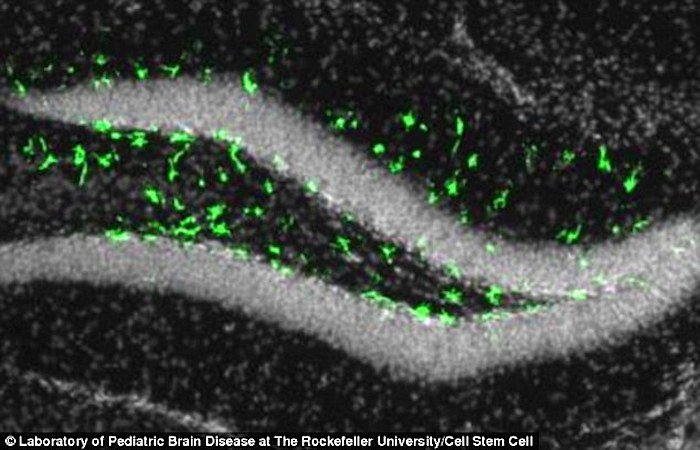
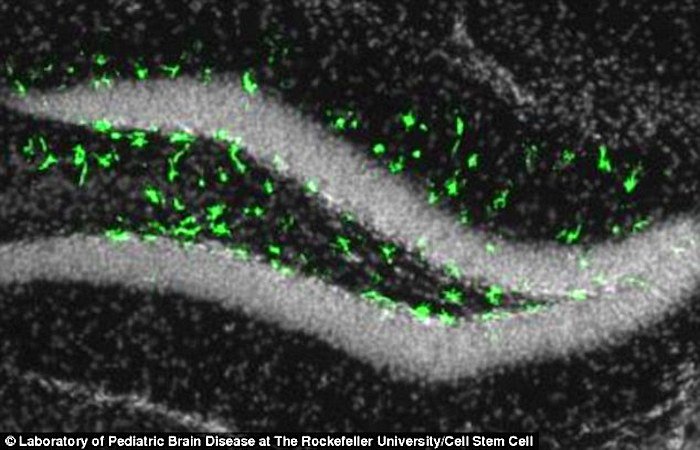
© Rockefeller University/Cell Stem CellThe green reveals the adult mouse brain could be infected by Zika in a region called the subgranular zone of the hippocampus. Full of neural progenitor cells, this part of the brain is important in learning and memory and linked to Alzheimer's in people.
Much of the focus around the mosquito-borne Zika virus has been on pregnant women and brain abnormalities in fetuses, but now scientists think some adult brain cells could be vulnerable too. Infections may even be as destructive as Alzheimer's disease.

By engineering mice to mimic the human Zika infection, and using fluorescent biomarkers to tag infection sites, scientists at the Rockefeller University and La Jolla Institute for Allergy and Immunology found that adult neural progenitor cells could be hijacked by the virus, leading to brain shrinkage and mental impairment.

"Our results are pretty dramatic - in the parts of the brain that lit up, it was like a Christmas tree," said Professor Joseph Gleeson, head of Laboratory of Pediatric Brain Disease at The Rockefeller University, in a released statement about the new study. "It was very clear that the virus wasn't affecting the whole brain evenly, like people are seeing in the fetus."

Gleeson said in healthy individuals, neural progenitor cells become fully formed neurons and are resistant to Zika, but for some people with weakened immune systems, they may be vulnerable to the virus.

The mature brain, Gleeson said, is learning, and memory that is impacted by Zika could bring about a cognitive decline that is normally associated with Alzheimer's disease or depression. "In the adult, it's only these two populations that are very specific to the stem cells that are affected by virus. These cells are special, and somehow very susceptible to the infection," Gleeson said. "Based on our findings, getting infected with Zika as an adult may not be as innocuous as people think."

Comment: Is this a case of finding a new threat in order to scare a new segment of the population and require more vaccinations to a bogus virus?


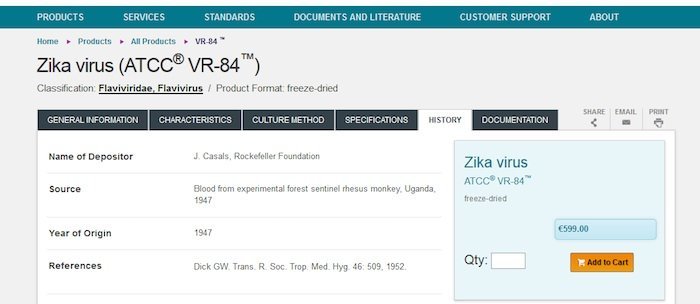
Comment: This sexually-transmitted virus has been around for 69 years and is marketed by two companies: LGC Standards (headquartered in the UK) and ATCC (headquartered in the US). And who owns the patent on the virus? The Rockefeller Foundation! Of significance, the Zika virus is a commodity which can be purchased online from the ATCC-LGC for 599 euros, with royalties accruing to the Rockefeller Foundation.
Zika screen shot
© unknown
See also:


Butterfly

Good relationships equal better sleep, says study: How responsive partners boost mental health

hugging
© Pixabay, Public DomainThe best sleep aid might be a supportive and attentive partner, new research suggests.
The people we are closest with may have a significant impact on the quality of sleep we get, suggests new research published Wednesday in Social Psychological and Personality Science.

The researchers studied data from a nationally representative survey of middle-aged Americans that examined how behavioral, psychological, and social factors affected people's health and well-being. Among people in relationships, they noticed a consistent pattern: Those who had responsive partners, meaning those who were attentive, supportive, and empathic, were generally calmer and experienced less stress. As a result, they also slept better.

Alarm Clock

Napping for health: Afternoon siestas can save your life

napping, power nap
Napping is not just for dogs and children. Some of the world's most influential thinkers and leaders have catnapped every day. Albert Einstein, Winston Churchill, Salvador Dali, John F Kennedy and Calvin Coolidge all found that a short snooze left them refreshed, recharged and ready to work. Science confirms that napping can help beat the post lunch slump and boost cognitive performance, but now there is evidence that a siesta could also save your life.

You probably don't need me to tell you that a nap can make you feel better; more alert, sharper and less grumpy. Research has shown that naps can improve our problem solving abilities and our memories, naps can also enhance perceptive skills and speed up reaction times. But the benefits go way beyond that. Short daytime sleeps have been shown to be good for the heart, decrease blood pressure, help our bodies cope with stress and even help us battle the bulge.

Comment: See also:


Health

The soothing effects of a sitz bath

Epsom Salt
Everyone needs a bit of TLC now and then. Sometimes certain body parts could use a little extra, such as your posterior region.

That's where a sitz bath may come in handy. Another term for sitz bath is hip bath, which helps describe the part of the anatomy having difficulty (referred to in many anatomy textbooks as the perianal area).

Rather than a full-fledged bath in a standard bathtub, a warm, relaxing sitz bath takes care of cleansing and soothing delicate areas with minimal pressure. Part of the beauty of this bottom-bathing option is that you don't even have to take all your clothes off!

It goes without saying that this is a delicate topic, because it's a delicate area, and people sometimes feel uncomfortable talking about it. But if you've never had toosh troubles, it's good to know how to deal with them beforehand.