Health & WellnessS


Health

Scarlet fever is making a comeback in the UK

scarlet fever
Scarlet fever, a common cause of childhood death in the 1800s and early 1900s, has seen an upsurge in England since 2011 after decades of decline, scientists said Tuesday.

Identifying the cause for the increased cases was "a public health priority", they warned.

"England is experiencing an unprecedented rise in scarlet fever with the highest incidence for nearly 50 years," said a study published in The Lancet Infectious Diseases, a leading medical journal.

In 2014, that amounted to a scarlet fever notification "for one in 500 children under the age of 10 years." There were no deaths.

"Whilst current rates are nowhere near those seen in the early 1900s, the magnitude of the recent upsurge is greater than any documented in the last century," said study leader Theresa Lamagni of Public Health England, Britain's executive health agency.

Scarlet fever is an infection, usually not serious, with symptoms including a sore throat, headache, high temperature and an itchy, sandpaper-like rash for which the disease is named.

Comment: Victorian diseases like scurvy and scarlet fever increase in the UK


Health

Study finds obesity and diabetes were responsible for almost 800,000 cases of cancer in one year

waistline
© Global Look Press
Obesity and diabetes were to blame for hundreds of thousands of cancer cases worldwide in 2012, according to the results published in a new study.

The combined effect of diabetes and high body mass index (BMI) above the indicator of 25 caused some 792,600 cancers globally five years ago, showed the study, led by Dr Jonathan Pearson-Stuttard from the Imperial College London's Faculty of Medicine.

"While obesity has been associated with cancer for some time, the link between diabetes and cancer has only been established quite recently," Pearson-Stuttard said, as quoted by AFP.

"Our study shows that diabetes - either on its own or combined with being overweight - is responsible for hundreds of thousands of cancer cases each year across the world," he added. Although, if taken separately, being overweight led to twice as many cancer cases as diabetes, the study showed.

Star

Light therapy might help people with bipolar depression

light therapy bipolar
© Katherine Streeter for NPR
As the months grow colder and darker, many people find themselves somewhat sadder and even depressed.

Bright light is sometimes used to help treat the symptoms of seasonal affective disorder, or SAD. Researchers are now testing light therapy to see if it also can help treat depression that's part of bipolar disorder.

It's unclear how lack of light might cause the winter blues, although some suggest that the dark days affect the production of serotonin in the skin.

The idea with light therapy for depression is to replace the sunshine lost with a daily dose of bright white artificial light. (Antidepressants, psychotherapy and Vitamin D help, too, according to the National Institute of Mental Health.) The light box is actually more like a screen, the size of an average desktop computer. Some people call it a "happy box."

Comment: See also: High schoolers create new light therapy device to treat seasonal affective disorder


Fire

Hyperthermic conditioning's role in increasing endurance, muscle mass, and neurogenesis

sauna
© Shutterstock
For the most part, people don't like to get hot.

The massive indoor climate control systems and pleasantly chilled water fountains found in most gyms speak to this fact. There are some exceptions - Bikram yoga, for example - but they're few and far between.

But here's the surprise: increasing your core temperature for short bursts is not only healthful, it can also dramatically improve performance.

This is true whether it's done in conjunction with your existing workout or as an entirely separate activity. I'm going to explain how heat acclimation through sauna use (and likely any other non-aerobic activity that increases core body temperature) can promote physiological adaptations that result in increased endurance, easier acquisition of muscle mass, and a general increased capacity for stress tolerance. I will refer to this concept of deliberately acclimating yourself to heat, independent of working out, as "hyperthermic conditioning."

I'm also going to explain the positive effects of heat acclimation on the brain, including the growth of new brain cells, improvement in focus, learning and memory, and ameliorating depression and anxiety. In addition, you'll learn how modulation of core temperature might even be largely responsible for "runner's high" via an interaction between the dynorphin/beta-endorphin opioid systems.

Brain

Neurofeedback has promise in treating tinnitus

neurofeedback chart
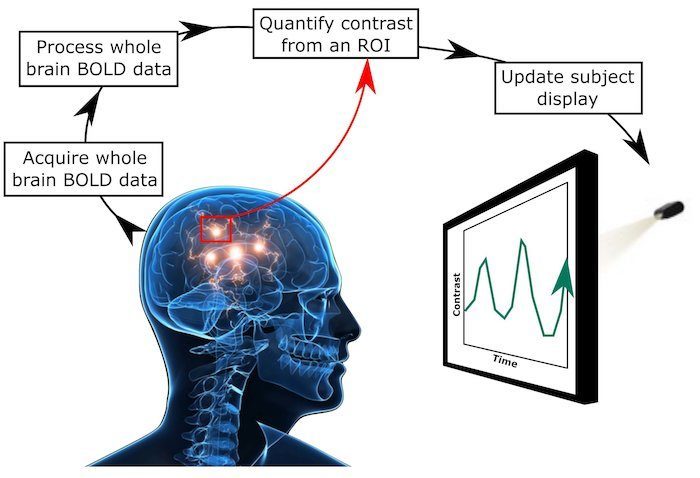
© Radiological Society of North AmericaThe standard approach to fMRI neurofeedback.
Researchers using functional MRI (fMRI) have found that neurofeedback training has the potential to reduce the severity of tinnitus or even eliminate it, according to a study presented today at the annual meeting of the Radiological Society of North America (RSNA).

Tinnitus is the perception of noise, often ringing, in the ear. The condition is very common, affecting approximately one in five people. As sufferers start to focus on it more, they become more frustrated and anxious, which in turn makes the noise seem worse. The primary auditory cortex, the part of the brain where auditory input is processed, has been implicated in tinnitus-related distress.

For the study, researchers looked at a novel potential way to treat tinnitus by having people use neurofeedback training to turn their focus away from the sounds in their ears. Neurofeedback is a way of training the brain by allowing an individual to view some type of external indicator of brain activity and attempt to exert control over it.

Comment: See also:


Microscope 2

Dangerous fungal infection known as 'cave disease' hid within a man for 30 years

histoplasmosis
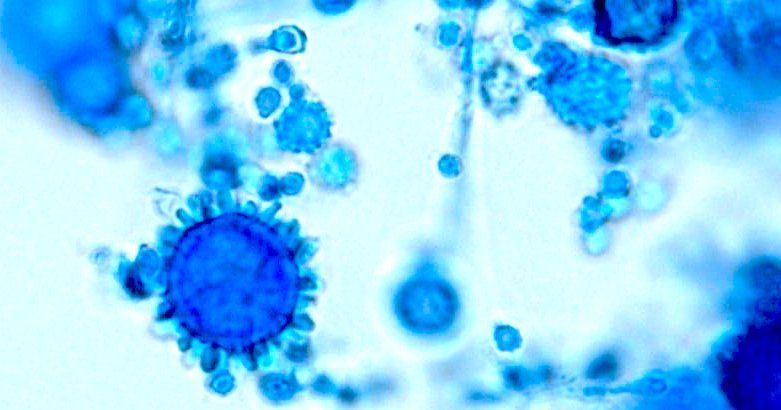
© LIFEHistoplasma capsulatum
A 70-year-old patient who presented with cancer-like symptoms turns out to have been harbouring something even weirder: a fungal infection that may have been in his body for 30 years before making itself known.

It turns out what he had was a disease called histoplasmosis - a condition caused by inhalation of the spores of a fungus called Histoplasma capsulatum.

He presented to the hospital complaining of "altered mental status" for four days, according to the case report - he seemed otherwise normal, but a bit confused. A CT scan, followed by an MRI, showed a lesion on his brain, and his doctors feared the worst: metastatic malignancy.

When they conducted further MRI scans, they also found masses in both his adrenal glands. But they did not suspect histoplasmosis. Partially because histoplasmosis, as it is inhaled, mainly presents in the lungs.

Mainly, however, because the patient lived in Arizona, and had not left the state for many years. Histoplasmosis, also known as cave disease, is fairly common in areas such as the Mississippi and Ohio river valleys, but not Arizona.

Health

Another study links Parkinson's disease to pesticides

Parkinson's
Parkinson's disease (PD) is a movement disorder that generally impairs speech and motor skills and is characterized by tremors and muscular rigidity. There is still a lot to learn about the symptoms and effects of Parkinson's disease, but recently, a new study concluded with interesting results.

How Is Parkinson's Disease Contracted?

There are many forms of Parkinson's disease that appear to be idiopathic, meaning doctors aren't sure of the causes. Some cases are linked to drug toxicity, medical disorders, or head trauma. The latest observation that medical scientists are exploring is a possible link between pesticides and Parkinson's Disease.

According to new research [1] into the causes of Parkinson's Disease, two specific insecticide classes were cited as significantly associated: organochlorines and organophosphorus compounds. While the research isn't exhaustive or definitive, the results compiled thus far are enough to warrant closer examination by the medical community.

Comment: See also:


Magnify

How the endocannabinoid system impacts metabolism, obesity and inflammation

brain CBD
Gut Microbiome

New research published over the last five years is revealing more about the trillions of bacterial companions that reside in our guts, and the important symbiotic health functions they provide each of us as their hosts. Amazingly, the human gut microbiota is composed of about 100 trillion cells (10 times more than the number of cells that make up the entire human body). Each individual harbors about 160 species (out of 1000 to 1500 found in the intestine), with some of these species found in the core microbiome of the majority of humans. However, relative profile and composition of our gut microbiome is heavily influenced by geographical location, diet and lifestyle factors such as physical activity. Prebiotics (non-digestible food ingredients, such as fiber) and probiotics (live microorganisms that can provide health benefits when administered orally) are also commonly used to change the composition of the gut microbiota.

Previous research has demonstrated that the gut microbiome can influence many other bodily systems and functions beyond simply gut health and digestive function. These microorganisms play an important role in mediating our immune systems, inflammation, defense against unwanted pathogens, metabolism of fat, protein and carbohydrates, and even our central nervous system with links to mental performance, depression and anxiety. It is usually shifts in general populations of gut bacteria or changes in the gut "ecosystem" (rather than a single bacterium) that creates dysfunction or disease.

Health

A professor of medicine explains why eating fat won't make you fat — but sugar will

  • Dozens of scientific studies suggest that eating fat isn't linked to weight gain.
  • Aaron Carroll, a pediatrician and professor of pediatrics, says it's perfectly OK to eat butter, cream, nuts, and avocados.
  • Instead of eating low-fat products, Carroll encourages people to eat less sugar, which studies have linked to weight gain and obesity.
low fat saturated fat
"There is one thing we know about fats," Aaron Carroll, a professor of pediatrics at the Indiana University School of Medicine, writes in his new book, "The Bad Food Bible: How and Why to Eat Sinfully."

"Fat consumption does not cause weight gain. To the contrary, it might actually help us shed a few pounds."

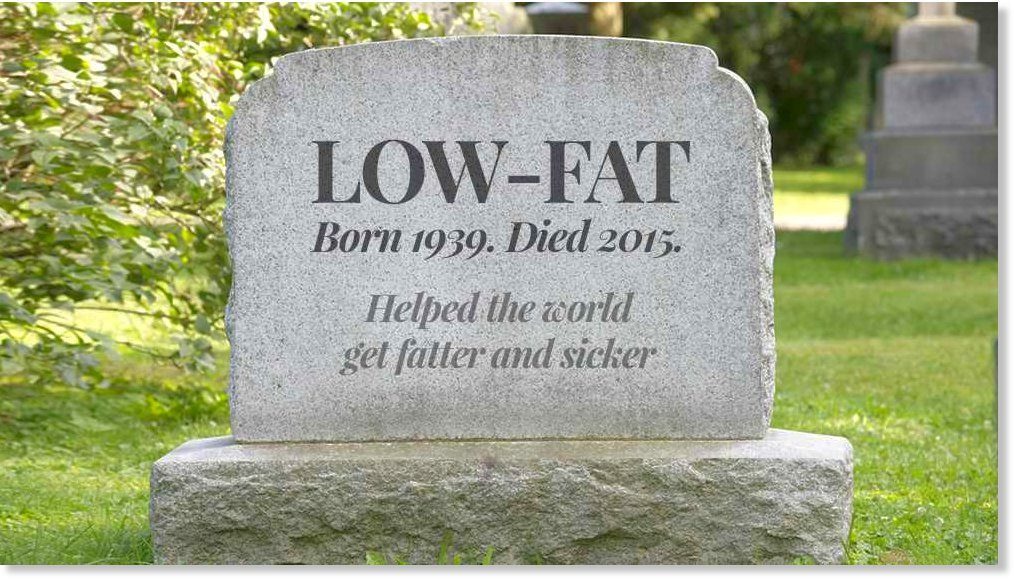
That means that foods like buttery avocados, rich salmon, and savory nuts should have a place in your diet. If you banned them as part of the low-fat dieting craze of the 1990s, it's time to bring them back.

The evidence lies in studies that have compared people on low-fat, high-carb diets with people on low-carb, high-fat diets. Time and time again, the research reveals that people who restrict their intake of fatty foods do not lose weight or gain other health benefits. In contrast, people who eat diets high in fat but low in refined carbohydrates like white bread and white rice tend to lose weight and see other health benefits as well.

To doctors and dietitians, these findings suggest that the real villain when it comes to weight gain isn't fat but rather added sugar and refined carbohydrates that get quickly broken down into sugar.

Comment: A basic understanding of organic chemistry explains why the Lipid Hypothesis - where a high intake of saturated fat and elevated LDL ("bad") cholesterol are the most important causes of atherosclerosis and coronary heart disease - doesn't make sense from a chemical point of view. In other words, if doctors and nutritionists would only apply their basic training in organic chemistry, they would be embarrassed to support the cholesterol myth. For more information, read our SOTT Focus: Shame on the American Heart Association - Big Business' Interests Take Precedence Over Human Health


Life Preserver

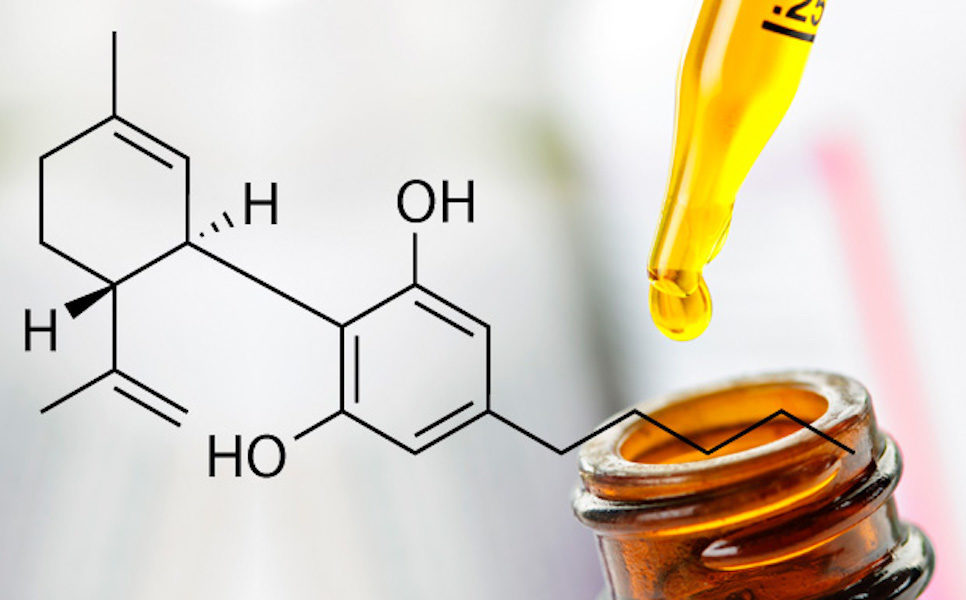
Why CBD oil is better than prescription painkillers

CBD oil
© HERB
With vast numbers of people taking addictive and hazardous prescription painkillers, more investment needs to be made into natural, cannabis-derived alternatives like CBD.

Anyone who has suffered from chronic pain will know that the effect on your life can be extremely corrosive.

Next time you see someone walking down the street looking miserable, consider this: maybe back pain kept them awake all night, and now that same pain has formed a pincer-movement with the tiredness, making it extremely difficult not to look like a grumpy sod.

Lots of people are in pain, and there are many potential remedies, both under and over the counter, inside and outside of the law.

Let us consider two: opiates and cannabis.

Comment: See also: