Health & WellnessS


Health

Blood Sugar Linked To Normal Cognitive Aging

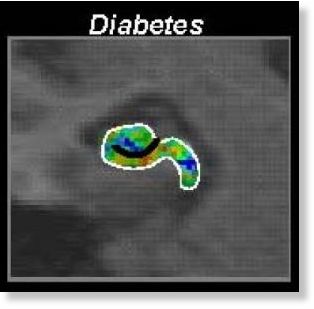
Cerebral blood volume (CBV) maps
© Columbia University Medical CenterCerebral blood volume (CBV) maps are shown for a subject with diabetes. Maps are color-coded with warmer colors indicating greater CBV or activity.
Maintaining blood sugar levels, even in the absence of disease, may be an important strategy for preserving cognitive health, suggests a study published by researchers at Columbia University Medical Center (CUMC).

Senior moments, also dubbed by New York Times Op-Ed columnist David Brooks as being "hippocampically challenged," are a normal part of aging. Such lapses in memory, according to this new research, could be blamed, at least in part, on rising blood glucose levels as we age. The findings suggest that exercising to improve blood sugar levels could be a way for some people to stave off the normal cognitive decline that comes with age.

"This is news even for people without diabetes since blood glucose levels tend to rise as we grow older. Whether through physical exercise, diet or drugs, our research suggests that improving glucose metabolism could help some of us avert the cognitive slide that occurs in many of us as we age," reported lead investigator Scott A. Small, M.D., associate professor of neurology in the Sergievsky Center and in the Taub Institute for Research on Alzheimer's Disease and the Aging Brain at Columbia University Medical Center.

Health

Family Rejection Of Lesbian, Gay And Bisexual Children Linked To Poor Health In Childhood

For the first time, researchers have established a clear link between family rejection of lesbian, gay and bisexual (LGB) adolescents and negative health outcomes in early adulthood.

A new paper, authored by Caitlin Ryan, PhD, Director of the Family Acceptance Project and her team at the César E. Chávez Institute at San Francisco State University, shows that negative parental behaviors toward LGB children dramatically compromises their health. The discovery has far reaching implications for changing how families relate to their LGB children and how a wide range of providers serve LGB youth across systems of care.

"For the first time, research has established a predictive link between specific, negative family reactions to their child's sexual orientation and serious health problems for these adolescents in young adulthood such as depression, illegal drug use, risk for HIV infection, and suicide attempts," said Ryan, who is the lead author of the paper. "The new body of research we are generating will help develop resources, tools and interventions to strengthen families, prevent homelessness, reduce the proportion of youth in foster care and significantly improve the lives of LGBT young people and their families."

Magnify

Scientists Pull Protein's Tail To Curtail Cancer

When researchers look inside human cancer cells for the whereabouts of an important tumor-suppressor, they often catch the protein playing hooky, lolling around in cellular broth instead of muscling its way out to the cells' membranes and foiling cancer growth.

This phenomenon of delinquency puzzled scientists for a long time - until a cell biologist in the Johns Hopkins University School of Medicine felt compelled to genetically grab the protein by the tail and then watched as it got back to work at tamping down disease.

"It was curious that when we removed its tail, the protein suddenly was unhindered and moved out to the membrane and became active," says Meghdad Rahdar, a graduate student in pharmacology.

The discovery, published Dec. 15 online at the Proceedings of the National Academy of Sciences, represents a potential new approach to cancer therapy, according to Peter Devreotes, Ph.D., professor and director of cell biology at Johns Hopkins.

"A long-term goal is to find a drug that does the equivalent of our bit of genetic engineering," he says.

Pills

Celebrities are Smarter than "Skeptical Scientists" When it Comes to Health Literacy

The science "skeptics" are at it again, attacking the credibility of celebrities who they say demonstrate astonishing levels of scientific illiteracy. Barack Obama, Oprah, Tom Cruise, Demi Moore, Kate Moss and Julianne Moore have all been labeled scientifically illiterate by the UK non-profit Sense About Science, which you'll learn more on below.

Health

Researchers unlock secrets of 1918 flu pandemic

Researchers have found out what made the 1918 flu pandemic so deadly -- a group of three genes that lets the virus invade the lungs and cause pneumonia.

They mixed samples of the 1918 influenza strain with modern seasonal flu viruses to find the three genes and said their study might help in the development of new flu drugs.

The discovery, published in Tuesday's issue of the Proceedings of the National Academy of Sciences, could also point to mutations that might turn ordinary flu into a dangerous pandemic strain.

Yoshihiro Kawaoka of the University of Wisconsin and colleagues at the Universities of Kobe and Tokyo in Japan used ferrets, which develop flu in ways very similar to humans.

Comment: Read the section on the pandemic threat in October's Connecting the Dots: Towards the New World Order with the Men who Count the Votes


Family

Giving can change your mind

Why would any rational American give to a charity this year? The economy is staggering. We lost half a million jobs in November alone. Home foreclosures are at record highs.

And while Washington may be wrapping up great piles of economic stimulus and rescue packaging for the holidays (with endless sheets of our best green paper), the rest of us are winding up a little ... short. Grumpy, even.

Meanwhile, charities and social services groups are facing enormous budget shortfalls just as demand for their services is accelerating.

But here's a surprising paradox. Even in the midst of a financial crisis - just when it seems that everybody should be out for themselves - the single most self-indulgent thing you can do is give.

A bit of time. A little money. Something, anything to a cause you care about.

Here's why.

Book

The Secret Epidemic of Trapped Emotions

Where would you be without your emotions? If the sum total of all your experiences makes up the tapestry of your life, it is the emotions you have experienced that give that tapestry its color.

Our emotions really do give color to our lives. Try to imagine for a moment a world where no emotions could occur. No joy would be possible. No feelings of happiness, bliss, charity or kindness. No love would be felt, no positive emotions of any kind.

On this imaginary emotionless planet, there would be no negative emotions either. No sorrow, no anger, no feelings of depression, and no grief. To live on such a planet would be to merely exist. With no ability to feel emotions of any kind, life would be reduced to a gray, mechanical ritual from cradle to grave. Be grateful that you can feel emotions!

But are there emotions you have experienced that you would rather not have felt? If you are like most people, your life has had its darker times. You have probably experienced moments of anxiety, as well as other times of grief, anger, frustration, and fear. You may have experienced periods of sorrow, as well as depression, low self-esteem, hopelessness, or any of a wide variety of negative emotions.

Toys

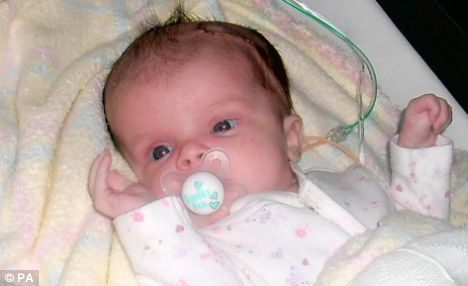
The British baby who had brain surgery at just TWO weeks old

Baby Madison
© PALittle fighter: Baby Madison in hospital at just a few weeks old
A British baby is thought to have become the world's youngest ever brain tumour surgery patient.

Madison Quartarone was just a few days old when a midwife noticed that the child's head had swollen noticeably and she was drowsy.

Doctors discovered she had been born with a large benign tumour which was accumulating fluid and growing.

Magnify

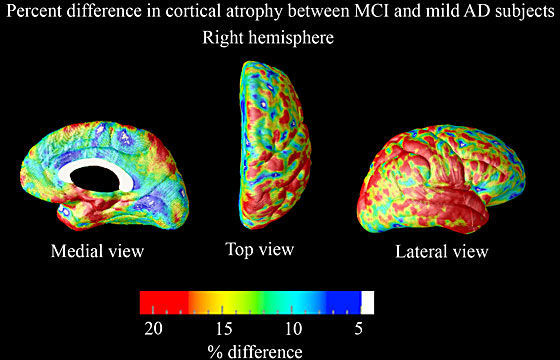
Slow Starvation of Brain Triggers Alzheimer's

brain starvation
© Dr. Liana G. Apostolova, David Geffen School of Medicine at UCLAA 3-D image of brain atrophy differences in mild cognitive impairment (MCI) patients and mild Alzheimer's disease patients. Alzheimer's patients show far more damage overall, especially in cortical areas of the brain
A slow starvation of the brain over time is one of the major triggers of the biochemistry that causes some forms of Alzheimer's, according to a new study that is helping to crack the mystery of the disease's origins.

An estimated 10 million baby boomers will develop Alzheimer's in their lifetime, according to the Alzheimer's Association. The disease usually begins after age 60, and risk rises with age. The direct and indirect cost of Alzheimer's and other dementias is about $148 billion a year.

Robert Vassar of Northwestern University, the study's lead author, found that when the brain doesn't get enough of the simple sugar called glucose - as might occur when cardiovascular disease restricts blood flow in arteries to the brain - a process is launched that ultimately produces the sticky clumps of protein that appear to be a cause of Alzheimer's.

Smiley

Smiles Are Innate, Not Learned

Athletes
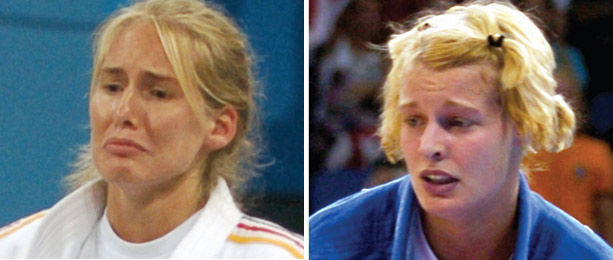
© Bob WillinghamBoth blind (left) and sighted (right) athletes who just lost a match for a medal showed similar facial expressions of sadness with a downturned mouth and raised inner eyebrows
From sneers to full-blown smiles, our facial expressions are hardwired into our genes, suggests a new study.

The researchers compared the facial expressions from more than 4,800 photographs of sighted and blind judo athletes at the 2004 Summer Olympics and Paralympic Games.

The analyses showed sighted and blind individuals modified their expressions of emotion in the same way in accordance with the social context. For example, in the Paralympics, the athletes competed in a series of elimination rounds so that the final round of two athletes ended in the winner taking home a gold medal while the loser got a silver medal.