Health & WellnessS


Cheeseburger

The History of Supersizing: How We've Become a Nation Hooked on Bigger Is Better

Image
© coromenglish.blogspot.com
NYC's recent ruling limiting the size of sugary drinks has spurred a lot of controversy. Is it stupid? Not if you know the history of supersizing.

New York Mayor Bloomberg's new rules limiting sodas and other sugary drinks sold in restaurants, movie theaters, sports arenas, food carts and delis to 16 ounces has spurred a national debate. Should government limit our serving sizes? Bloomberg's rules do not prevent a person from buying two, five or 10 16-ounce sodas and drinking them all in one sitting. They just prevent a restaurant from selling that much soda in one cup. Stupid rule? Not if you know the history of supersizing.

The idea can be traced back to a man named David Wallerstein, who ran movie theaters in the 1960s. He tried method after method to get his customers to buy more than one order of popcorn. Nothing worked. Then he realized why: people thought they would look like pigs if they bought two popcorns. So he tried increasing sales a different way, by offering a jumbo size popcorn. The trick worked. Popcorn sales went up.


Info

How a Mother Fought for Vaccine Exemption to Protect Her Kids

Image
Story at-a-glance
  • Full-time mother, advocate and writer Cathy Jameson gives a first-hand account of what to say to a pediatrician who tires to force his or her vaccination opinions on you
  • Knowledge is power, so it's important to stay educated about vaccine choice and vaccination risks so you can easily explain your position to others, including others in positions of authority
  • If your doctor belittles you, refuses to treat your family, or will not take the time to discuss your vaccine concerns with you, I suggest you find one who will
  • It is your choice and your responsibility to get educated about vaccination, and your doctor should work with you on this

Sherlock

The Dark Side of Soya: How One Super Crop Lost its Way

Image
© The Ecologist
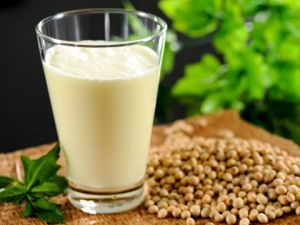
A decade ago, soya was being hailed as a superfood but in recent years, numerous issues surrounding deforestation and its impact on health have come to light.

Once credited with power to prevent cancer and combat high cholesterol, over the last few years, evidence that soya is far from a superfood has begun to emerge. And it's not just the potentially negative health impact of the bean that has former supporters up in arms: it's the environmental impact. In the UK we rely heavily on soya, or soy, and it's not just for vegetarian food. It is a hidden product in many foods and everyday items such as soap. It is a cheap source of protein for people as well as animals and according to Greenpeace, 80 per cent of soya worldwide is used for the livestock industry. WWF add that the UK consumption alone requires an area the size of Yorkshire to be planted with soya every year. So how did soya go from super crop to super bad?

Health

MSG Hidden in Variety of Foods and Contributing To Illness

MSG
© GreenMedInfo
Despite common perception, the toxic food additive MSG is everywhere - not just in Chinese food! This taste enhancer is actually hidden under dozens of ingredient names in all sorts of processed foods, restaurant foods, beverages, chewing gums, vitamins and supplements. It is added to foods in higher dosages than ever before, and more and more people are experiencing symptoms.

Monosodium Glutamate (MSG) is a health concern because it contains glutamate. Glutamate is the salt form of "Free Glutamic Acid" - a toxin that is associated with serious health problems such as digestive distress, heart attacks, Fibromyalgia, behavior problems, insulin resistance, weight gain, and a long list of other symptoms. [1, 2, 3, 4]

Due to insufficient labeling laws, food companies use many hidden names to disguise Free Glutamic Acid in their ingredients lists. So consumers must look for more than just "MSG" on food labels.

To understand why processed Free Glutamic Acid is associated with so many health problems, it is helpful to learn about natural Glutamic Acid - an amino acid (a building block of protein) that occurs naturally in the body as one of many excitatory neurotransmitters (chemicals that "excite" cells into action).

Glutamatic Acid also occurs naturally in certain unprocessed, whole foods (e.g., tomatoes). In this natural form, it is bound (i.e., linked) together with other amino acids to form a protein. Once ingested, the protein is broken down slowly by the digestive system. The Glutamic Acid is released gradually into the blood stream and is non-toxic. If one ingests more than the body needs, the cells clear away the excess just as they were designed to do. The digestion of these natural, whole food sources releases such a small amount of Glutamic Acid that even people who react to processed MSG can usually tolerate them.

Smoking

Why Schizophrenics Smoke

smoking
When it comes to cigarettes, schizophrenics just can't seem to get enough. They're two to three times more likely to smoke than the general population, and patients have been known to puff through up to four packs a day. New research on mice may explain this behavior: Nicotine spurs the production of a key neural protein that's scarce in schizophrenics--and that may help relieve their symptoms.

The 100 billion neurons in our brains are continually signaling one another. These impulses are like cars zooming through a city without traffic lights to deliver a message--they would pile up and the messages would get garbled. To keep neural signal traffic flowing, the brain uses certain neurotransmitters as stoplights to prevent neurons from firing out of turn. Reduced levels of one such neurotransmitter, called gamma-aminobutyric acid (GABA), characterizes the brains of schizophrenia patients. Researchers think that without the stoplight effect of GABA, signals in the schizophrenic brain overlap and get jumbled in a sort of neural traffic jam, resulting in hallucinations, disorganized thinking, and anxiety.

Info

75-Year-Old Woman Still Miraculously Has the Body of a 20-Year-Old

Exercising
© healthyloverclub/YouTube
When I picture myself at 75 years old ... well, honestly, I try to avoid picturing myself at 75 years old. No offense to the average septuagenarian, but I'm just not all that jazzed about a future of wrinkles and saggy old lady arms and boobs that hover around my waistline.

Or perhaps I should say I wasn't all that jazzed about the golden years, because now that I've seen 75-year-old bodybuilder Ernestine Shepherd in action? Um, WOW.

Apparently that whole "age is just a number" thing isn't merely something nice you write in a birthday card to your grandma -- it's true!

Declared the oldest competitive female bodybuilder in the world by the Guinness Book of World Records in 2010, Ernestine Shepherd will literally redefine your personal definition of what a 75-year-old human being's body should look like. Shepherd is in better shape than the average 25-year-old!

Perfectly toned and sculpted, lean and mean, with absolutely gorgeous skin and bright eyes -- did this woman make a deal with the devil?

Health

Does Skin Pigment Act Like A Natural Solar-Panel?

Skin
© GreenMedInfo
While ubiquitous in nature, melanin, which provides the coloring found in hair, skin, eyes, feathers, scales, etc., is an especially important substance as far as the human condition is concerned. After all, melanin's role in determining skin color makes it the primary physiological basis for racial differentiation among humans.

Entire civilizations, no doubt, have risen and fallen due to their conceptions (and misconceptions) about this pigment's effects on human behavior, to the point that the very notion of humanness itself has been called into question depending on how little or how much melanin a body possessed.

It is for this reason that melanin's lesser known, functional properties should be considered more closely. In fact, being more pigmented, i.e. darker skinned, or put oppositely, being less de-pigmented, may confer a unique set of health benefits which over the course of human history have been repressed or intentionally misrepresented in order to fuel the sociopolitical construct of race.

In biological science melanin is known to possess a diverse set of roles and functions in a wide range of organisms. These include:
  • Protection against biochemical attack: e.g. the smokeshield-like ink of the octopus, and the melanin-based protective colorings of bacteria and fungi which are capable of encapsulating and oxidizing invading organisms in a process known as melanization.
  • Mitigating chemical stresses associated with exposure to heavy metals and oxidizing agents.
  • Acting as a natural sunscreen: shielding light-sensitive tissue from the potentially damaging effects of ultraviolet light.
Melanin is capable of transforming ultraviolet light energy into heat in a process known as "ultrafast internal conversion"; more than 99.9% of the absorbed UV radiation is transformed from potentially genotoxic (DNA-damaging) ultraviolet light into harmless heat.

If melanin can convert light into heat, could it not also transform UV radiation into other biologically/metabolically useful forms of energy? This may no seem so far fetched when one considers that even gamma radiation, which is highly toxic to most forms of life, is a source of sustenance for certain types of fungi and bacteria.

Roses

Coenzyme Q10 May Slow Progression of Huntington Disease

Image
A new study shows that the compound Coenzyme Q10 (CoQ) reduces oxidative damage, a key finding that hints at its potential to slow the progression of Huntington disease. The discovery, which appears in the inaugural issue of the Journal of Huntington's Disease, also points to a new biomarker that could be used to screen experimental treatments for this and other neurological disorders.

"This study supports the hypothesis that CoQ exerts antioxidant effects in patients with Huntington's disease and therefore is a treatment that warrants further study," says University of Rochester Medical Center neurologist Kevin M. Biglan, M.D., M.P.H., lead author of the study. "As importantly, it has provided us with a new method to evaluate the efficacy of potential new treatments."

Red Flag

Big Pharma Continues Drug Experiments in Underdeveloped Nations for Profit

Image
© Activist Post
Pharmaceutical corporations, like Novo Nordisk, have been using underdeveloped countries as testing grounds for experimental drug trials. Doctors are beginning to speak out against this practice, citing that it has more to do with increasing profits and less to do with scientific research.

In countries like India and South Africa, where the citizens pay for their medicines, these drug trials are quite profitable for drug corporations.

While drug licensing authorities do not require post-marketing studies, major drug corporations regularly contend that they must conduct more experiments on the human population. Using third-world nations is the easiest way to do so considering that the general population in those countries does not have the ability to speak out and protest.

Stop

Mysterious disease claims 18 lives on single day

Even as doctors, scientists and health specialists in Bihar continue to investigate the "mysterious disease" which has claimed hundreds of lives in the last one month, the death of 18 more kids on Saturday has taken the toll from 156 to 174.

Additional Secretary (Health) R P Ojha said out of 402 children detected with symptoms of Acute Encephalitis Syndrome (AES), 82 have been admitted to different hospitals for treatment, while 156 died. The rest 164 children have been discharged after treatment.

Unofficial sources, however, put the death toll to 203.

Ever since the "mysterious disease" broke out on May 16, the blame game is on in the state. Bihar Health Minister Ashwani Choubey has charged the Centre with stalling the State's plan to spray the chemical in the susceptible districts -- Muzaffarpur and Gaya -- where the casualty list is long.