Health & WellnessS


Health

New Insights Into the Effects of Stress On Pregnancy

Expectant mothers who dealt with the strain of a hurricane or major tropical storm passing nearby during their pregnancy had children who were at elevated risk for abnormal health conditions at birth, according to a study led by a Princeton University researcher that offers new insights into the effects of stress on pregnancy.

The study used birth records from Texas and meteorological information to identify children born in the state between 1996 and 2008 whose mothers were in the path of a major tropical storm or hurricane during pregnancy. The children's health at birth was compared with that of siblings whose gestation didn't coincide with a major weather event.

The study found that mothers living within 30 kilometers of a hurricane's path during their third trimester were 60 percent more likely to have a newborn with abnormal conditions, which are detailed on birth records. Those conditions included being on a ventilator for more than 30 minutes or experiencing meconium aspiration, which occurs when a newborn breathes in a mixture of meconium -- or early feces -- and amniotic fluid around the time of delivery. Increased risk was also found following exposure to weather-related stressors in the first trimester, while evidence was less clear for exposure in the second trimester. The researchers were able to isolate the impact of stress caused by the storm from other factors, such as changes in the availability of health care in a storm's aftermath.

Syringe

Study Disproves CDC's Primary Justification for Vaccination

Baby Jab
© GreenMedInfo

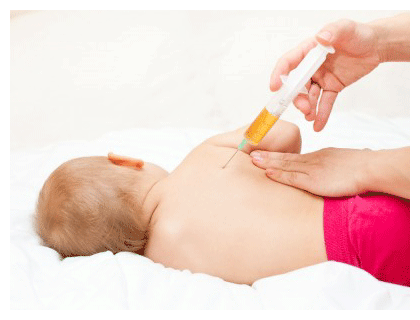
According to the Centers for Disease Control and Prevention (CDC), "Immunity to a disease is achieved through the presence of antibodies to that disease in a person's system."[i] This, in fact, is the main justification for using vaccines to "boost" immunity, and a primary focus of vaccine research and development.

And yet, newly publish research has revealed that in some cases no antibodies are required for immunity against some viruses.

Published in the journal Immunity in March, 2011, and titled, "B cell maintenance of subcapsular sinus macrophages protects against a fatal viral infection independent of adaptive immunity," researchers found that mice infected with vesicular stomatitis virus (VSV) can suffer fatal invasion of their central nervous system even in the presence of high concentrations of "neutralizing" antibodies against VSV.[ii]

The researchers found that while B-cells were essential for surviving a systemic VSV infection through the modulation of innate immunity, specifically macrophage behavior, the antibodies they produce as part of the adaptive immune response were "neither needed nor sufficient for protection." These findings, according to the study authors, "...contradict the current view that B cell-derived neutralizing antibodies are absolutely required to survive a primary cytopathic viral infection, such as that caused by VSV."

The discovery that antibodies are not required for protection against infection, while counterintuitive, is not novel. In fact, not only are antibodies not required for immunity, in some cases high levels are found in the presence of active, even lethal infections. For example, high serum levels of antibodies against tetanus have been observed failing to confer protection against the disease. A report from 1992 published in the journal Neurology found severe tetanus in immunized patients with high anti-tetanus titers, one of whom died as a result of the infection.[iii]

These research findings run diametrically opposed to currently held beliefs regarding the process by which we develop immunity against infectious challenges. Presently, it is a commonly held view that during viral infections, innate immunity must activate adaptive responses in order to achieve effective immunity. It is believed that this is why the immune system has developed a series of innate defenses, including complement, type I interferon, and other "stopgap measures," which work immediately to lower pathogen burden and "buy time" for the much slower adaptive immune response to develop.

Beaker

What's Really Behind the Ingredients in 'Natural Flavors?'

Image
© docakilah.wordpress.com
What does the term "natural flavors" really mean? Could it be that the term "natural flavors" includes genetically modified, pesticide-laden food? There are also plenty of "food products" on the shelves that read "all natural" on the label, but they still contain large amounts of synthetic, laboratory-concocted food agents, many of which cause diseases and disorders. So how much more confusing can it get to simply shop for food that doesn't kill you slowly?

Exactly who makes the rules about terms put on labels? You better hope it doesn't all fall in the hands of the FDA, the same organization responsible for allowing genetically modified food to exist and be sold completely undercover ever since its inception. And does natural flavoring include the migraine headache monster monosodium glutamate? Also, can "natural flavoring" include bugs that are ground up to turn your food into some "happy" colors that help you celebrate some birthday or big event? One final question: could "natural flavoring" mean the food contains meat, even though it's a vegetarian or vegan product?

Maybe "natural flavoring" means it's not natural at all, instead, some food scientists were paid millions to create un-natural, immune system "crippling" foods, drinks, candies and medicine, just to make some extra money off of your sickness. There's a point where conspiracy theory bleeds over into the real world of unnatural food and medicine, where paranoia of cancer scams and epidemics spill over into actual statistics (United States), the ones which include every other man and every third women in the most "powerful country in the world."

Cow

U.S. Consumers Say 'No' to Antibiotics for Meat Production

Image
© UPI.comConsumers increasingly are leery of the use of the use of antibiotics for meat production purposes and are urging grocery stores to employ labels that clearly state whether meat in coolers has been treated with the drugs.
A U.S. consumer group is campaigning to get local supermarkets to sell only meat that has been raised without antibiotics.

The campaign by Consumers Union, the public policy arm of Consumer Reports, coincides with the release of a study that suggests 86 percent of Americans want meat raised without antibiotics, which can be a difficult task due to misleading and unapproved labels, Consumer Reports said last week.

The U.S. Food and Drug Administration earlier this year issued guidelines to cut back the use of antibiotics in animals raised for food.

The voluntary initiative requires certain antibiotics not be used for so-called "production" purposes, such as to enhance growth or improve feed efficiency in an animal. The antibiotics would still be available to prevent, control or treat illnesses under veterinary supervision, officials said.

Comment: To learn more about the misuse and overuse of antibiotics in Factory Farms and Why Factory Farms Threaten Your Health read the following articles:

Factory Farms Make You Sick. Let Us Count the Ways

What the USDA Doesn't Want You to Know About Antibiotics and Factory Farms

Got Antibiotics in Your Food? Thank the FDA

The FDA Finally Reveals How Many Antibiotics Factory Farms Use
Animals in factory farms get daily doses of antibiotics, both to keep them alive in their stressful, unsanitary conditions and to make them grow faster. What's the annual volume of antibiotic use on factory farms? The question is a critical one, because the practice has given rise to a novel strain of antibiotic-resistant staph (MRSA), known as ST398, that's widely present in our vast hog and chicken factories.

Well, federal regulators have for years ignored the question and refused to release estimates of just how much antibiotics the livestock industry burns through. But that ended yesterday, when the FDA released its first-ever report on the topic. The answer: 29 million pounds in 2009. According to ace public-health reporter Maryn McKenna, that's a shitload. (I'm paraphrasing her.)


Beaker

Fungicide Used on Farm Crops Linked to Insulin Resistance, Increased Risk of Cancer

A fungicide used on farm crops can induce insulin resistance, a new tissue-culture study finds, providing another piece of evidence linking environmental pollutants to diabetes. The results will be presented Saturday at The Endocrine Society's 94th Annual Meeting in Houston.

"For the first time, we've ascribed a molecular mechanism by which an environmental pollutant can induce insulin resistance, lending credence to the hypothesis that some synthetic chemicals might be contributors to the diabetes epidemic," said investigator Robert Sargis, M.D., Ph.D., instructor in the endocrinology division at the University of Chicago.

Beaker

Phthalates Linked to Higher Rates of Childhood Obesity

Image
© organic-mama.ca
Obese children show greater exposure than nonobese children to a phthalate, a chemical used to soften plastics in some children's toys and many household products, according to a new study, which found that the obesity risk increases according to the level of the chemical found in the bloodstream.

The study will be presented Saturday at The Endocrine Society's 94th Annual Meeting in Houston.

The chemical, di-ethylhexyl phthalate (DEHP), is a common type of phthalate, a group of industrial chemicals that are suspected endocrine disruptors, or hormone-altering agents.

In the study, children with the highest DEHP levels had nearly five times the odds of being obese compared with children who had the lowest DEHP levels, study co-author Mi Jung Park, MD, PhD, said.

Bug

Gut Microbes Battle a Common Set of Viruses Shared by Global Populations

Image
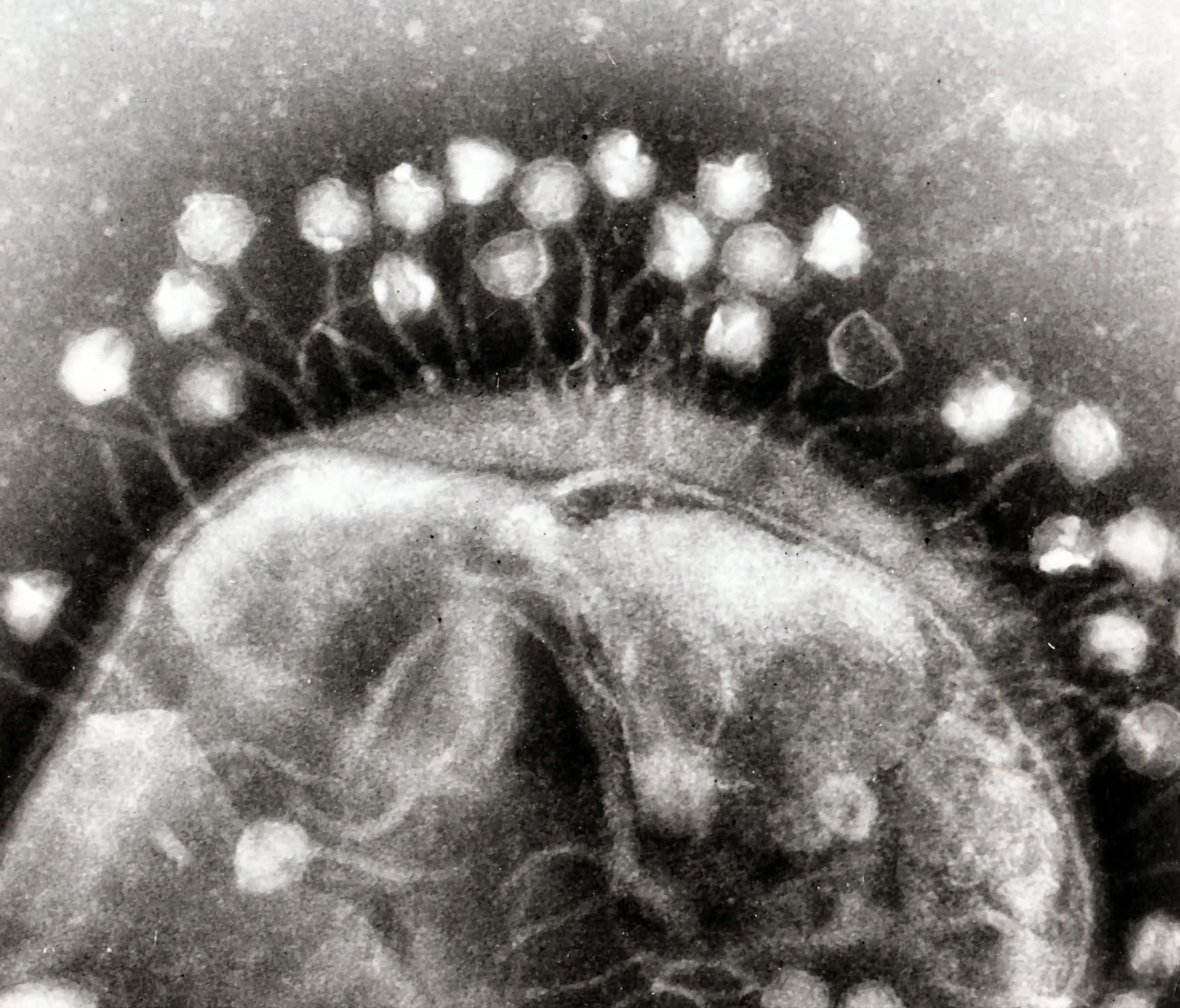
© biology.science.oregonstate.eduIn this image, several phages are infecting a single bacterial cell
The human gut is home to a teeming ecosystem of microbes that is intimately involved in both human health and disease. But while the gut microbiota is interacting with our body, they are also under constant attack from viruses. In a study published online in Genome Research, researchers have analyzed a bacterial immune system, revealing a common set of viruses associated with gut microbiota in global populations.

Viruses that prey on bacteria, called phages, pose a constant threat to the health of bacterial communities. In many ecological systems, viruses outnumber bacterial cells ten to one. Given the richness of bacteria in the human gut, it was not surprising that scientists have found that phages are also highly prevalent. But how can viruses targeting gut microbiota be identified? How do viral communities differ between people and global populations, and what could this tell us about human health and disease?

Attention

Toxic Chemicals in Hair and Nail Salons Create Serious Suffering in the Name of Beauty

Image
© Shutterstock.com
Working long hours amid noxious fumes, salon workers are in constant contact with chemicals linked to various illnesses and reproductive health problems.

You shouldn't have to suffer to be beautiful. But many women suffer for the beauty of others, polishing nails and styling hair with a toxic palette of chemicals.

Working long hours amid noxious fumes, salon workers, typically women of color, are in constant contact with chemicals linked to various illnesses and reproductive health problems.

Comment: Read the following articles for a deeper understanding of the author's claim about a 'consumer culture that endorses the trading of health for beauty':

The Ugly Side of Beauty, Some Cosmetics Can Be Toxic
Toxic Nail Salons: Why Your Nail Polish Color Could be the Next Agent Orange
The Dangers of Nail Polish Advertised as Nontoxic
Dangerous Beauty: 5 Hazardous Beauty Products
Deadly and Dangerous Shampoos, Toothpastes, and Detergents: Could 16,000 Studies Be Wrong?


Magic Wand

Holy Basil for Stress Relief

Image
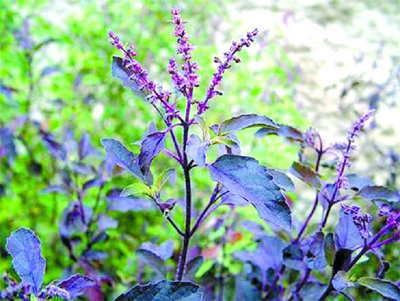
© m.guardian.co.ttThe tulsi plant, commonly referred to as the holy basil.
Holy basil (Ocimum sanctum) is an herb native to India, where it is known as tulsi. It is sacred in the Hindu religious tradition and is regarded as one of the most important plants used in Ayurvedic medicine. If you go to India, you will see holy basil growing in profusion around Hindu temples. It comes in red and green varieties, both with a strong, pleasant aroma. More clove-like than that of culinary basil, holy basil has been used for centuries to treat a variety of medical conditions including heart problems, asthma, bronchitis, arthritis and eye disorders. Although historically it hasn't been used for cooking, some American cooks have begun to experiment with it.

In the past decade or so a number of scientific studies have looked at holy basil for various treatment purposes. All of these studies have been done in animals, usually laboratory mice and rats, so we can't be certain that results will translate to humans. Findings from these various investigations suggest that holy basil might have some effects as a painkiller, a COX-II anti-inflammatory agent, an antioxidant, and as a treatment for bacterial, fungal and even viral infections. There is also evidence (again, only from animal studies) that holy basil might help control blood sugar.

Attention

Study: Radiation Therapy May Make Cancers 30x More Malignant

Scanner
© GreenMedInfo
Following on the heels of recent revelations that x-ray mammography may be contributing to an epidemic of future radiation-induced breast cancers, in a new article titled, "Radiation Treatment Generates Therapy Resistant Cancer Stem Cells From Aggressive Breast Cancer Cells," published in the journal Cancer July 1st, 2012, researchers from the Department of Radiation Oncology at the UCLA Jonsson Comprehensive Cancer Center report that radiation treatment actually drives breast cancer cells into greater malignancy.

The researchers found that even when radiation kills half of the tumor cells treated, the surviving cells which are resistant to treatment, known as induced breast cancer stem cells (iBCSCs), were up to 30 times more likely to form tumors than the nonirradiated breast cancer cells. In other words, the radiation treatment regresses the total population of cancer cells, generating the false appearance that the treatment is working, but actually increases the ratio of highly malignant to benign cells within that tumor, eventually leading to the iatrogenic (treatment-induced) death of the patient.

Last month, a related study published in the journal Stem Cells titled, "Radiation-induced reprogramming of breast cells," found that ionizing radiation reprogrammed less malignant (more differentiated) breast cancer cells into iBCSCs, helping to explain why conventional treatment actually enriches the tumor population with higher levels of treatment-resistant cells. [i]

A growing body of research now indicts conventional cancer treatment with chemotherapy and radiation as a major contributing cause of cancer patient mortality. The primary reason for this is the fact that cancer stem cells, which are almost exclusively resistant to conventional treatment, are not being targeted, but to the contrary, are encouraged to thrive when exposed to chemotherapy and radiotherapy.

In order to understand how conventional treatment drives the cancer into greater malignancy, we must first understand what cancer is....