Health & WellnessS


Attention

More Infants Born Addicted to Prescription Drugs

Newborn Baby
© Vanessa Van Rensburg | Dreamstime
Instead of the healthy cries of newborns, hospitals are now hearing an increase in shrieking just after birth -- just one sign in a rising epidemic of infants born addicted to prescription drugs.

Nationally, the rate of newborns suffering withdrawal, or "neonatal abstinence syndrome," rose 330 percent from 2000 to 2009, according to a study published in the Journal of the American Medical Association last spring.

In some states, it's much worse: In Kentucky, the rate rose 2,400 percent. In Florida, it rose 500 percent between 2004 and 2011, the Sun Sentinel reports. And those figures are likely on the low side, since they don't include infants without immediate symptoms who go home with parents who don't report their drug use.

"It's a silent epidemic that's going on out there," Audrey Tayse Haynes, secretary of the Kentucky Cabinet for Health and Family Services, told USA Today in its story on the issue. "You need to say: 'Stop the madness. This is too much.'"

It's no surprise that the numbers are high in Kentucky and other states with rampant prescription drug abuse. Still, when Van Ingram, executive director of Kentucky's Office of Drug Control Policy, requested statistics on infant hospitalizations, he was shocked.

"I was blown away," he told USA Today. "We need to slow the tide."

Heart

Why Broth is Beautiful: Essential Roles for Proline, Glycine and Gelatin

Several years ago Knox Gelatin introduced a new product named Nutrajoint with great fanfare. This supplement contains gelatin, vitamin C and calcium, and advertisements touted "recent scientific studies" proving that gelatin can contribute to the building of strong cartilage and bones.

In fact, the evidence goes back more than a century, and not only established gelatin's value to cartilage and bones but also to the skin, digestive tract, immune system, heart and muscles.
gelatin broth
These early studies, however, have fallen off the radar screen of Knox as well as that of nearly everyone else. So it was not surprising in 1997 when the editors of the Tufts University Health & Nutrition Letter advised consumers not to buy Nutrajoint or similar supplements because the idea that gelatin can contribute to the building of strong cartilage and bones "is a theory that has yet to be investigated." As for the theory itself, they sniffed that it "sounds tidy--rather along the lines of 'you are what you eat.'" In conclusion, they stated that even if Nutrajoint worked as claimed, it would be totally unnecessary because "the body can manufacture its own proline and glycine as needed and therefore suffers no shortfall."1

The notion that the body can create proline and glycine is, of course, the reason that neither amino is considered "essential." The ability to manufacture them easily and abundantly as needed, however, is probably true only of people enjoying radiant good health.Common sense suggests that the millions of Americans suffering from stiff joints, skin diseases and other collagen, connective tissue and cartilage disorders might be suffering serious shortfalls of proline, glycine and other needed nutrients.

Health

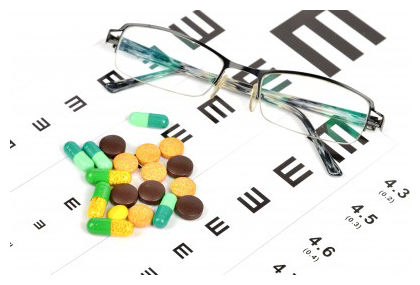
Blind To The Truth: The Eye-Damaging Effects of Statins

Statins and the Eyes
© GreenMedInfo
Newly published research has raised concern about the possibility that statin drugs are damaging the eyes of those taking them. Titled, "Age-related cataract is associated with type 2 diabetes and statin use," and published in the journal Optometry and Vision Science, researchers found that those taking statin drugs had 48% higher risk of pathological eye lense changes (nuclear sclerosis and cortical cataract) associated with increased opacity, i.e. cataracts.

As far back as 1990 research published in the journal of Experimental Eye Research discussed the potential that statin drugs have cataractogenic properties noting "[statin drugs] may result in an increased concentration of inhibitor [statin] in the outer cortical region of the lens where cholesterol synthesis is critical, thereby resulting in the development of opacities."[i] Other studies can be found supporting the cataract-statin link, which are located for your convenience on our database here: Statin-Cataract Research.

Statin drugs have now been linked to over 300 adverse health effects, including, ironically, statin-induced cardiotoxicity itself. Beyond the obvious problem of statin-associated muscle damage (78 studies) - remember, the heart is a muscle - there is the equally concerning problem of statin-induced neurotoxicity (53 studies).

Given the fact that that the heart is a highly innervated muscle, that is, nerve-dense muscle, the primary justification for prescribing them appears to be defunct, especially considering that the chemical class is, according to an accumulating body of clinical evidence, contributing to two orders of magnitude greater adverse health effects than their purported therapeutic ones.

Health

Lack of Sleep Found to Be a New Risk Factor for Aggressive Breast Cancers

Lack of sleep is linked to more aggressive breast cancers, according to new findings published in the August issue of Breast Cancer Research and Treatment by physician-scientists from University Hospitals Case Medical Center's Seidman Cancer Center and Case Comprehensive Cancer Center at Case Western Reserve University.

Led by Cheryl Thompson, PhD, the study is the first-of-its-kind to show an association between insufficient sleep and biologically more aggressive tumors as well as likelihood of cancer recurrence. The research team analyzed medical records and survey responses from 412 post-menopausal breast cancer patients treated at UH Case Medical Center with Oncotype DX, a widely utilized test to guide treatment in early stage breast cancer by predicting likelihood of recurrence.

All patients were recruited at diagnosis and asked about the average sleep duration in the last two years. Researchers found that women who reported six hours or less of sleep per night on average before breast cancer diagnosis had higher Oncotype DX tumor recurrence scores. The Oncotype DX test assigns a tumor a recurrence score based on the expression level of a combination of 21 genes.

Health

Short And Mid-Term Cardiovascular Effects of Japan's 2011 Earthquake and Tsunami: Incidence Rises With the Seismic Peak

The Japanese earthquake and tsunami of 11 March 2011, which hit the north-east coast of Japan with a magnitude of 9.0 on the Richter scale, was one of the largest ocean-trench earthquakes ever recorded in Japan. The tsunami caused huge damage, including 15,861 dead and 3018 missing persons, and, as of 6 June 2012, 388,783 destroyed homes.

Following an investigation of the ambulance records made by doctors in the Miyagi prefecture, close to the epicentre of the earthquake and where the damage was greatest, cardiologist Dr Hiroaki Shimokawa and colleagues from the Tohoku University Graduate School of Medicine at Sendai, Japan, found that the weekly occurrence of five conditions -- heart failure, acute coronary syndrome (including unstable angina and acute MI), stroke, cardio-pulmonary arrest and pneumonia -- all increased sharply soon after the earthquake occurred.

Such reactions -- in ACS, stroke and pulmonary embolism -- have been reported before, said Dr Shimokawa, in Japan, China and the USA. However, these studies reported only the short-term occurrence of individual CVD events, and the mid-term CVD effects of such great earthquakes remain to be elucidated. To this end, the study examined all ambulance transport records in the Miyagi prefecture from 11 February to 30 June for each year from 2008 to 2011 (ie, four weeks before to 16 weeks after 11 March, a total of 124,152 records). Incidence records from before, during and after the earthquake disaster were compared, the aftershocks counted and recorded according to a seismic intensity of 1 or greater.

Health

Midlife Fitness Staves Off Chronic Disease at End of Life

Being physically fit during your 30s, 40s, and 50s not only helps extend lifespan, but it also increases the chances of aging healthily, free from chronic illness, investigators at UT Southwestern Medical Center and The Cooper Institute have found.

For decades, research has shown that higher cardiorespiratory fitness levels lessen the risk of death, but it previously had been unknown just how much fitness might affect the burden of chronic disease in the most senior years -- a concept known as morbidity compression.

"We've determined that being fit is not just delaying the inevitable, but it is actually lowering the onset of chronic disease in the final years of life," said Dr. Jarett Berry, assistant professor of internal medicine and senior author of the study available online in the Archives of Internal Medicine.

Researchers examined the patient data of 18,670 participants in the Cooper Center Longitudinal Study, research that contains more than 250,000 medical records maintained over a 40-year span. These data were linked with the patients' Medicare claims filed later in life from ages 70 to 85. Analyses during the latest study showed that when patients increased fitness levels by 20 percent in their midlife years, they decreased their chances of developing chronic diseases -- congestive heart failure, Alzheimer's disease, and colon cancer -- decades later by 20 percent.

Health

Divorced Parents in Hostile Relationships Use Technology to Sabotage Communication

Separated and divorced couples are increasingly using emails, texting and social media to communicate with their ex-partners about their children. However, when ex-spouses use that technology to withhold or manipulate information, the children are the ones who suffer most, according to a University of Missouri family studies expert. A new study suggests divorce counselors should teach separated parents effective ways to use communication technology in order to maintain healthy environments for their children.

Lawrence Ganong, a professor of human development and family studies at MU, found that ex-partners who were cooperative with one another used emails and texting to facilitate effective co-parenting, while couples who did not get along used communication technology to avoid confrontations and control their former partners' access to their children.

"Technology makes it easier for divorced couples to get along, and it also makes it easier for them not to get along," said Ganong, who also is a professor of nursing at MU. "Parents who use technology effectively can make co-parenting easier, which places less stress on the children. Parents who use communication technology to manipulate or withhold information from the other parent can cause pain to the child."

Ganong and his colleagues interviewed 49 divorced parents individually about the quality of their relationships with their ex-partners.

Health

Link Between Protein and Aggressive, Recurring Prostate Cancer Discovered

In a study to decipher clues about how prostate cancer cells grow and become more aggressive, Johns Hopkins urologists have found that reduction of a specific protein is correlated with the aggressiveness of prostate cancer, acting as a red flag to indicate an increased risk of cancer recurrence.

Their findings are reported online in the Proceedings of the National Academy of Sciences on Aug. 27, 2012.

The team focused on a gene called SPARCL1, which appears to be critically important for cell migration during prostate development in the embryo and apparently becomes active again during cancer progression.Normally, both benign and malignant prostate cancer cells express high levels of SPARCL1, and reduce these levels when they want to migrate. The team correlated this reduction or "down regulation" of SPARCL1 with aggressiveness of prostate cancer.

"Our findings should allow physicians to not only pinpoint those patients whose cancers are destined to return after surgery, but could also reveal a potential new option for treatment," says Edward Schaeffer, M.D., Ph.D., an associate professor of urology, oncology and pathology at the Johns Hopkins University School of Medicine and co-director of the Johns Hopkins Prostate Cancer Multidisciplinary Clinic.

Health

Pregnancy Duration Predicts Stress Response in the First Months of Life

After waking up, the concentration of the stress hormone cortisol in saliva rises considerably; this is true not only for grown-ups but for babies as well. A research team from the Ruhr-Universität Bochum and from Basel has reported this finding in the journal Psychoneuroendocrinology.

"This gives us a new, non-invasive and uncomplicated possibility to already research the activity of the stress system during infancy," Prof. Dr. Gunther Meinlschmidt, of the Clinic of Psychosomatic Medicine and Psychotherapy at the LWL University Hospital of the RUB, said.

The information not only open doors to the pursuit of as-yet unresolved research inquiries, but could also be used in the future to diagnose illnesses in the hormone-producing organs, such as the adrenal gland, of infants.

Attention

Gastro Epidemic Hits Australia's NSW

An outbreak of gastroenteritis has landed more than 3500 people in NSW hospitals over the past fortnight.

NSW Health says primary school-aged children and people in aged care facilities, hospitals and child care have been struck down by the epidemic.

NSW Health Director of Health Protection, Dr Jeremy McAnulty, says viral gastroenteritis is highly infectious and warns those afflicted to stay away from vulnerable people in hospitals and aged care facilities.

"These outbreaks are mostly caused by infection with a virus, most often norovirus or rotavirus, and spread easily from person to person," Dr McAnulty said in a statement.

"It is vital that if you or your family contract gastroenteritis that you stay home from work or keep a child home from school if they are sick."

People with the virus should avoid preparing food for others until at least 48 hours after recovery, he said.

Good hygiene is also essential to avoid contracting the virus by washing hands thoroughly with soap and running water for at least 10 seconds before handling and eating food, and after visiting the bathroom.

Symptoms include nausea and diarrhoea.

People who are concerned should visit their local GP.