Health & WellnessS


Magic Wand

Bacterial cause found for skin condition rosacea

Scientists are closer to establishing a definitive bacterial cause for the skin condition rosacea. This will allow more targeted, effective treatments to be developed for sufferers, according to a review published in the Journal of Medical Microbiology.

Rosacea is a common dermatological condition that causes reddening and inflammation of the skin mostly around the cheeks, nose and chin. In severe cases skin lesions may form and lead to disfigurement. Rosacea affects around 3% of the population - usually fair-skinned females aged 30-50 and particularly those with weak immune systems. The condition is treated with a variety of antibiotics, even though there has never been a well-established bacterial cause.

A new review carried out by the National University of Ireland concludes that rosacea may be triggered by bacteria that live within tiny mites that reside in the skin. The mite species Demodex folliculorum is worm-like in shape and usually lives harmlessly inside the pilosebaceous unit which surrounds hair follicles of the face. They are normal inhabitants of the face and increase in number with age and skin damage - for example, following exposure to sunlight. The numbers of Demodex mites living in the skin of rosacea patients is higher than in normal individuals, which has previously suggested a possible role for the mites in initiating the condition.

Clock

Metabolism in the brain fluctuates with circadian rhythm

Image
© L. Brian Stauffer Cell and developmental biology professor Martha Gillette and her colleagues at Illinois discovered that metabolism influences time-keeping in the brain.

The rhythm of life is driven by the cycles of day and night, and most organisms carry in their cells a common, (roughly) 24-hour beat. In animals, this rhythm emerges from a tiny brain structure called the suprachiasmatic nucleus (SCN) in the hypothalamus. Take it out of the brain and keep it alive in a lab dish and this "brain clock" will keep on ticking, ramping up or gearing down production of certain proteins at specific times of the day, day after day.

A new study reveals that the brain clock itself is driven, in part, by metabolism, the production and flow of chemical energy in cells. The researchers focused primarily on a phenomenon known as "redox" in tissues of the SCN from the brains of rats and mice.

Redox represents the energy changes of cellular metabolism (usually through the transfer of electrons). When a molecule gains one or more electrons, scientists call it a reduction; when it loses electrons, they say it is oxidized. These redox reactions, the researchers found, oscillate on a 24-hour cycle in the brain clock, and literally open and close channels of communication in brain cells.

They report their findings in the journal Science, which also wrote a Perspective on the research.

"The language of the brain is electrical; it determines what kind of signals one part of the brain sends to the other cells in its tissue, as well as the other parts of the brain nearby," said University of Illinois cell and developmental biology professor Martha Gillette, who led the study. "The fundamental discovery here is that there is an intrinsic oscillation in metabolism in the clock region of the brain that takes place without external intervention. And this change in metabolism determines the excitable state of that part of the brain."

Magic Wand

Protein found to regulate red blood cell size and number

The adult human circulatory system contains between 20 and 30 trillion red blood cells (RBCs), the precise size and number of which can vary from person to person. Some people may have fewer, but larger RBCs, while others may have a larger number of smaller RBCs. Although these differences in size and number may seem inconsequential, they raise an important question: Just what controls these characteristics of RBCs?

This question is particularly relevant for the roughly one-quarter of the population that suffers from anemia, which is often caused by flawed RBC production. A better understanding of how RBC production is controlled may offer greater insight into the development and potential treatment of anemia.

By analyzing the results of genome-wide association studies (GWAS) in conjunction with experiments on mouse and human red blood cells, researchers in the lab of Whitehead Institute Founding Member Harvey Lodish have identified the protein cyclin D3 as regulating the number of cell divisions RBC progenitors undergo, which ultimately affects the resulting size and quantity of RBCs. Their findings are reported in the September 14 issue of Genes and Development.

"This is one of the rare cases where we can explain a normal human-to-human variation," says Lodish, who is also a professor of biology and bioengineering at MIT. "In a sense, it's a window on human evolution. Why this should have happened, we have no idea, but it does."

Question

New 'Heartland' Virus Discovered in Sick Missouri Farmers

Tick
© Shutterstock
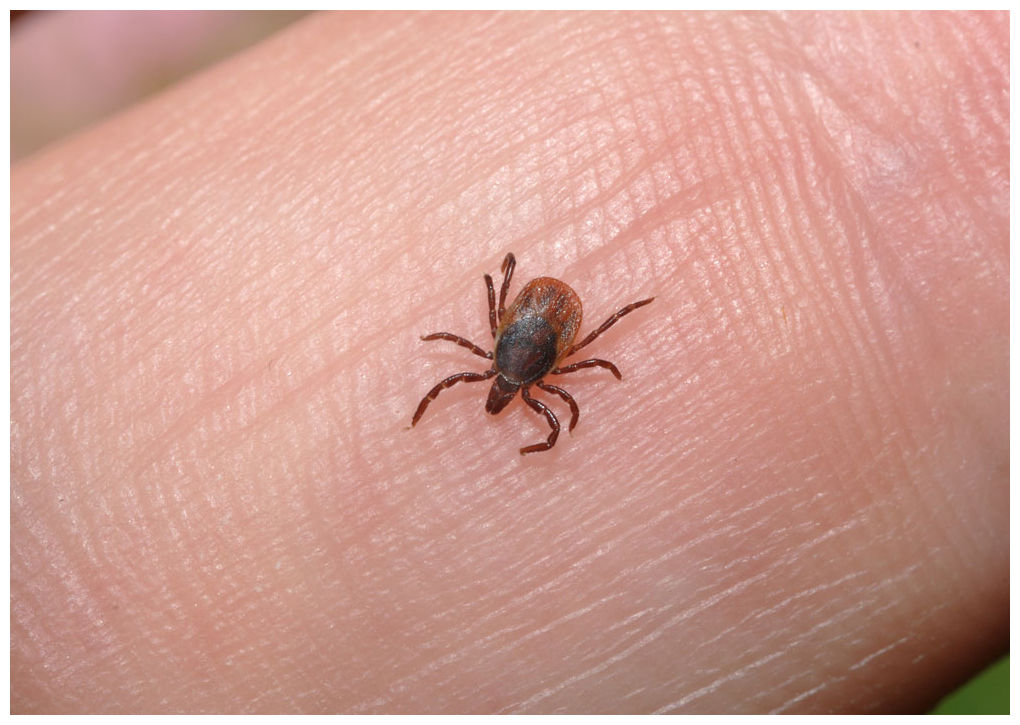
Two men in Missouri who became severely ill after sustaining tick bites were found to be infected with a new type of virus, according to a study from the Centers of Disease Control and Prevention (CDC).

Both men were admitted to hospitals after experiencing high fevers, fatigue, diarrhea and loss of appetite. They were originally thought to be suffering from a bacterial infection, but doubts arose when they didn't improve after being treated with antibiotics.

Further tests revealed their blood contained a new virus, which the researchers dubbed the Heartland virus. It belongs to a group called phleboviruses, which are carried by flies, mosquitoes or ticks, and can cause disease in humans.

While the genetic material of Heartland virus appears similar to that of other phleboviruses, the particular proteins it produces are different enough to call it a new species, said study researcher Laura McMullan, a senior scientist at the CDC.

Because the Heartland virus causes such general symptoms, it could be "a more common cause of human illness than is currently recognized," the researchers wrote in the Aug. 30 issue of the New England Journal of Medicine.

Attention

Gates Foundation Funds Surveillance of Anti-Vaccine Groups

Bill Gates
© GreenMedInfo
The Bill & Melinda Gates foundation launched the Grand Challenges in Global Health (GCGH) in partnership with the National Institutes of Health in 2003 which, according to the GCGH website, is aimed at "creating new tools that can radically improve health in the developing world." So far, 45 grants totaling $458 million were awarded for research projects involving scientists in over 30 countries.1

But where has all the money actually gone? Towards developing water purification systems? Or nutritional support aimed at immune optimization? How about providing shelter and medical facilities for the homeless? Not even close.

For example, a $100K grant was recently disbursed to Seth C. Kalichman, professor at the Department of Psychology, University of Connecticut, for "Establishing an Anti-Vaccine Surveillance and Alert System," which intends to "establish an internet-based global monitoring and rapid alert system for finding, analyzing, and counteracting misinformation communication campaigns regarding vaccines to support global immunization efforts." [emphasis added]

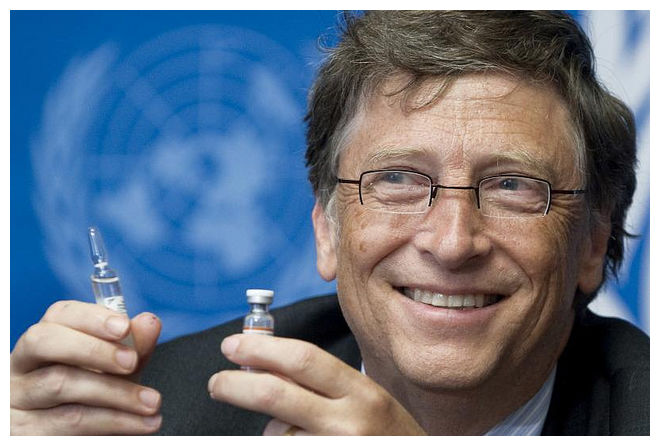
We can only wonder what organizations might be labeled as "misinformation communication campaigns" considering the fact that Bill Gates, in a Feb. 4th, 2011 interview on CNN with Sanjay Gupta said that "anti-vaccine groups "kill children."" It is quite possible that any dissenting voice not in support of universal vaccination campaigns may be included in this type of "surveillance and alert system" as a potentially endangering the lives of others, i.e. "killing children."

Info

The Straight Dope on Cholesterol: 10 Things You Need to Know - Part 1

Image
This is a guest post by Peter Attia and is a summary based on a 10-part series of the same name that you can find at The Eating Academy.

To put this summary post and, more importantly, this 10-part series in perspective, let's examine one of the most pervasive pieces of dietary advice given to people worldwide:
"Eating foods that contain any cholesterol above 0 mg is unhealthy."
- T. Colin Campbell, PhD, author of The China Study.
No summary of this length can begin to fully address a topic as comprehensive as cholesterol metabolism and the pathogenesis of atherosclerosis. In fact, those of us who challenge conventional wisdom often find ourselves needing to do exactly what Frederic Bastiat suggested:
"We must admit that our opponents in this argument have a marked advantage over us. They need only a few words to set forth a half-truth; whereas, in order to show that it is a half-truth, we have to resort to long and arid dissertations."
So, at the risk of trying to minimize the "long and arid" part of this process, below are the 10 things you need to know to be the judge - for yourself - if the conventional advice about cholesterol is correct.

Megaphone

The Great Organic Deceivers

Image
© Alliance for Natural Health
Which organic brands really believe in organic - and which are working behind the scenes to betray natural health consumers? It's time for a boycott.

Many natural and organic brands are actually owned by huge conglomerates that don't support sustainable, organic, non-GMO, non-toxic agriculture. In fact, their product labels are often designed to mislead consumers just so they can grab a share of the lucrative health-conscious consumer market.

Even worse, many of the conglomerate companies that produce so-called natural foods - and even some labeled "organic" - are allied with the biotech industry fighting by any means to defeat "Label GMO," a.k.a. Prop 37, the California Right to Know 2012 Ballot Initiative. Why are they doing such a thing? Because they sell more food that has GMO ingredients than organic food, and don't want consumers to have a choice about the GMO. They especially don't want consumers to know what is actually in their so-called "natural" products.

Video

Avoiding GMOs in Your Daily Life


As California remains the proverbial battlefield for GMO labeling, an increased interest is growing over ways to actually start avoiding GMOs in your daily life. By far the best tip, which may not be applicable at all times, is to stick to high quality organic sources. Preferably 100% organic or locally grown by organic-based farmers. This certainly is not always an option, so I've compiled a quick 'cheat sheet' of the top genetically modified crops and substances that you can remember when avoiding GMOs in your daily life.

Beaker

Big Chem, Big Harm?

Image
© healthviper.com
New research is demonstrating that some common chemicals all around us may be even more harmful than previously thought. It seems that they may damage us in ways that are transmitted generation after generation, imperiling not only us but also our descendants.

Yet following the script of Big Tobacco a generation ago, Big Chem has, so far, blocked any serious regulation of these endocrine disruptors, so called because they play havoc with hormones in the body's endocrine system.

One of the most common and alarming is bisphenol-A, better known as BPA. The failure to regulate it means that it is unavoidable. BPA is found in everything from plastics to canned food to A.T.M. receipts. More than 90 percent of Americans have it in their urine.

Bacon

Caveman Diet: Grain Free, Disease Free

Image
Most people freak out without their morning wheat toast. However, more and more people are beginning to turn to the wheat-free diet, experiencing liberation from chronic health ailments, weight and blood sugar spikes. In the book, Wheat Belly, preventative cardiologist William Davis explains how eliminating wheat from our diets is the key to achieving permanent weight loss and relief from a range of health issues.

After witnessing over 2,000 patients regain their health after giving up wheat, Davis reached the disturbing conclusion that wheat is the single largest contributor to the nationwide obesity epidemic - and its elimination is key to dramatic weight loss and optimal health.

Comment: For more information read:
The Addictive Opioids in Wheat and Dairy Foods
Gluten: What You Don't Know Might Kill You
The Myth That Vegetables Are Good For You