
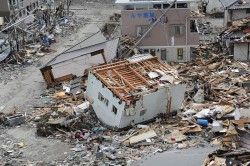
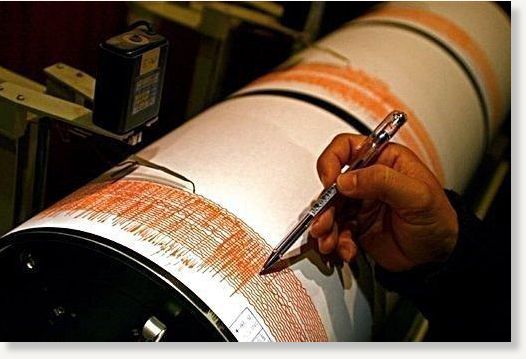
An earthquake represents the abrupt release of seismic strain that has built up over the years as plates of the Earth's crust slowly grind and catch against each other. Giant earthquakes live up to their fearsome name. The biggest ever recorded was the magnitude-9.5 Chile earthquake of 1960. It accounts for about a quarter of the total seismic strain released worldwide since 1900. In just three minutes, the recent quake in Japan unleashed one-twentieth of that global total according to geophysicist Richard Aster at the New Mexico Institute of Mining and Technology in Socorro.

The Indonesian quake "reinvigorated interest in these giants," said Aster, who is also president of the Seismological Society of America. The Chile and Japan earthquakes -- along with a magnitude-9.2 quake in Alaska in 1964 -- also triggered catastrophic tsunamis.
After a lull in large quakes in the 1980s and 1990s, we may now be in the middle of a new age of large earthquakes, Aster added.








Comment: Update: German news report on the bizarre sandstorm: