Earth ChangesS


Better Earth

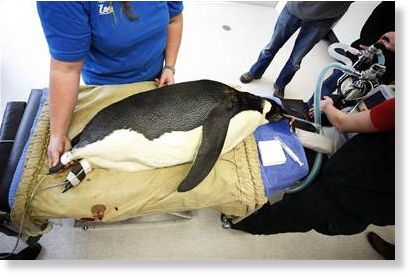
Happy ending for 'Happy Feet'? Penguin to head home

Image
© Hagen Hopkins / Getty Images, file"Happy Feet" the emperor penguin that washed up on the Kapiti Coast recovers after undergoing a medical examination at Wellington Zoo on June 29 in Wellington, New Zealand.
A young Emperor penguin that captured global attention when it washed up on a New Zealand beach after straying thousands of miles from home will be head back to the subantarctic in a specially designed cage aboard a research vessel.

The Wellington Zoo, where the bird - nicknamed "Happy Feet" by locals - has been living since June, said on Wednesday the penguin would be on the research vessel Tangaroa when it leaves on Aug. 29 for a fisheries survey.

The penguin will be released from the ship about four days out at sea, en route to its final destination.

"The NIWA team are looking forward to having this extra special guest onboard the vessel with us for the journey," Rob Murdoch of NIWA, the research organization that operates the vessel, said in a statement issued by the zoo.

Igloo

Ireland: Summer 2011 Could Be Coldest In At Least 25 Years

Ireland summer weather map
Map showing mean temperatures at a select number of synoptic stations for the summer period June 1st – August 15th 2011
Summer 2011 could finish the coldest summer in at least 25 years in some places according to Met Éireann. Speaking on RTE Television last night, Forecaster Siobhan Ryan stated that "This summer is shaping up to be the coldest summer at many of our stations since 1986 and especially so for Dublin Airport where it has been the coldest summer, so far, since 1957."

"With that it has been quite dull with 80% of the usual sunshine but at least rainfall totals have come in close to normal. It is worth remembering, however, there have been 40 other summers which have been as cold, if not colder, since records began, but it does look poor against the backdrop of warming we have become accustomed to over the last few years with the summer of 2010 fairing warmer and sunner than normal".

The reason for the generally cooler than average conditions this summer so far is due to fact that most of weather this during June, July and August has come in from the north Atlantic, usually in the form of Polar Maritime (Pm) air masses which have been unusually dominant this season thus far (particularly so the P5 and P6 strand) and which is the direct result of the polar jet stream running much further south than normal over the North Atlantic region throughout much of the season.

Bizarro Earth

UK: Shell Detects Second Gannet Alpha North Sea Leak Point

gannet oil platform
© BBCThere have been two oil leak points connected to the Shell run platform
A second leak point has been found in the flow line beneath the Gannet Alpha oil platform, 113 miles (180km) off Aberdeen.

Shell has been dealing with the release of an estimated 216 tonnes - 1,300 barrels - from a leak near the platform discovered last week.

The oil company said it was working to tackle what was described as a "second pathway" of leakage.

Shell said the overall leak rate was declining.

Glen Cayley, technical director of Shell's exploration and production activities in Europe, said: "The leak source remains the same. The initial release path was stopped, however, the oil found a second pathway to the sea.

Since then we have been working to find the source of the much smaller flow of hydrocarbons. It had proved difficult to find because we are dealing with a complex subsea infrastructure and the position of the small leak is in an awkward place surrounded by marine growth.

Info

Peruvian Desert Once a Breadbasket

Peruvian Desert
© Wikimedia CommonsThe coastal desert of Peru.

What do the characters in The Grapes of Wrath, Icelandic shepherds in the Middle Ages and ancient Peruvians have in common? They all suffered from the effects of intensive agriculture on sensitive environments.

Throughout human history unsustainable agricultural practices have turned fragile ecosystems into wastelands and left people starving. During the Dust Bowl, American farmers learned the consequences of removing the deep rooted grasses from the Great Plains when the soil blew away in tremendous dust storms. Icelandic shepherds learned that the sheep rearing practices their ancestors used on the European mainland destroyed the thin soils of their island and left them with starving herds and little to eat.

The ancient inhabitants of what is now Peru also learned the unhappy consequences of farming in a delicate ecosystem. The Ica Valley, near the coast of southern Peru and the famous Nazca lines, is now a barren desert, but was once a fertile floodplain, anchored by the roots of the huarango tree.

People were able to raise a variety of crops there for several centuries. But intensive agriculture in pre-conquest times led to ecosystem collapse. The history of the land was recently reconstructed by bioarcheologist David Beresford-Jones of the University of Cambridge by looking at plant remains left in ancient garbage heaps.

Arrow Up

Extreme weather on the rise in Sweden

Image
© Larrod/Flickr
Heavy rains and extreme weather are becoming more common in Sweden, according to a study by forecasters at the Swedish meteorological and Hydrological Institute, SMHI.

"We are still missing some data, but the trend is unmistakeable, extreme weather is becoming more common in Sweden," said meteorologist Lennart Wern to daily Dagens Nyheter (DN).

Recent downpours and heavy rains over western Sweden is but one example of a trend showing more extreme weather according to the so far unpublished report by SMHI.

In a new report Wern has collated information about the rainiest 24 hours from the country's all weather stations in a year and then builds a series of data that will span the whole of the twentieth century until present day.

Stop

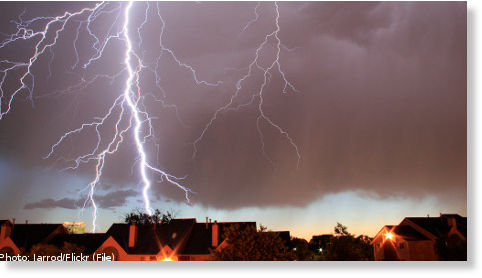
Earth changes catch up with a retail giant? Ireland: Lightning no longer blamed for Amazon data center outage, but transformer failure

Image
© Unknown
Utility retracts earlier diagnosis, continues investigation.

The power outage that brought down a portion of an Amazon data center in Dublin, taking down along with it the virtual infrastructure of a number of the company's Cloud customers, is no longer believed to have been caused by a lightning bolt.

In a detailed online account of the outage, the Amazon Web Services team wrote that the utility whose transformer went down on the morning of 7 Aug. had taken back its initial diagnosis of the culprit, when it said a lightning strike had caused the outage, but had not offer an alternative explanation.

"The utility provider now believes it was not a lightning strike, and is continuing to investigate root cause," the AWS team wrote.

Eye 1

US: Pearl River fish kill puts fear in residents-"Every species of fish here is dead"

dead fish, pearl river
© snip WOLX news

Pearl River County, Mississippi-For the past few days a surge of dead fish has been the scene for folks living along the Pearl River. Residents in Picayune have also been effected by the scare.

For families like the Mitchells, living along the Pearl River isn't just beautiful scenery, it's a complete way of life.

"We feed our families three times a week from these rivers. Whether it be frogs, fish, the wildlife that we hunt during the Winter it's a big portion of our meat for the year," said Mitchell

Igloo

'Once-in-a-Lifetime' Snow as Cold Blast Hits New Zealand

Wellington snowman
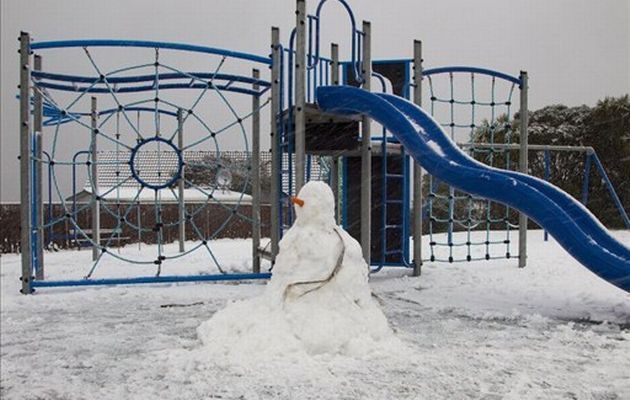
© AFP PHOTO / Marty Melville A snowman made by children stands in a playground in the Wellington suburb of Johnsonville after a polar blast dumped snow on the city for the first time in decades on August 15, 2011. Residents of hillside suburbs in the capital Wellington were warned they faced being snowed in amid the worst winter weather in the North Island for half a century.
Residents of New Zealand's capital city Wellington are taking delight in the unusual sight of snowflakes falling in what forecasters are describing as a once-in-a-lifetime event.

Services across the country were disrupted on Monday by the snowfalls, which were accompanied by heavy rain and high winds. Mail delivery in many centres was cancelled, as were some flights. Some roads were closed and recreational facilities such as libraries and swimming pools were shut in many centres.

Wellington rarely gets snow - the few inches it got on Sunday and Monday is the most in at least 30 years - and so people are taking to the streets with cameras and cheers.

Forecasters are predicting the cold snap to continue through Wednesday.

Snowman

South Africa: Cold Front Brings Snow to Johannesburg

Johannesburg snow
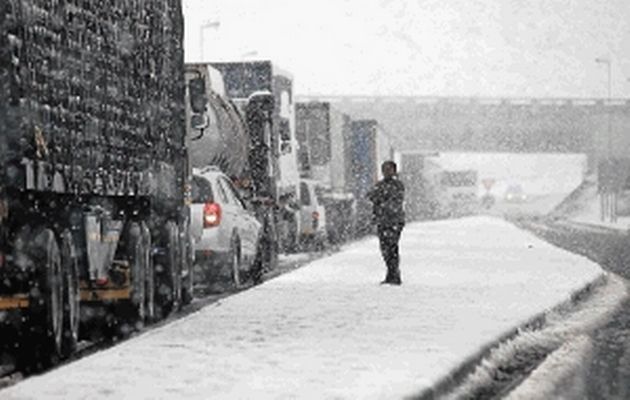
© Kevin SutherlandTrucks line up along the N3 on-ramp in Harrismith after snow in the Free State town forced officials to close the major route between Villiers and Van Reenen's Pass.
Light snow fell over Johannesburg on Monday afternoon during as another cold front baffled people across the country.

The snowfall excited local residents as they updated their status on Facebook and Twitter.

"Incredible weather in Joburg, snow, rain, sleet, hail... keep the pictures coming where you are," Radio 702's Aki Anastasiou tweeted.

A Facebook status read: "It is snowing here in Ormonde! Our whole office is playing outside."

Cloud Lightning

US: New York Breaks City's Rainfall Record with Nearly Eight Inches Soaking City

New York broke an all-time record for a one-day rainfall Sunday as up to 8 inches of water soaked the city, snarling trains and flooding roadways.


By 9 p.m., 7.7 inches of rain had fallen at Kennedy Airport.

It was the most recorded there in a single day since the National Weather Service began keeping records 116 years ago.