Earth ChangesS


Attention

Pesticides Damaging Australia's Great Barrier Reef: Government Study

Image
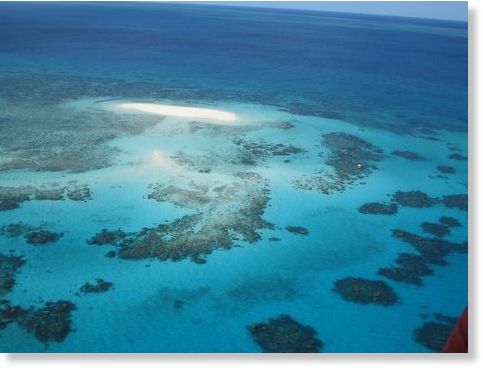
© UNESCOGreat Barrier Reef
Agricultural pesticides are damaging Great Barrier Reef - one of the world's great natural wonders - according to a report by the Australian government on water quality.

The report stated that farmers are using to many toxic chemicals that are seeping into the water - in fact, almost 25 percent of horticulture producers and 12 percent of pastoral farmers are believed to using pesticides regarded as unacceptable.

Pesticides of toxic concentrations have been detected 38 miles inside the reef.

The severe flooding as well as cyclone Yasi that hit the region earlier this year are believed to have worsened the problem by sending pollutants into the ocean.

The report particularly blamed pesticides used by the sugar cane industry in northern Queensland province.

Arrow Up

US: Heat pops pipes nationwide; brace for higher bills

Image
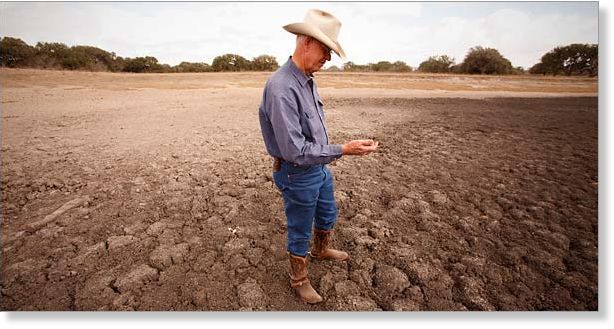
© Michael Stravato for The New York TimesAustin Brown II, 65, on his ranch in Beeville, Tex. Much of the state has not had a significant rainfall since August.
Critical water pipelines are breaking from coast to coast, triggered by this summer's record high temperatures. It's not a phenomenon or coincidence, experts say. It's a clear sign that Americans should brace for more water interruptions, accompanied by skyrocketing water bills.

The heat wave of the past few weeks has burst hundreds of crucial pipes in California, Kansas, Oklahoma, Texas, Indiana, Kentucky and New York, temporarily shutting off water to countless consumers just when they needed it most.

"It's one of the worst summers," said Debbie Ragan of Oklahoma City's Utilities Department. As days of 100 degree-plus temperatures bake the region, the utility reports 685 water main breaks since July alone. That's an estimated rate of four times normal. To keep up with repairs, Ragan said, workers have been putting in 12-to 16-hour shifts 24/7.

Bizarro Earth

Twenty Percent of All Mammals at Risk of Extinction

Elephants
© Chris Jackson / Getty Images Elephants are among the mammals nearing extinction according to a new report.

At least twenty percent of all known mammals are nearing extinction, with large species at greatest risk, according to a recent assessment of the conservation status of 5,487 mammals.

Expanding agriculture and hunting are the primary extinction drivers, according to the findings, published in the latest Philosophical Transactions of the Royal Society B. That means humans causing the most severe mammal extinction period in history.

"The example I often tend to bring up is Tasmanian Devil, familiar to many from the Looney Tunes cartoons, because it's an example of how a species that is common, or at least not uncommon, can suddenly, through the emergence of a novel threat, be plunged into a steep decline," lead author Michael Hoffmann told Discovery News, explaining that a relatively new cancer, Devil Facial Tumor Disease, is wiping out this particular mammal.

Hoffmann, a researcher for the International Union for Conservation of Nature, and his team analyzed data gathered for IUCN's Red List Index. It covered the period from 1996, when all species were first completely assessed, until 2008, when they were reassessed.

Bizarro Earth

Great Britain: 'Several hundred tonnes' of oil in North Sea spill

North Sea oil rig
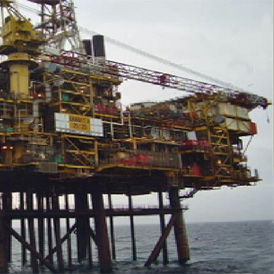
© UnknownShell operates the Gannet Alpha platform off the coast of Aberdeen.
Pressure is increasing on the oil giant Shell to be open about the scale of last week's spill, as UK government figures estimate "several hundred tonnes" of oil could have leaked into the North Sea.

The Department of Energy and Climate Change says the spill off the coast of Aberdeen is "substantial", with estimates showing it is the biggest such leak in more than a decade.

The slick is estimated to be some 20 miles by 2.6 miles at its widest point.

'Under control'

Royal Dutch Shell says it has brought the spill under control, but it has not yet confirmed the extent of the leak.

A DECC spokesman said the energy firm is still trying to "completely halt" any further leakage.
It is not anticipated that oil will reach the shore and indeed it is expected that it will be dispersed naturally. Department of Energy and Climate Change spokesman

"It is not anticipated that oil will reach the shore and indeed it is expected that it will be dispersed naturally.

"The UK Continental Shelf oil spill record is strong, which is why it is disappointing that this spill has happened.

"Current estimates are that the spill could be several hundred tonnes. However, it is always very difficult and takes time to get an accurate assessment of the size of a spill and this is subject to ongoing revision."
-- Department of Energy and Climate Change spokesman

Comment: Given Shell Oil's record in Nigeria, don't hold your breath.

Shell Oil - The Awful Truth


Nuke

Nuclear Expert: Radioactive Rain-Outs Will Continue For a Year - Even In Western U.S. and Canada - Because Japanese Are Burning Radioactive Materials

japan fallout wind pattern
© Accuweather
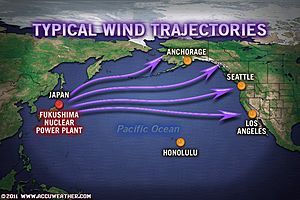
Nuclear expert Arnie Gundersen says in a new interview that the Japanese are burning radioactive materials. The radioactivity originated from Fukushima, but various prefectures are burning radioactive materials in their terroritories.

Gundersen says that this radioactivity ends up not only in neighboring prefectures, but in Hawaii, British Columbia, Oregon, Washington and California.

He notes that radioactive rain-outs were documented recently in British Columbia and Oklahoma with geiger counters.

Gundersen is working with scientists who will publish a paper in the near future definitively debunking Canadian and American health officials' claims that only harmless levels of radiation are being released.

Igloo

'Once in a lifetime' polar blast gives New Zealand taste of Ice Age to come

Image
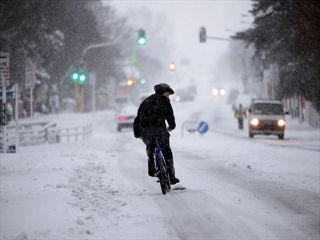
A polar blast has hit New Zealand, bringing freezing temperatures and the heaviest snowfall in 40 years.

Snow is even predicted to fall on the hills around Auckland in what meteorologists are describing as a once-in-a-lifetime storm.

Schools across the country have been closed for the day and most airports are at a standstill.

The bitterly cold southerly blast has now brought snow to most of New Zealand, closing roads and some airports and cutting power to thousands of homes.

Snow has made roads impassable in many areas of both islands.

MetService head forecaster Peter Kreft told the New Zealand Herald the polar blast was "of the order of a 50-year'' event and warned it could last for several more days.

"It's a once-in-many-decades event. We are probably looking at something like, in terms of extent and severity, maybe 50 years,'' he said.

Attention

US: Governor - Wind Gust That Fell Indiana Stage a 'Fluke'


The wind gust that toppled a stage at the Indiana State Fair Saturday night, killing five and injuring dozens of fans waiting for the country band Sugarland to perform, was a "fluke" that no one could have anticipated, the governor and others said Sunday.

The wind was far stronger than that in other areas of the fairgrounds, said Dan McCarthy, chief meteorologist for the National Weather Service in Indiana. He estimated the gust at 60 to 70 mph.

Gov. Mitch Daniels said precautions were taken before the storm, but no one could have foreseen such a strong gust focused in one place. Some witnesses have said that while a storm was expected, rain hadn't begun to fall when the wind sent the stage rigging falling into the crowd of terrified fans.

"This is the finest event of its kind in America, this is the finest one we've ever had, and this desperately sad, as far as I can tell fluke event doesn't change that," Daniels said.

Four people were killed when the metal scaffolding that holds lights and other stage equipment fell, and a fifth died overnight at a hospital, Indiana State Police 1st Sgt. Dave Bursten said. The county coroner's office identified the victims as Alina Bigjohny, 23, of Fort Wayne; Christina Santiago, 29, of Chicago; Tammy Vandam, 42, of Wanatah; and two Indianapolis residents: 49-year-old Glenn Goodrich and 51-year-old Nathan Byrd. Byrd died overnight.

Radar

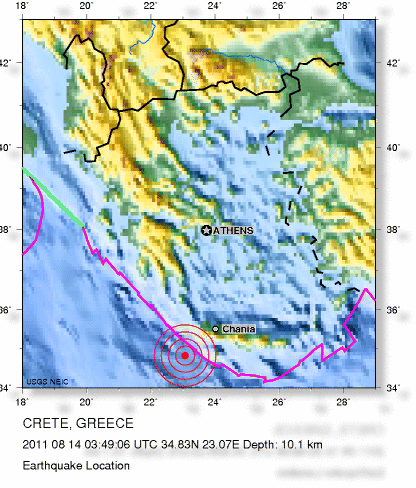
Magnitude 4.3 Earthquake Rattles Crete, Greece

Image
The quake struck on Saturday, August 13, 2011 at 10:49:06 PM (CDT) - Central Daylight (Chicago).

Rumbling at a rather shallow depth of 10.2 km (6.3 miles), the quake hit 114 km (70 miles) SW of Chania, Crete, Greece; 195 km (121 miles) WSW of Iraklion, Crete, Greece; 259 km (160 miles) SSE of Kalamata, Greece; and 354 km (219 miles) S of ATHENS, Greece.

There are no reports of damage or tsunami activity.

Bizarro Earth

UK: Mysterious Unknown Purple Sea Sponge Discovered Off The East Coast

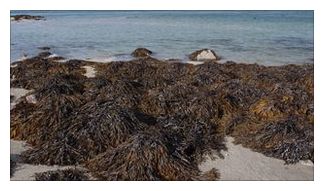
Seaweed
© BBCSeaweed

A purple sponge never seen in UK waters has been found off England's east coast.

It was discovered by the Wildlife Trust, who were conducting a seaweed survey of the North Sea.

The survey uncovered 131 types of seaweed, including the "reflexed grape weed", or red seaweed, and three other non-native types, while endangered starlet sea anemones were seen along Suffolk and Norfolk's coasts.

An unidentified sea slug new to Norfolk was spotted, while the unknown purple sponge was discovered during dives off East Runton in the north of the county.

A spokesman said: "This survey has thrown up some important finds. They will form a crucial part of our knowledge base of what's living off the east coast."

No Entry

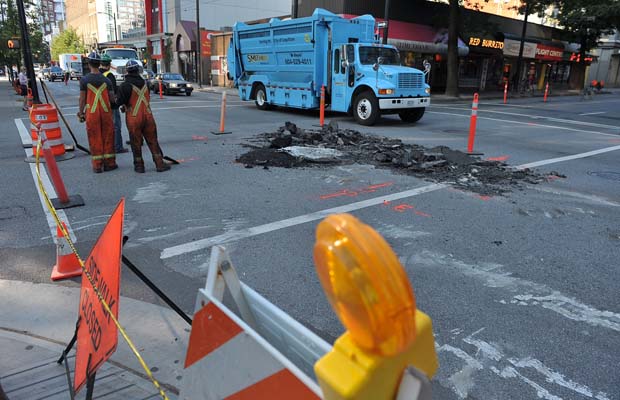
Canada, British Columbia: Downtown Vancouver Sinkhole a Mystery to City Staff

Image
© Ward Perrin, PNGTraffic was disrupted as crews repaired a large hole at Seymour and Robson streets in downtown Vancouver.
The City of Vancouver says it has no explanation for a large hole which developed early Friday at the busy intersection of Seymour and Robson Streets.

"We don't know what caused it," said city spokeswoman Wendy Stewart. "The ground was dry. There was no water and no suggestion it was from a broken pipe."

She said dry, summer weather is not the type of conditions in which sinkholes usually form.

"Sometimes dirt will erode and a pothole will be created," she said. "Sinkholes are more common when winter turns to spring and water comes down from the hills."