Earth ChangesS


Eagle

US: 5.8 Earthquake Causes Frantic Evacuation From Pentagon

Image
© Unknown
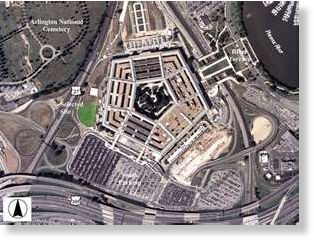
The Pentagon was evacuated early Tuesday afternoon moments after a 5.8 magnitude earthquake out of Mineral, Va. shook reinforced concrete walls of the building, sending panicked workers running for the exits.

Some of the nearly 20,000 people who work at the Pentagon every day feared the shaking was caused by another Sep. 11 style attack.

Fears of a terror attack were quickly dismissed after it became clear others around Washington D.C. and Virginia felt the tremors. The quake was felt as far away as New York City, North Carolina, Ohio and Illinois.

At the Pentagon black SUV's sped to the VIP entrance waiting to evacuate senior military officers. Marine helicopters circled above.

Evil Rays

Rare event: One of the strongest earthquakes in decades rattles eastern US seaboard

Image
© AFP/Getty Images/File, Mark WilsonA strong earthquake measuring 5.9 rattled the US east coast
One of the strongest earthquakes to strike the US east coast in decades rattled offices Tuesday in downtown Washington and caused panicked evacuations from skyscrapers as far away as New York.

The Pentagon, the US Capitol and Union Station in the nation's capital were all evacuated after the 5.9-magnitude quake, which was shallow with its epicenter only 0.6 miles (one kilometer) underground.

The disruption to cell phone services in the hour after the quake added to the sense of panic in a country preparing to mark the 10th anniversary of the September 11, 2001 terror attacks.

Seismologists from the US Geological Survey said the epicenter was 27 miles (47 kilometers) from Charlottesville, Virginia, and 87 miles (139 kilometers) from Washington, where Reagan National Airport was also evacuated.

Bizarro Earth

Are Category 6 Hurricanes Coming Soon?

Irene
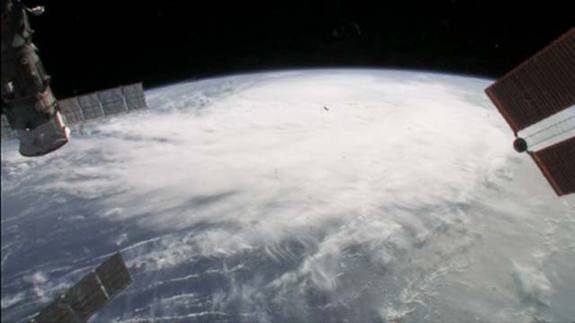
© NASAAboard the International Space Station, an Expedition 28 crew member captured views of intensifying Hurricane Irene from an altitude of 225 miles at 3:33 p.m. EDT on Aug. 22, 2011, as the tropical system passed to the north of Hispaniola.
Atmospheric researchers tend to agree that tropical cyclones of unusual ferocity are coming this century, but the strange fact is that there is no consensus to date on the five-point scale used to classify the power of these anticipated storms. In what may sound like a page from the script of the rock-band spoof Spinal Tap with its reference to a beyond-loud electric guitar amplifier volume 11, there is actually talk of adding a sixth level to the current Saffir-Simpson hurricane scale, on which category 5 intensity means sustained winds higher than 155 miles per hour (250 kilometers per hour) for at least one minute, with no speed cap.

The lack of an upper limit on the scale results in all of the most intense tropical cyclones getting lumped together, despite their wide range of power. Category 5 becomes less descriptive when it includes 2005's Emily, which reached peak wind speeds of 257.5 kph (160 mph) and six hours in category 5; the same year's Katrina which held peak wind velocity of 280 kph (175 mph) for 18 hours in the category; and 1980's Allen, churning with peak winds at 305 kph (190 mph) maintained for 72 hours in the highest category.

And now the ferocity forecast for the century adds to this classification problem. "The severe hurricanes might actually become worse. We may have to invent a category 6," says David Enfield, a senior scientist at the University of Miami and former physical oceanographer at the U.S. National Oceanic and Atmospheric Administration (NOAA). This new level wouldn't be an arbitrary relabeling. Global satellite data from the past 40 years indicate that the net destructive potential of hurricanes has increased, and the strongest hurricanes are becoming more common - especially in the Atlantic. This trend could be related to warmer seas or it could simply be history repeating itself. Data gathered earlier than the 1970s, although unreliable, show cycles of quiet decades followed by active ones. The quiet '60s, '70s and '80s ended in 1995, the year that brought Felix and Opal, among others, and resulted in $13 billion in damages and more than 100 deaths in the U.S.

Bizarro Earth

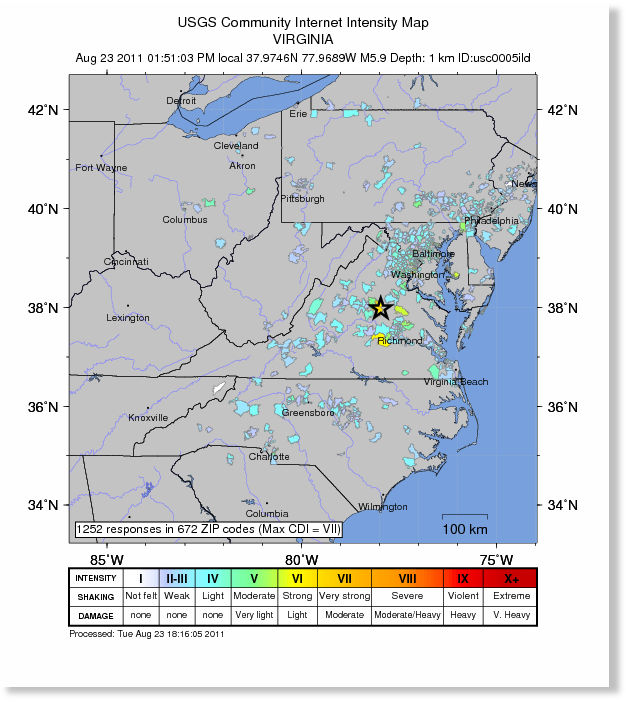
US: Virginia - Earthquake Magnitude 5.9

Image
© USGS
Date-Time:
Tuesday, August 23, 2011 at 17:51:03 UTC

Tuesday, August 23, 2011 at 01:51:03 PM at epicenter

Location:
37.975°N, 77.969°W

Depth:
1 km (~0.6 mile) (poorly constrained)

Region:
VIRGINIA

Distances:
6 km (4 miles) SSE (152°) from Louisa, VA

6 km (4 miles) SW (236°) from Mineral, VA

26 km (16 miles) SE (133°) from Gordonsville, VA

66 km (41 miles) NW (318°) from Richmond, VA
134 km (83 miles) SW (219°) from Washington, DC

Cloud Lightning

It's getting stronger: Hurricane Irene upgraded to Category 2 as it leaves Dominican Republic and nears U.S. south-east mainland

A rapidly strengthening Hurricane Irene was roaring off the Dominican Republic's northern coast last night, whipping up high waves and torrential downpours on a track that could see it reach the U.S. south-east as a major storm by the end of the week.

Irene grew into a Category 2 hurricane late yesterday and the U.S. National Hurricane Center in Miami said it could reach Category 3 today and possibly become a monster Category 4 storm within 72 hours.

'We didn't anticipate it gaining this much strength this early,' said center meteorologist Chris Landsea, adding that the ocean's warm temperatures and the current atmosphere is 'very conducive' to energising storms.

Forecasters said it could still be that strong when it slams into the U.S., possibly landing in Florida, Georgia, or South Carolina. Irene is expected to rake the Turks and Caicos and the Bahamas today and tomorrow.

Image
© Getty ImagesPanic buying: Residents in West Palm Beach, Florida, are preparing for the arrival of Hurricane Irene as it sweeps through the Caribbean

Bizarro Earth

Newly Discovered Icelandic Current Could Lead To Climate Cooling

Image
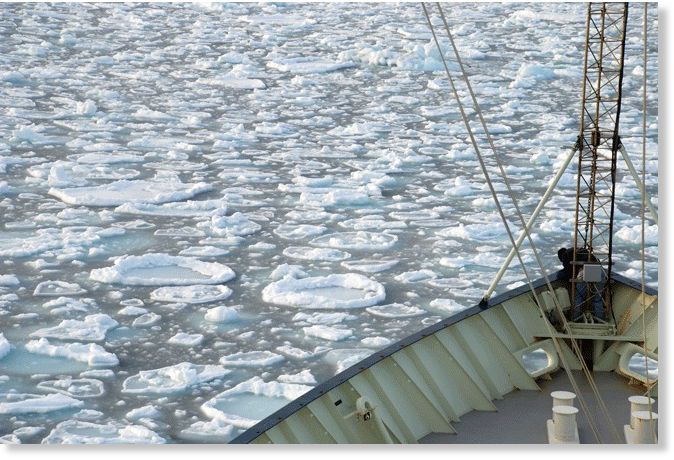
© WHOIThe research vessel Knorr navigates the Iceland Sea while taking measurements of the Jet.
An international team of researchers has confirmed the presence of a deep-reaching ocean circulation system off Iceland that could have "important ramifications" for ocean circulation's impact on climate in the Northern Hemisphere.

The current, called the North Icelandic Jet (NIJ), contributes to a key component of the Atlantic Meridional Overturning Circulation (AMOC), also known as the "great ocean conveyor belt," which is critically important for regulating Earth's climate.

Climate specialists have been concerned that the conveyor belt is slowing down due to a rise in global temperatures. They suggest that increasing amounts of fresh water from melting ice and other warming-related phenomena are making their way into the northern North Atlantic, where it could freeze, which would prevent the water from sinking and decrease the need for the loop to deliver as much warm water as it does now. Eventually, this could lead to a colder climate in the northern hemisphere.

The team, which includes physical oceanographers from the Woods Hole Oceanographic Institution (WHOI), announced their findings in a paper published in the August 21 online issue of the journal Nature Geoscience.

Cloud Lightning

US: Electrifying moment lightning hit New York bridge as spectacular storm hit the city

New York's night sky was lit up by bolts of lightning flashing through the darkness during a fierce thunder storm on Friday night.

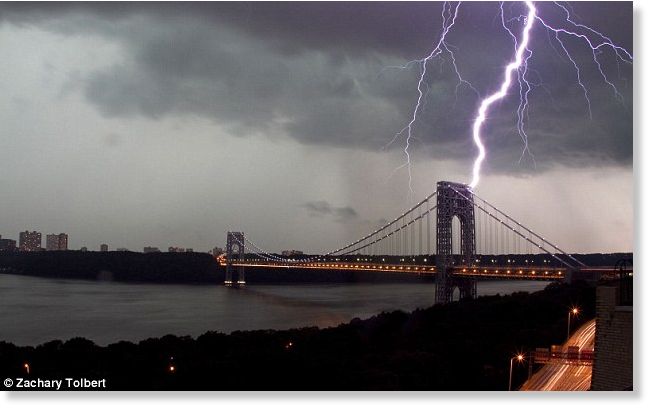
And one photographer was able to capture the moment one of those bolts struck the George Washington Bridge.

The city endured heavy rain and ferocious claps of thunder and flashes of lightning for most of Friday evening leading into a warm and bright Saturday which saw many bask in temperatures of around 82F.

But Sunday night brought more wet and wild weather as once again severe thunderstorms, rain and hail fell on the city, bringing a soggy end to the weekend.

Image
© Zachary TolbertStrikes: A photographer captured the exact moment a lightning bolt struck the George Washington Bridge on Friday night in New York
This was the second weekend in a row that the Big Apple was hit by severe weather.

At least seven inches of rain fell by JFK Airport last Sunday, and all through the city residents dealt with travel delays, dangerous road conditions and even some flooded basements.

Bizarro Earth

US: Record-Breaking Extreme Heat Wave Is Just Starting For Arizona

The extreme heat wears on with our Excessive Heat Warning still in effect until 8 p.m. Thursday.

We broke a record yesterday at Phoenix Sky Harbor topping out at 113 degrees, two degrees above the old record of 111 set in 1999.


Bizarro Earth

US: Largest Colorado quake since 1973 shakes homes

Image
© USGS
The largest earthquake to strike Colorado in almost 40 years shook hundreds of people in the southern part of the state and in northern New Mexico, causing minor damage to a few homes.

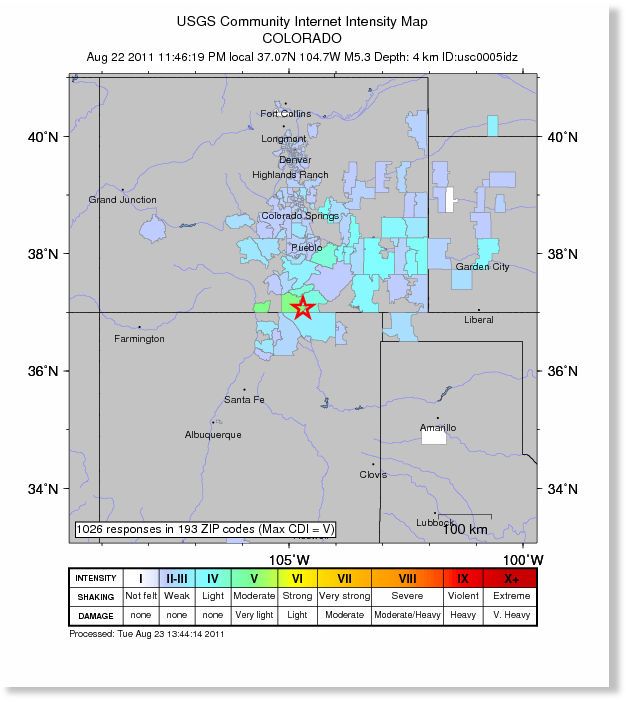
The magnitude 5.3 temblor was recorded at about 11:46 p.m. MDT Monday about nine miles southwest of Trinidad, Colo., according to the National Earthquake Information Center in Golden, Colo. That area is near the New Mexico border is and about halfway between Denver and Albuquerque, N.M. The quake followed three smaller ones that hit the area earlier in the day.

U.S. Geological Service geophysicist Shengzao Chen said the information center had received calls from more than 70 people in Trinidad and several dozen people in New Mexico who felt the shaking. More than 30 people in Colorado Springs, Colo., about 130 miles north of Trinidad, also reported feeling the quake, he said.

Bizarro Earth

US: Colorado - Earthquake Magnitude 4.6, followed by Magnitude 5.3 - numerous aftershocks

Image
© USGS
Date-Time:
Tuesday, August 23, 2011 at 05:46:19 UTC

Monday, August 22, 2011 at 11:46:19 PM at epicenter

Time of Earthquake in other Time Zones

Location:
37.070°N, 104.700°W

Depth:
4 km (2.5 miles)

Region:
COLORADO

Distances:
15 km (9 miles) WSW of Trinidad, Colorado

33 km (20 miles) NW of Raton, New Mexico

54 km (33 miles) S of Walsenburg, Colorado

290 km (180 miles) S of DENVER, Colorado