Earth ChangesS


Phoenix

Four major Wyoming wildfires destroy structures, force evacuations

Squirrel Creek fire
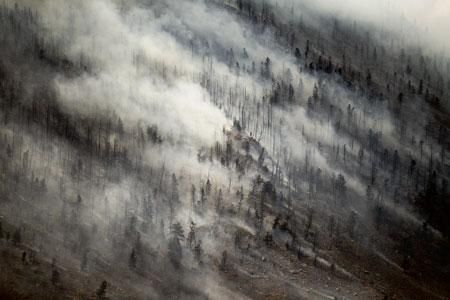
© Andy Carpenean/Boomerang photographerA sudden wind shift draws smoke back over the top of Sheep Mountain Tuesday as the Squirrel Creek fire spreads.
Fed by bone-dry timber and fanned by hot winds, the four major wildfires burning in Wyoming today have destroyed an unknown number of buildings and forced hundreds to evacuate.

The Albany County Sheriff's Office issued an immediate evacuation notice this morning for areas east of Sheep Mountain to Harmony Lane, and south of Lake Hattie as crews battle the Squirrel Creek Fire near Woods Landing southwest of Laramie. The notice includes the area northwest of Lake Hattie to Highway 130.

The evacuation center is the Albany County Fairgrounds. For more information, call 307-721-1801.

Authorities urged evacuees to assist neighbors if necessary.

The Albany County media release also advised that the Arapaho Fire in the county's northeast area is advancing quickly. Authorities said residents should be prepared to leave the area immediately. "This fire is moving at unprecedented rates," the release said.

The Arapaho Fire, currently the state's largest, is burning near Laramie Peak southwest of Wheatland. It had burned nearly 88,000 acres by this morning, fire spokesman Jim Whittington said.


Attention

Death of the Birds and the Bees Across America

Image
© unknown
Birds and bees are something most of us take for granted as part of nature. The expression "teaching about the birds and the bees" to explain the process of human reproduction to young people is not an accidental expression. Bees and birds contribute to the essence of life on our planet. A study by the US Department of Agriculture estimated that "...perhaps one-third of our total diet is dependent, directly or indirectly, upon insect-pollinated plants."1

The honey bee, Apis mellifera, is the most important pollinator of agricultural crops. Honey bees pollinate over 70 out of 100 crops that in turn provide 90% of the world's food. They pollinate most fruits and vegetables - including apples, oranges, strawberries, onions and carrots.2 But while managed honey bee populations have increased over the last 50 years, bee colony populations have decreased significantly in many European and North American nations. Simultaneously, crops that are dependent on insects for pollination have increased. The phenomenon has received the curious designation of Colony Collapse Disorder (CCD), implying it could be caused by any number of factors. Serious recent scientific studies however point to a major cause: use of new highly toxic systemic pesticides in agriculture since about 2004.

Question

Morning Shower Paints Rural Kannur Red

India: Though not for first time in the state, red rain in parts of Kannur on Thursday did create some panic and curiosity among the residents in the district. The strange phenomenon happened around 6:50am and lasted for 15 minutes. People in the 1km area in and around Edachery in Puzhati panchayat panicked as their courtyards turned blood red after rain.

Kannur block panchayat president Shaija M, who collected the sample of the rainwater, said the water was as dark as black coffee and had the smell of raw beetroot. "I thought someone killed some animal and its blood got mixed with water on the courtyard," she said. Akshay Sajeevan, another resident in the locality, said in his compound the colour of rainwater was a bit lighter. According to meteorological department, though red rain is a rare phenomenon, but it is no way harmful. "I assume this is due to atmospheric pollution. The pollutants in the air get dissolved in rainwater resulting in red rain," said M Santhosh, director of meteorological department, Thiruvananthapuram.

Normally such rains occur during the beginning of monsoon. This time it happened in the middle of the monsoon as monsoon is weak. The residents are now planning to give the sample of the red rainwater to the health department for analysis.

Bizarro Earth

New Zealand's Biggest Quake in 100 years

NZ Quake
© Thinkstock
Last night's magnitude 7.0 earthquake in the South Taranaki Bight is the largest to strike the region in more than 100 years, GNS Science says.

The quake struck at 10.36pm, 60km south-west of Opunake in Taranaki, at a depth of 230km.

It was felt strongly around the west coast of the lower North Island, and was widely felt from the Bay of Plenty to Canterbury.

No tsunami was generated by the quake.

Waiouru resident Adrienne Murphy told the Herald it was the "biggest shake we have felt in years".

Residents in Wellington reported being startled by shakes, which lasted for about 15 seconds.

Some said the shakes were strong enough to topple household appliances, but the central Fire Service communications centre said it had received no reports of earthquake-related damage.

Wellington resident Sam Rowe said he felt the walls of his house shaking.

"It shook for about 5 to 10 seconds - things rattled but nothing was knocked over. It wasn't that severe ... and our power's still on."

Bizarro Earth

Phoenix Put on Haboob Watch

Haboob
© NOAAA haboob looms over Phoenix, as seen from the National Weather Service office on July 5, 2011.
Monsoon moisture will be on the increase across the Four Corners region this week, increasing the rain chances for the region and putting Phoenix at risk for another haboob.

A haboob is a type of intense dust storm carried by strong winds that are usually the aftermath of a thunderstorm.

Recent thunderstorms that have dotted the Four Corners region have produced more dry lightning strikes than substantial rainfall.

That will change starting Tuesday when the door is opened for monsoon moisture to start streaming northward.

The initial surge of moisture will help ignite a cluster of thunderstorms across southeastern Arizona and southern New Mexico Tuesday afternoon.

The desert areas of southern Arizona, including Phoenix, may then become the target of a haboob Tuesday night as these thunderstorms track westward. Gusty winds racing away from the thunderstorms would trigger the massive dust storms.

The added moisture in the air will also allow the thunderstorms to drop substantial rainfall Tuesday afternoon and night.

The same can be said across more of the Four Corners region as the week progresses and the monsoon moisture spills northward.

Bizarro Earth

Destructive Derecho Windstorm Sweeps Across US

Derecho
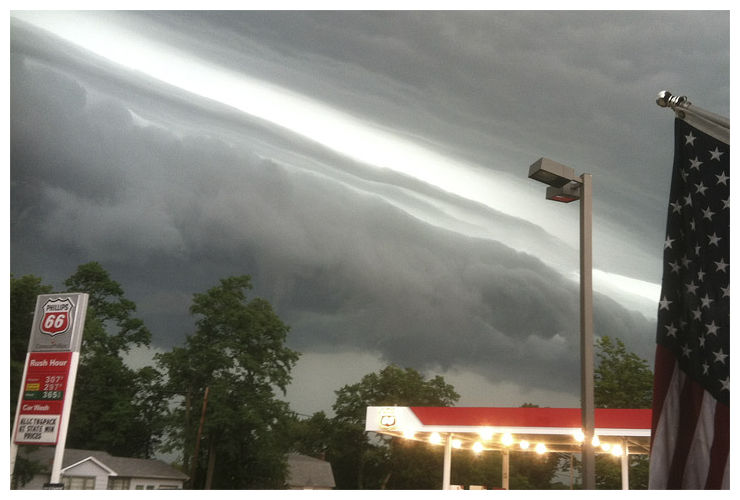
© NOAA/Courtesy of Kevin GouldAn ominous line of clouds portends the approaching derecho in La Porte, Ind., on the afternoon of June 29.
A destructive derecho - a rare, powerful, and long-reaching windstorm that accompanies lines of thunderstorms - swept from the Midwest to the East Coast on Friday, June 29, and a new video stitched together from satellite images shows the storm's furious progress.

To qualify as a derecho - the Spanish word for "straight," and pronounced deh-REY-cho - a storm must pack wind gusts of at least 58 mph (93 kph) throughout, and must cause wind damage across an area at least 240 miles (400 kilometers) wide.

Although the full power of the recent storm is still emerging, it appears it exceeded the qualifying requirements. The derecho moved approximately 450 miles (724 km) in six hours, at an average speed of 75 mph (120 kph). It swept southeast from northwestern Indiana, across Ohio, and into Pennsylvania and West Virginia, according to preliminary numbers from the National Oceanic and Atmospheric Administration's Storm Prediction Center.

Cloud Lightning

Flash floods roll through Auckland

Parts of Auckland were hit by surface flooding this afternoon, as a severe thunderstorm rolled through the region.

The Fire Service was inundated with more than 150 calls over a few hours this afternoon, mostly from central and west Auckland and the North Shore, but also from Waihi to the east.

Most of the reports were for surface flooding, and several business had to shut shop for the day while rain poured through damaged roofs.

One was central Auckland strip club Calendar Girls where the upstairs section was flooded and water trickled through the ceiling to the downstairs bar.

Hobson St in central Auckland was closed about noon after high winds lifted a section of roof.

Link to video

Bizarro Earth

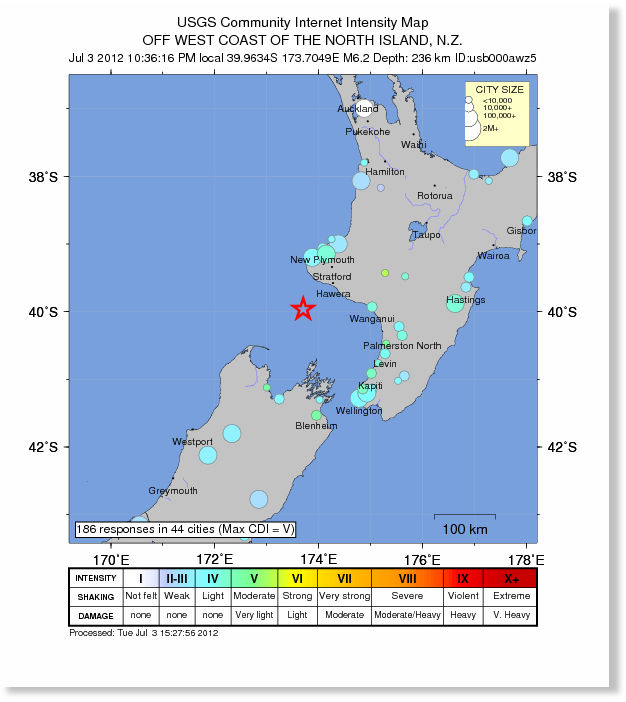
USGS: Earthquake Magnitude 6.2 - Off West Coast of New Zealand

Image
© USGS
Date-Time
Tuesday, July 03, 2012 at 10:36:16 UTC
Tuesday, July 03, 2012 at 10:36:16 PM at epicenterTime of Earthquake in other Time Zones

Location
39.963°S, 173.705°E

Depth
236.1 km (146.7 miles) Region
OFF WEST COAST OF THE NORTH ISLAND, N.Z.

Distances
57 km (35 miles) SSW of Opunake, New Zealand
64 km (39 miles) SW of Hawera, New Zealand
104 km (64 miles) SSW of New Plymouth, New Zealand
115 km (71 miles) W of Wanganui, New Zealand

New Zealand GeoNet lists the earthquake at 7.0

Phoenix

Razed to the ground: Shocking before-and-after images reveal scale of destruction caused by fires sweeping through Colorado

Image
Before (above) and after (below): The devastating Colorado wildfire can be seen in two overhead images in the Colorado Springs neighbourhood of Mountain Shadows
  • 32,000 evacuated from Colorado Springs including Air Force Academy cadets as inferno spread
  • About 300 homes reportedly destroyed in Waldo Canyon Fire, which has been named the No. 1 priority for emergency crews
  • Obama to tour the disaster-stricken area on Friday to meet firefighters working around the clock
Photos of the heartbreaking devastation of the wildfires that have ravaged Colorado in the last several days have revealed piles of rubble where houses once stood before the flames engulfed the region, leaving more than 30,000 people homeless.

The photos revealed the Mountain Shadows area of Colorado Springs, where dozens of homes can be seen decimated by the fast-moving fire.

The raging wildfire that has encroached on the state's second-largest city and threatened the U.S. Air Force Academy.

Mayor Steve Bach said a more accurate account will be available later in the day of the damage from a blaze that has burned out of control for much of the week and forced more than 30,000 evacuees to frantically pack up belongings and flee.

Bizarro Earth

US Map shows the path of every tornado to hit the U.S. in the last 60 years

Image
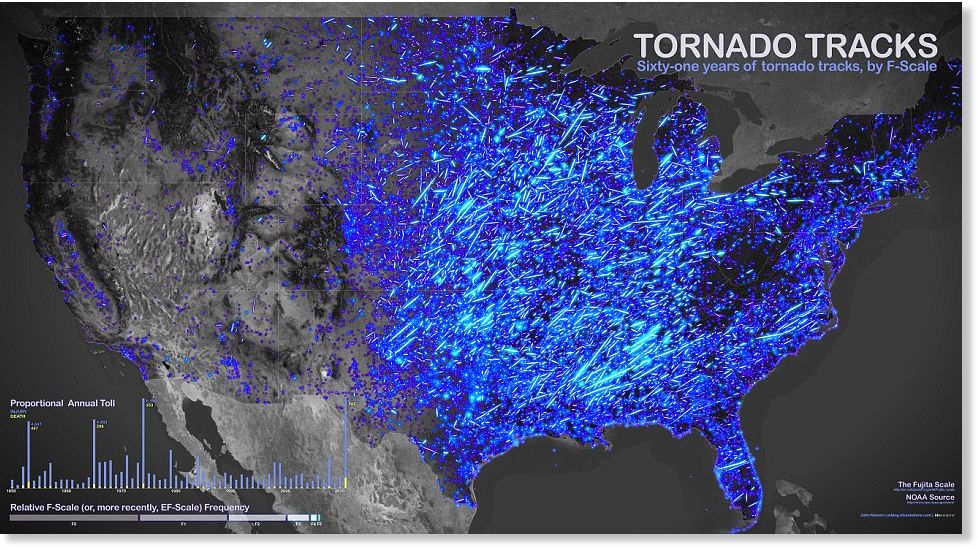
© John Nelson61 years of tornado tracks: The map, by John Nelson of IDV Solutions, shows the path of the violent storms, with the brightness of the lines indicating the intensity
If you are in America and want to avoid the path of a tornado, the West side of the nation might be the place to go.

For this map shows the course of every single tornado that has hit the U.S. over the last six decades, and as you can see, few places on the East side of the continent have escaped the path of the deadly winds.

The neon-coloured map was created as a side-project by mapping manager John Nelson, in a case of taking his work home with him, as he works for data-visualisation software maker IDV Solutions.